
Since Donald Trump moved into the White House, the world has been changing at a dramatic pace. While the American elite have traditionally pursued their interests behind closed doors, the current president acts like an uncontrolled bulldozer.
He pushes for what he believes is in the American interest. Examples are not hard to find. Greenland, Venezuela, Iran, Ukraine, and most recently Cuba... He treats multinational institutions and treaties to which the United States is committed with contempt. He sees foreign trade as a zero-sum game, even though the academic community is unusually united in its opposition to his views.
Abandoning the role of global policeman has consequences. It has held up a mirror to the leaders of many countries, bringing all their shortcomings to the surface. This is particularly evident on the old continent. Warning lights are flashing in the fields of military and energy security, industry is weakening, the population is aging, and budgets are unsustainable.
Paradoxically, however, Trump's "America first" policy may ultimately harm the overseas superpower itself, while others have a chance to emerge from these times stronger.
Whether this will be the case rests mainly on the shoulders of the rest of the Western powers and large economies such as India, Brazil, Argentina, Indonesia, Turkey, and Mexico.
A call for unity
Canadian Prime Minister Mark Carney spoke in Davos, Switzerland, about the need to develop "strategic autonomy" and join forces outside the US. In other words, to isolate the overseas superpower. According to him, the United States should be left to play its own game, while mutual ties are strengthened. To a certain extent, this is already happening, as trade with the US is declining in many countries, while trade with other countries is growing.
Carney is not the only voice calling for this. There is increasing talk of the need for a contingency plan for Europe and other rich Western economies, such as Canada, Australia, Japan, and South Korea, to ensure their survival without falling into the power field of a superpower that controls or exploits them but does not protect them.
Former US administration officials and academics Philip Gordon and Mara Karlin argue that the idea of buying time and surviving Trump is just "wishful thinking."
Even if the world succeeded in doing so, they say, the current president "represents the American attitude toward foreign policy as much as he shapes it." In other words, they say, a significant portion of America really does not want Washington to deal with the problems of the rest of the world. It should be emphasized that this is the view of Trump's opponents, not his supporters.
Trade can reduce dependencies
It is difficult to imagine a large-scale consolidation of defense capabilities or a new form of the North Atlantic Alliance without the US at this point. Individual states cannot fully rely on others in the area of defense. Europe still needs to significantly expand its own capacities for the production of tanks, fighter jets, drones, air defense, etc. It needs to catch up.
However, trade agreements or customs unions with anyone who has something to offer can also help in this area. Whether it is raw materials or a market with purchasing power. It is no wonder that, after many years of disputes, the European Commission has just approved agreements with Mercosur and India.
Given Trump's tariffs and regular threats, this seems to suit all parties. Brussels is not the only one concluding pacts. The Chinese have also shaken hands with the Canadians and the British.
Mercosur will test European farmers, but it will not be devastating
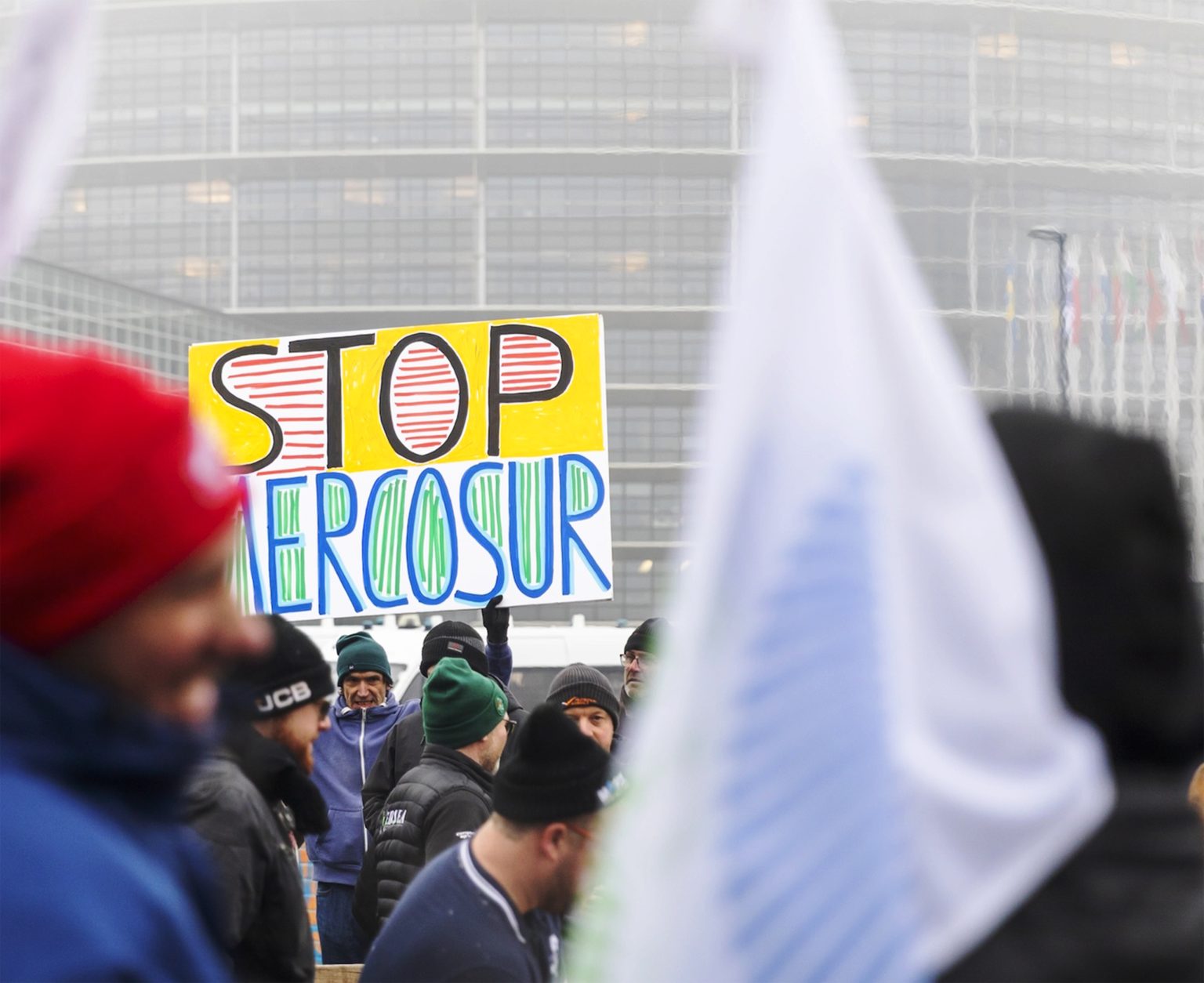
Although the agreement between the European Union and the Mercosur member countries brings significant savings on tariffs to a wide range of exporters on both sides, European farmers are radically opposed to it. They fear an influx of cheap food.
Their main argument is that competition from South America will not be fair, as agricultural production there is not subject to the same environmental, veterinary, and technological standards.
However, according to the agreement, only products that meet the local standards will be allowed to enter the European market. Crops and meat will be subject to border controls, with low import tariffs applying only to certain quantities. The influx of cheaper food is limited by quotas for many key items.
Although the checks may not be 100% effective and European farmers will face tough competition anyway, the removal of high tariffs may in turn benefit the local premium agricultural sector – for example, iconic wines and spirits, dairy products, and various trademarked products.
The agreement with South American countries is also of strategic importance for the continent. Although its overall direct impact on the EU economy will not be staggering (around 0.05 percent of GDP per year), it will open the door to critical raw materials for the Union. These are urgently needed in the defense industry, renewable energy sources, and electric car batteries. We are talking mainly about lithium (Argentina), graphite, nickel, manganese, niobium, and rare earths (Brazil).
It should be added that at the end of January, the European Parliament referred the agreement to the Court of Justice of the European Union, which could delay its entry into force by up to two years. Nevertheless, diplomats have stated that it should apply from March this year (after Paraguay's signature).
The European Commission has the power to do so, but it is a risky move because if the court later decides that the agreement is invalid, customs duties would have to be applied retroactively.
The mother of all agreements between Brussels and New Delhi
The agreement with India arouses less passion than the one with Mercosur. It is probably not as well known to the public. However, in the longer term, it has the potential to bring significantly greater benefits.
The "mother of all agreements" connects huge markets with a population of around two billion people. Together, the Indian and European economies account for around a quarter of global GDP.
The value of goods and services exchanged by both sides currently stands at €180 billion. Although this is almost ten times less than between the EU and the US, it is estimated that the agreement will double trade by 2030.
New Delhi will abolish or reduce tariffs on almost 97 percent of European products, while Brussels will do the same for almost all Indian goods.
Agreements alone are not enough; dogmatists must be replaced by pragmatists
Although agreements make sense from a strategic point of view, if a country is to be independent, it must first and foremost produce key goods domestically or import them from a large number of suppliers. In both cases, it is necessary to think strategically and pragmatically, not ideologically.
This is not yet happening in Brussels, as evidenced by the continuing effort to be an environmental leader, even though almost no one is following Europe in its drastic measures, which are destroying its industrial base.
In the area of risk diversification, ideological hostility towards Russia is a prime example. Admittedly, this stems from history and fears, and is understandable in many ways. However, a significant part of Brussels' sanctions policy (especially in the energy sector) is hurting the Union itself, with no sign that it will cripple Russia's military base or have a significant impact on the balance of power on the battlefield.
Europe is not calculating its own interests here; it has allowed itself to be carried away by emotions. Getting rid of dependence on Russian commodities does not simply mean not importing any Russian oil and nuclear fuel. The same applies, by analogy, to American liquefied gas.
Until there is a change in the dogmatists and ideologues in official positions, it is difficult to expect that we in Europe will feel sovereign and secure at the same time, with prosperity growing as it did at the turn of the millennium. One will always require the sacrifice of the other.