
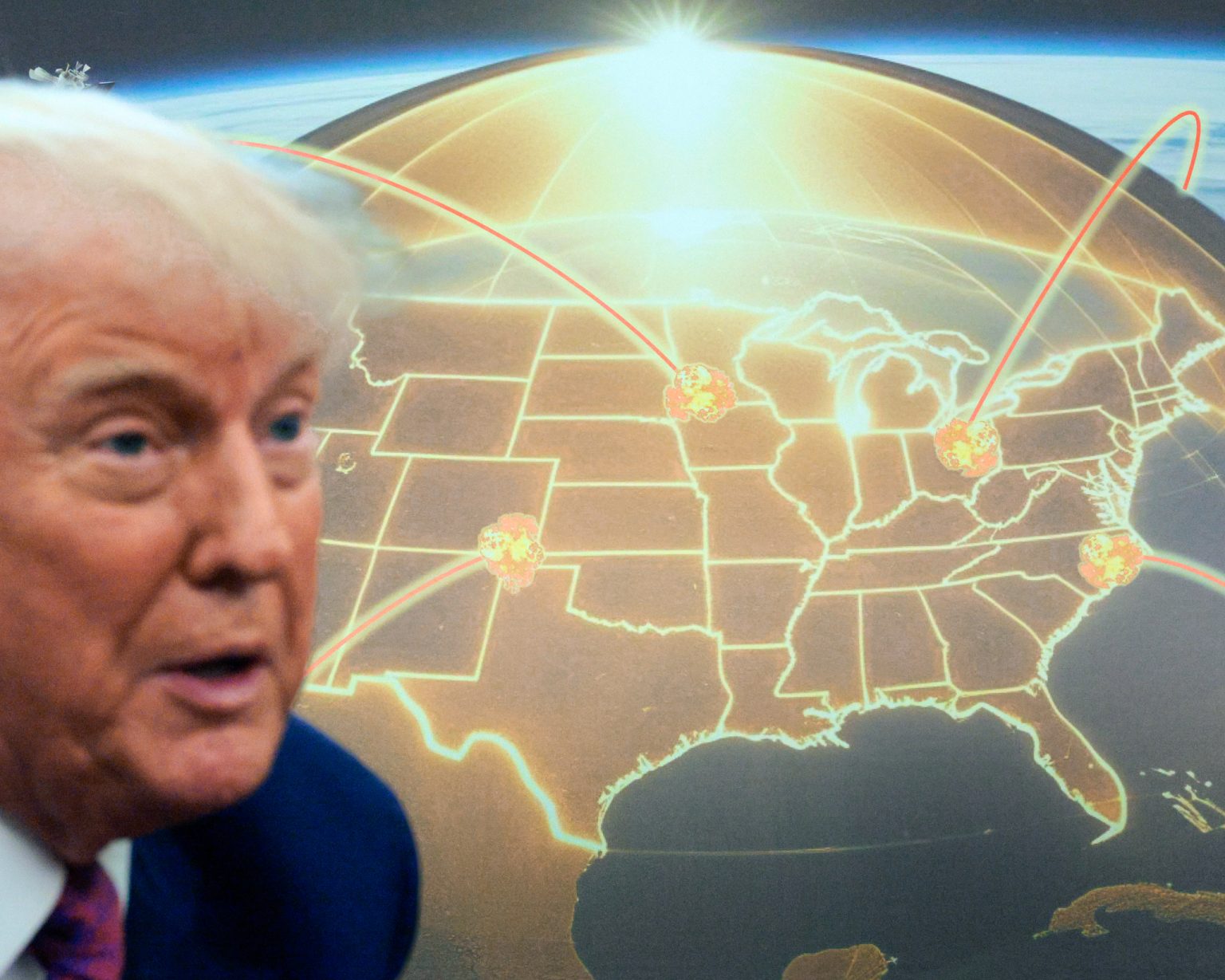
A year after its launch, US President Donald Trump's Golden Dome missile defense initiative has made little visible progress. It has been slowed down by technical disputes and concerns about space components, which have delayed the release of several billion dollars and halted one of the president's most ambitious projects in the field of US national security.
The executive order establishing Golden Dome, signed on January 27, 2025, set an ambitious timeline for the implementation of a comprehensive missile defense system by 2028. After a year of existence, the program has not used up a large part of the $25 billion allocated last summer, as officials continue to debate the basic elements of its space architecture.
According to two American sources familiar with the matter, work on finalizing the architecture of the missile defense shield is still ongoing, and large-scale spending has barely begun. Officials involved in the project said that if key decisions are made, the money is available and a significant portion of it could be released in the coming days.
"The office continues to meet the goals set out in the executive order," a Pentagon representative said in response to questions from Reuters. The implementation plan and related technologies are dynamic, but the basic elements of the architecture are reportedly already in place, although they remain secret from the public.
Debate on weapons in space
Golden Dome plans to expand existing ground-based defense systems, such as anti-aircraft missiles, sensors, and command and control systems, while adding additional experimental space elements designed to detect, track, and potentially counter incoming threats from orbit. These include advanced satellite networks and increasingly discussed weapons placed in orbit.
One reason for the project's delay was internal debate over classified space assets, one official said. A defense industry source, speaking on condition of anonymity, said the systems under discussion likely include communications standards.
Another source said the issue could be anti-satellite capabilities, raising questions about how such weapons would fit in with a missile defense shield. The United States has historically opposed anti-satellite weapons out of concern for space debris. In 2007, it criticized China for testing an anti-satellite missile.
The architecture placed in space remains one of the issues that must be decided before program director General Michael Guetlein can proceed to the next phase of procurement contracts for existing weapons, sources said.
There are only a few contracts so far
In November, the US Space Force approved about half a dozen smaller contracts for the construction of competing missile defense prototypes as part of the Golden Dome project, including contracts for Northrop Grumman, True Anomaly, Lockheed Martin, and Anduril. These initial low-budget contracts represent the first concrete steps in a program that Trump says will ultimately cost $175 billion.
Since last December, at least one classified meeting on architecture has been held for defense companies, US officials said.
Tom Karako, a weapons security expert at the Washington-based Center for Strategic and International Studies, said that much of last year was spent on security checks, staffing decisions, and approving complex plans for the project. He added that the Golden Dome project is unlikely to be fully completed by 2028.
"A lot can be done in the next three years to better integrate what we already have, but there is no doubt that some things will not be implemented and developed until after 2028."
Another unresolved issue concerning the Golden Dome project is the role that Greenland could play in it.
Trump recently linked US control of the Danish territory to the missile defense initiative and has repeatedly stated that acquiring Greenland is "vital" to the project. However, defense experts point out that existing agreements already allow for the expansion of US military operations on the island.
One US official said that Greenland itself is not part of the proposed space project architecture.
The Russian military is closely monitoring US plans for the Golden Dome missile defense shield, including in relation to Greenland, the Kremlin said a few days ago.
"What kind of dome will it be?" Kremlin spokesman Dmitry Peskov asked on Russian state television. "What threats will it be designed to counter? I have no doubt that our military will closely monitor and analyze these plans," he added.
What is the Golden Dome project?
Golden Dome is a multi-layered US missile defense system with global reach, designed to protect the United States from various types of missile threats, including ballistic, hypersonic, and cruise missiles.
The project is expected to include satellites with highly sensitive sensors for early missile detection, interceptor systems (anti-missiles) located in space, at sea and on land to neutralize threats at various stages of flight, and potentially advanced technologies such as lasers or other next-generation systems.
(reuters, im)