
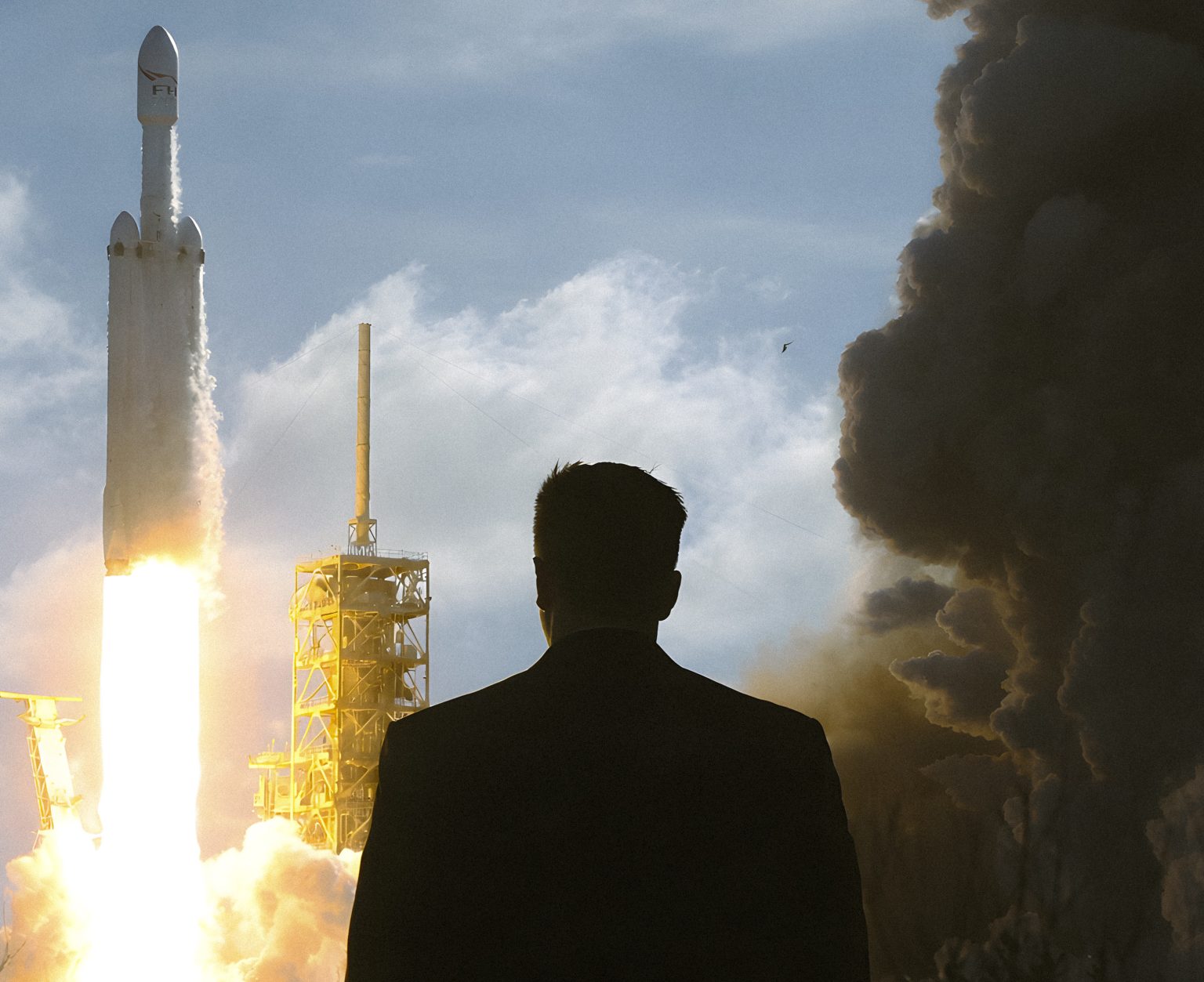
Seventy-five years ago, the idea of harnessing the power of the sky was just a fantasy spun by futurists such as Arthur C. Clarke and Isaac Asimov. This week, Elon Musk is bringing this sci-fi dream one step closer with the mega-merger of his companies xAI and SpaceX.
NASA engineers and technologists have been speculating for nearly two decades about moving energy-hungry computing operations off the planet. Recently, this idea has caught the attention of large technology companies, including Alphabet (Google) and Blue Origin, the company of Amazon founder Jeff Bezos. The physics made sense; there is plenty of solar energy. Nevertheless, such challenges seemed insurmountable.
Musk, known for betting on seemingly far-fetched theories and pushing them forward, may finally be laying the groundwork for data centers in space to become a reality. He is armed with the world's busiest satellite fleet, an artificial intelligence startup, and an appetite for infrastructure that stretches from Earth to the vacuum.
"In the long run, space-based artificial intelligence is clearly the only way to scale," Musk said earlier this week. "Harnessing even a millionth of our Sun's energy would require more than a million times the energy our civilization currently consumes. The only logical solution is therefore to transfer this demanding effort to a place with enormous power and space."
The mega-merger is drawing investors' attention to how major obstacles can be overcome through a closely interconnected ecosystem of rockets, satellites, and artificial intelligence systems to take AI infrastructure beyond Earth. It comes just as SpaceX prepares for a potential initial public offering worth $1.5 trillion.
SpaceX has applied for permission to launch up to one million solar-powered satellites to serve as orbital data centers, far exceeding anything currently in operation or even proposed.
In its filing with the Federal Communications Commission (FCC), SpaceX describes a solar-powered, fiber-optic "orbital data system," though it does not specify how many Starship launches [the tested generation of SpaceX rockets that is intended to make space travel, including flights to the Moon and Mars, cheaper and more accessible, editor's note] would be needed to expand the network of space data centers to an operational level.
"Computing in space is no longer science fiction," said David Ariosto, author and founder of space news company The Space Agency. "And Elon Musk has already proven himself capable in several areas."
An old idea meets a new economy
Proponents of the project argue that space data centers would be a cheaper alternative to data centers on Earth thanks to the constant presence of solar energy and the ability to dissipate heat directly into space.
Other experts warn that large commercial profits are still years away from reality, as the concept faces enormous challenges and is fraught with technical risks: radiation, orbital debris (debris), heat management (heat dissipation and cooling), latency (delayed reception of signals or data from space), and impressive economics, which include high maintenance costs.
"These are real challenges, but how can they be achieved in terms of cost?" wonders Armand Musey, founder of Summit Ridge Group, who added that the financial details of such a project are difficult to model because "no one has clarified the technical unknowns."
"But never say never," emphasized Musey, who described Musk's results as "incredible." "I think it's largely a bet on Elon. His success is really hard for people to ignore."
However, despite Musk's ambitions, some experts believe that data centers in space may not be achievable for another decade.
The basic physics behind space infrastructure is nothing new. The use of solar energy in orbit has been explored since the Cold War, when in the 1970s the US Department of Energy and NASA analyzed concepts for space solar power. Ultimately, however, they concluded that the costs of launches (rockets) and the necessary materials were so high that it was practically impossible to use.
Musk's efforts differ in that his companies have more direct control over key elements of the system—from the rockets that will carry the hardware, to the connections for transmitting data back to Earth, to the billionaire's social network, which is designed to generate demand for inexpensive artificial intelligence operations.
"SpaceX has structural advantages that few companies can match. It controls the world's most active fleet of launch rockets, has demonstrated mass production of spacecraft through Starlink, and has access to significant private capital," said Kathleen Curlee, a research analyst at Georgetown University.
Bombarding chips with radiation
Among the biggest challenges facing space data centers are radiation and cooling.
Data center hardware will be bombarded by cosmic radiation from the sun. In the past, chips designed for space were specifically "resistant" to such radiation, but they were rarely as fast as today's flagship chips for artificial intelligence.
Another obstacle is cooling artificial intelligence chips, which generate enormous heat during calculations. Although space is cold, it also functions almost like a vacuum, so heat cannot be dissipated as it is on Earth. Instead, powerful chips must transfer heat to large radiators that release it as infrared energy, which significantly increases their size, weight, and thus cost.
SpaceX's application to the Federal Communications Commission describes cooling through "passive heat dissipation into the space vacuum" and outlines how satellites that experience operational failures will quickly fall out of orbit.
Recently, Alphabet (Google) bombarded one of its artificial intelligence chips with radiation at a university laboratory in California. It wanted to see how it would withstand a five- or six-year mission in space as part of a research effort to connect solar satellites into an orbital artificial intelligence cloud called Project Suncatcher.
"We did pretty well," said Travis Beals, a Google executive and head of the project, whose prototype is scheduled to be launched into space in 2027.
(authors: Akash Sriram, Joey Roulette, Reuters)