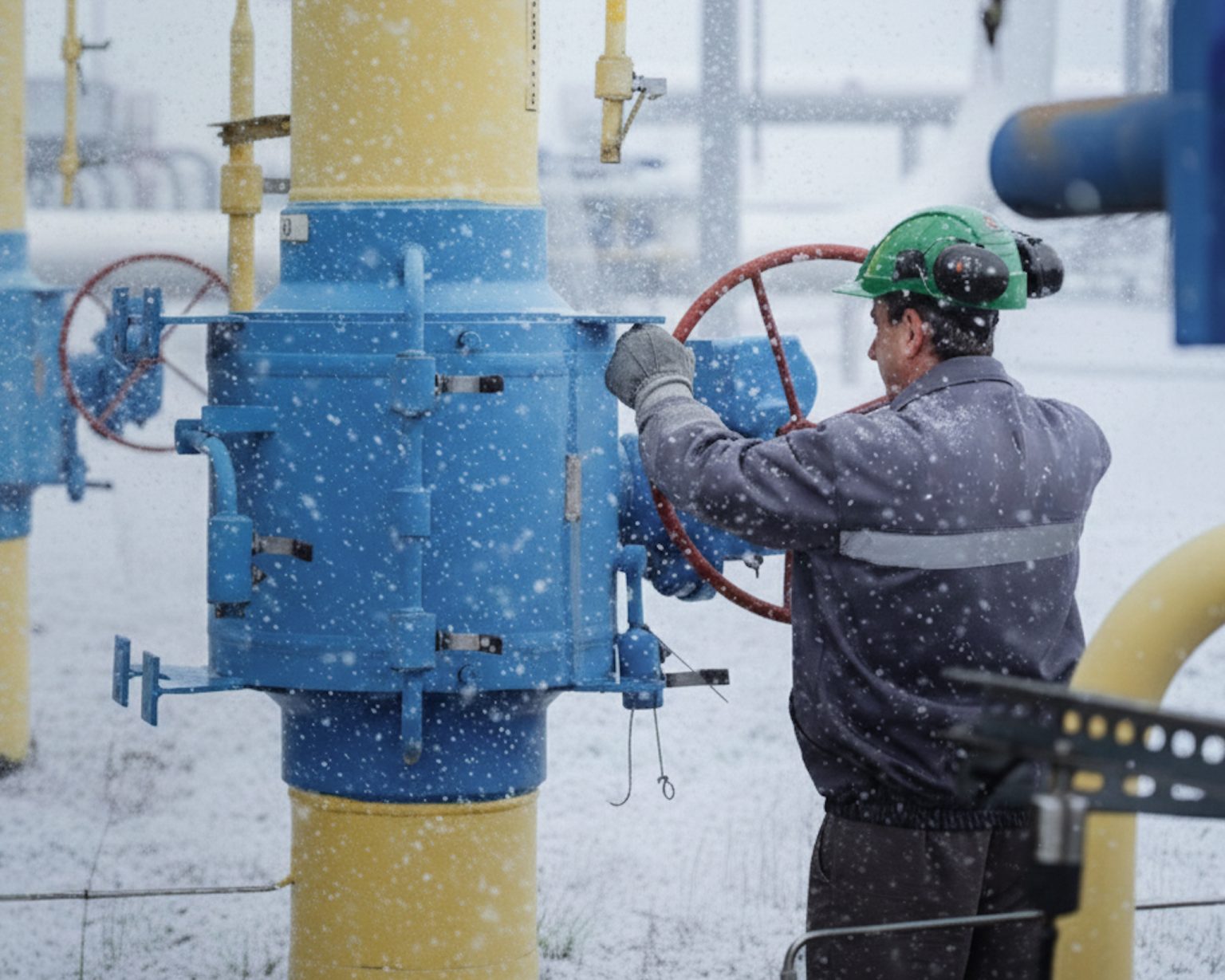
Gas reserves have fallen below 40 percent, prices have skyrocketed. Gas suppliers assure that there will be enough to last until spring
This winter, Europe is facing freezing temperatures and the whims of the American president. Both factors are having a significant impact on the gas market. One has a direct effect on prices, while the other is causing concerns about future energy security.
|
As of February 6, Slovak gas storage facilities are at their lowest level since 2022. Their capacity has fallen to 39 percent. However, the end of winter is still quite far away.
At the same time, Europeans are witnessing a sharp rise in the price of this commodity. By switching to liquefied gas supplies, the continent has found itself in a highly competitive global market. Since the beginning of the year, the commodity has risen in price by a fifth in Europe, and just a week ago, its price tag was up to 40 percent higher than at the beginning of the year.
According to Richard Kvasňovský, director of the Slovak Gas and Oil Association (SPNZ), the main driver of this growth is the cold winter weather, which is causing higher demand for gas.
"From the beginning of January to the end of the month, the price rose from €27 to more than €40 per megawatt hour. This was caused by two cold spells in January on the old continent and very cold weather in the US, which had an impact on reducing LNG supplies to Europe," Richard Kvasňovský told Štandard.
However, according to him, "we still have sufficient capacity in our storage facilities to last until the end of winter without any problems with uninterrupted supplies." He adds that, according to forecasts, Slovakia's storage facilities should still be filled to approximately 20 percent of capacity after the end of the heating season.
Trump's interest in Greenland has no impact on prices so far
European countries, including Slovakia, have also significantly changed their supply portfolio in recent years. In 2021, Russia still played a leading role, while last year the EU purchased "only" about 13 percent of its needs from Moscow. Almost twice as much came in liquefied form from the US.
And the trend is growing. In the summer, European Commission President Ursula von der Leyen committed to purchasing hundreds of billions of euros worth of American gas when she signed a trade agreement with the US.
In connection with the US president's interest in Greenland and his tough assertiveness towards European allies, voices began to be heard asking whether the continent had gone from bad to worse, from one dependency to another.
However, Kvasňovský notes that although gas companies are aware of these tensions and the EU has "significant exposure" to the US, Donald Trump's stance on Greenland has less impact on prices than information and developments surrounding the conflict in Ukraine.
In terms of energy security, he believes that Europe could take inspiration from China and invest more resources in exploration and extraction on its own territory. He argues that the way forward for Slovakia is to "support the production of biomethane, which is a renewable gas that can be substituted for natural gas, but is fully in our hands in terms of production."
Can Russian and American gas be replaced?
Efforts to achieve independence can also be supported by maximizing the diversification of suppliers, which will not be affected by political decisions in Brussels.
Gas is expected to become more abundant on the market. In addition to China, Qatar also plans to almost double its production by 2030, mainly through the North Field project. And Americans are also extracting more and more gas from shale.
Nevertheless, Europe will still have a problem replacing approximately 20 billion cubic meters of Russian LNG by the end of this year, almost the same volume of gas (which goes through pipelines) by the fall of 2027, while also reducing its newly created dependence on the US.
"The global market is expected to see a seven percent increase in LNG supply this year. The vast majority of this is due to higher production capacities in the United States and Qatar. Qatar is focusing more on the Asian market, while the US is focusing on the European market. Although the number of liquefied gas suppliers in the world is growing, none of them has the capacity to fully replace American LNG," continues the head of SPNZ.
According to him, such an effort would most likely mean higher prices.
"The first weeks of this year showed what growing dependence on supplies from the US can cause. Severe frosts in America limited liquefied gas exports to Europe. Gas supply nominations to export terminals fell by 26 to 72 percent. The result was a sharp rise in prices."
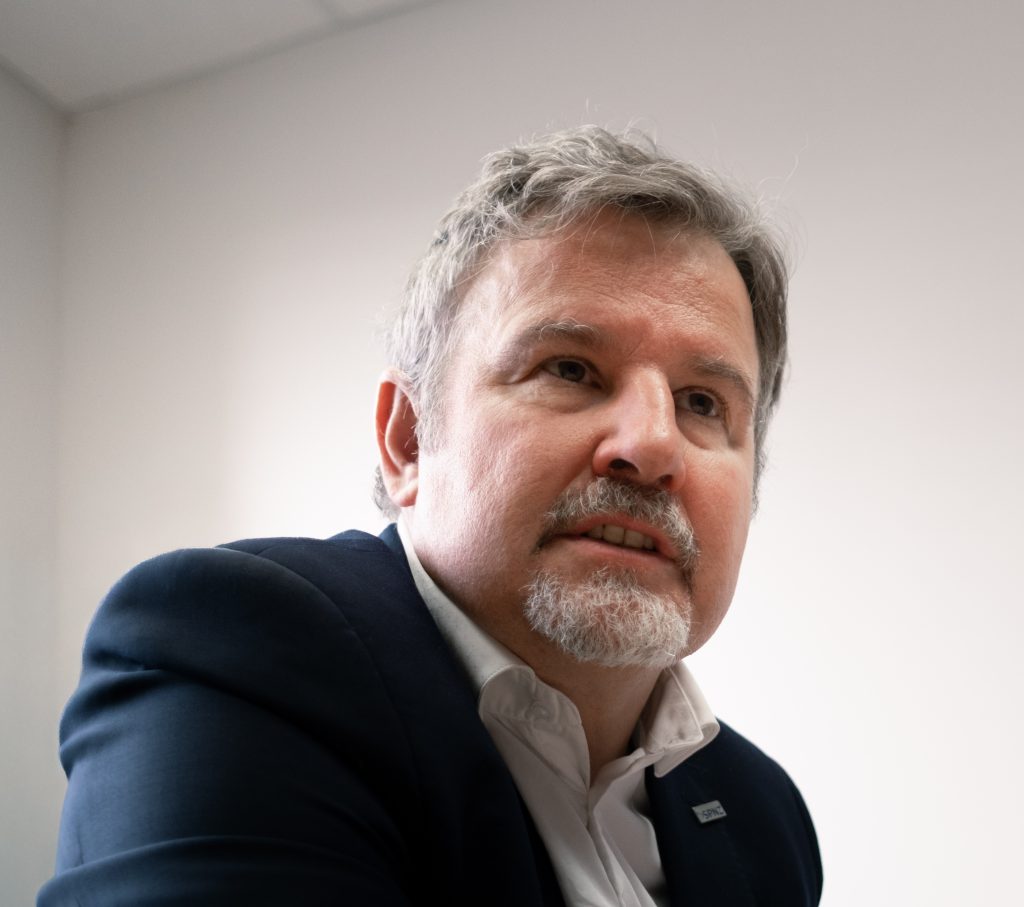
Richard Kvasňovský. Photo: Tomáš Baršváry/Štandard
Kvasňovský: If we want cheap gas, we need to import less LNG
The solution to the whole European problem of energy sovereignty would be to lift the hard ban on Russian energy carriers in Europe, which Slovakia and Hungary are calling for. Both countries are filing a lawsuit against Brussels over this regulation. By putting a stop to it, we are losing an important supplier, and with the US becoming an unreliable partner, the pool of potential sellers is too narrow.
Moreover, relying on gas from Qatar or other Middle Eastern countries is a big risk, as increased tensions between Israel, the US, and Iran could lead to a blockade of the Strait of Hormuz.
However, this alternative is politically unfeasible at present.
Richard Kvasňovský notes that although "it makes sense for coastal countries to invest in LNG terminals and build a portfolio of multiple liquefied gas suppliers, not just the US," landlocked countries such as Slovakia "should be able to rely primarily on pipeline supplies."
"This is due to the existing extensive infrastructure and also in terms of prices. For Slovakia, Russian pipeline gas is the most economically advantageous, but we are also preparing for the alternative of the country being fully supplied with LNG. However, this will be more expensive and will carry the risk of a longer transport route, which we will not have full control over," he continues.
According to him, Europe's greater focus on LNG has brought it onto the global market, which means it must come to terms with higher price levels.
"Investment bank Morgan Stanley has explicitly stated that if Europe wants gas prices at pre-COVID crisis levels, just under €20 per megawatt hour, it needs to reduce its dependence on LNG supplies to 10 to 20 percent, which was the standard before 2020 to 2021. This would mean importing more pipeline gas, including Russian gas," he concludes.
Placeholder For Topreaded Placeholder For Topreaded
Placeholder
Placeholder
Placeholder For Topreaded Placeholder For Topreaded
Placeholder
Placeholder
Placeholder For Topreaded Placeholder For Topreaded
Placeholder
Placeholder
Placeholder For Topreaded Placeholder For Topreaded
Placeholder
Placeholder
Placeholder For Topreaded Placeholder For Topreaded
Here is placeholder for Article excerpt Here is placeholder for Article excerpt Here is placeholder for Article excerpt Here is placeholder for Article excerpt
Here is placeholder for Article excerpt Here is placeholder for Article excerpt Here is placeholder for Article excerpt Here is placeholder for Article excerpt
Here is placeholder for Article excerpt Here is placeholder for Article excerpt Here is placeholder for Article excerpt Here is placeholder for Article excerpt
Welcome to the comments section of the Štandard daily. Please take note of our guidelines, comments are moderated by us. You can contact the moderators at [email protected].
Participate in the discussion
Comments are available to subscribers only. If you'd like to join the discussion, choose a subscription starting at €6.72 per month.
All comments 0
Register
Comments are available to registered users only. If you'd like to join the discussion, register here.