
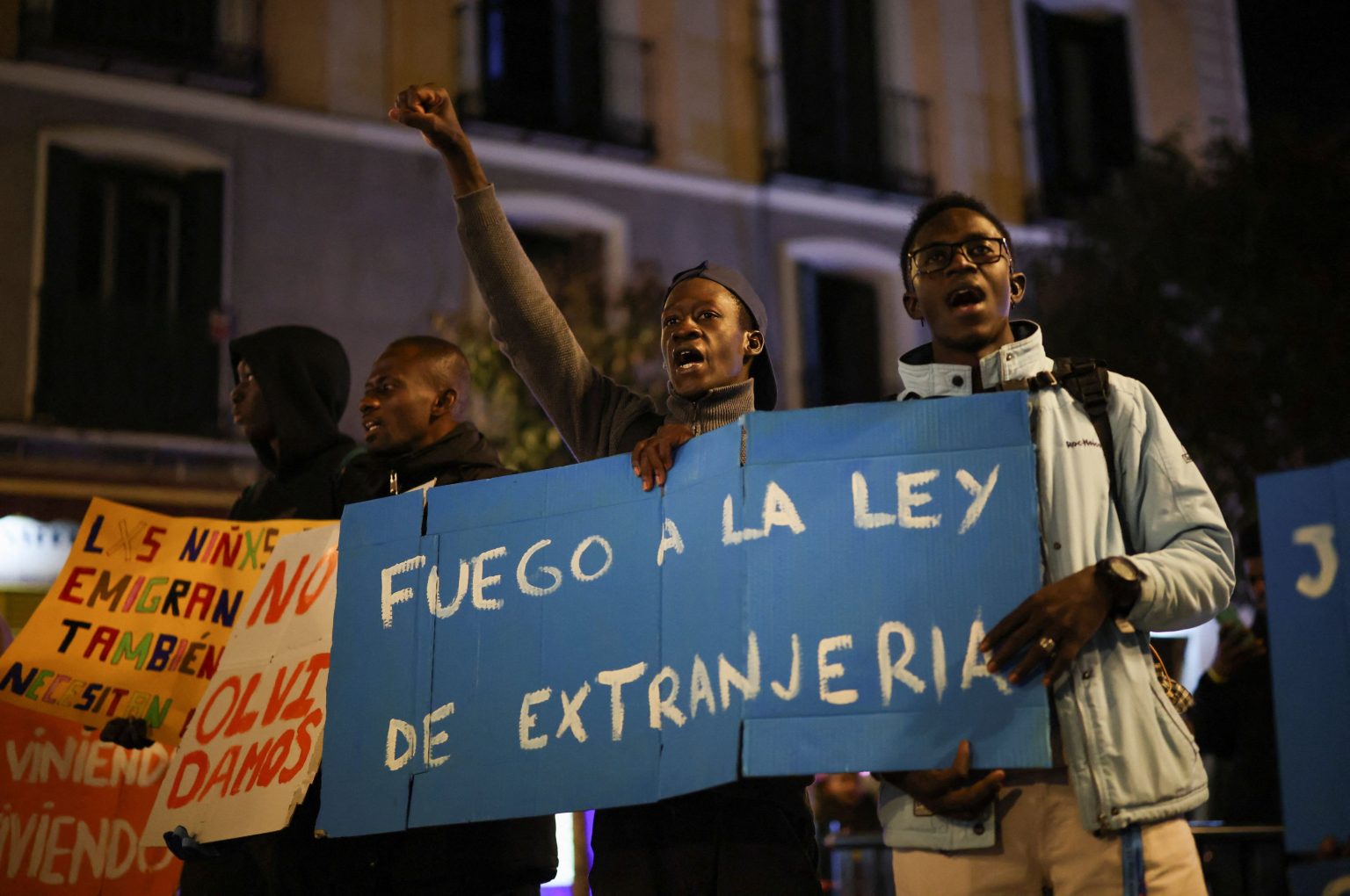
The Spanish government has approved a comprehensive plan to legalize the residence of approximately half a million illegal immigrants. According to Migration Minister Elma Saiz Delgado, the measure is intended to promote better integration of foreigners and contribute to the country's economic growth.
However, Madrid faces sharp criticism from both the domestic opposition and European conservatives, who warn of possible consequences for the stability of the Schengen area.
The new rules are expected to come into force between April and June this year. They apply to migrants who have been living in Spain for at least five months and have applied for international protection before the end of 2025. A clean criminal record is also a condition for obtaining a residence permit, according to Echo24.
According to activists, this is a step that could change the lives of thousands of people. Edith Espínola, representative of the Regularisation Now! movement, said that legalization gives migrants the feeling that they are full members of society and allows them to fight for their rights.
Conservatives protest
The decision by the government of Socialist Prime Minister Pedro Sánchez has provoked a strong reaction from the opposition People's Party (PP) and the Vox movement. PP leader Alberto Núñez Feijóo has announced that if his party comes to power, it will fundamentally change the country's migration policy.
At the European level, the European Conservatives and Reformists (ECR) faction also opposed the measure.
The conservatives argue that such a move undermines the credibility of migration control in the European Union and cannot be seen as solely an internal matter for Spain.
The group has therefore called on the European Commission to formally assess the possible consequences for Schengen, including the risk of secondary movements of migrants to other Member States or increased pressure on the Union's external borders.
Support from the Church
On the contrary, the legalization plan was welcomed by the Catholic Church in Spain, which described it as an act of social justice. In recent years, Spain has faced a significant increase in the number of migrants, especially from Latin America.
According to data from the Funcas think tank, the number of undocumented migrants has increased sevenfold since 2017, from approximately 107,000 to nearly 838,000. Most of them are said to come from Colombia, Peru, and Honduras.
With a population of approximately 49.4 million, the country is now home to more than seven million foreigners, making migration one of the most sensitive political issues.
(ecre, echo24, mja)