
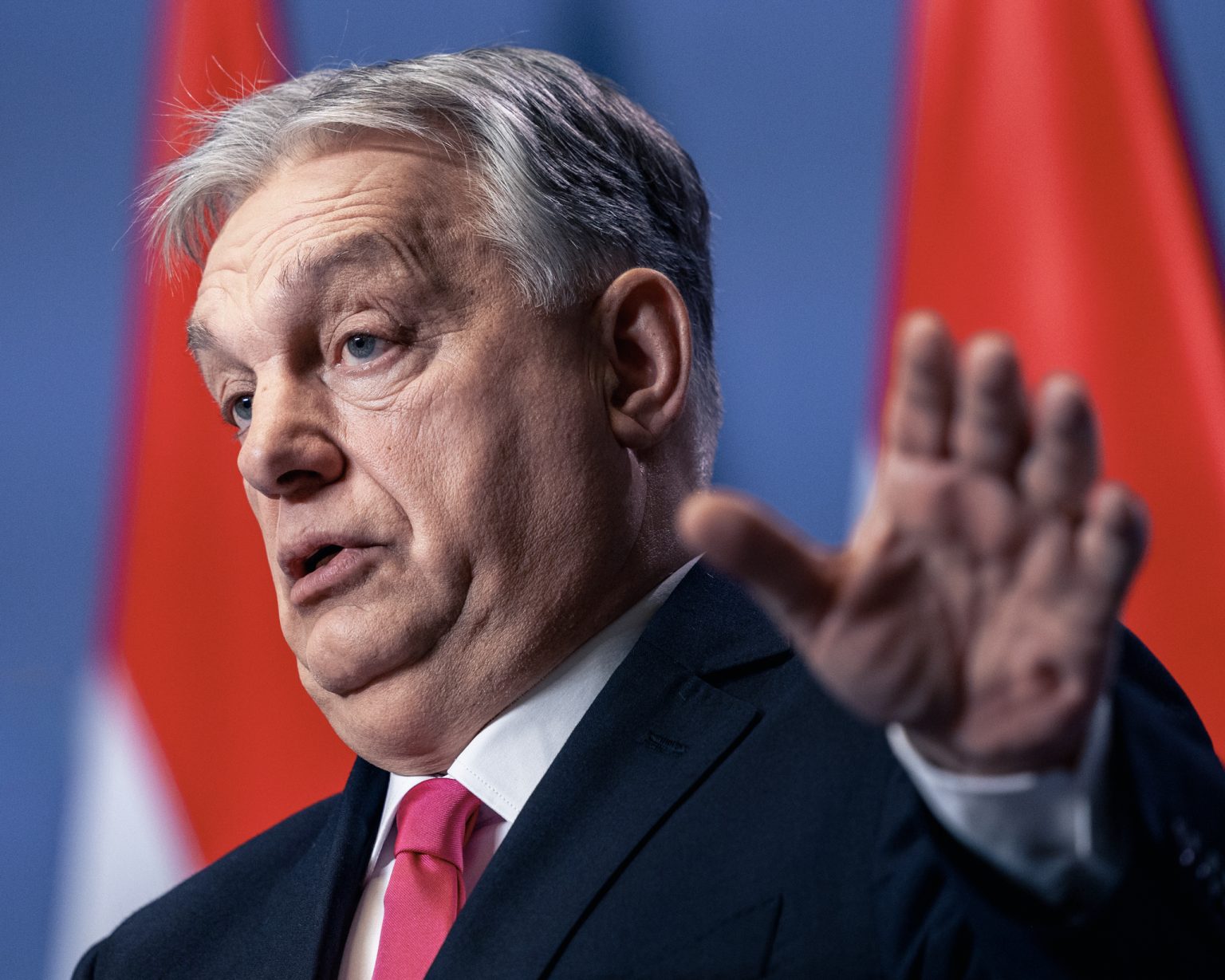
Brussels no longer hides the fact that the enlargement of the European Union is becoming a geopolitical tool. According to the daily Politico, a five-point plan has been drawn up to secure Ukraine’s partial membership of the Union as early as 2027 – even before all reforms have been completed. Hungarian Prime Minister Viktor Orbán called this an ‘open declaration of war on Hungary’.
The statement came less than two months before Hungary’s parliamentary elections. Orbán wrote on social media that the Brussels elite, together with Kyiv, had decided to fast-track Ukraine’s accession while also seeking to remove the current Hungarian government.
‘They are ignoring the decision of the Hungarian people and are determined to remove the Hungarian government by any means necessary. They want the Tisza party to come to power because then there would be no veto, resistance or delay in their conflict,’ Orbán said.
According to him, Fidesz is ‘the only force standing between Hungary and Brussels’ domination’ and a guarantee of Hungarian sovereignty. He called on voters to stop the plan in the April elections.
Five steps to 2027
The European Commission is already provisionally assessing Kyiv’s application for membership and providing technical guidance in negotiations on so-called clusters – thematic areas a candidate country must fulfil. The EU has so far provided details on three of the six clusters and is set to present the others at a meeting of European affairs ministers. At the same time, EU representatives emphasise that there will be ‘no shortcuts’ in the reforms.
A concept known as ‘reverse enlargement’ is being discussed. Under this idea, Ukraine would gain a seat at the EU negotiating table even before fully meeting the criteria and would gradually acquire rights and obligations. This represents a modification of the standard enlargement process, which until now has required conditions to be fulfilled prior to accession.
Some member states – especially Germany – are cautious about the idea and point to the risk of creating multiple levels of membership.
Orbán as an obstacle
The third step assumes that Brussels will wait for the results of the Hungarian elections. EU enlargement requires the unanimous consent of all 27 member states. Orbán has long opposed Ukraine’s accession and has repeatedly emphasised his veto.
European leaders are therefore watching the outcome of the Hungarian elections on 12 April, when Fidesz will face Péter Magyar’s opposition party, Tisza. According to polls, the opposition has been in the lead since the end of 2024.
According to Politico, diplomats do not rule out that a possible change of government could soften Budapest’s stance on Ukraine’s membership.
The Trump card and Article 7
If Orbán wins the election, the plan envisages a fourth step: leveraging the influence of US President Donald Trump, an ally of the Hungarian leader. Since Ukraine’s accession to the EU by 2027 is expected to form part of a broader peace framework, Washington could put pressure on Budapest.
Finally, there is a fifth step – the most extreme option: Article 7 of the EU Treaty. This allows a member state’s voting rights to be suspended. In other words, if we do not agree, we will take away your vote. So far, the option has been discussed cautiously.
Ukrainian President Volodymyr Zelenskyy argues for security guarantees and the need to firmly anchor Ukraine in the West. Brussels speaks of a ‘political signal’ and support for the country at war.
(pir)