Brussels supporters awaken Central European demons
Brussels ideology is sharply anti-nationalist. The traditional European nations whose states founded the European project are tolerated in Brussels only as folkloric ornaments, not as politically active players.
Brussels supporters argue among themselves whether their own project is based on a new European nation or merely on universal rules of constitutional patriotism. However, when it is politically advantageous, they know how to deploy nationalism.
In Slovak-Hungarian relations, they use it to put pressure on their Hungarian enemy, and in Czech-German relations to support their German friend.
The Czech-Slovak card with the Beneš Decrees
Both cases revolve around the so-called Beneš Decrees, i.e., the basic norms of post-war Czechoslovakia enshrining the expulsion of Germans and Hungarians, as well as the resulting property relations. Years ago, this sensitive issue was successfully resolved politically in Czech-German relations and dampened in Slovak-Hungarian relations. It did not burden political relations and was only occasionally raised by extremists.
The Slovak-Hungarian storm was triggered by the Slovak branch of pro-Brussels politics, called Progressive Slovakia, when it began to question these norms last year. What led it to do so?
Either common progressive anti-nationalism, which is directed against its own nation, often unknowingly playing into the hands of its rivals. Or deliberate political interference in Hungarian-Slovak relations in the tense atmosphere of pre-election Hungary with the aim of putting Hungarian Prime Minister Viktor Orbán in a tight spot. Regardless of the intention, the latter happened.
The Slovak government responded to the progressive provocation with a harsh law criminalizing the questioning of decrees, which in turn provoked a reaction in Hungary.
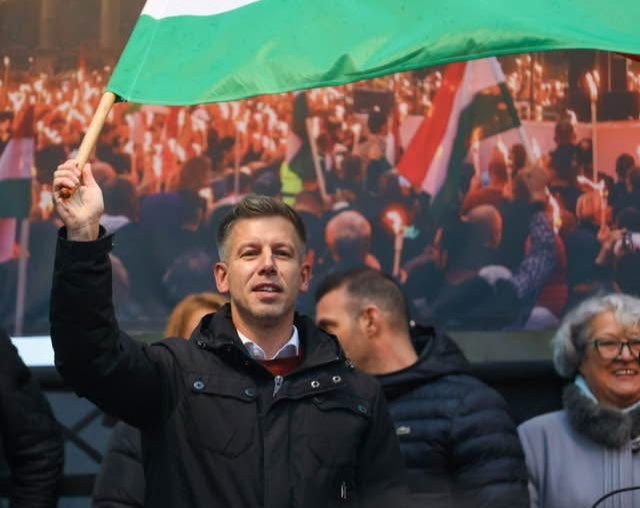
While Orbán responded critically but moderately, with an apparent effort to avoid escalation and maintain good relations with his northern neighbor, his pro-Brussels challenger Péter Magyar began to stir up anti-Slovak sentiment through statements, demonstrations, and letters.
Péter Magyar. Photo: X/Magyar Péter (Ne féljetek)
This former member of Orbán's Fidesz party entered high politics to the applause of Brussels when he published discrediting recordings of his own wife, then Minister of Justice. Today, he attacks Orbán for not defending Hungarian interests vis-à-vis Slovakia. What a paradox!
A pro-Brussels activist, who should be consistently anti-nationalist, accuses Orbán, whom Brussels demonizes as a nationalist, of a lack of nationalism.
To add to the paradox, Orbán defends himself by sending a complaint about his ally Robert Fico to the European Commission, which he otherwise criticizes relentlessly.
The Landsmannschaft is not a folklore association
Czech supporters of Brussels, on the other hand, decided to invite the Sudeten German Landsmannschaft to Brno to hold its annual congress there. A Czech non-governmental organization with the non-Czech name Meeting Brno brought together around forty well-known personalities who signed the invitation letter to Munich. Among them are Petr Pithart, Milan Uhde, Pavel Rychetský, and Bolek Polívka.
The Landsmannschaft is not a folklore association. It is a political organization that makes political demands on the Czech Republic on behalf of displaced Germans, who see themselves as a "fateful community," i.e., a nation in their own right. Their demands are framed by the fight against the aforementioned decrees and for the "right to a homeland."
Unlike the decrees, this concept has no basis in international or Czech law. However, representatives of the Sudeten Germans use it to give the appearance of legitimacy to their claims to the territories their ancestors once inhabited.
The Czech government rejects these claims, but for decades the Landsmannschaft and its allies have been working ideologically and financially in the Czech environment to legitimize the Sudeten German claims. In the 1980s, they won over part of the Prague dissident movement, including such influential figures as Václav Havel and Petr Pithart.
When they came to hold high state office after 1989, they demonstrated their democratic European spirit and opposition to "Czech pettiness" and nationalism by accommodating Sudeten German nationalism. This influenced the next generation, although some simply exploited their high-minded, European stance for personal gain.
If the Sudeten Germans hold their congress in Brno in May, they will have taken an important step. The Czechs will confirm the legitimacy of their "right to a homeland," albeit only at the level of the Brno authorities and the NGOs they finance. The Munich side will thus prepare the ground for another attack against the hated Beneš and his decrees.
We will see what role Brussels will play. In the past, the Sudeten Germans have failed in their efforts to involve European institutions in their campaign. However, Brussels was not nearly as politicized as it is today. While former European Commission President Jean-Claude Juncker declared his institution to be "political," his successor Ursula von der Leyen called it "geopolitical."
The political and geopolitical priorities of Brussels are largely decided in Berlin. Berlin may not be Munich, but politically speaking, it is much closer to Munich than to Prague.
Undermining Central European cooperation
This newly reignited tension suits Brussels' supporters. Central European cooperation is currently the most realistic alternative in our region to a declining and increasingly undemocratic European Union.
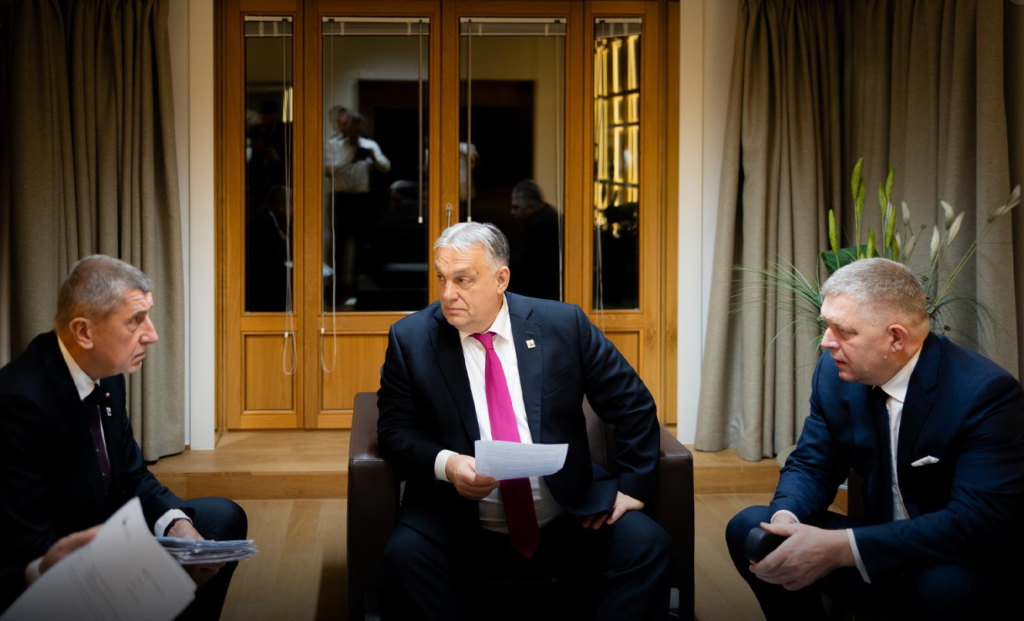
Viktor Orbán, Andrej Babiš, and Robert Fico. Photo: Orbán Viktor/Facebook
However, if the Slovaks start arguing with the Hungarians, the Czechs with the Germans, or the Czechs with the Poles, it undermines the Central European alternative. Brussels will be happy to help with that.
And if they even go to Brussels to complain about each other, as the Czechs did about the Poles years ago and the Hungarians are doing about the Slovaks today, Brussels supporters will be in political ecstasy.
Placeholder For Topreaded Placeholder For Topreaded
Placeholder
Placeholder
Placeholder For Topreaded Placeholder For Topreaded
Placeholder
Placeholder
Placeholder For Topreaded Placeholder For Topreaded
Placeholder
Placeholder
Placeholder For Topreaded Placeholder For Topreaded
Placeholder
Placeholder
Placeholder For Topreaded Placeholder For Topreaded
Here is placeholder for Article excerpt Here is placeholder for Article excerpt Here is placeholder for Article excerpt Here is placeholder for Article excerpt
Here is placeholder for Article excerpt Here is placeholder for Article excerpt Here is placeholder for Article excerpt Here is placeholder for Article excerpt
Here is placeholder for Article excerpt Here is placeholder for Article excerpt Here is placeholder for Article excerpt Here is placeholder for Article excerpt
Welcome to the comments section of the Štandard daily. Please take note of our guidelines, comments are moderated by us. You can contact the moderators at [email protected].
Participate in the discussion
Comments are available to subscribers only. If you'd like to join the discussion, choose a subscription starting at €6.72 per month.
All comments 0
Register
Comments are available to registered users only. If you'd like to join the discussion, register here.