In short, it is a strategic commodity of the first order.
Brussels has recklessly thrown itself into America's arms
Europe's dependence on Russian gas has been a thing of the past for many months now. Last year, only 13 percent of Europe's needs came from the country of the bear. The United States became the main supplier, with a share of about a quarter. Brussels bet on them rather recklessly. In light of today's relations with the White House, this is quite evident.
The result of the much-discussed diversification of gas supplies after Russia's invasion of Ukraine is essentially a transition from one dependency to another. From a weaker superpower to a stronger one.
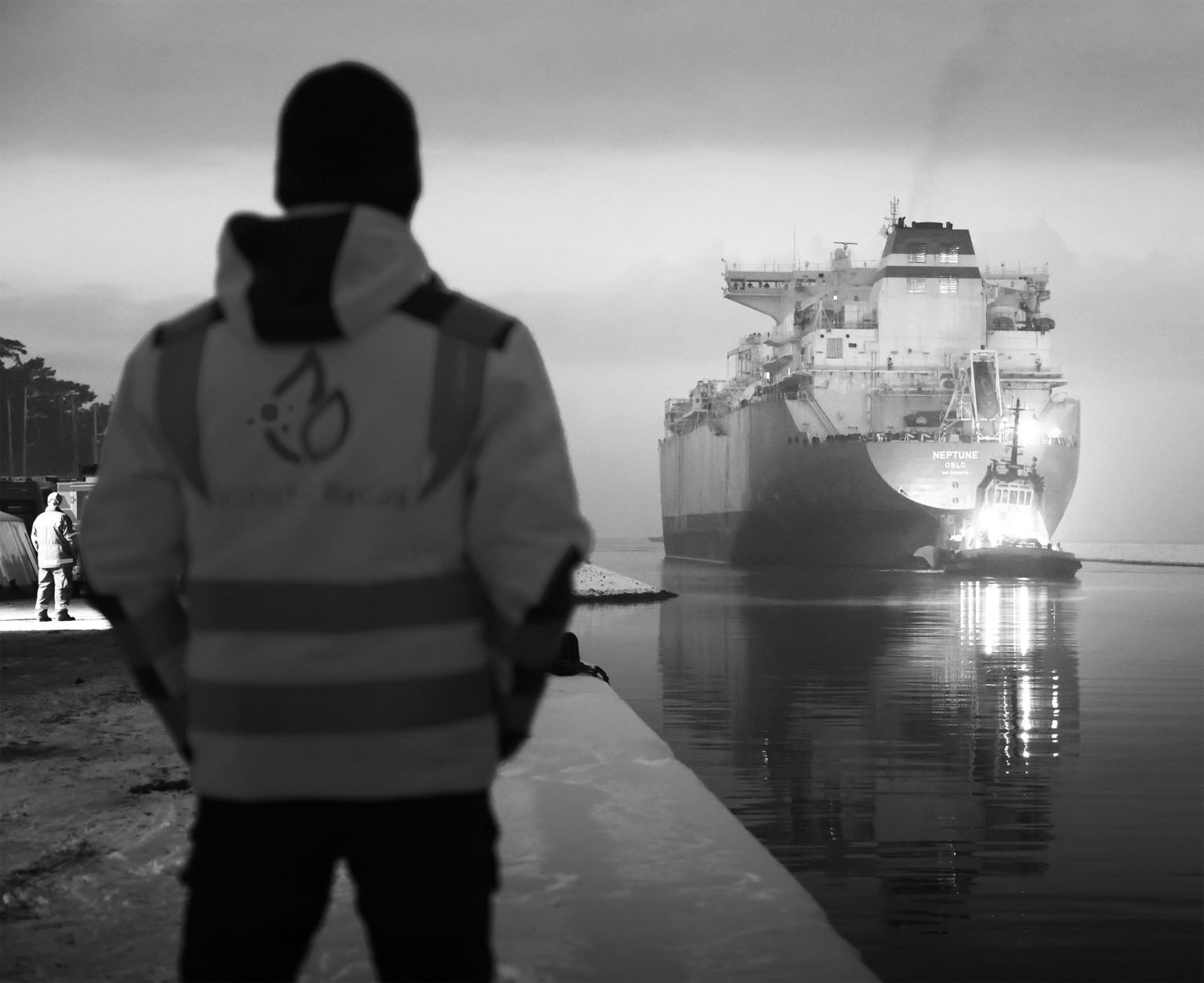
Now that more and more American LNG is arriving by ship every month, the question is what the continent will do with it. This is especially true because, in the next twenty months, it will also lose the remaining nearly 40 billion cubic meters of gas from Russia due to its own decision.
Supply is growing, but so is demand
There is plenty of gas on the market. Global supply is growing relatively quickly. Last year, it grew at a rate of 7%, and this year, according to the International Energy Agency, it will grow even faster.
In the coming years, Qatar, the United States, Canada (gas intended mainly for export), and China (production for domestic use) are expected to contribute to this growth with higher production. And although global demand for gas is also expected to rise, especially in Asia and Africa, the pace is expected to be somewhat slower. Estimates range from around two percent this year to just under ten percent by 2030.
This means that there will be a slight surplus of supply over demand on the market in the near future.
From a theoretical point of view, there is a certain possibility for Europe to reorient the remaining flows from Russia without accepting American gas. This is also positive for Europe in terms of prices, which should remain low as long as there are no significant changes on the market.
However, practice is far more complicated than theory.
North Africa is key, but it will not help much with the new needs
Brussels has removed some of the world's suppliers from the list. For example, Iran and Russia. Today, when European Commissioner for Energy Dan Jørgensen talks about the need to move away from American LNG, there are only a few countries that could significantly increase supplies to Europe.
Several billion cubic meters per year could theoretically come from Azerbaijan. Europe is actually counting on this.
Last year, it purchased 12.8 billion from there, and in the past, both sides agreed to increase supplies to 20 billion by 2027.
However, the situation is complicated by insufficient pipeline capacity and the extraction projects themselves, in which Azerbaijan must invest. The Eurasianet portal writes that, according to the latest data, the country may not only have problems fulfilling its commitments to the EU, but also securing sufficient gas to meet rapidly growing domestic demand.
Algeria, which supplies around 15 percent of the continent's needs, is also not on the list of solutions. Although it has great ambitions to expand production by up to 60 billion cubic meters in the coming years, these are political goals. Analysts do not expect any major export boom, but rather a slight increase in the billions per year. There are several reasons for this: rapidly growing domestic demand, depleting old fields that require investment, and limited export capacity.
A similar premise applies to gas from Nigeria, which could eventually flow through the Trans-Saharan pipeline to Algeria and on to Europe – but with nearly 2,000 kilometers of pipeline still to be built, this is more of a dream for the future.
In the meantime, the country is increasing gas production (which is expected to grow by around 11 billion cubic meters per year over the next two years) and expanding the capacity of its LNG terminals. The problem is that part of the new production (40 percent) will be allocated to domestic industry, and the European market is not the only destination for Nigerian liquefied gas. The country also has customers in India and China.
Qatar and Canada as key suppliers – what's the catch?
European officials have calculated that Russian gas will be replaced mainly by the United States and Qatar. If America drops out of this equation, only Qatar remains. According to Jørgensen, Qatar is the clear favorite for diversification, along with Canada.
Canada will increase its production and exports in the coming years, by roughly 30 billion cubic meters by 2029, while wanting to diversify its current exports from what is de facto its only current customer (the US). The catch is that it only has terminals in the west of the country. The real possibility of Canadian gas physically flowing to Europe is unlikely.
In the words of Richard Kvasňovský, head of the Slovak Gas and Oil Association: "Canada currently does not have the potential to significantly influence supplies to the EU. Its LNG terminals are intended more for the Asian market."
However, a swap mechanism is being considered. For example, Canada would sign a contract with Germany, fulfill it by purchasing gas from Qatar or the US, and then import it to the buyer under its own flag. Meanwhile, it would send its physical LNG supplies to where American or Qatari gas was originally supposed to go—for example, to Asia.
However, if Europe does not want to depend on physical supplies of American gas, there are not many potential intermediaries for a swap agreement, although it would probably be possible.
Qatar also has its risks. Europe already imports around 13 billion cubic meters per year (approximately 4%) from there, and together with the US, they are set to be one of the main suppliers replacing Russian gas.
The country's production capacity is likely to grow at the fastest rate in the world in the near future.
By 2030, the country wants to almost double its production from the current 106 billion cubic meters to nearly 200 billion. Although the country is more oriented towards the Asian market, in the past it has concluded long-term contracts with European countries, which came into effect at the beginning of this year. Exports to the old continent are expected to double by 2028.
However, the Achilles' heel of Qatari gas is that it comes from the Persian Gulf, from where the only route is through the Strait of Hormuz, which is controlled by Iran.
If war or wider disputes with Israel and the US led to its blockade, it would drastically affect market prices even today. Moreover, if Qatar became a pilot European supplier thanks to growth in production capacity and swap agreements with Canada, such a scenario could quickly turn into a physical gas shortage.