A few hours later, the White House chief announced that he had agreed with the Europeans on an Arctic security treaty under which the United States had "achieved everything it wanted." He canceled the punitive tariffs that were to take effect on February 1. On the European side, the process of adopting a trade agreement has also thawed.
Europe and its outsourcing
Although relations with the US have not remained at a standstill, the EU is also turning to other regions of the world in order to maintain its prosperity and diversify the risk of unilateral dependence. It has to.
Amid massive protests by French and Polish farmers, Brussels approved an agreement with the South American trade union Mercosur, which opens the European market to four Hispanic countries—Argentina, Brazil, Paraguay, and Uruguay.
The aim of the agreement, which Brussels and Montevideo have been waiting 25 years to seal, is to create a single market with 700 million consumers on two continents.
According to the protesting farmers, this will be at the expense of food self-sufficiency.
Although their concerns are understandable, only products that meet the local standards will be allowed on the European market. Crops and meat will be subject to border controls, with low import duties only applying to certain quantities. The influx of cheaper food is limited by quotas for many key items.
A week after the green light for Mercosur, European Commission President Ursula von der Leyen traveled to the Indian capital New Delhi to conclude the "mother of all agreements" – a trade agreement that will account for a quarter of global GDP, according to Indian Prime Minister Narendra Modi.
Among other things, it includes a specific clause on mobility that facilitates migration to Europe for "students, researchers, seasonal and highly skilled workers," which needs skilled people due to its poor demographic situation. Brussels is also set to open its first EU Legal Gateway Office in India.
Finding a partner for gas is more complicated
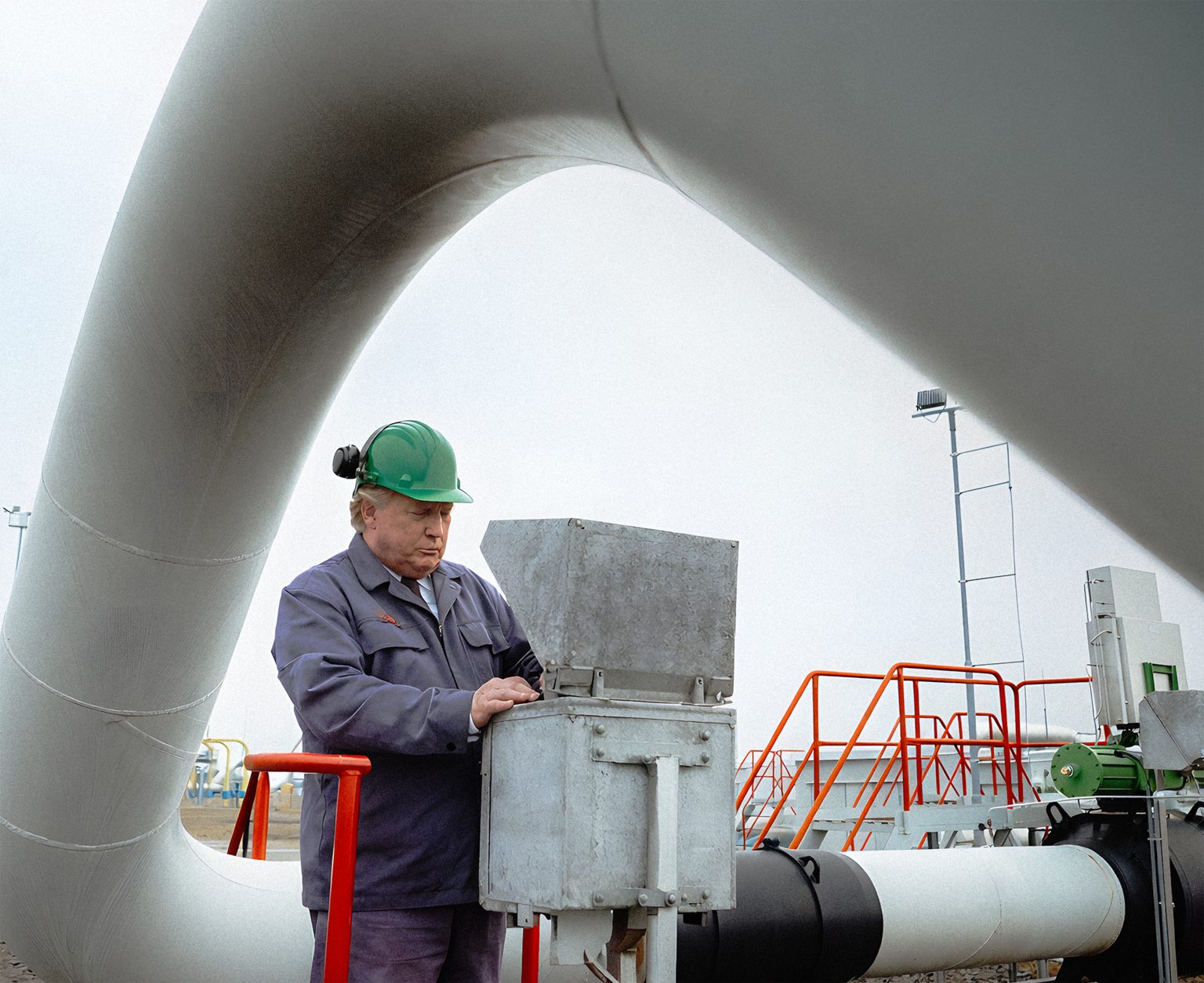
However, one of the most pressing problems still needs to be solved by the EU. It has been searching for alternatives to replace fossil fuels and raw materials from the Russian Federation for a long time. The main problem is gas.
The plan was to replace Russian supplies with American liquefied gas. This has indeed been happening over the past few years.
However, there are several problems associated with this. In addition to being more expensive due to the complex logistics involved, Trump in the White House can use it to put pressure on Europe, following Russia's example.
Europe is now burdened by the fact that, although it has rid itself of its dependence on Russian gas, it does not want it on the continent at all. In its current position, with its growing dependence on the unpredictable US, this undermines its energy security.
The paradox is that it was the Americans who stirred up this attitude among the European elites. They have long viewed Russia as a strategic opponent and often criticized European allies in NATO for cultivating positive relations with it. Germany, in particular, which sought to bypass Poland and the Baltic states with the Nord Stream gas pipeline, became the target of Donald Trump's criticism during his first term in office.
Trump's successor, Joe Biden, threatened in early February 2022 that if Russia attacked Ukraine, "there would be no Nord Stream 2." In September of the same year, unknown perpetrators blew up gas pipelines in the Baltic Sea.
Does Trump really want to bring Russian gas back to Europe?
However, Biden's successor, Trump, who returned to the White House last January, seems to have changed his stance on Russian gas over time. According to available information, in December 2025, he proposed that the peace agreement between Ukraine and Russia should include the return of Russian energy carriers to Europe.
Although shortly thereafter, in January of this year, member states voted by a qualified majority to ban them completely [the last deliveries must end by November 1, 2027, ed. note], if peace is concluded, their return is not so difficult to imagine. Especially if Donald Trump continues to push for it – for example, with the aim of limiting the rapprochement between Russia and China, which is emerging as the main rival of the US, and rehabilitating relations with Moscow.
Moreover, this idea has quite a few supporters not only in Hungary and Slovakia, but for example also in northern parts of Germany. These speculations gained momentum last year.
However, there are also arguments against this scenario. Trump played this card during the conclusion of the aforementioned trade agreement with the European Union. Under pressure in Scotland last summer, von der Leyen promised him that member states would purchase even more LNG from the Americans than before. At that time, Europe was already importing about a fifth of its needs from overseas.
Of course, business logic also plays a role here. After all, the Americans are already selling liquefied gas to Europe for billions of dollars.
On the other hand, the return of larger quantities of Russian gas to the market would probably go hand in hand with a fall in prices, and the fight against expensive energy was one of Trump's pre-election slogans.
At this point, it is impossible to clearly estimate what Trump's actual goal is. It will depend on whether strategic and political priorities prevail, or rather the business and lobbying interests of energy giants.
However, according to experts, they can relatively easily redirect their supply to willing buyers in Asia. Russian gas may not have closed its doors to Europe for good.