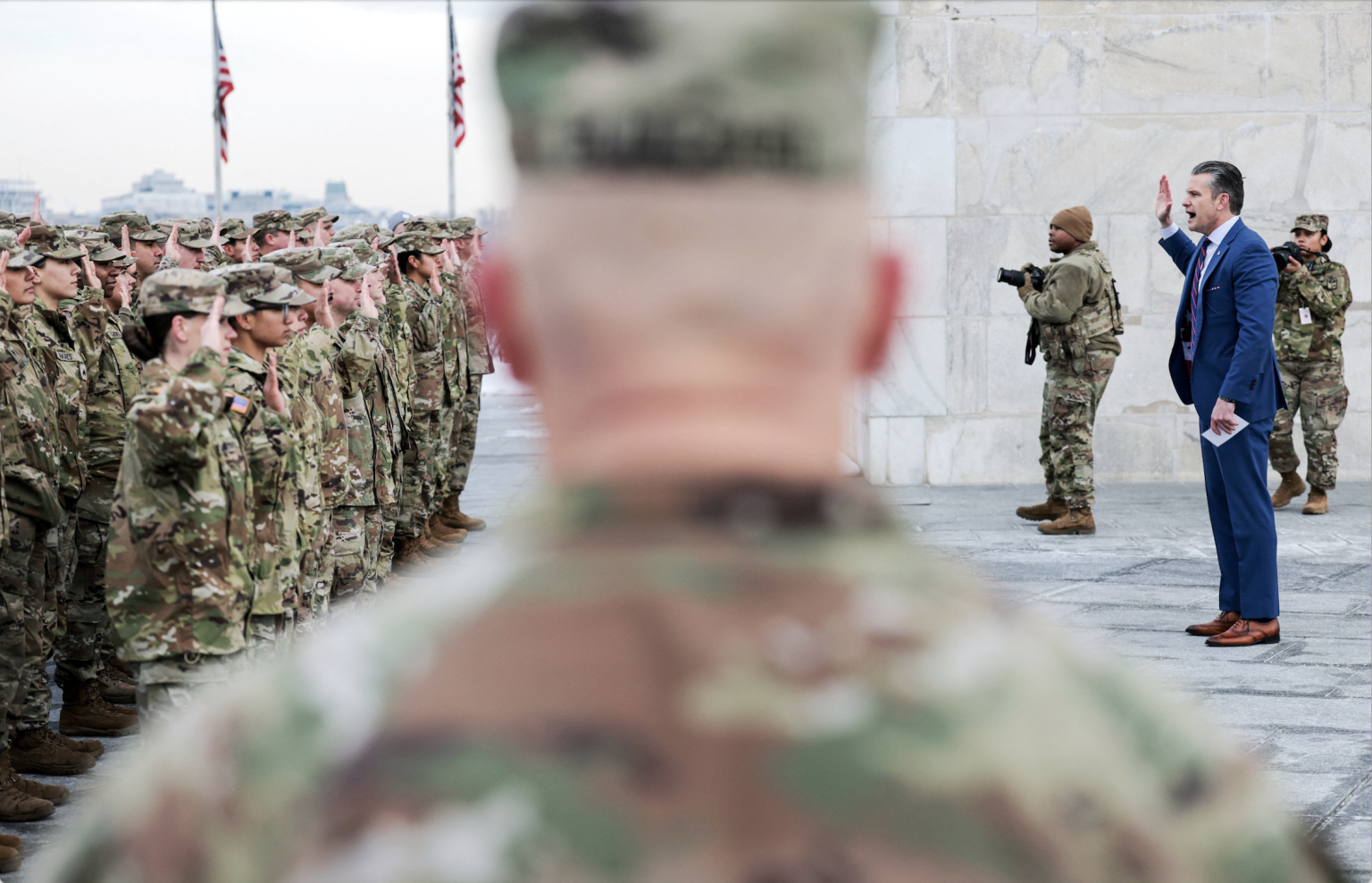
Representatives of the US Department of Defense assured their European partners in the North Atlantic Alliance that the announced withdrawal of troops would take place gradually.
Seven anonymous representatives of European governments explained that the "signals" they are receiving from their counterparts at the Pentagon "do not indicate that there will be a significant withdrawal—at least not now."
"This administration has realized that a stable Europe is important to them too," one of the sources noted. He thus denied previous statements that Donald Trump's administration was planning a "massive" withdrawal of armed forces from Europe.
Instead, the Pentagon will make several targeted changes, and in addition to withdrawing smaller contingents, several others will rotate between bases. Most personnel and equipment will thus remain in Europe.
US Secretary of War Pete Hegseth did not attend Thursday's meeting of Alliance defense ministers. He was represented by Director of Policy Elbridge Colby, who stated that NATO should be based "on partnership, not dependence."
The Politico portal described the Pentagon chief's repeated absence as a "contemptuous gesture" towards European allies. Reuters alsonoted that US Secretary of State Marco Rubio also skipped the meeting of foreign ministers.
A large-scale withdrawal of US troops is not expected in the foreseeable future, partly due to domestic politics. Last year, the US Congressapproveda continuing defense budget bill that includes a clause requiring a minimum of 76,000 US troops in Europe. According toPolitico, there are currently approximately 85,000 US troops on the Old Continent.
In areas such as troop deployment, air bases, and training areas operated by the United States in Europe, in most cases "everything will remain the same," as one NATO representative said. However, the deployment of about 200 US soldiers will gradually come to an end, and they will be replaced by European or Canadian representatives after their tour of duty expires.