
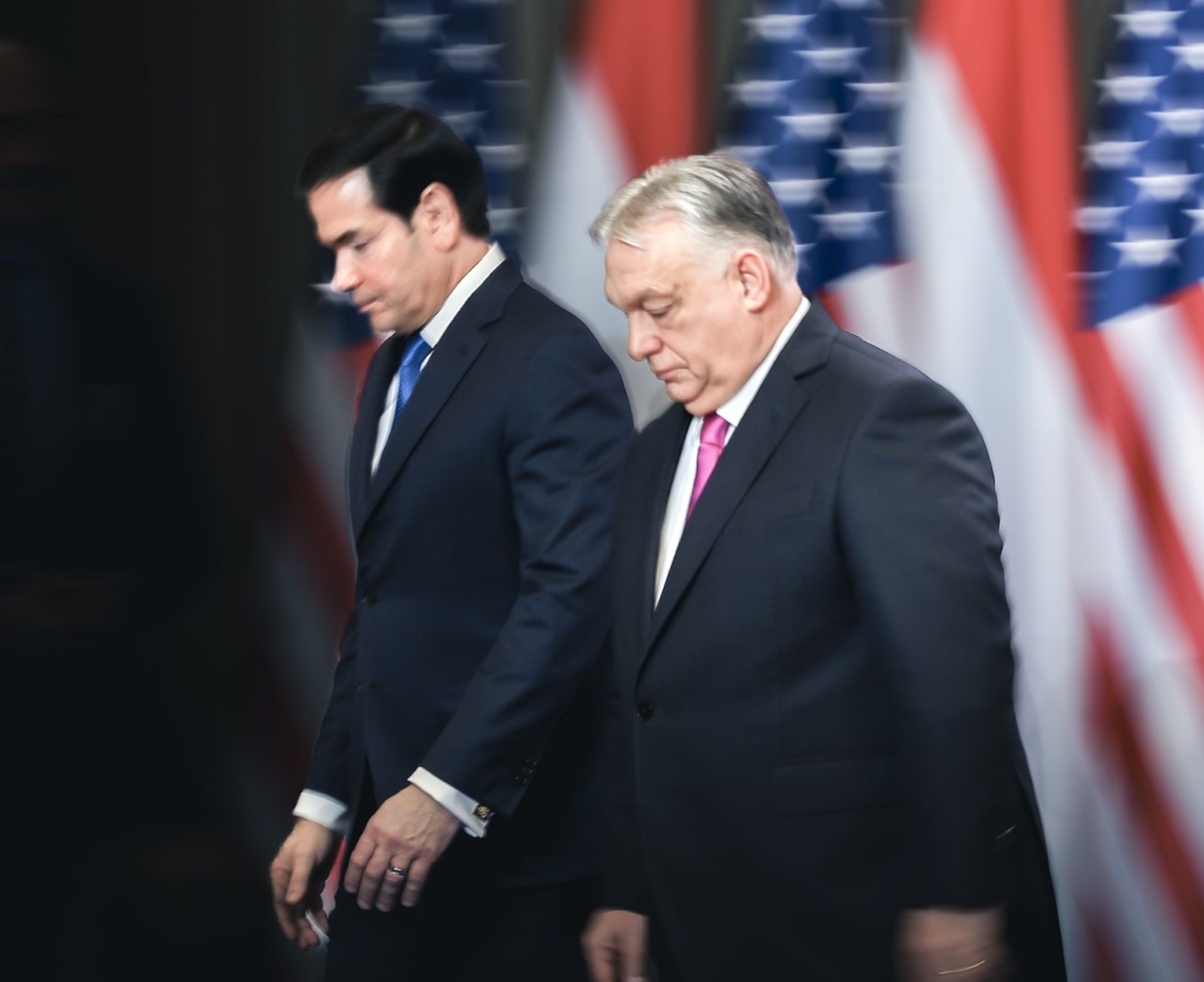
After a visit to Bratislava on Sunday, US Secretary of State Marco Rubio travelled to Budapest, where he met Hungarian Prime Minister Viktor Orbán. Even before their joint press conference, Rubio signed an agreement on civil nuclear energy with Hungary’s foreign minister, Péter Szijjártó.
‘This week has started well. It’s only Monday, and we have already had a cordial, serious and friendly conversation with the US Secretary of State,’ Orbán said, according to the news portal 24.hu. He noted that the visit had been agreed during the Hungarian delegation’s trip to Washington in November.
According to the prime minister, the two countries have concluded 17 agreements since last year. He also pointed to the restoration of visa-free travel for Hungarians to the United States and Hungary’s invitation to join the Peace Council. In his view, these steps signal a ‘new golden age’ in relations between Budapest and Washington.
Orbán highlighted cooperation in nuclear energy, oil and gas, arguing that the agreements would allow the government to ensure cheap energy for Hungarian households.
He also confirmed that discussions had taken place about the conditions under which the Hungarian company MOL could acquire the Serbian oil refinery NIS. Orbán added that US President Donald Trump has a standing invitation to visit Hungary.
Rubio hails ‘golden age’ in relations
Rubio, who was visiting Budapest for the first time, praised the city and the venue of the talks. He said it was no exaggeration to speak of a ‘golden age’ in relations between the two countries. According to him, the relationship rests not only on cooperation between states but also on the personal ties between Prime Minister Orbán and President Trump.
The US Secretary of State also said that if Hungary were to face difficulties, the United States would be ready to help, including financially. Washington, he stressed, wants to continue strengthening the relationship, particularly while Orbán remains prime minister.
‘President Trump is deeply committed to your success because your success is our success,’ Rubio said, standing beside Orbán. ‘We want this country to prosper. It is in our national interest, especially while you are prime minister and leader of this country,’ he added, noting that voters will ultimately decide Hungary’s political direction after the April parliamentary elections.
Hungary is due to hold parliamentary elections on 12 April and, according to opinion polls, Orbán faces his toughest challenge since his Fidesz party returned to power with a landslide victory in 2010.
Relations with Ukraine and China
During the press conference, questions were also raised about Ukraine. Orbán said he did not want to involve Rubio in Hungary’s domestic politics, but argued that Ukraine was closely watching what kind of government Hungarians would choose after the elections.
According to the prime minister, two scenarios are possible: a government that defends Hungarian interests, or one that is friendly towards Ukraine. He also claimed that Ukrainians were financing his political opponents. Rubio responded that the United States’ priority is to end the war and bring both sides to the negotiating table.
Questions were also raised about Hungary’s relations with China. The US Secretary of State said there are areas where the interests of the two countries coincide and others where they diverge, but stressed that maintaining dialogue remains important.
He noted that the United States itself maintains relations with China and does not expect its partners to isolate themselves.
Orbán said the foundation of Hungarian foreign policy is NATO membership, which sets clear limits on cooperation in security matters. In trade and economic relations, however, Hungary also works with countries outside the North Atlantic Alliance.
‘If someone doesn’t like it, let me know and we’ll talk about it,’ he said. According to Orbán, the most straightforward approach is simply to tell the Americans openly what the country’s leaders think. He added that since Trump became president there has not been a single point of conflict in bilateral relations.
(reuters, max)