
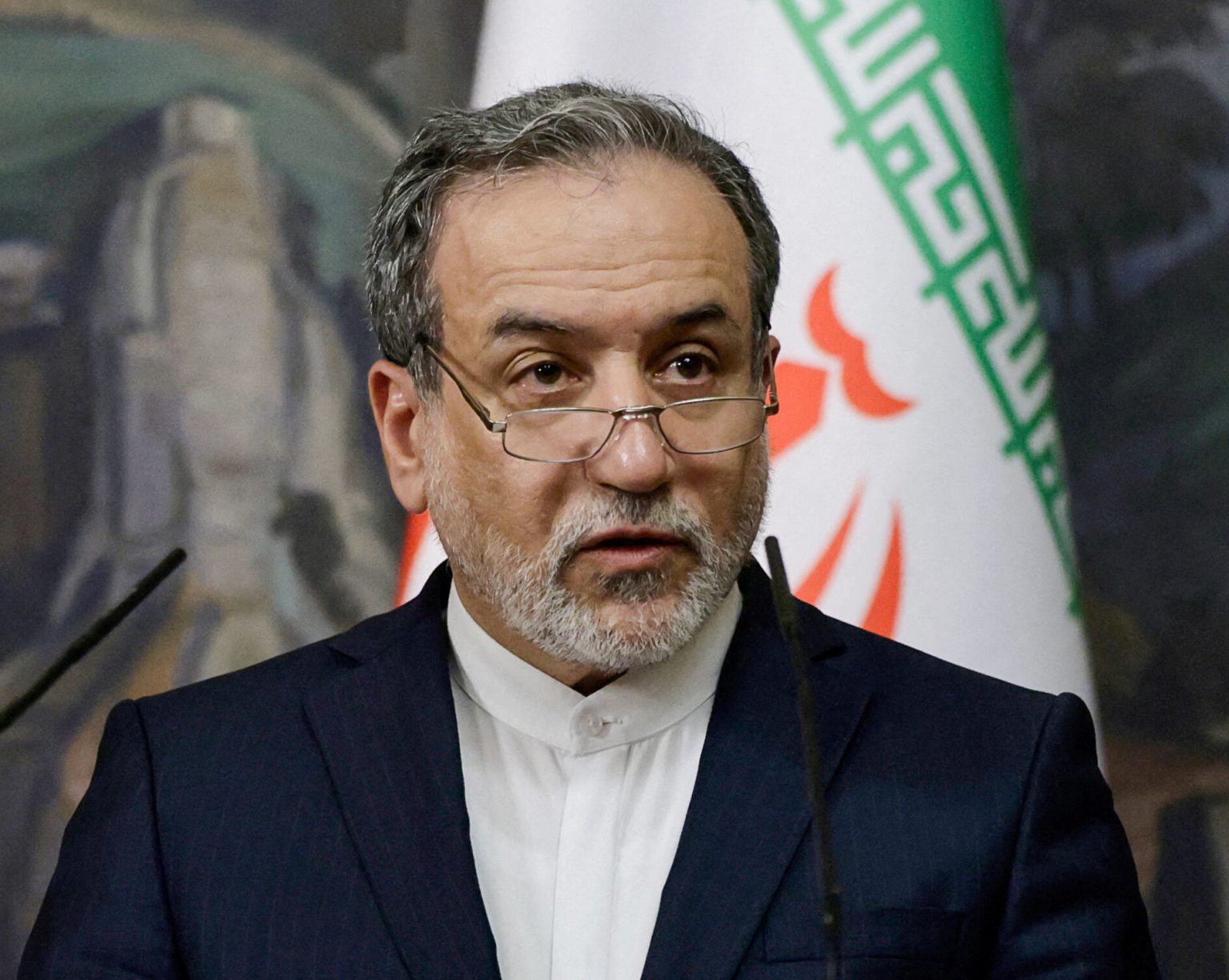
The US should immediately stop threatening Iran with force, Iranian Foreign Minister Abbas Arakchi said on Tuesday. He was responding to statements made by Donald Trump's administration in the run-up to the current nuclear negotiations. The day before, the Iranian Foreign Minister had met with Rafael Grossi, Director General of the International Atomic Energy Agency, in Geneva to discuss the resumption of inspections of nuclear facilities in Tehran.
The facilities in Fordow, Natanz and Isfahan were targeted by US attacks in June last year as part of Operation Midnight Hammer, which was followed by several days of attacks on Israel. After the attacks, Tehran suspended its cooperation with the UN organisation.
Talks are back on
Negotiators from the Islamic Republic and the United States have now reached a framework agreement on the most important ‘guiding principles’ for further negotiations at the Omani embassy in the Swiss city of Geneva, Arakchi added, noting that more work was still needed. This progress does not mean that an agreement will be reached soon, but the path has been set, he told Iranian media after the talks.
Trump and several of his supporters have repeatedly emphasised in recent days and weeks that regime change is a desirable outcome. In particular, Senator Lindsey Graham compared Supreme Leader Ali Khamenei to Adolf Hitler at the Munich Security Conference and hinted at the possibility of an assassination.
Against the backdrop of the talks in Switzerland, Ayatollah Khamenei stated that any attempt at regime change was doomed to failure. During the negotiations, Iran temporarily closed the Strait of Hormuz between the Persian Gulf and the Arabian Sea, citing military exercises by the Islamic Revolutionary Guard Corps.
Although this measure lasted only a few hours, it triggered global economic concerns. The strait is one of the main arteries of the oil trade, through which one-fifth of the world's volume flows. In addition to the above-mentioned ‘security reasons’, the Revolutionary Guard's exercises were also a symbolic response to the increased US military presence in the Indian Ocean, where Trump wanted to send a second aircraft carrier and an amphibious group.
Blockade of the strait
Tehran had threatened in the past to block the strait in the event of an attack on its territory. An anonymous source in Geneva said that Trump's key negotiators – Special Representative for the Middle East Steve Witkoff and the president's son-in-law Jared Kushner, who holds no official office – had negotiated with Arakchi.
A few days before the talks, anonymous sources from the Pentagon admitted to Reuters that the Trump administration was preparing ‘weeks-long’ operations against Iran. Trump has repeatedly called for a new agreement to limit Iran's nuclear programme. In 2018, he withdrew from the original format negotiated by his predecessor Barack Obama in 2015 and reimposed comprehensive sanctions.
Sanctions reintroduced
Trump's predecessor, Joe Biden, has eased some sanctions and also released about $6 billion in humanitarian funds to Tehran. Biden's critics linked this move in September 2023 to Hamas' subsequent attack on southern Israel – and thus to the start of the war in the Gaza Strip.
Donald Trump reimposed all suspended sanctions as part of a policy of ‘maximum pressure’ aimed at forcing the Shiite regime to abandon its nuclear programme. In addition to the US, the E3 countries – the UK, France and Germany – also supported the reintroduction of sanctions (snapback). If an agreement is reached on the permissible level of uranium enrichment, sanctions and trade embargoes would likely be suspended again, but the anti-government protests that have been ongoing since December last year would lose momentum.