

Moscow. On 18 February, the Russian state news agency TASS reported that the Federation Council, the upper house of parliament chaired by Valentina Matviyenko, had approved a law ‘obliging operators to disconnect communications at the request of the FSB in cases specified by presidential decrees of the Russian Federation’. The Russian government submitted the bill to the State Duma, the lower house, in November last year.
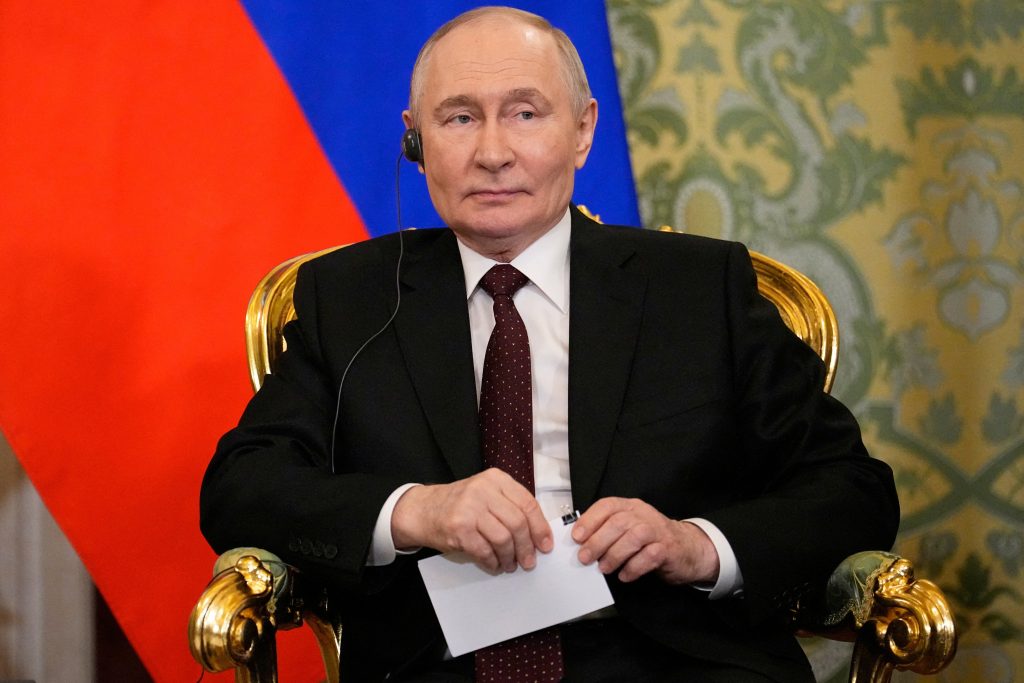
During the first reading, the draft stipulated that operators would be required to disrupt internet connections at the request (запрос) of the Federal Security Service (FSB). In the second reading, however, the word ‘request’ was replaced with ‘demand’ (требование). The law will enter into force ten days after it was signed by President Vladimir Putin on the evening of 20 February.
Slowly but surely
Under a Russian government resolution dated 27 October 2025, the Federal Service for Supervision of Communications, Information Technology and Mass Media (Roskomnadzor), together with the FSB and the Ministry of Digital Development (Mintsifry), will be able, from 1 March this year, to restrict Russia’s connection to the global internet — a step that brings the country closer to the Chinese model.
However, the new law, which will enter into force once Putin signs it, permits the internet to be shut down without justification in response to any threat, whether national or regional in scope. The bill was approved at a plenary session on 17 February in its second reading — following a change in terminology — and then in its third and final reading. The presentation of amendments and the vote took just two minutes.
Beyond replacing ‘request’ with ‘demand’, the second reading introduced several substantive changes to the wording of the draft. Whereas the original text referred to a possible request by the FSB in order to protect citizens and the state from emerging security threats, the final version as adopted contains no reference to any security-related conditions.
The Russian government was also removed from the text, leaving only the president, whose decree is to be decisive. The law also addresses the position of internet service providers: in cases where access is blocked at the demand of the FSB, telecommunications operators will not be liable to customers for failing to fulfil their contractual obligations.
YouTube and others
In mid-February, Russia used its National Domain Name System (NSDI) for the first time to block YouTube. Until then, the platform had been deliberately throttled since the summer of 2024, rendering it largely unusable. This marked the first outright ban. The site’s domain was removed from the Russian internet registry.
According to the Russian émigré outlet Novaya Gazeta, at least 13 widely used websites had been taken offline by 11 February, including several that had previously only been slowed down: WhatsApp, Facebook, Instagram and a number of Russian-language media outlets, among them The Moscow Times, Radio Liberty, Deutsche Welle and the BBC.
As IT expert Leonid Yuldashev told Novaya Gazeta, the move represents a turning point in the way the internet is censored in Russia. ‘We have repeatedly pointed out that Russia is building a sovereign internet infrastructure. And in the long run, this is much more dangerous than simply blocking it,’ says Yuldashev.
Russia blocks Russian messenger
Launched in March last year, the ‘national messenger’ Max, developed by the VK corporation, has been mandatory on all new smartphones and tablets since 1 September 2025. Competing services such as Telegram and WhatsApp have been placed at a legal disadvantage, including through ‘partial restrictions’ on calls made via their platforms.
Unlike its more popular rivals, the Max app collects users’ IP addresses and data on their activity, while reserving the right — as stated in its privacy policy — to pass such information on to third parties and state authorities.
On 10 February 2026, Roskomnadzor announced that Telegram continues to violate Russian law and that efforts to block the service will persist, citing extremist content among the grounds. Telegram is widely used by Russian and Ukrainian soldiers and civilians, and is also popular across European Union countries.
The Kremlin has further alleged that Telegram’s encryption has been compromised, allowing foreign intelligence services to access conversations involving Russian soldiers. Telegram has dismissed the claims as fabricated. Its co-founder Pavel Durov lost control of his previous social network, VKontakte, following state intervention several years ago. However, thanks to Telegram’s encryption and the use of foreign servers, the Kremlin cannot simply seize control of the platform.
Amid mounting pressure from the Russian authorities, the use of virtual private networks (VPNs) has long been widespread. Advertising VPN services has been subject to fines since 1 September 2025, and technical measures to restrict their operation are also being tightened.
According to Mikhail Klimariov, director of the Internet Protection Association, between three and five per cent of people in Russia use paid VPN services, while the majority rely on free versions.
Telegram is currently being significantly throttled in Russia, and in some regions it may be impossible to use any messenger other than Max without a VPN.