
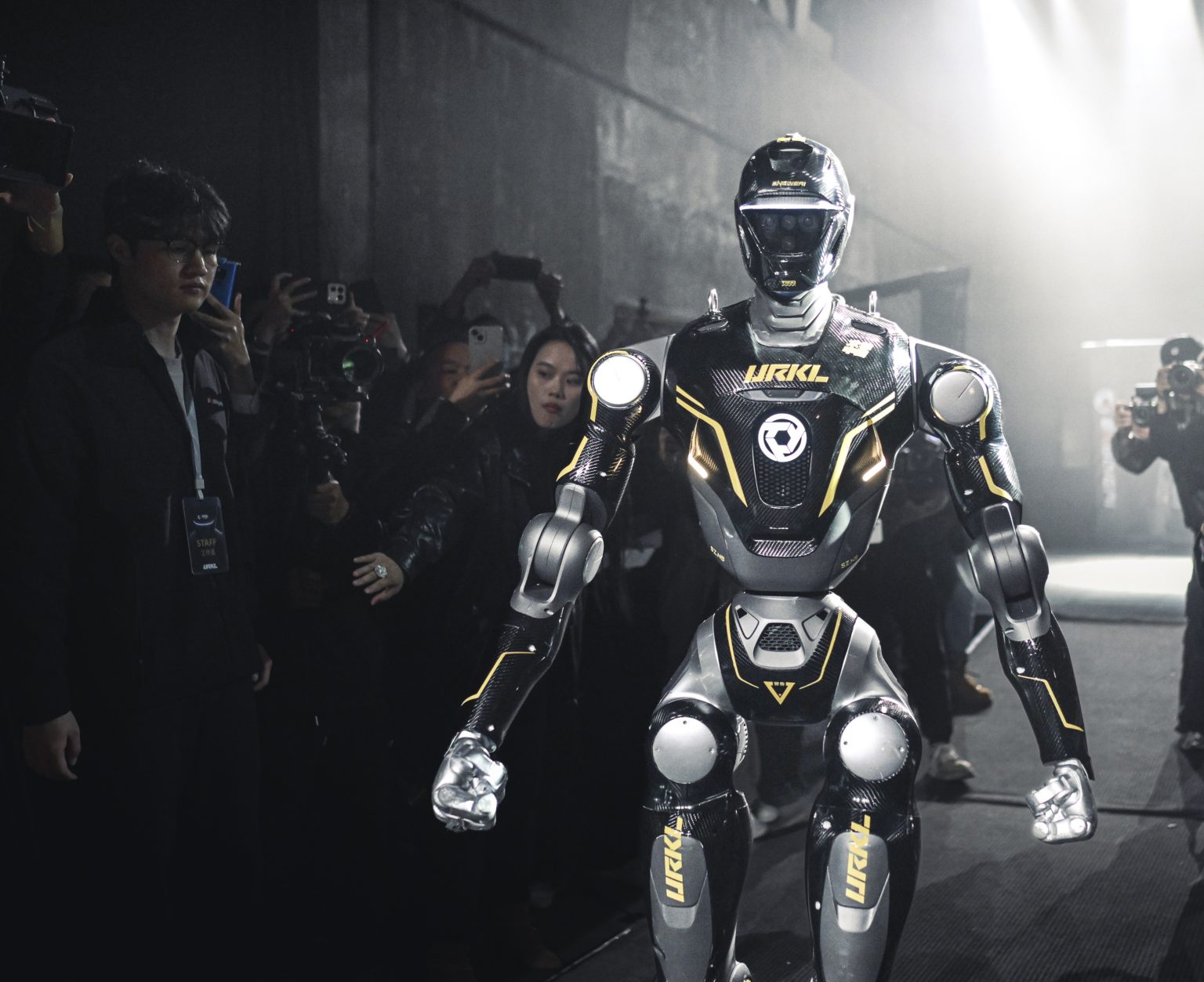
Four start-ups focused on the development and production of humanoid robots - Unitree Robotics, Galbot, Noetix and MagicLab - showcased their products earlier this week during the Spring Festival Gala, held on New Year’s Eve ahead of the Chinese New Year. It is the most-watched television event in China, comparable to the Super Bowl in the United States.
The first three segments of the colorful program prominently featured humanoid robots, including an extended martial arts performance. More than a dozen humanoids produced by Unitree Robotics performed complex combat routines, wielding swords, sticks and nunchucks while operating in close proximity to children taking part in the show.
Between the martial arts sequences, there was also a technically ambitious display reminiscent of the unstable movements and backward falls typical of the Chinese martial art known as drunken boxing, which imitates the movements of a drunk person. The sequence highlighted advances in multi-robot coordination, with the machines able to regain their balance and stand up again even after falling.
The program’s opening sketch also featured Doubao, an artificial intelligence chatbot developed by ByteDance, while four humanoid robots from Noetix appeared alongside actors in a comedy sketch. Robots from MagicLab performed a synchronized dance with human performers during the song We Are Made in China.
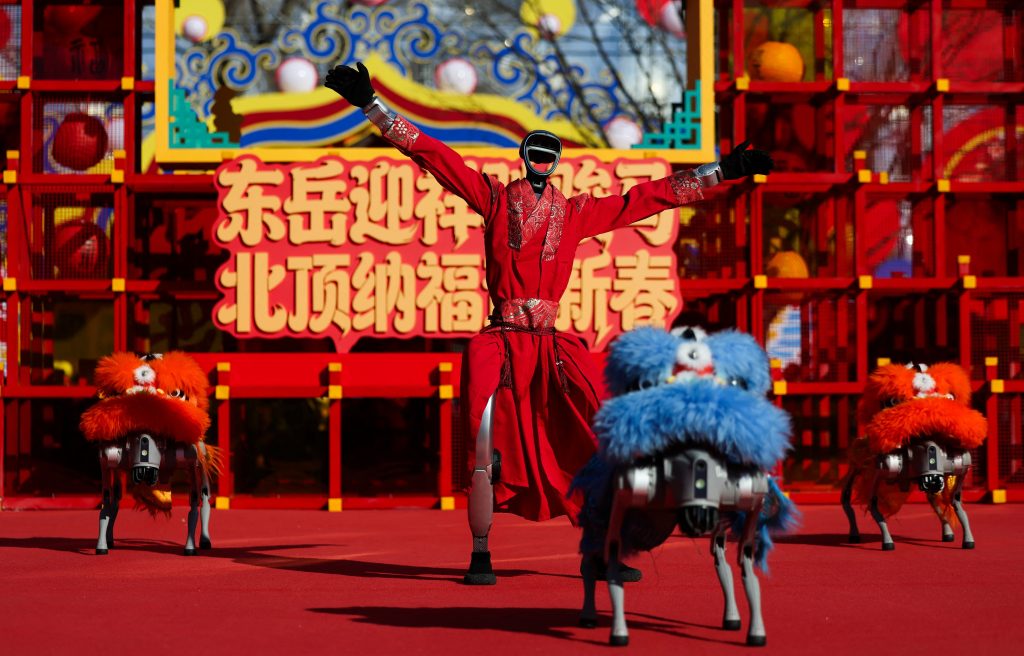
Support From the President
The growing attention around China’s humanoid robot sector comes as major industry players, including AgiBot and Unitree, prepare for initial public offerings this year. In addition, several Chinese artificial intelligence start-ups are expected to launch new flagship models during the nine-day Lunar New Year holiday.
During last year’s gala, 16 human-sized robots from Unitree wowed the audience by twirling handkerchiefs and dancing in sync with performers.
The founder of Unitree met President Xi Jinping a few weeks ago at a major technology symposium, the first event of its kind since 2018. Xi also met five founders of robotics start-ups last year in gatherings comparable to earlier meetings with leading entrepreneurs from the electric vehicle sector and executives from the semiconductor industry. The Chinese president is clearly raising the profile of emerging technology sectors.
Last year’s Spring Festival Gala reached up to 79% of Chinese viewers. Beijing has used the event for decades to showcase its technological ambitions, including its space program, drones and robotics, said Georg Stieler, executive director for Asia and head of robotics and automation at the consulting firm Stieler.
“What sets the gala apart from other comparable events is the directness of the transition from industrial policy to spectacular prime-time broadcasting”, he said. “Companies that appear on the gala stage will reap tangible rewards in the form of government orders, as well as investor attention and improved market access.”
“It has only been a year, and the leap in performance is remarkable”, Stieler said, adding that the precise control of the robots’ movements reflects Unitree’s focus on developing robotic “brains” - software based on artificial intelligence. That allows them to perform fine motor tasks that can be applied in real factory environments.
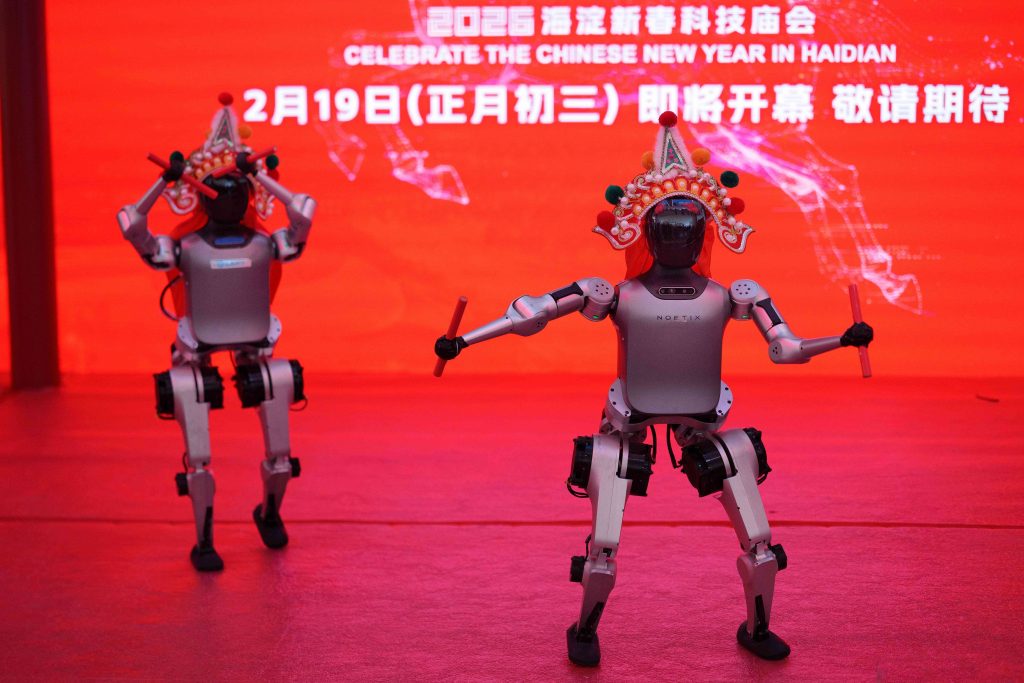
Replacing an Ageing Workforce
Behind the presentation of robots running marathons or performing kung fu kicks and backflips lies a deliberate Chinese strategy that places robotics and artificial intelligence at the center of national attention. The country is relying on higher productivity through automation to offset the pressures of an ageing workforce.
“Humanoid robots combine many of China’s strengths into one story: artificial intelligence capabilities, hardware supply chains and manufacturing ambitions. They are also the most visible symbol of progress for both the public and officials”, said Beijing-based technology analyst Pcho-e Zhao.
According to the research firm Omdia, China accounted for 90% of the roughly 13,000 humanoid robots shipped worldwide last year, significantly more than its American competitors, including Tesla’s Optimus.
Morgan Stanley predicts that sales of humanoid robots in China will more than double this year to 28,000 units. Elon Musk has said he considers Chinese companies to be his biggest competitors as Tesla focuses on embodied artificial intelligence and its flagship product, the Optimus humanoid.
Musk argued that many people outside China still underestimated China’s technological capabilities, even though its companies were already operating on an entirely different level.
(reuters, im)