
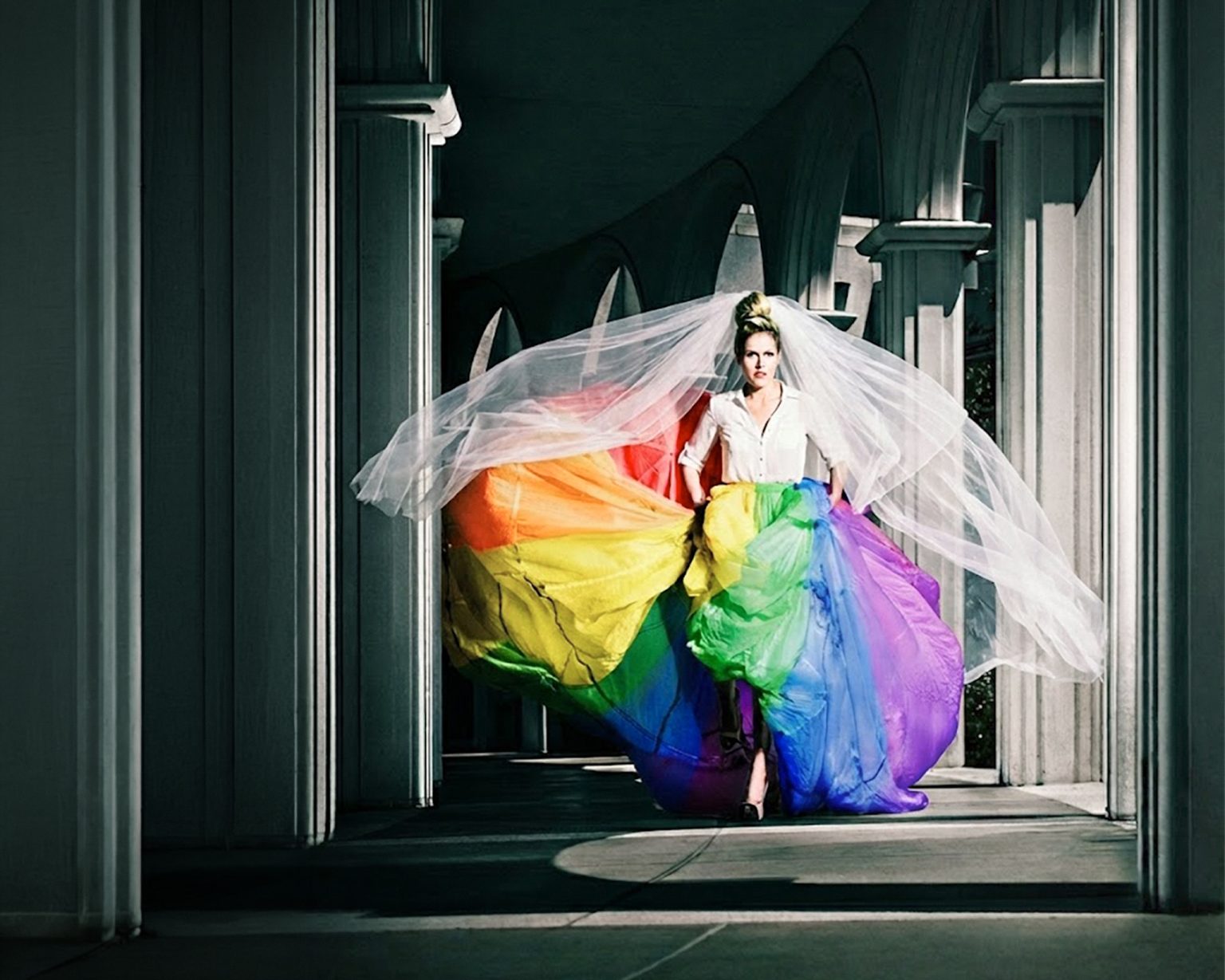
Generation Z is coming of age in a climate in which freedom, identity, equality and authenticity are subjects of constant debate. At the same time, it is a cohort marked by profound uncertainty – cultural, economic and personal. Many young people sense that old certainties have collapsed, while new ones have yet to provide a stable point of reference.
An intriguing development has emerged: a widening divergence in values between young men and young women. The divide extends beyond party loyalties to encompass differing views on love, family, sexuality and the purpose of life.
Research conducted by the Pew Research Center and the American Institute for Boys and Men suggests that men in Generation Z tend to hold more conservative positions on LGBT issues than their female counterparts. The most pronounced gaps concern same-sex marriage, attitudes towards homosexuality and transgender rights.
While many young women tend to embrace such trends almost instinctively as part of ‘progress’, a considerable number of young men are beginning to ask where the development is heading. What will become of the family, of marriage, and of the traditional roles of men and women?
Yet the reaction is not necessarily driven by resistance or fear. It often reflects a search for order and stability.
The return to fixed models
For years, traditional masculinity has been depicted as a problem. In progressive circles, young men have repeatedly been told that male strength is toxic, authority undesirable and the traditional family model obsolete. The outcome, however, has not been liberation but confusion.
Many men today do not wish to become caricatures of aggressive ‘alpha males’. At the same time, they resist the prospect of being passive, paralysed by insecurity and drifting without direction.
A gradual shift is nevertheless discernible. Some young men are beginning to reassert values such as responsibility, loyalty, moral grounding and strength of character. The development is less a reactionary retreat into the past than a search for order in an era of cultural disorientation.
The decline of femininity
At the same time, an opposite tendency is emerging among many young women. Some are distancing themselves from the traditional heterosexual family, which they regard as a structure marked by imbalances of power.
In progressive media, the classic romantic narrative of ‘man and woman’ is increasingly described as patriarchal, unequal and emotionally draining. Queer storylines, by contrast, are presented as more attractive – supposedly ‘more equal’ and ‘more authentic’.
Such interpretations, however, often rest more on ideology than on lived reality.
The appeal of queer romantic fiction among young women is frequently about more than sexuality alone. It can function as a cultural form of escapism. Within such narratives, romance is detached from traditional roles, long-term commitment, fertility and family life. The focus shifts to emotion, tension and the authenticity of the moment.
Yet love is not merely a feeling; it is also a decision and a commitment. When romance is separated from the natural complementarity of man and woman, from family and responsibility, it risks becoming little more than an aesthetic fantasy.
Marriage as a stable union
Marriage is not merely a social construct but a natural and spiritual reality. It represents a union between a man and a woman, open to life, stability and the future. Rather than an instrument of oppression, it is conceived as a framework of protection.
The bond between a man and a woman is not the product of power arrangements or cultural engineering. It reflects the reality of differences that complement rather than negate one another. Man and woman are not rivals in a contest for dominance but partners in the building of a home.
When marriage is reduced to a form of emotional companionship detached from the nature of men and women, it forfeits its stabilising force. It ceases to be a commitment that endures beyond mood and immediate gratification and becomes a provisional arrangement.
A society that weakens marriage in such a manner ultimately weakens itself. Children may grow up without security, men without a sense of responsibility and women without protection. Individualism promises freedom, yet often yields loneliness.
The widening gap between the sexes
The present divide between young men and women has not arisen by chance. It is portrayed as the consequence of a long cultural experiment that has steadily eroded trust between the sexes. Men have frequently been cast as the problem, women as the victims of the system.
The outcome, however, has not been a more just order but a climate of mutual suspicion. Some men withdraw into defensiveness, while many women are conditioned to anticipate disappointment. Young men who are returning to firmer values are often not rebelling against women; they are reacting against disorder. They seek stability, respect and clearly defined boundaries. They want to understand what it means to be a man without feeling obliged to apologise for it.
At the same time, many young women have grown up in a cultural atmosphere that has encouraged scepticism towards the traditional family model and portrayed male authority as inherently suspect. When such outlooks collide, mutual comprehension falters. The result is a divide that is not merely political but profoundly personal – a divergence in the understanding of love, commitment and identity.
Restoring healthy masculinity as a response
If the divide between men and women is to be narrowed, it will not be achieved through further concessions at the expense of masculinity, but through its renewal. A society that persistently weakens men should not be surprised if it forfeits stability in the process. The argument, in its simplest form, runs as follows: a mother does not wish for a feeble son, a sister not for a feeble brother, and a woman not for a feeble man. She does not seek an aggressor, yet neither does she desire a man without backbone. She does not want a tyrant, but nor does she want a boy afraid to assume responsibility.
Many women long for security and reliability, for someone capable of bearing burdens. That longing does not stem from frailty, but from the conviction that the relationship between man and woman rests on complementarity rather than interchangeability. When a man relinquishes his strength – whether physical, moral or spiritual – he does not win esteem but risks losing trust. Weakness is not a virtue; virtue lies in strength held in check.
Healthy masculinity implies the capacity to stand by what one believes to be true, even when it proves unpopular. Within the family, a man may be regarded as its head – not as a despot, but as the one who assumes responsibility first.
The restoration of healthy masculinity is thus presented not as a nostalgic reverie but as an existential necessity. If trust between the sexes is to be renewed and families are to remain stable, men are required who are unashamed of their strength and willing to subordinate it to moral principle.
Hope for Generation Z
Generation Z does not require another ideological wave that reshapes reality according to the mood of the moment. It requires a fixed point of reference. It needs to know that love has a form, that family carries meaning, and that the difference between men and women is not a defect in the system but a gift.
The restoration of marriage as a natural union between a man and a woman is presented not as a return to a dark past but as a return to equilibrium – an equilibrium between strength and tenderness, between leadership and co-operation, between freedom and commitment. Only within a clear framework can genuine intimacy and trust take root.
If young men learn steadfastness and young women regain confidence that male responsibility is a gift rather than a threat, the divide may begin to narrow. Not through ideological manifestos, but through lived examples that testify to the enduring sense of fidelity and family.
The cultural uncertainty of the present age will not be resolved by retreating into fantasy or by endlessly rewriting identity. It will be addressed by a renewed commitment to a particular understanding of human nature: that men and women are oriented towards a lasting and fruitful relationship grounded in their differences. In such a conviction, Generation Z may rediscover the stability it so evidently seeks.