
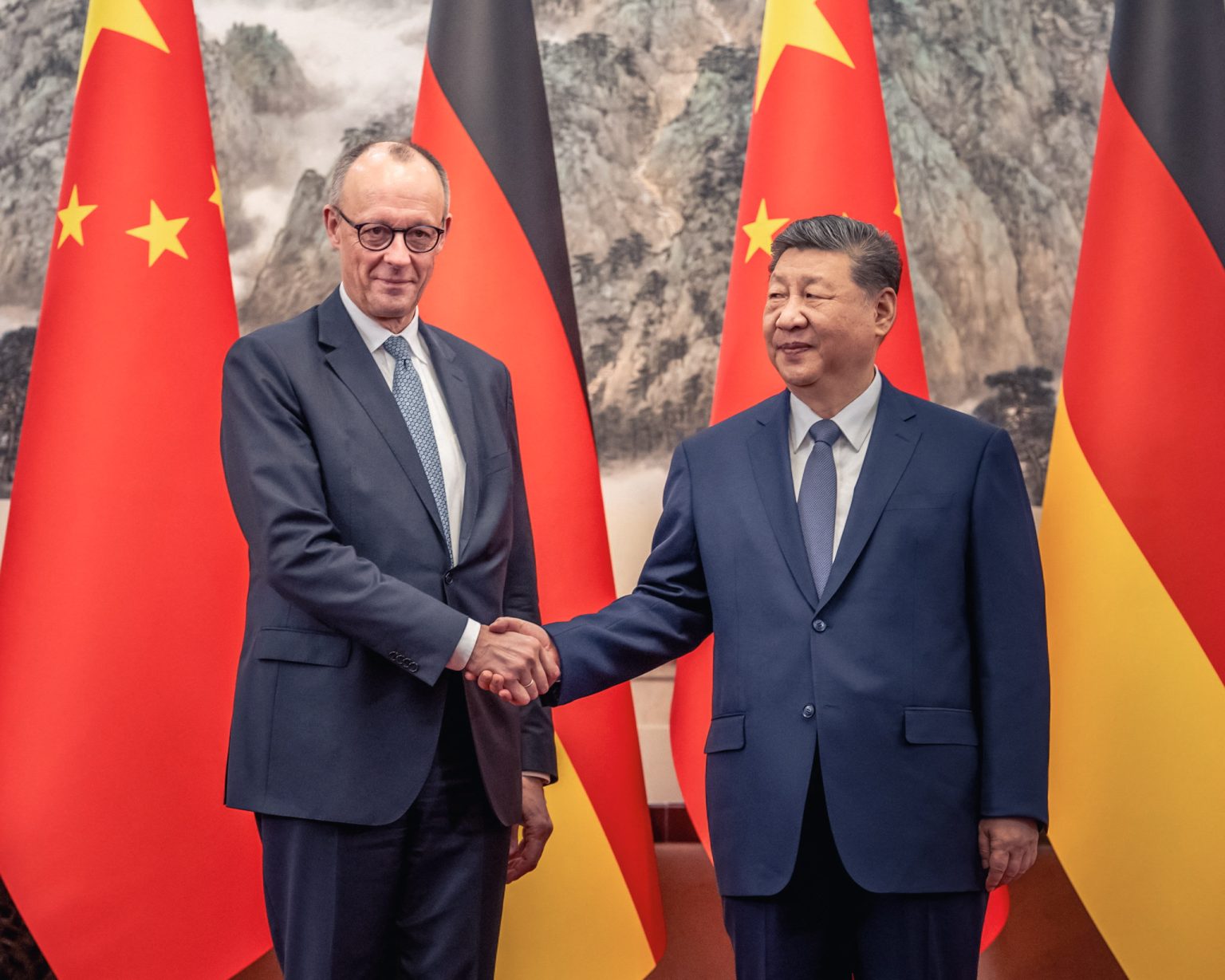
Beijing. Friedrich Merz’s visit to China is intended to restore momentum to cooperation between the world’s second- and third-largest economies at a time of mounting global tensions.
The German chancellor met President Xi Jinping and Premier Li Qiang in Beijing and is accompanied by a delegation representing around 30 German companies, including the carmakers Volkswagen and BMW. China was Germany’s largest trading partner last year, yet relations face increasing economic and political strains.
‘There are challenges that we should talk about today, but the framework in which we operate is extremely good, and we have worked very well together over the past decades’, Merz said after meeting the Chinese president.
The Chinese leader responded by underlining the strategic trust between the two countries. ‘The more turbulent and intertwined the world becomes, the more China and Germany need to strengthen strategic communication and increase mutual trust’, he said.
Merz voices concerns over trade imbalances
At a meeting with Premier Li Qiang, the chancellor openly set out Germany’s reservations. ‘There are very specific concerns about our cooperation, which we want to improve and make fairer’, he said, referring to Berlin’s long-standing objections over market distortions, state subsidies and industrial overcapacity among Chinese manufacturers.
Li called for the defence of the multilateral system and free trade, in what was widely interpreted as an indirect reference to US President Donald Trump’s trade policy. He stressed that China and Germany should work together to build a ‘fairer and more equitable system of global governance’.
Calls without major agreements
Despite appeals for closer cooperation, no significant economic agreements have been concluded so far. Five documents were signed, mainly covering climate cooperation, the prevention of animal diseases, a protocol on poultry products and cooperation in sport.
Compared with recent visits by Canada and the United Kingdom, which resulted in several agreements with China, the outcome appears relatively modest. More tangible results, however, may emerge during the second, trade-focused stage of Merz’s visit.
German carmakers are facing intensifying competition from Chinese rivals, particularly in the electric vehicle sector, contributing to a widening trade imbalance. This has fuelled calls for protectionist measures in Germany and across the European Union.
(reuters, pir)