
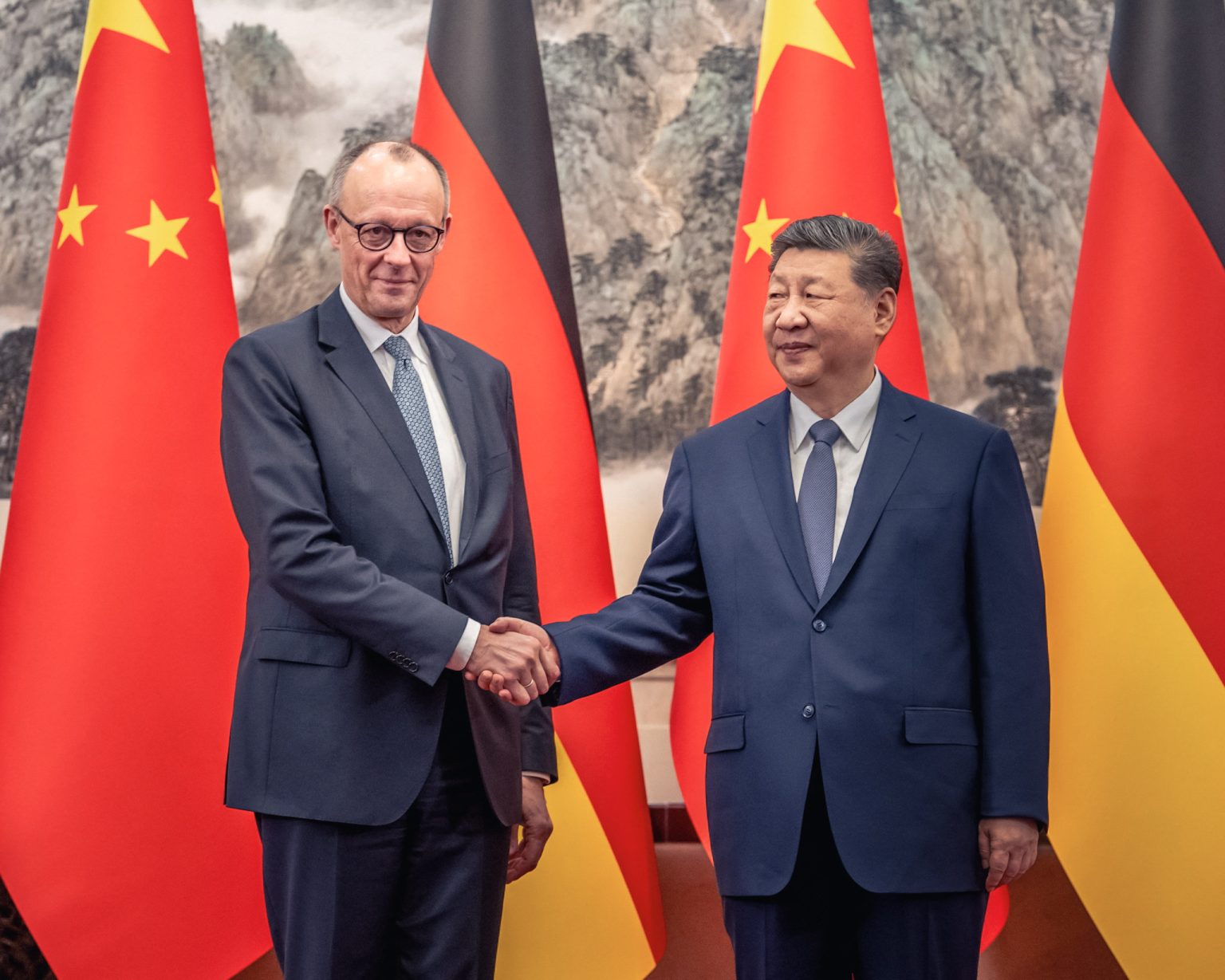
Beijing. Germany’s Federal Chancellor Friedrich Merz (CDU) used the opening of his visit to China to argue for deeper economic ties while voicing clear criticism of trade imbalances, restrictions and dependencies. In talks with President and Party leader Xi Jinping, he underlined the responsibility borne by two leading industrial nations, but stressed that open markets, fair competition and reliable rules must form the basis of any strategic partnership.
That dual message – cooperation and correction – is emblematic of Europe’s approach to China. It gains further weight as US President Donald Trump is expected in Beijing at the end of March. Within a matter of weeks, two Western strategies will thus engage directly with the Chinese leadership. For an international audience more familiar with the American debate on China than with the European one, a structural difference becomes clear: the United States defines China primarily as a systemic rival. Europe – and Germany in particular – operates in a field of tension between economic necessity and geopolitical caution.
With a trade volume exceeding €250 billion, China has once again become Germany’s most important trading partner. At the same time, the imbalance has deepened. Imports from China substantially exceed German exports, and the deficit has grown markedly. German companies are losing market share to technologically upgraded Chinese competitors, notably in electric mobility and battery technology. The relationship is therefore no longer merely a division of labour but increasingly one of competition.
Merz speaks of the ‘right balance of cooperation’. The phrase captures the core of the German position: deepen economic ties, enable investment, keep markets open and at the same time reduce strategic dependencies. The federal government remains committed to the concept of ‘de-risking’: minimising exposure without fundamentally severing economic interdependence.
Europe’s balancing act between partnership and systemic rivalry
The European Union officially describes China simultaneously as a partner, competitor and systemic rival. From an American perspective, that triple definition often appears inconsistent, yet it reflects Europe’s varied interests. France emphasises strategic autonomy, eastern European states align more closely with Washington’s security policy, while economically exposed countries such as Germany are particularly sensitive to potential Chinese countermeasures.
In Beijing, Merz made clear that Germany expects open markets and seeks the removal of trade barriers. Issues such as the widening trade deficit, currency questions and access to rare earths were raised. These matters go beyond bilateral commerce; they concern Europe’s strategic resilience. Dependencies in key sectors can constrain political room for manoeuvre.
At the same time, Berlin acknowledges the systemic dimension. China aspires to shape a new multilateral order according to its own rules. Civil liberties and universal human rights occupy a different place in that model than in Western understanding. Europe responds with regulation, diversification of supply chains and the expansion of its own industrial capacity, yet without open confrontation.
The economic context compels such caution. German carmakers generate significant profits in China, while Chinese producers are entering the European market with growing momentum. Any escalation would have immediate industrial consequences. Europe’s approach therefore remains rule-based, gradual and focused on limiting risk.
America’s competitive strategy and the Taiwan dimension
In the United States, the strategic framing is more explicit. China is regarded as the principal challenger to American leadership. Export controls on advanced technology, restrictions on semiconductors, investment bans and industrial policy programmes designed to strengthen domestic production form part of a security strategy that deliberately employs economic instruments for geopolitical ends.
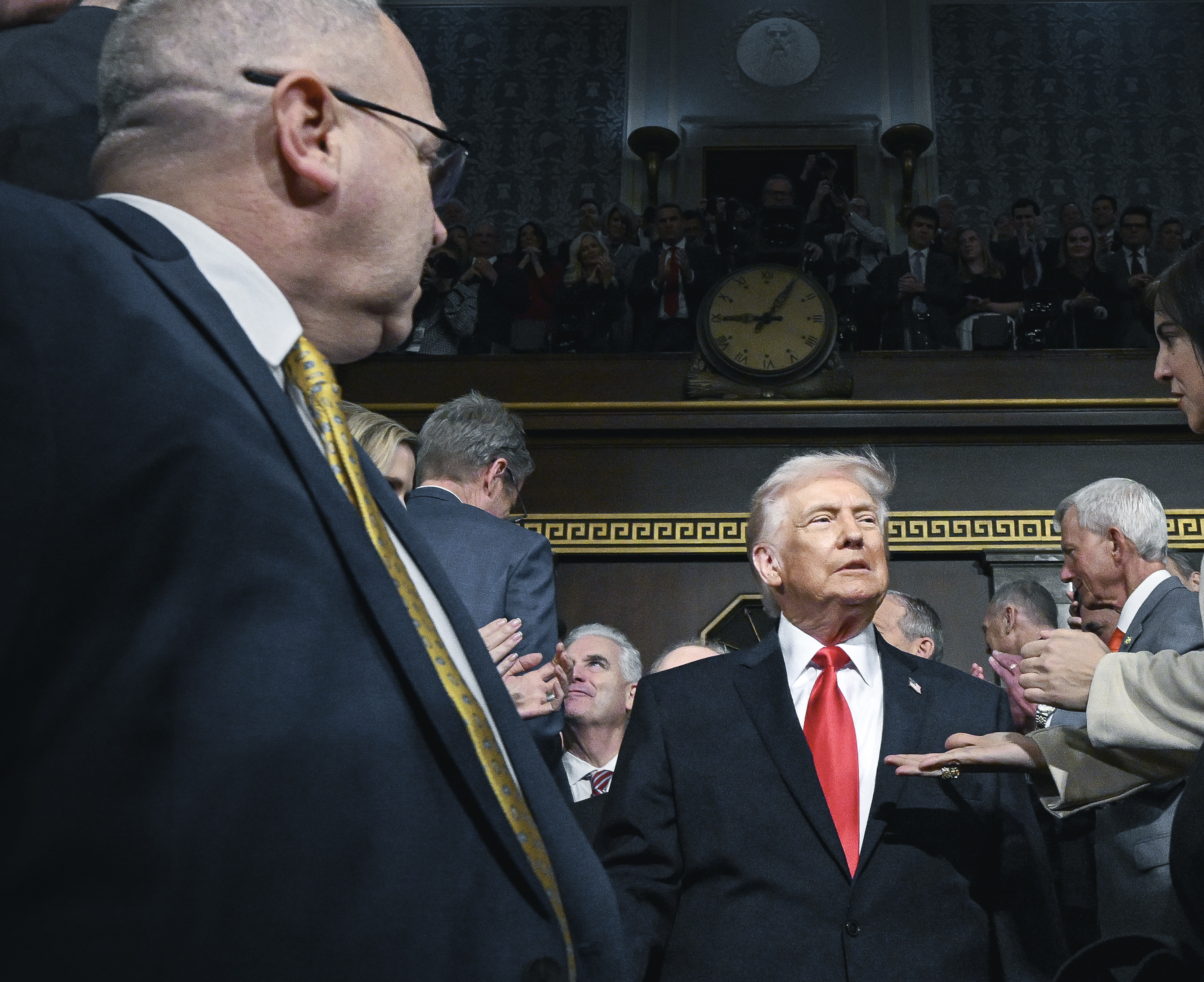
Donald Trump’s forthcoming visit also takes place against a backdrop of legal and political tension. The Supreme Court has struck down central elements of his far-reaching tariff policy, in particular measures based on emergency powers. Other tariffs remain in place, and new duties have been announced. The trade conflict is thus structurally embedded. For Washington, trade imbalances, technological dependencies and strategic supply chains are matters of national security.
For the People’s Republic of China, Taiwan is a core question of state sovereignty. Beijing regards the democratically governed island as part of its territory and does not rule out military means for ‘reunification’. The modernisation of the armed forces, regular exercises in the Taiwan Strait and an increasing military presence underscore that claim.
For the United States, Taiwan represents a strategic test case. The Taiwan Relations Act obliges Washington to provide the island with the means of self-defence. Although the US formally adheres to the One China policy and maintains no diplomatic relations with Taipei, it remains Taiwan’s principal arms supplier. Extensive defence packages are intended to ensure deterrence. At the same time, the American position remains deliberately ambiguous in order to deter a Chinese invasion while discouraging unilateral steps by Taiwan towards formal independence.
Europe adopts a more reserved course. The EU affirms the One China policy and emphasises stability and dialogue. It offers no security guarantees. Economically, however, Europe is heavily exposed. Taiwan plays a pivotal role in global semiconductor production. Any escalation in the Taiwan Strait would disrupt supply chains, impair industrial output and inflict considerable economic damage. For Europe, Taiwan is therefore primarily a strategic economic risk; for the United States, it is a focal point of security policy.

China’s calibrated response
China will assess both Western approaches in differentiated fashion. Towards Germany and Europe, Beijing stresses economic cooperation and strategic partnership in order to prevent full alignment with the American competitive logic. Towards the United States, clear demarcation on core interests – above all Taiwan – can be expected. Concessions on trade issues are possible, provided they remain structurally manageable.
The parallel engagements in Beijing thus highlight a fundamental challenge: Germany seeks economic stability in an era of intensifying systemic rivalry. The United States defines China as a central rival in a multipolar order. China itself combines economic interdependence with geopolitical ambition and long-term strategy. The decisive question will be whether Europe and the United States can coordinate their differing approaches. A coherent transatlantic line would strengthen their strategic position. Divergence, by contrast, would create room for manoeuvre in Beijing. What is at stake in Beijing is therefore not merely bilateral dialogue but the broader question of how cohesively the West can act in a world of mounting great-power rivalry.