
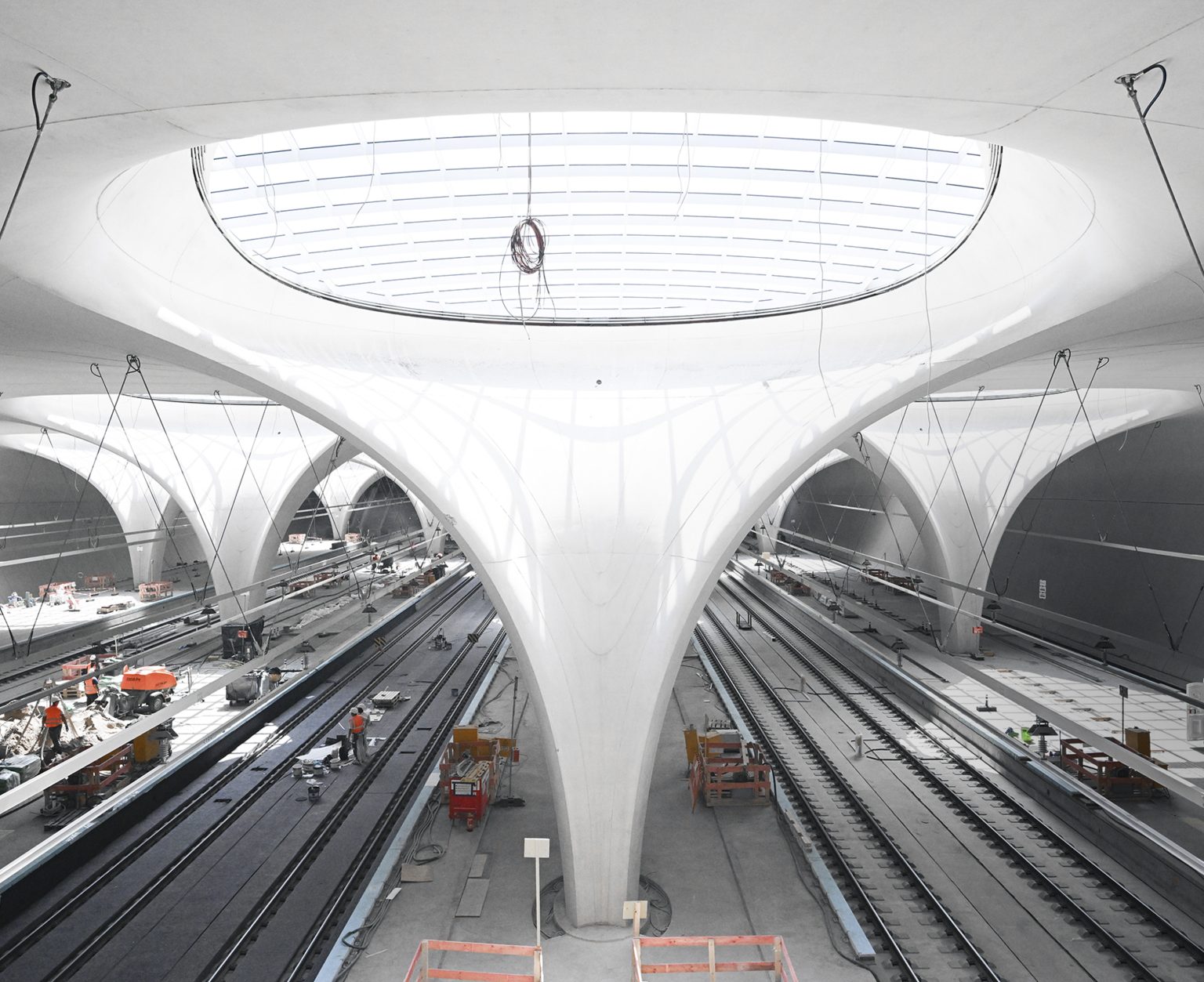
Stuttgart. When plans for Stuttgart 21 were unveiled in the 1990s, they seemed to fit perfectly with Germany’s self-image: technically ambitious, conceived for the long term and visionary in infrastructural scope. An existing terminus was to be replaced by an underground through station, flanked by new tunnels, tracks, bridges and urban development areas. It was presented as a project for the century.
Three decades on, the dominant theme is no longer vision but delay. According to recent reports, full completion is now not expected until 2030. The station had originally been due to enter service in 2019, later in 2026. That deadline, too, is considered untenable. The new date has not been officially confirmed, yet the direction is clear: Stuttgart 21 is joining the list of major German projects in which timetables prove elastic and budgets stretch.
Station underground – problems above ground
The technical scale is formidable: 56 kilometres of tunnel tubes, 100 kilometres of new track, 42 bridges and several new stations. Costs have risen from an initial estimate of 2.5 billion euros to more than 11 billion euros. Delays are attributed to legal challenges, stricter fire protection requirements, difficult geological conditions and environmental regulations. There have also been staff shortages, protracted test runs and technical modifications.
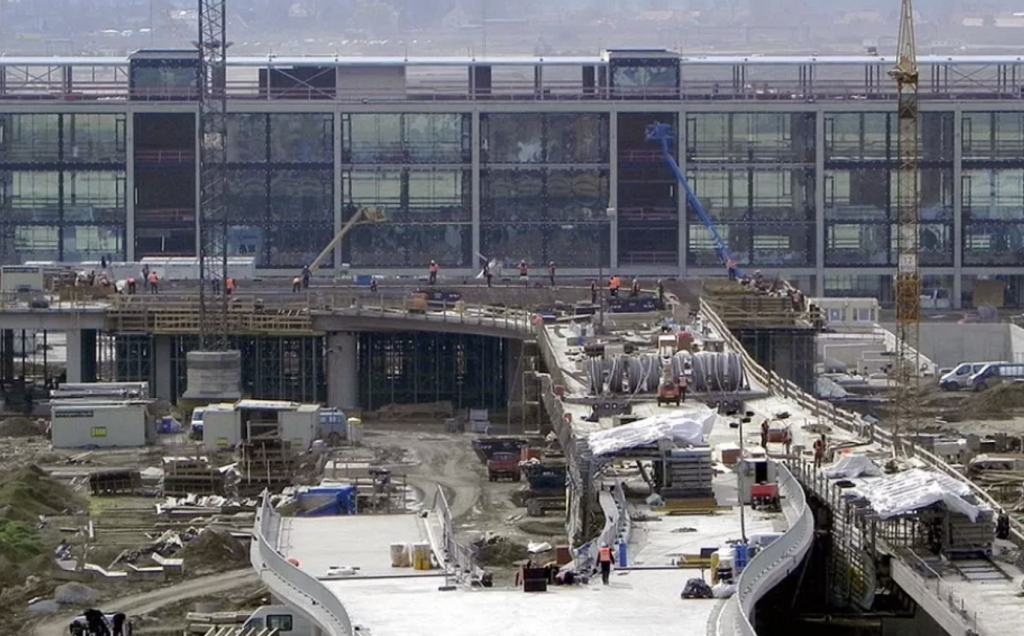
All of that is explicable. Complex infrastructure projects carry risks. Yet Stuttgart 21 does not stand alone. Berlin Brandenburg Airport opened years later than planned and consumed billions more than anticipated. The Elbphilharmonie in Hamburg evolved from an ambitious cultural scheme into an international byword for cost overruns and construction chaos, before ultimately proving architecturally impressive. What was once seen as a hallmark of German engineering discipline now often resembles a case study in administrative overcomplexity. Approval procedures drag on for years, responsibilities are fragmented and objections and lawsuits can effectively block projects. Planning becomes a permanent process of negotiation rather than execution.
The erosion of a core brand
Germany long took pride in its reliability. ‘Made in Germany’ signified precision, punctual delivery and technical excellence. Major projects were regarded as proof of state and industrial capability. Motorways, power stations and railway hubs were delivered within clearly defined timeframes.
Today, a different picture prevails. Expert report follows expert report, regulations are tightened, political majorities shift and lines of responsibility become blurred. The state is not incapable of acting, but it is often preoccupied with itself. The balance between the rule of law, public participation and efficiency is slipping out of alignment. In that sense, Stuttgart 21 is more than a transport scheme. It is a symptom – not of a lack of know-how, but of a culture of risk aversion that steadily narrows room for manoeuvre. Every eventuality is anticipated, every risk legally hedged, and yet new risks arise in the end: loss of time, rising costs and damage to trust.
For an export-oriented industrial nation, functioning infrastructure is not a luxury but a foundation of economic competitiveness. Supply chains, commuter flows and logistics networks all depend on reliable transport hubs. A rail junction such as Stuttgart is not merely of regional importance, but part of a European network. If improvisation persists for years, the consequences are systemic.
Yet the debate extends beyond the sphere of business economics. It touches on a question of mindset. Over recent decades, Germany has constructed a dense web of regulations, participation rights and review bodies. Every intervention in nature, the urban landscape or neighbourhood life is subject to legal scrutiny. Transparency and co-determination come at a price. While other states, such as China, bundle procedures, set deadlines and enforce political priorities, German practice often loses itself in detail. Responsibilities intertwine between federal, state, municipal and corporate levels without any single authority ultimately taking decisive control. Accountability is dispersed and thereby diluted.
Stuttgart 21 illustrates how justified caution can turn into structural inertia. The tension between democratic participation and the state’s capacity to act is not new, but it appears here with particular clarity. Holding major projects in limbo for years produces not only additional costs, but also cynicism.
Lessons from BER and the Elbphilharmonie
Berlin Brandenburg Airport (BER) has become a negative template for many: years of delay, technical defects and spiralling budgets. The Elbphilharmonie, by contrast, moved from object of ridicule to landmark, though at a cost that exceeded the original budget many times over. Both projects are now functioning. Yet both consumed public trust.
Stuttgart 21 risks being placed in that lineage. The greater danger lies less in the structural outcome than in the symbolic damage. When a country that sees itself as a nation of engineers realises its largest construction schemes only through constant correction, the international narrative shifts. Investors already factor political and administrative risks into their calculations. Planning certainty is a competitive advantage. Once lost, it slips away quietly – not dramatically, but durably.
Perhaps Stuttgart 21 will open in 2030 as a modern transport hub that proves functional, efficient and architecturally persuasive. Perhaps the long years of dispute will then seem no more than footnotes. Yet the path taken remains part of the story. It speaks of a state capable of much, yet often standing in its own way. Of a society that rightly sets high standards and must at the same time learn to define priorities. And of the question whether reliability in the 21st century still aspires to be at the core of German identity.
Stuttgart 21 will lie underground. The real construction site lies above it: in planning law, administrative culture and political resolve. Until they are reformed, every major project remains a gamble – and every delay more than a mere postponement.