
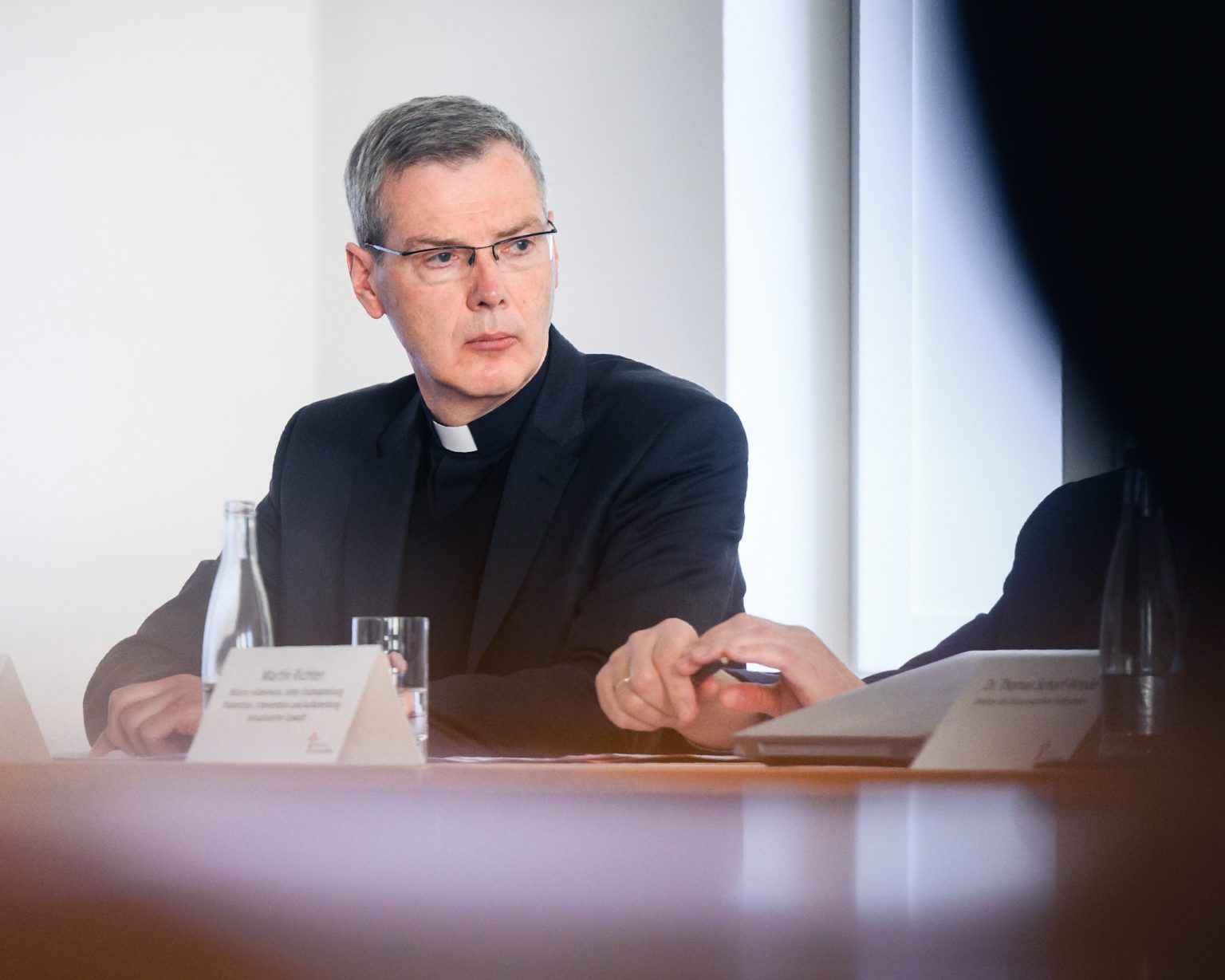
Würzburg. In recent days, the German bishops have elected a new chairman of their conference. The decision comes at a turbulent moment for the Church in Germany. It marks a turning point that may lead either towards renewal or further decline.
To understand the present situation, one must look back to 2018. That year saw the publication of the so-called MHG study, which examined the sexual abuse of predominantly male adolescents by clerics in Germany. Since 2011, increasing numbers of cases had come to light. Not only had numerous clerics abused boys, but in many instances the responsible bishops had covered up the crimes. Perpetrators were transferred, often escaping punishment or receiving only mild sanctions. Victims were ignored and in some cases defamed.
The 2018 study was intended to initiate a process of reckoning. Yet critics argued that both its format and its findings were inadequate. One of its central theses held that sexual abuse in the Church had been facilitated by systemic causes. Critics objected that such an approach risked relativising the personal guilt of perpetrators and of bishops who had concealed offences.
A misguided approach
In 2019, the German Bishops’ Conference (DBK) agreed with the Central Committee of German Catholics (ZdK) to launch a forum for dialogue known as the Synodal Path. The aim was to advance a reform agenda that the ZdK had pursued for more than 50 years. Among the issues were the ordination of women, the abolition of clerical celibacy, changes to Catholic sexual teaching, greater participation of lay people in church governance and financial authority for lay functionaries over church funds. The agenda was later expanded to include the introduction of LGBT concerns into church life.
The ZdK is a body unique in the universal Church, composed of representatives from church-recognised associations and lay councils within the dioceses. Many of its reform proposals stand in marked tension with Catholic doctrine and are therefore not implementable. Nevertheless, during the six-year Synodal Path numerous texts were adopted that sought to alter essential elements of church teaching. The Vatican intervened on several occasions, issuing clear warnings. Repeatedly, German bishops and the ZdK pressed ahead regardless. Over the course of the process, four bishops withdrew and declined to participate further in what became known as the Synodal Committee.
The threat of schism
Experts continue to warn of the danger of a schism. At the conclusion of the Synodal Path, the bishops and the ZdK agreed to establish a national synodal body under the name Synodal Conference. Its statutes were adopted by both parties. The Vatican has reserved the right to require papal approval before the body may begin its work. Here, too, many critics argue that the statutes in their present form are unlikely to receive approval.
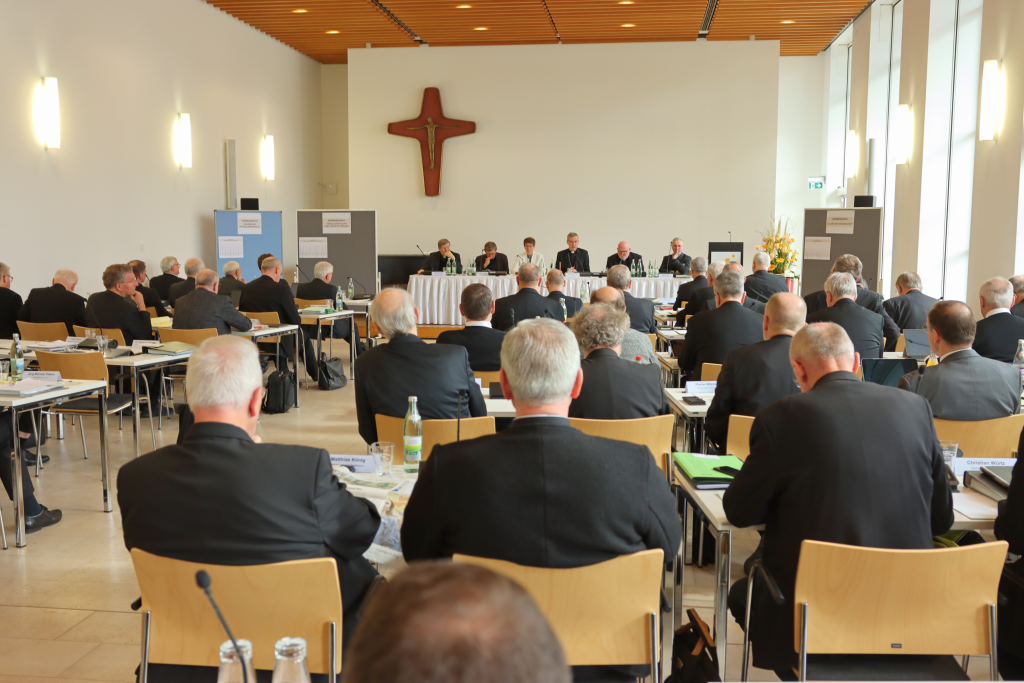
The Church in Germany is now deeply divided, both among bishops and among the faithful. The divisions have grown so severe that genuine dialogue appears almost impossible. The outcomes of the Synodal Path are such that many practising Catholics can only reject them. The outgoing DBK chairman, Georg Bätzing, Bishop of Limburg, intensified polarisation through his consistent alignment with self-styled reform forces. Tensions among the bishops were plainly visible. The marginalisation of certain groups of believers created a climate that inflicted serious harm on faith and church alike.
Unity and clarity required
In this situation, the bishops have chosen a chairman widely regarded as capable of building bridges: Heiner Wilmer, Bishop of Hildesheim. A member of the Priests of the Sacred Heart, he spoke at his first press conference of placing Jesus Christ at the centre. He avoided detailed positioning on contentious church-political issues. At the concluding press conference of the bishops’ plenary assembly last Thursday, however, he indicated his intention to present the reform projects of the Synodal Path in Rome. As a first example, he mentioned lay preaching. In the Holy Mass, preaching is reserved to priests or deacons. In this respect, the self-declared reformers may soon face their first setback. In other areas – the abolition of celibacy, the ordination of women or changes to sexual teaching – there is likewise little reason to expect approval from the Vatican.
The DBK chairman would be well advised to prepare the faithful in Germany, patiently but honestly, for the reality that the universal Church will remain Catholic. To nurture further illusions would prove a mistake in the long term. How the new chairman intends to meet this challenge remains unclear. A glance towards Rome may offer guidance. Pope Leo XIV has not broken radically with his predecessor, to the dismay of very traditional Catholics, nor has he fully satisfied progressive forces. Instead, he has set somewhat more traditional accents of his own. He conveys the impression of seeking to overcome or avoid conflict and division within the Church. His manner is measured and calm, yet clear in substance.
The path of reconciliation
Pope Leo XIV has expressed the wish that all voices be heard in discussion. Exclusion of the kind associated with Georg Bätzing’s line is not acceptable to him. If that is to be the path of the new DBK chairman, he must find the courage to speak with those marginalised during the Synodal Path. There are sound reasons for the Church’s sexual teaching. There are sound reasons for what the Church teaches about marriage. There are sound reasons, presented by the Church as binding, why only men may be ordained priests. Faithful Catholics who defended such positions on the basis of Scripture and tradition were pushed to the margins by bishops and lay functionaries. If Bishop Wilmer is to unite the Church in Germany, he must give them a voice.
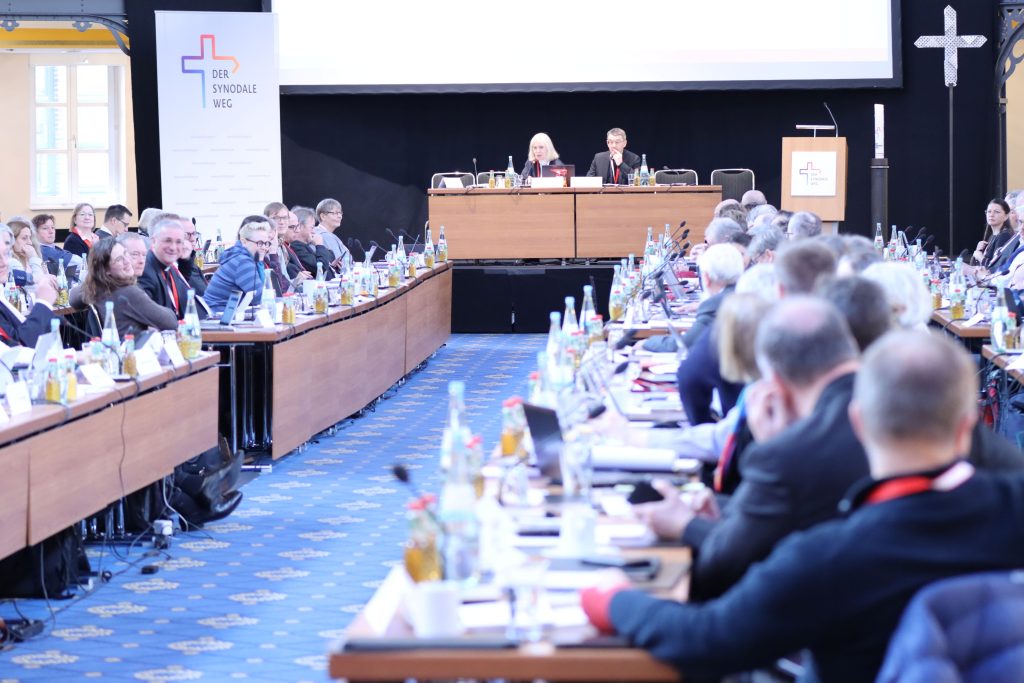
That will not be easy. Conservative Catholics were at times branded as right-wing and defamed, even by bishops. Their concerns were brusquely dismissed and their arguments ignored. Such treatment must end if unity is to be restored. Wilmer’s closing remarks offer some grounds for hope. ‘The global synodal process has allowed us to experience how valuable it is to listen together,’ he said. ‘Synodality remains a spiritual attitude.’ Precisely such an attitude was scarcely visible during the Synodal Path. ‘To journey together,’ he continued, ‘to share responsibility, to bear decisions collectively – with Christ at the centre.’
From that centre, trust grows, and trust creates the future. The task will be to proclaim the Gospel with full conviction, if necessary also in words. Evangelisation, explicitly desired by Pope Francis as central to synodality, was strikingly absent from the Synodal Path.
Functionaries do not represent the People of God
If the new chairman wishes to achieve genuine progress in this respect, he will face a major challenge: to place the Synodal Path, which has until now been highly politicised, within a clearer spiritual framework. The same applies to the supervision of bishops by lay councils decided at the final assembly of the Synodal Path, which was misleadingly portrayed as the ‘monitoring’ mandated by the world synod for synodal bodies.
The issue here is not control in the manner of a supervisory board, as envisaged by the Synodal Path, but a spiritual listening of bishops together with representatives of the People of God to the Holy Spirit, discerning how the Church should continue on her way. The fundamental error in Germany – and one that will not easily be corrected – lies in the assumption that functionaries, in this case the ZdK, represent the People of God. If the bishops in Germany continue to speak only with the ZdK while excluding other lay representatives, the divisions will deepen and a schism will become increasingly difficult to avoid.
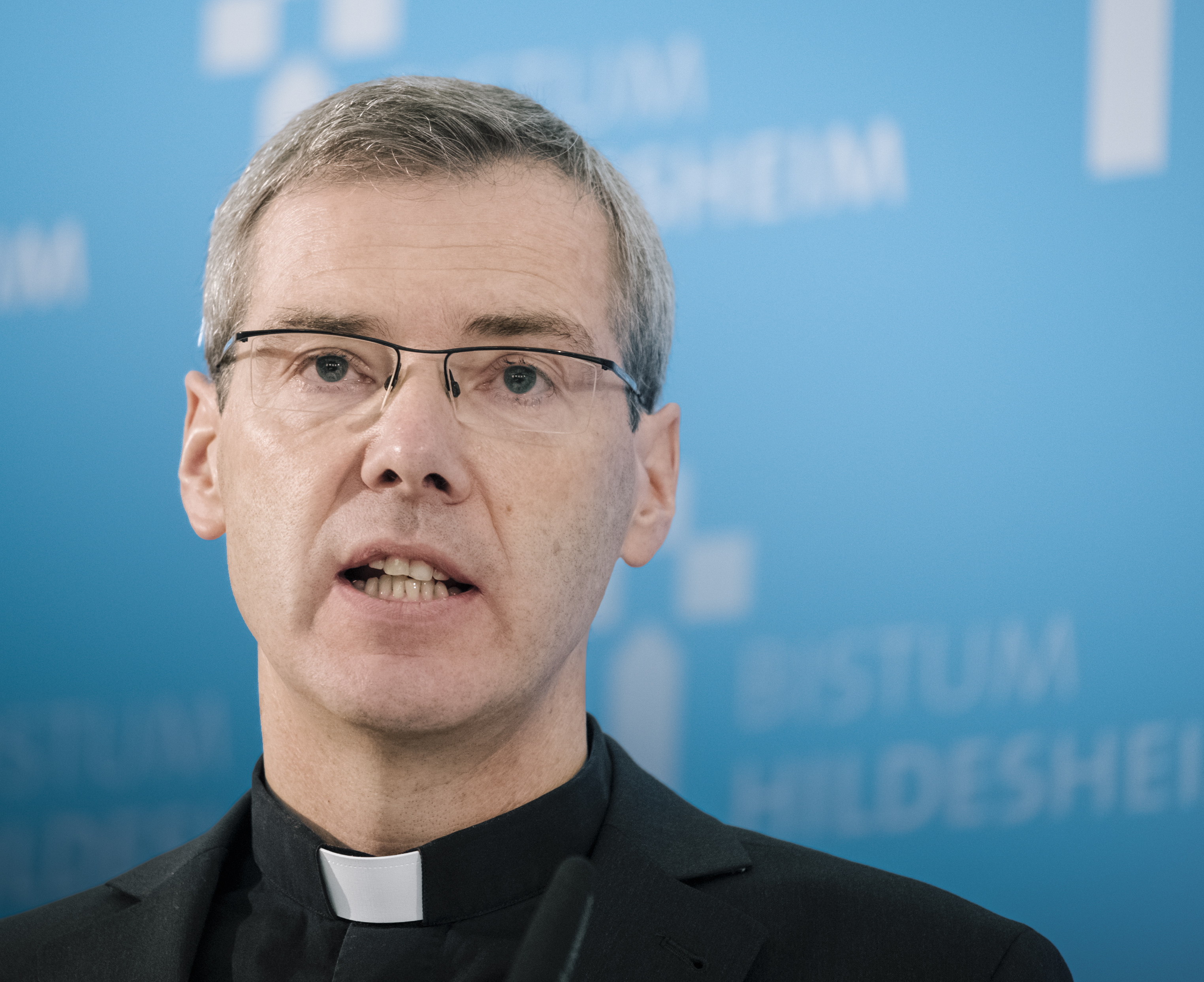
If Pope Leo XIV desires synodality for the Church at every level, the new chairman faces the difficult task of translating universal synodality into German. The bishops have also taken leave of the apostolic nuncio, Nikolai Eterović, who has turned 75 this year and is required to offer his resignation to the Pope. It will fall to the Holy Father to appoint a successor to a nuncio who accompanied the Synodal Path with patience and clarity and who can assist in promoting unity in accordance with papal intentions. There may not yet be grounds for great optimism about the future course of the Church in Germany, but a change of style could point towards a new direction.
Hope dies last. A glance towards France or England shows that growing numbers of young people are once again showing interest in the Church. Their interest lies in faith in Jesus Christ as taught for two millennia. Traditional parishes and communities act as magnets. Reform agendas, by contrast, hold little appeal. The true challenge for the Church in the coming years lies here. It has long since ceased to lie in the Synodal Path.