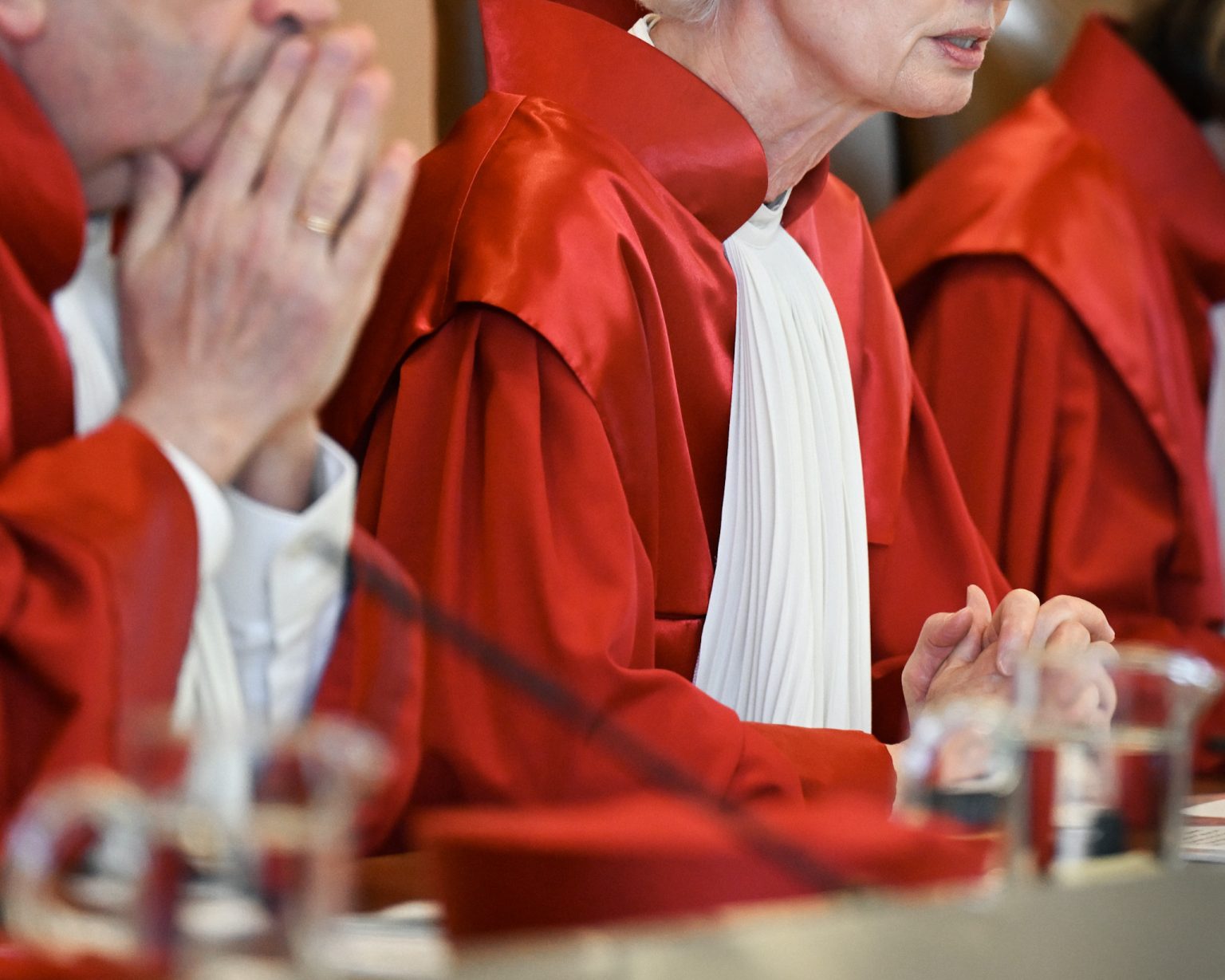
Karlsruhe. In two landmark rulings, Germany’s Federal Constitutional Court (Bundesverfassungsgericht, BVerfG) upheld constitutional complaints after lower courts had treated disputed remarks as criminal insults. In doing so, the judges in Karlsruhe signalled that, in recent years, parts of the judiciary had been too ready to classify statements made under the protection of free speech as punishable offences.
‘Dimwit professional’ and ‘Pinocchio in Heilbronn’
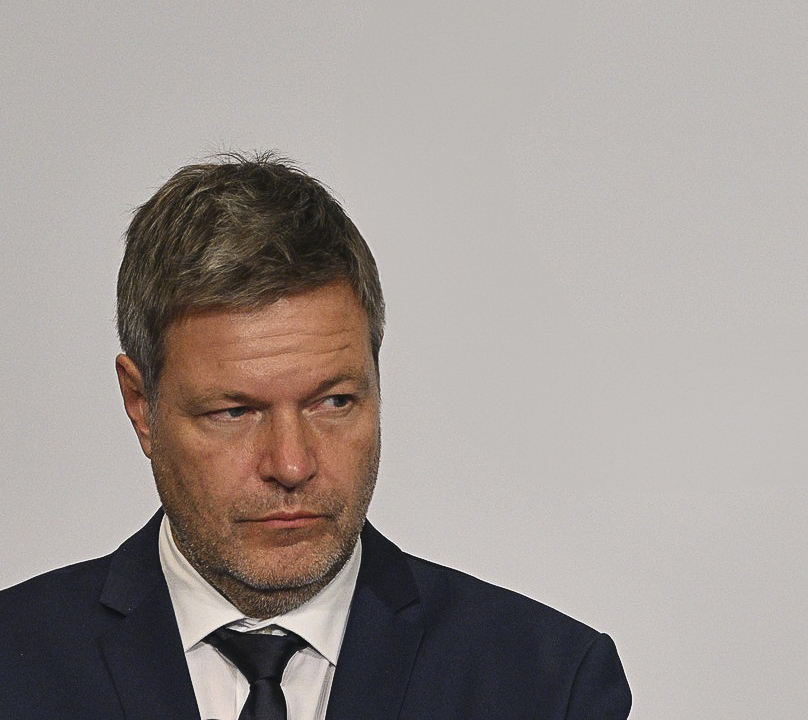
Beyond complaints, investigations and trials, there have been coercive measures such as house searches and seizures, even in cases that later did not lead to further investigations, let alone an indictment. One man faced a criminal complaint, an investigation and a house search after posting a meme mocking the then economy minister, Robert Habeck, with an allusion to a shampoo advertisement (the Schwarzkopf brand) and the slogan ‘Dimwit professional’. Investigators frequently relied on Section 185 of the Criminal Code (Strafgesetzbuch, StGB) on insults and Section 188, which covers insults, defamation and slander directed at people in political life.
Section 188 gives the impression that it was created specifically to shield politicians from criticism. The provision is sometimes described as a modern form of lèse-majesté and came into force in 2021, during the Covid period. The effect is plain to see. Never before have politicians filed so many criminal complaints against citizens. Robert Habeck alone lodged 803 complaints between 2021 and 2024, according to the Federal Statistical Office. A pensioner came to the attention of the criminal police over the comment ‘Pinocchio is coming to Heilbronn’, a remark directed at Chancellor Friedrich Merz. Prosecutors investigated the man on suspicion of breaching Section 188 of the Criminal Code.
Adding to the problem, those flagging such cases were all too often state reporting centres, or reporting centres run by NGOs and financed by the state. In recent years, Germany has seen an entire system of such reporting points, or business models, develop. They collect citizens’ statements – mostly on social media – and try to have even legitimate remarks pursued as criminal offences. A number of public prosecutor’s offices and courts have gone along with this, securing or handing down corresponding judgments.
The BVerfG in Karlsruhe has now ruled in two cases in favour of free speech. The decisions are seen as setting a course for future proceedings involving alleged speech offences. In both cases, the First Chamber of the First Senate found that the courts had not given sufficient weight to freedom of expression under Article 5(1) of the Basic Law (Grundgesetz, GG). The decisions were quashed and the cases sent back to the competent courts. The BVerfG stressed, however, that it had not ruled that the statements in question were lawful, but had criticised the way the courts handled the cases.
Context matters
The first case concerned a father who, in the summer of 2021, sent the headteacher at his son’s school several emails that later became the subject of criminal proceedings. In them, the man criticised Covid measures at the school in harsh terms. He spoke of ‘fascistoid orders’, and declared that his son would not submit to a ‘fascist system and its henchmen’. He also wrote to the headteacher that ‘people like you’ had, in earlier dark times, been ‘the greatest pillars of the system’. Ulm District Court (Amtsgericht Ulm) and, on appeal, Ulm Regional Court (Landgericht Ulm) convicted the man of insult and imposed a fine. A further appeal on points of law was dismissed by Stuttgart Higher Regional Court (Oberlandesgericht Stuttgart).
Karlsruhe took a more nuanced view of the emails. A statement, the BVerfG said, must not be too quickly treated as a personal attack. Courts must analyse the wording and the context carefully. Karlsruhe was particularly critical of the assumption of ‘abusive criticism’. Such a finding applies only when the statement is no longer about substantive debate but solely about denigrating a person. Especially where criticism targets state action, the court said, the aspect of holding power to account carries particular weight. Those who attack public officials may do so in pointed terms.
No insult despite harsh words
The second case involved a man who had been restrained during psychiatric detention. In a letter to his former procedural guardian (Verfahrenspflegerin), he accused her of allowing the hospital’s ‘psychiatric mob’ to turn on him again. A bailiff then refused to serve the letter on the grounds that it was insulting. Stuttgart Higher Regional Court classed the phrase as ‘abusive criticism’ and upheld the refusal.

Here too, the judges at Germany’s highest court objected to the approach. The Higher Regional Court, they said, had relied on dictionary definitions of the term ‘psychiatric mob’ without examining the context. The remark was clearly connected to concrete allegations concerning coercive measures. That does not rule out an insult, but it does make a careful balancing exercise necessary.
A higher threshold
In the two cases, the Federal Constitutional Court stated: ‘The constitutional complaints are well founded insofar as they are admissible. The decisions of the lower courts violate the complainants’ fundamental right to freedom of expression under Article 5(1), first sentence, of the Basic Law.’
For future case law, the BVerfG’s rulings make one point unmistakably clear: courts must determine the meaning of a contested statement carefully and in its full context. An isolated reading of individual words will not suffice. If a remark is to be classified as a smear, that label must meet a stringent standard of justification. Judges must distinguish precisely between the protection of personal honour and the protection of free expression and explain in detail why a particular statement crosses the line into criminality.
Both rulings mark a clear rebalancing in favour of free speech. It is not for citizens to prove that their words are protected. It is for the courts to demonstrate, with precision, why they are not.
For the creators of ‘Dimwit professional’ and ‘Pinocchio in Heilbronn’, the legal climate may have grown marginally less inhospitable.