
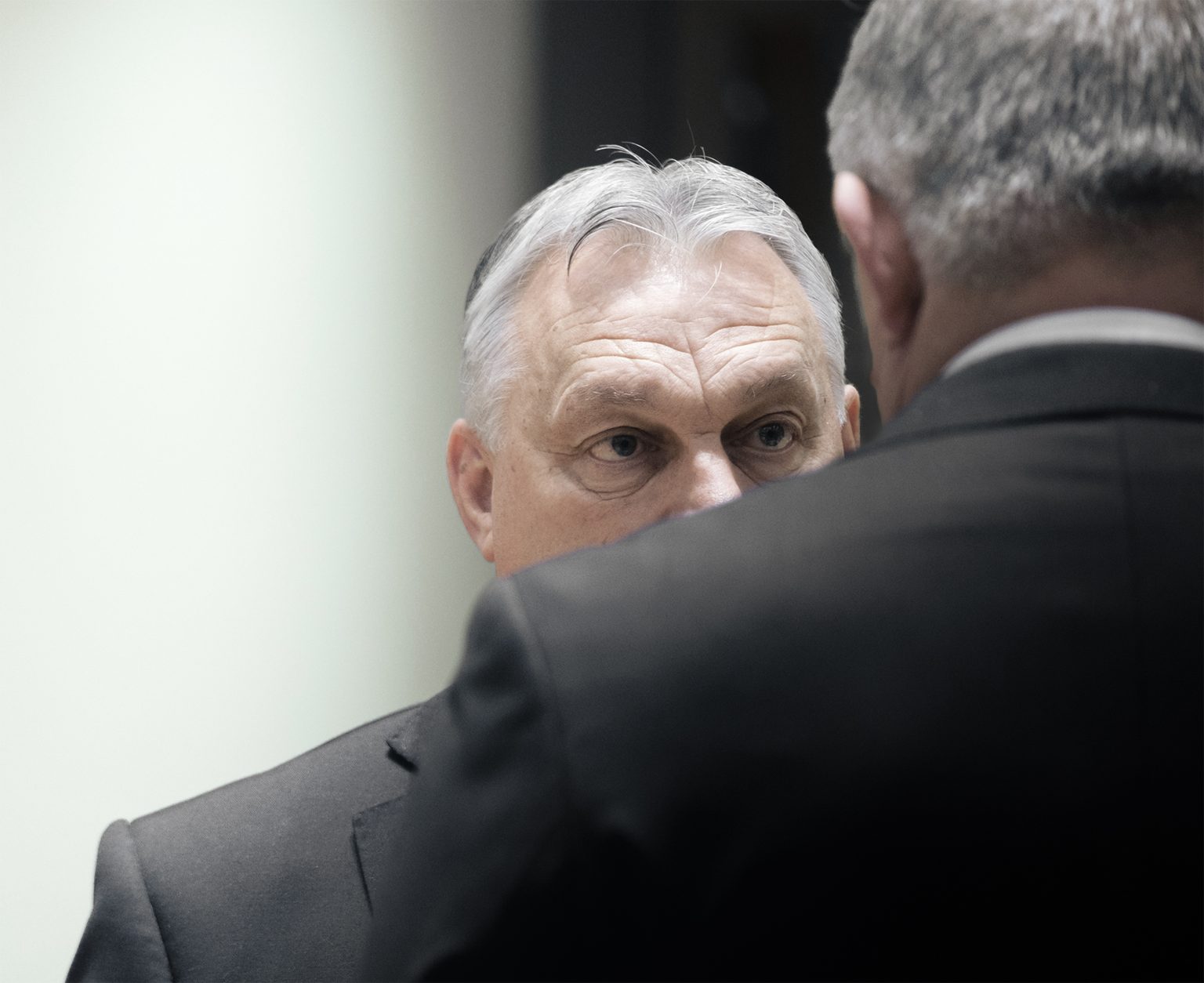
Disputes over EU funds for Ukraine and the Druzhba oil pipeline have once again highlighted the mutual frustration in Hungary and Slovakia’s relationship with the European Union.
In Brussels, Prime Ministers Viktor Orbán and Robert Fico are considered populists and nationalists who complicate European solutions to pressing problems. In the Danube capitals, on the other hand, governments complain that the EU does not stand up for them and instead forces them to take disadvantageous steps.
However, their clashes with Brussels are not only about Ukraine. They also concern migration, gender and other issues. Both governments are paying the price: they face sanctions, interference in domestic politics and attempts at international isolation. Whether such resistance pays off depends on how it is measured. But it is more legitimate than the conformist alternative.
It is worth recalling that such clashes were not yet on the horizon in 2004, when both countries joined the EU. At the time Orbán and Fico, then opposition leaders in their countries, supported accession, as did the vast majority of Slovak and Hungarian voters. Even today they do not question their countries’ membership of the EU, but they are noticeably more critical of Brussels than they were then.
It is a different Europe now
The European Union has changed significantly since then. Certainly, with the Maastricht Treaty it became more centralised, a development that many Europeans rejected. However, in 2004 it was still difficult to imagine that Brussels would tell member states not to protect their borders against illegal migration, that they should support a war in Eastern Europe or anywhere else in the world, or even influence what is taught in primary and secondary schools on gender or other issues.
Today this is the reality in Europe. The positions of member states vary. Some, such as Germany and France, are on the same wavelength as Brussels and do not mind the activities or strengthening of EU institutions, which they largely control and which, from their point of view, promote a good cause.
Others who are troubled by Brussels’ policies fall into three groups. The first consists of those who are so knowledgeable and respected that they can negotiate special treatment in the Brussels jungle, sparing them from the worst consequences. Belgium knows this, and so do other long-standing member states.
Others grit their teeth and submit, hoping that EU subsidies and the Commission’s favour will compensate them for the damage caused by policies imposed on them, which is typical of Eastern Europe.
And then there are a few, such as Hungary and Slovakia today, that go head-to-head with the Commission and Germany and earn themselves a reputation as outcasts.
Their resistance makes sense from three perspectives. First, the new member states from Eastern Europe are generally not entitled to special treatment in Brussels. Either because they have not had time to learn how to secure it, or because they have to fight against prejudices against Eastern Europe.
These are among the few prejudices that today’s politically correct Brussels can afford. It sees the region as an insufficiently civilised neighbourhood whose objections to Brussels’ policies are not the result of democratic will, but of incomplete Europeanisation.
The losses of Hungary or Slovakia resulting from Brussels’ policies will always appear lower and more negligible in the eyes of the European elite than the losses of Germany or the Benelux countries, even when they are actually higher. Resistance to Brussels is therefore resistance to this postcolonial template.
Secondly, it is also resistance by peripheral democracy to the bureaucracy of the centre. In Hungary and Slovakia, the social majority does not want mass migration or gender indoctrination and does not want to pay for the continuation of a lost war in Ukraine. Their political representatives are able to formulate these preferences politically and defend them democratically.
It is equally democratic for representatives of states with differently oriented political majorities, such as France or Germany, to defend opposite positions. But it is not democratic for them to impose those positions on others through European institutions.
Finally, the conflict with Brussels often involves very tangible and quantifiable needs. If Budapest and Bratislava are currently blocking funds for Ukraine in Brussels because of Ukraine’s blocking of the Druzhba oil pipeline, they are doing so because they simply need that oil. If they reject migrants, it is because they have calculated that migrants would bring high costs and low returns.
Compensation is not enough
However, the calculation is complicated by the fact that the European Commission is trying to make resistance by member states very costly through various soft and hard sanctions. Orbán could tell you a thing or two about that. On the other hand, it can reward those who remain loyal.
When Donald Tusk, Brussels’ favourite, returned to power in Poland after the previously ostracised Law and Justice party (PiS), the taps of European money were opened again despite his crackdown on the media and the courts. Brussels does everything it can to ensure that conformists leave with a positive balance sheet and that troublemakers count their losses.
However, in recent decades the EU has become so detached from reality that the costs of its decisions are reaching astronomical heights. Its compensatory measures are far from sufficient. Not only is resistance to Brussels’ nonsense justified, it also pays off.
The self-confident policies of Hungary and Slovakia are not leading to their international isolation, as Brussels would like. On the contrary, they are opening doors in Washington, Moscow and Beijing. Perhaps Prague and elsewhere in Central Europe will also take note.