
A short video filmed in Manchester has once again reignited one of the most contentious debates in British politics: whether the country operates under what is now called a ‘two-tier’ system. Many people in the country feel that traditional British equality under the law has been replaced with favouritism for some minority groups.
The footage, widely shared on social media, shows a group of South Asian men wearing armbands and riding horses through the streets of Manchester. When the cameraman tells police officers they have been chasing people and asks why they have not been arrested, a policeman makes excuses instead of acting. At that point, the cameraman claims that, had the horsemen been carrying the Union Jack flag of Britain, the police would have acted.
The clip has been circulated online as an example of the authorities allegedly tolerating behaviour that would have provoked a much stronger response if it were not from minority groups.
Policy proposal intensifies debate
Examples such as these are cited as evidence of a discriminatory system. Those using the term often point to the response to the Southport riots. In that case, the housewife Lucy Connolly was sent to prison for a social media post, while masked Muslim demonstrators in Birmingham patrolled the streets and harassed journalists without police intervention.
The phrase ‘two-tier’ has since spread widely online. Elon Musk has amplified it further by repeatedly referring to the Prime Minister, Keir Starmer, as ‘Two-tier Kier’.
This controversy has been amplified recently by the UK government’s proposed definition of anti-Muslim hatred. Ministers argue that the definition is intended to improve the recording of hate incidents and to ensure authorities properly recognise discrimination against Muslims.
Civil rights organisations such as the Free Speech Union, headed by Toby Young, argue that this will be used to muzzle free expression and amounts to a ‘Muslim blasphemy law via the back door’. The Free Speech Union has announced that they will challenge it in the courts.
Ultimately, it would mean that ethnic and religious minority groups will have greater protections than others. They note that other groups have not received similar special treatment, even though the biggest race crime in the last few decades is the grooming gangs, where mostly Muslim background men abused underage working-class girls who were usually white.
Meanwhile, some Muslim politicians, like Mothin Ali, the deputy leader of the Green Party, have claimed the definition didn't go far enough. Instead of ‘anti-Muslim hostility', they wanted it to be described as ‘Islamophobia'. Independent politician Iqbal Mohamed asked how the new definition would be integrated into the Nolan Principles, which are the ethical standards for public office, and what sanctions would be implemented for parliamentarians who breach the definition. That could mean this definition is being used to control what politicians and civil servants can say.
This is a very real concern. Guidance issued to teachers across the north of England, called ‘Sharing The Journey', suggested that children's drawings could be seen as blasphemous to Muslims, while music and dance lessons could also contravene Islamic teachings. It called for ‘sensitivity and awareness', but this amounts to allowing Islamic concerns to dictate what children can and cannot do.
The timing has also drawn scrutiny. Labour is facing political pressure in several constituencies with large Muslim populations following the war in Gaza. In the recent Gorton and Denton by-election, it lost a seat it has held for around a century, largely as a result of Muslim voters switching to the Green Party. Polling shows several senior ministers in heavily Muslim seats are on track to lose them in the next election.
Different treatment before the law
Another highly debated issue that has fuelled the ‘two-tier’ argument concerns new guidance proposed by the Sentencing Council. The draft guidance suggested that courts should consider a defendant’s ethnic or cultural background when deciding whether to request a pre-sentence report, which can influence the severity of punishment.
If this were applied, it could lead to different treatment based on ethnicity. The former Conservative politician Robert Jenrick warned at the time that the guidance risked creating ‘two systems of justice’, in which some offenders might receive more favourable consideration than others because of their background. Supporters of the proposal insisted that pre-sentence reports simply help judges understand personal circumstances and do not determine the final sentence.
Nevertheless, the proposal quickly became politically contentious, with opponents arguing that equality before the law requires sentencing decisions to be based on the offence and the individual’s actions rather than their ethnicity. The dispute has further intensified the broader debate over whether Britain’s legal system is moving away from strictly uniform treatment under the law.
Security concerns add another dimension to the debate
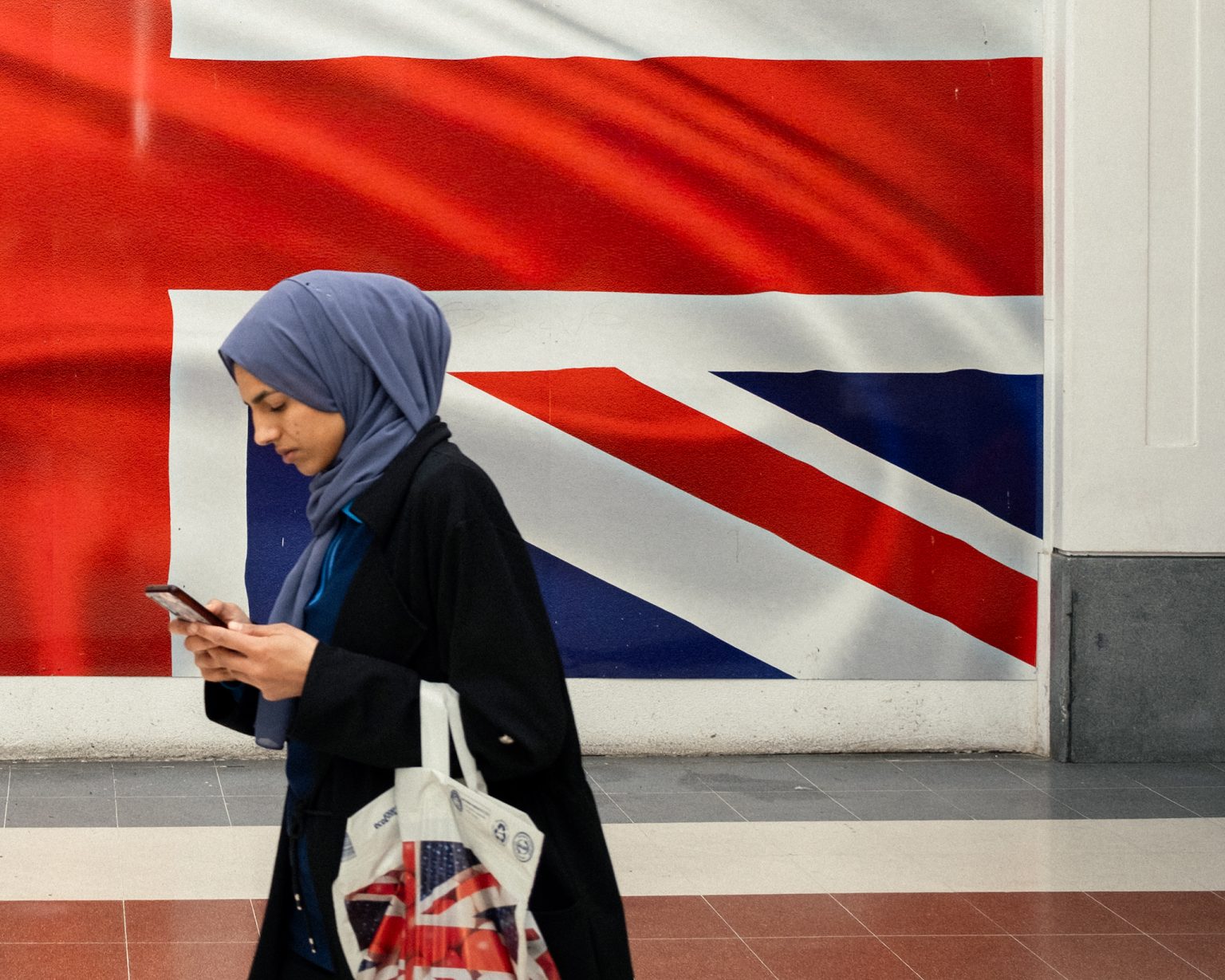
This controversy has also fed into a wider discussion about how British institutions approach questions of identity and integration. The publication of a new cohesion strategy has revealed how divided the country is becoming. A leaked draft suggested that flying the British flag, the Union Jack, could be used to ‘exclude or intimidate’ and described it and other flags as being ‘tools of hate’. The Government confirmed that this language would not be in the final report, but that it was even considered has sparked outrage.
The published report admits that trust in institutions is declining and that tensions between communities are getting worse. However, it blames this on ‘division’. The report does include measures to try and stop Islamists from infiltrating the charity and university sectors, but this is outweighed by the new anti-Muslim hostility definition, together with a ‘tsar’ to implement it and funding for a charity which records supposed anti-Muslim hate.
That is despite the Shawcross review, into the Government's counter-extremism strategy, which noted that 80% of live counter-terrorism police investigations involved Islamists, but that authorities failed to tackle non-violent Islamic extremism.
Growing tensions unlikely to disappear
In an age of viral videos and constant online commentary, a few seconds of footage can quickly expose deep divisions and ignite debate about policing, identity and fairness. Yet the intensity of the response suggests that the issue goes far beyond a single incident captured on a phone camera. For many observers, it reflects the accumulation of long-standing tensions surrounding immigration and integration.
For many people in Britain, these issues also highlight a broader uncertainty about how the rules governing public life are applied. In such an atmosphere, even relatively small incidents can rapidly acquire symbolic meaning, feeding public anger and mistrust. This can spill over into wider unrest, as seen during the riots in Southport.
Restoring public confidence will therefore require more than simply clarifying the circumstances of individual incidents. Both the current government and its predecessors have struggled to address this effectively. Unless a clear sense of fairness and consistency can be restored, the perception that Britain operates under different standards for different groups will continue to resurface in political debate and public discussion.