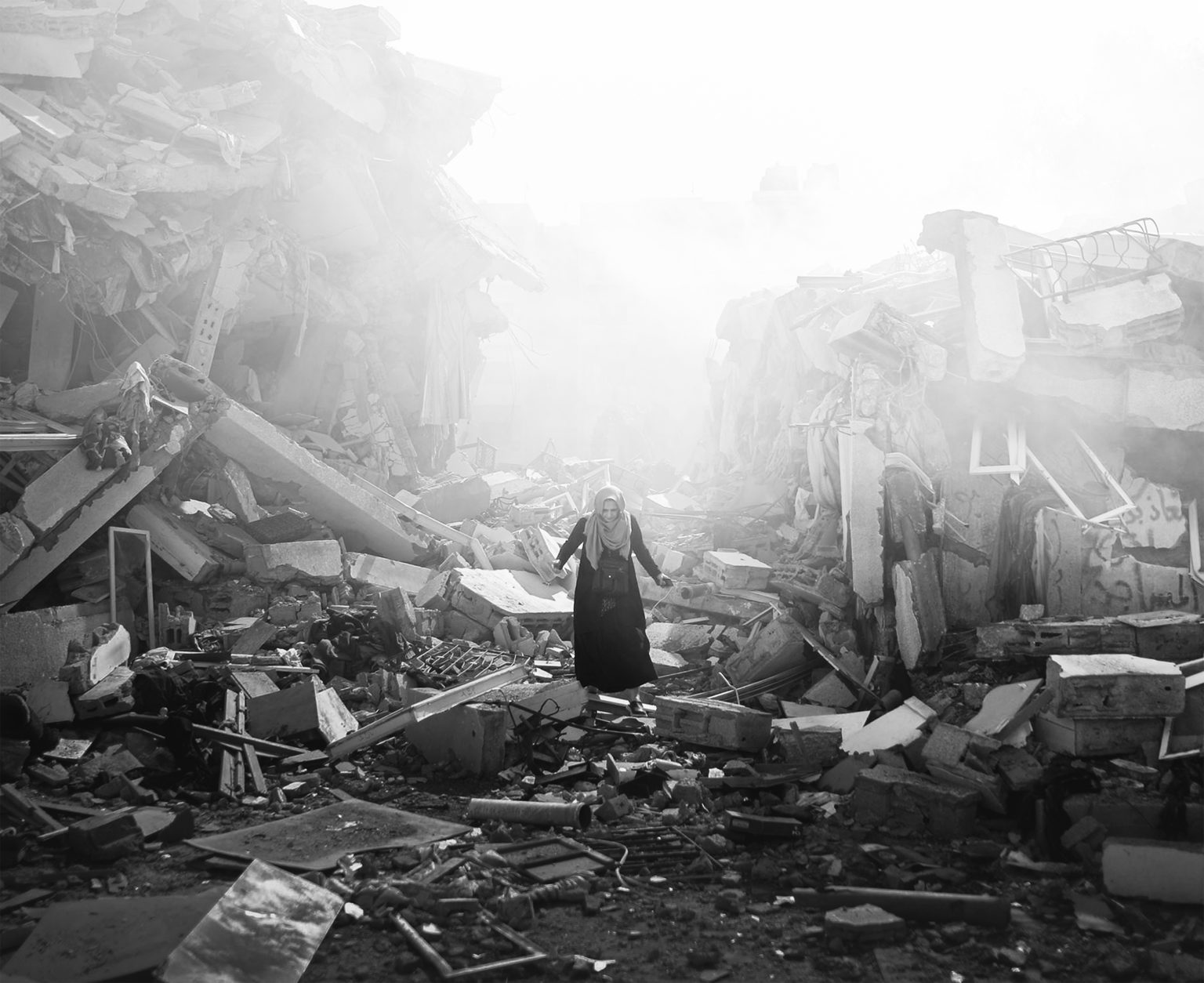
A distraught resident walks through the rubble of residential buildings following Israeli airstrikes in the al-Zahra neighborhood of the Gaza Strip. Photo: Mustafa Hassona/Anadolu via Getty Images
Could the conflict in the Middle East lead to a world war?
The Israeli Arab military confrontations are stages of a seemingly endless war. They are now escalating into religious confrontations that risk expanding to a global scale.
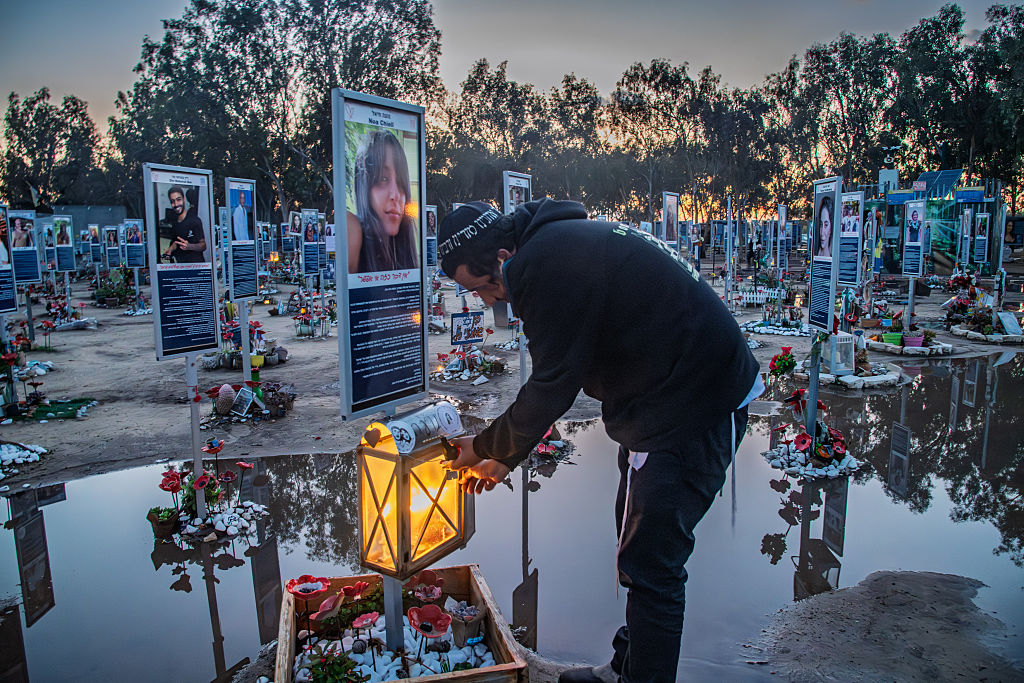
On October 7, 2023, the Palestinian armed movement Hamas launched another round of deadly attacks against Israel, striking kibbutzim in the south of the country and the Nova festival in the Negev desert. Members of Hamas and allied militant groups killed nearly 1,200 people, took 251 hostages, and shattered the myth of Israel’s impregnable border.
Just two years earlier, a series of shootouts had taken place between Gaza and Tel Aviv, which, like previous conflicts, had no conclusion. Even at that time, analysts warned that only a situation in which Palestinian militants did not launch further combat operations could be considered an ‘Israeli victory’.
According to this view, Israel lost the war in the spring of 2021 because it failed to secure an end to the violence. At the same time, however, it must be acknowledged that it is pursuing its strategic goals, and wars in the Middle East are almost without exception part of one ‘super-war’.
A year later, Tel Aviv attacked the positions of Islamic Jihad and eliminated virtually its entire leadership in a single weekend. The terror group Hamas did not become involved in the conflict, as it probably did not want to risk Israeli retaliation.
A visitor lights candles in the Menorah under a plaque at the Nova memorial site. This is the location where 364 young people were murdered, and dozens more were kidnapped during the Hamas terrorist attack on October 7, 2023. Photo: Eli Basri/SOPA Images/LightRocket via Getty Images
A thousand years of bloodshed
War in the area now known as the Gaza Strip has erupted intermittently since the third millennium BC. This narrow strip of land, with the cities of Gaza, Ashkelon and Ashdod, was contested by the great powers of the Bronze Age and later settled by the Philistines, who left behind the name Palestinians.
They also gave their name to the wider area that we now call Israel. After suppressing a series of Jewish uprisings between 66 and 135, known as the Roman Jewish wars, the Romans erased local names such as Judea, Samaria and Galilee and introduced the name ‘Syria Palaestina’.
Palestinians and Jews have been fighting for independence since before the creation of Israel. In 1936, an Arab revolt broke out in response to increased Jewish migration from Europe and conflict over the land. Then, from 1944, Zionist armed groups began an armed campaign against British rule in what was then the Mandate for Palestine.
In response to the proposed UN partition of Palestine between Jews and Arabs, civil strife broke out. Correctly fearing an Arab invasion, Zionist forces began to seize areas and then declared Israeli independence. The following day Egyptian, Transfordanian, Syrian and Iraqi troops attacked. After a war lasting ten months, Israel had not only defended the territory intended by the UN for the Jewish state but had also captured more than half of that intended for the Palestinians.
The historical paradox of the Zionist armed organisations, such as the Haganah, from which the Israel Defence Forces later emerged, the Irgun and Lehi lies in the fact that, together with medical, social and even sporting institutions such as Maccabi, they effectively formed a state even before Israel declared independence.
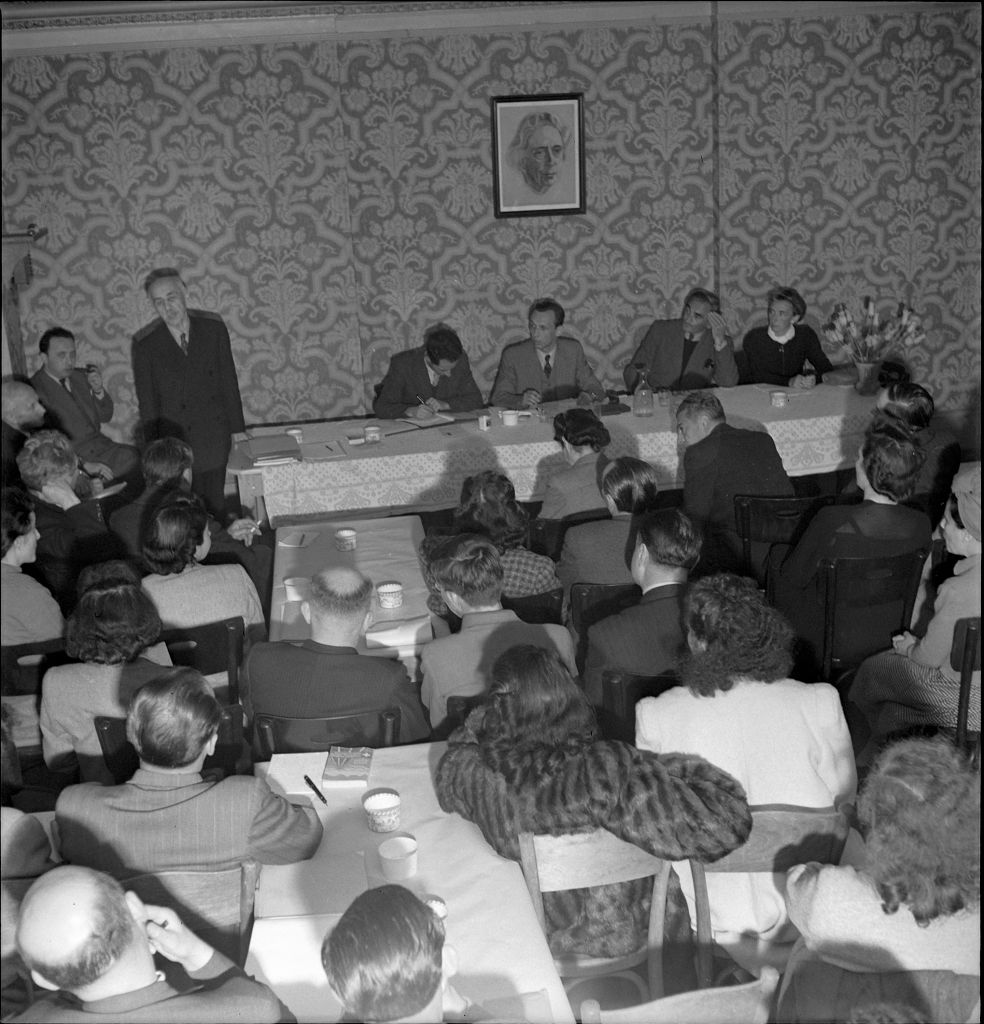
The World Zionist Organisation, through the Jewish Agency, represented the administrative authority. The Jewish National Council in Palestine exercised executive powers and was accountable to the House of Representatives, which led observers to describe the structure as a ‘virtual Jewish non-territorial state’, as noted by the Anglo-American Commission report of 1946.
World Zionist Organisation congress, 1946. Photo: RDB/ullstein bild via Getty Images
Domestic wars
After the Arab-Israel war of 1948, Egypt controlled the Gaza Strip and Transjordan what is now the West Bank. Israelis refer to this area by the historical terms Judea and Samaria, after the principalities and later Roman provinces located west of the River Jordan.
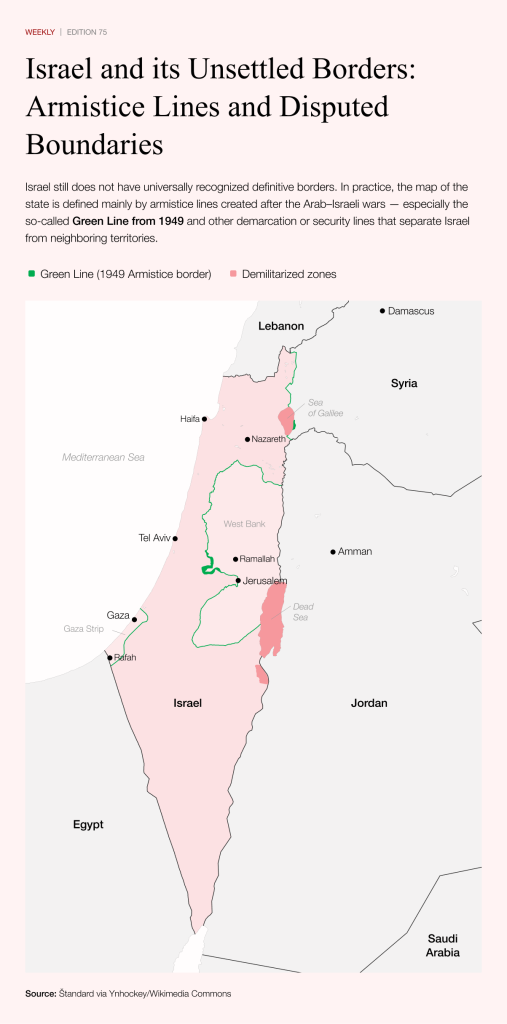
Because the Jewish state faced war immediately after its creation, it still does not have a fixed border. The lines recognised in contemporary geography are in reality armistice lines along which a decades-long truce has largely held.
The longest of these is the Green Line. It outlines Israel itself without the Gaza Strip and the West Bank, and the UN recognises it only as a de facto border. In 1967 Israel fought a surprise six day war against Syria, Jordan and Egypt in which it occupied the entire West Bank, Gaza and the Sinai Peninsula, which it later returned to Egypt under the Camp David peace treaty of 1978.
Source: Statement.com via Ynhockey/Wikimedia Commons
Lebanon is separated from Israel by the Blue Line. The UN insisted on its observance amid recurring clashes between Israel and the Shiite militant movement Hezbollah, which rejects the demilitarisation of southern Lebanon.
Israel has conducted three ground operations against this northern neighbour, in 1978, 1982 and 2006. The first two of these were against the PLO, which recruited amongst the Palestinian refugees living in Lebanon.
The return of Sinai was ultimately a consequence of the Yom Kippur war of 1973, which intertwined Israeli Arab hostility with Cold War rivalry. The Arab side was supported by the Soviet Union, which caused considerable disappointment among some left-wing American Zionists and helped to spur the rise of neoconservatism.
The peace treaty was signed at the US president’s summer residence by Egyptian President Anwar Sadat, who was subsequently assassinated by members of Egyptian Islamic Jihad outraged at this accommodation with Israel.
Other opponents of Israel included Iraq and Saudi Arabia. After the fall of Saddam Hussein, however, Iraq became a failed state, while Saudi Arabia appeared inclined to sign the Abraham Accords before October 7, 2023. This diplomatic framework was launched under Donald Trump and offered incentives and international concessions in exchange for recognising Israel.
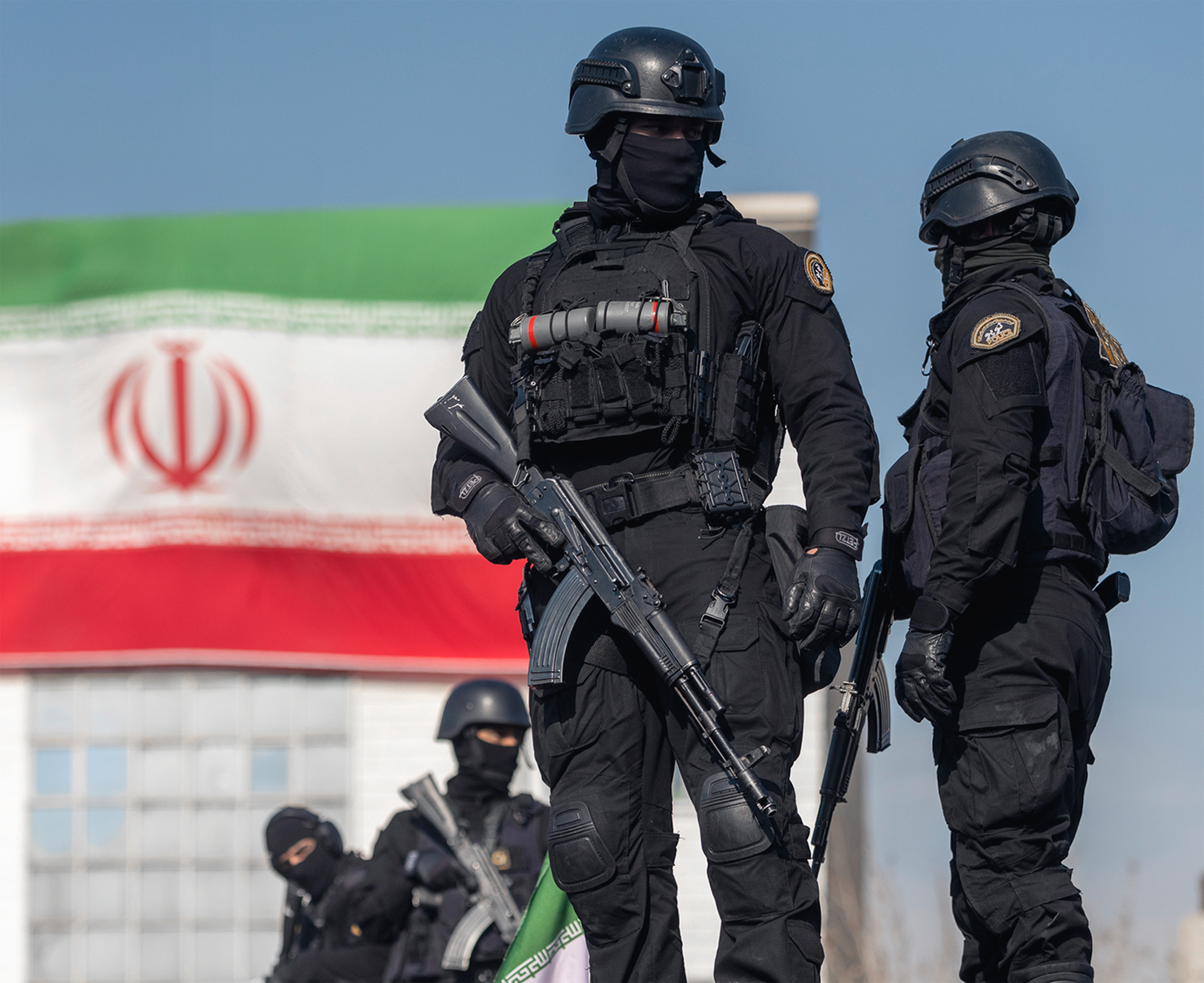
Although Arab rhetoric in this ‘super-war’ often invoked the Koran, the underlying conflicts were initially national in character – particularly the question of the Palestinian people and their right to self-determination. Israel’s most prominent challenger in the region today, however, is Iran, which is not Arab but as a Shiite ‘Islamic republic’, openly speaks of religious war.
This did not prevent Tehran from supporting Sunni militant movements such as Hamas, as well as Palestinian Islamic Jihad and other groups with differing agendas. Hamas has ruled Gaza essentially without opposition since 2009, and according to its charter, its objective is the destruction of Israel and the establishment of Palestine as a nation-state.
This has produced a paradoxical situation in which Shiite Iran supports not only allied militias such as Lebanon’s Hezbollah and Yemen’s Ansar Allah – the Houthis – but also the Sunni movement Hamas. As the strongest force in Gaza, it was the only organisation capable of breaching the border blockade imposed by Israel after its unilateral withdrawal in 2006.
Militants on motorised scooters raided the Nova festival site, a series of kibbutzim along the border, and a military base. They murdered 1,195 people and kidnapped another 251. Hamas returned the last hostages and their remains at the end of 2025.
Israel responded with a massive air campaign and, despite warnings, sent ground troops into the streets of Gaza City on October 27. The result, according to the Gaza health ministry, was the destruction of 95 per cent of buildings and infrastructure and the deaths of more than 75,000 Palestinians.
Meanwhile, Iran was fighting a proxy war that also led to direct exchanges between aspiring regional powers. In April and October 2024, the two countries traded fire. The first round followed the Israeli bombing of the Iranian consulate in Damascus, in which seven members of the Islamic Revolutionary Guard Corps were killed.
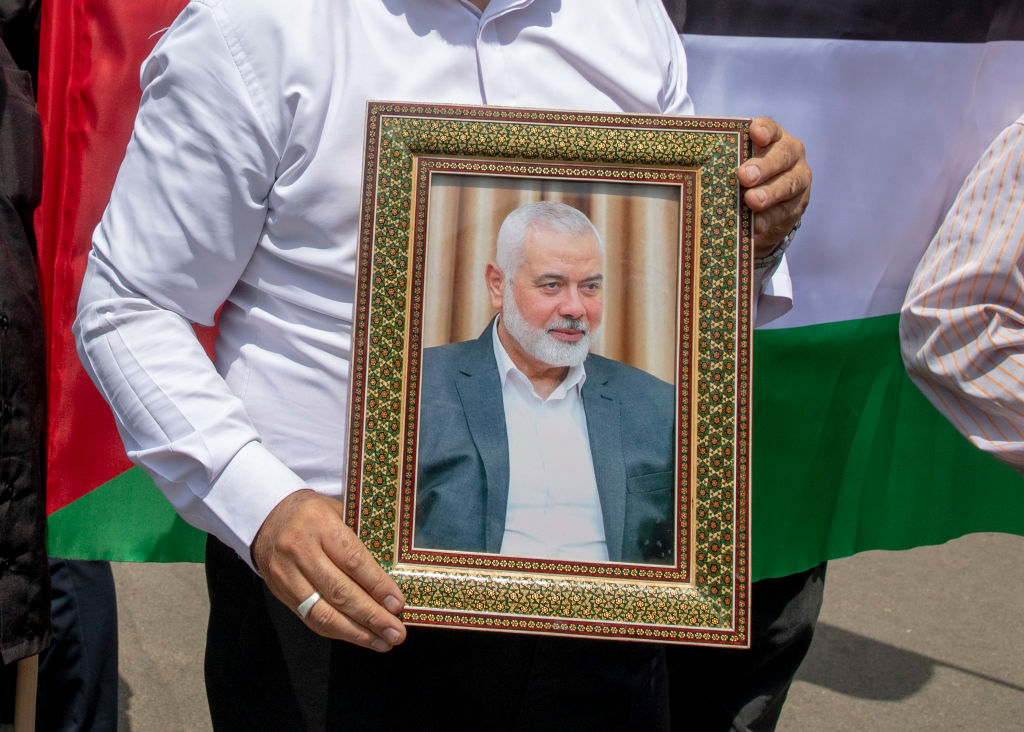
The second followed the killing of Hamas leader Ismail Haniyeh in Tehran. Haniyeh had attended the inauguration of President Masoud Pezeshkian when his secure apartment in the centre of the Iranian capital was reportedly attacked by Mossad agents.
Members of Tehran University Council attend a protest to condemn the killing of Hamas leader Ismail Haniyeh, as they carry Iranian and Palestinian flags at Tehran University, July 31, 2024 in Tehran, Iran. Photo: Majid Saeedi/Getty Images
Israel-Iran conflict draws US into the confrontation
Israel launched further strikes after the International Atomic Energy Agency reported that Iran’s nuclear programme had exceeded the 95 per cent enrichment threshold for isotopes, although there were no firm indications that the programme was military in nature. After several days of escalation, the United States bombed Iranian nuclear facilities, bringing the 12-day conflict to an end, according to Trump.
The confrontation between Israel and Iran thus began to overlap with the looming global conflict. Israel is backed by a coalition of pro-Israel lobbyists in the United States, urging the Trump administration to take military action, while Iran forms part of the ‘anti-imperialist’ CRINK alignment alongside China, Russia and North Korea.
The Abraham Accords also became the focus of further tension. In September 2024, Saudi Crown Prince Mohammed bin Salman rejected the normalisation of relations with Israel until it recognised Palestinian statehood as part of a bilateral settlement.
The United Arab Emirates, however, joined the US-brokered agreements in 2020 and immediately became the target of accusations of Zionism from representatives of the Saudi monarchy.
Washington Post analyst David Ignatius recently quoted Saudi commentary about the Emirates which called it ‘Israel’s Trojan horse’. ‘After Saudi Arabia bombed Emirati forces in Yemen on December 30, there was a dramatic increase in Saudi posts criticising Israel, with 77 per cent of comments attacking the Emirates as Israel’s proxy carrying out Zionist plans to divide Arab states’, he said.
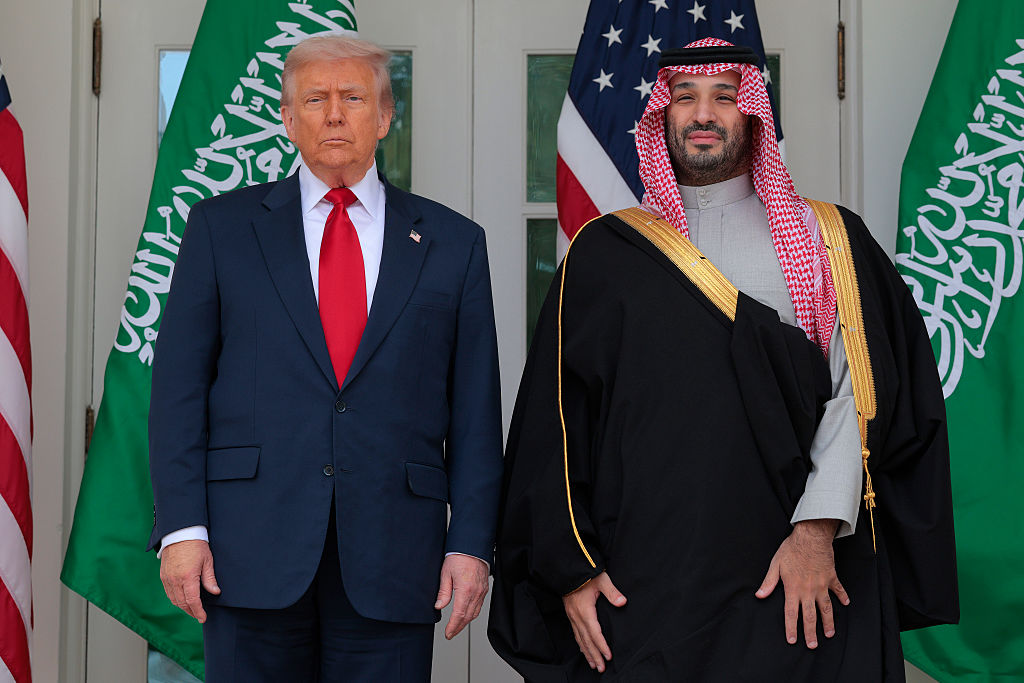
US President Donald Trump and Crown Prince and Prime Minister Mohammed bin Salman of Saudi Arabia pause for photographs along the West Wing Colonnade at the White House on November 18, 2025 in Washington, DC. The two leaders held meetings aimed at strengthening economic and defence ties, including the sale of F-35 fighter jets to Saudi Arabia. Photo: Chip Somodevilla/Getty Images
A new geopolitical fault line from Africa to eastern Europe
What began as an Israeli-Arab conflict is gradually evolving into an Israeli-Iranian and Saudi-Emirati confrontation. These conflicts, still largely fought through proxies, increasingly threaten to merge.
Pope Francis pointed to this trend as early as 2020, when he spoke of a ‘fragmented’ third world war unfolding before our eyes. ‘We are currently experiencing a war between Russia and Ukraine, but there have been a whole series of asymmetric wars of a similar nature in recent years,’ former ambassador to the Holy See Marek Lisánsky reminded Statement.com.
According to the Vatican, this chain of conflicts stretches from West Africa through the Sahel, Sudan, Ethiopia, the Middle East and the Caucasus to eastern Europe. Within this arc lie Europe and North Africa, where instability and growing violence are forcing millions of people to flee, often towards the EU.
In these wars between Shiites, Sunnis, Alawites, Christians and Jews, or between different systems of government, such as monarchy in Saudi Arabia and federation in the Emirates, some actors harbour sectarian hostility. At the centre of this ‘chain of wars’ stands Israel, the only democracy in the Middle East, which, after the destabilisation of its neighbours, could remain the region’s only fully functioning state and thus become the dominant power in the Middle East.
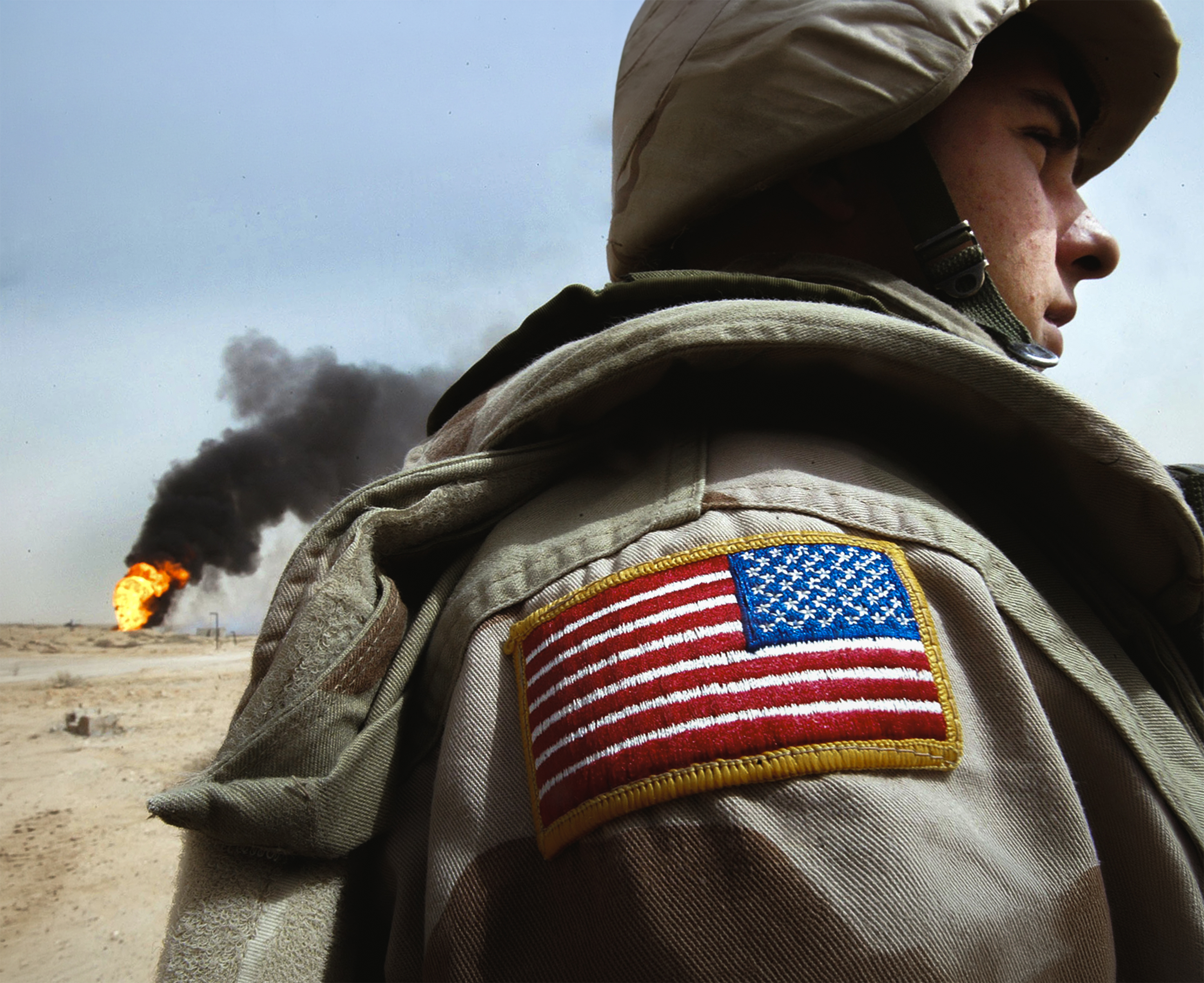
However, this Vatican assessment proved overly optimistic. In 2026 the United States and Israel began a war against Iran, calling on the people of Iran to rise up. The war has been justified on the grounds that Iran is a sponsor of terrorist organisations, that Iran has been building thousands of ballistic missiles and is trying to restart elements of its nuclear programme. The conflict has led to strikes by Iran on Israel, the Gulf States, and Western military bases in Cyprus and Iraq. The Straits of Hormuz have also been closed to shipping by Iran, causing economic ripples across the world.
If the conflict continues to escalate, it could mark the outbreak of a third world war. Tel Aviv would not enjoy the status of a regional superpower for long.
Here is placeholder for Article excerpt Here is placeholder for Article excerpt Here is placeholder for Article excerpt Here is placeholder for Article excerpt
Here is placeholder for Article excerpt Here is placeholder for Article excerpt Here is placeholder for Article excerpt Here is placeholder for Article excerpt
Here is placeholder for Article excerpt Here is placeholder for Article excerpt Here is placeholder for Article excerpt Here is placeholder for Article excerpt
Welcome to the comments section of the Štandard daily. Please take note of our guidelines, comments are moderated by us. You can contact the moderators at [email protected].
Participate in the discussion
Comments are available to subscribers only. If you'd like to join the discussion, choose a subscription starting at €6.72 per month.
All comments 0
Register
Comments are available to registered users only. If you'd like to join the discussion, register here.