
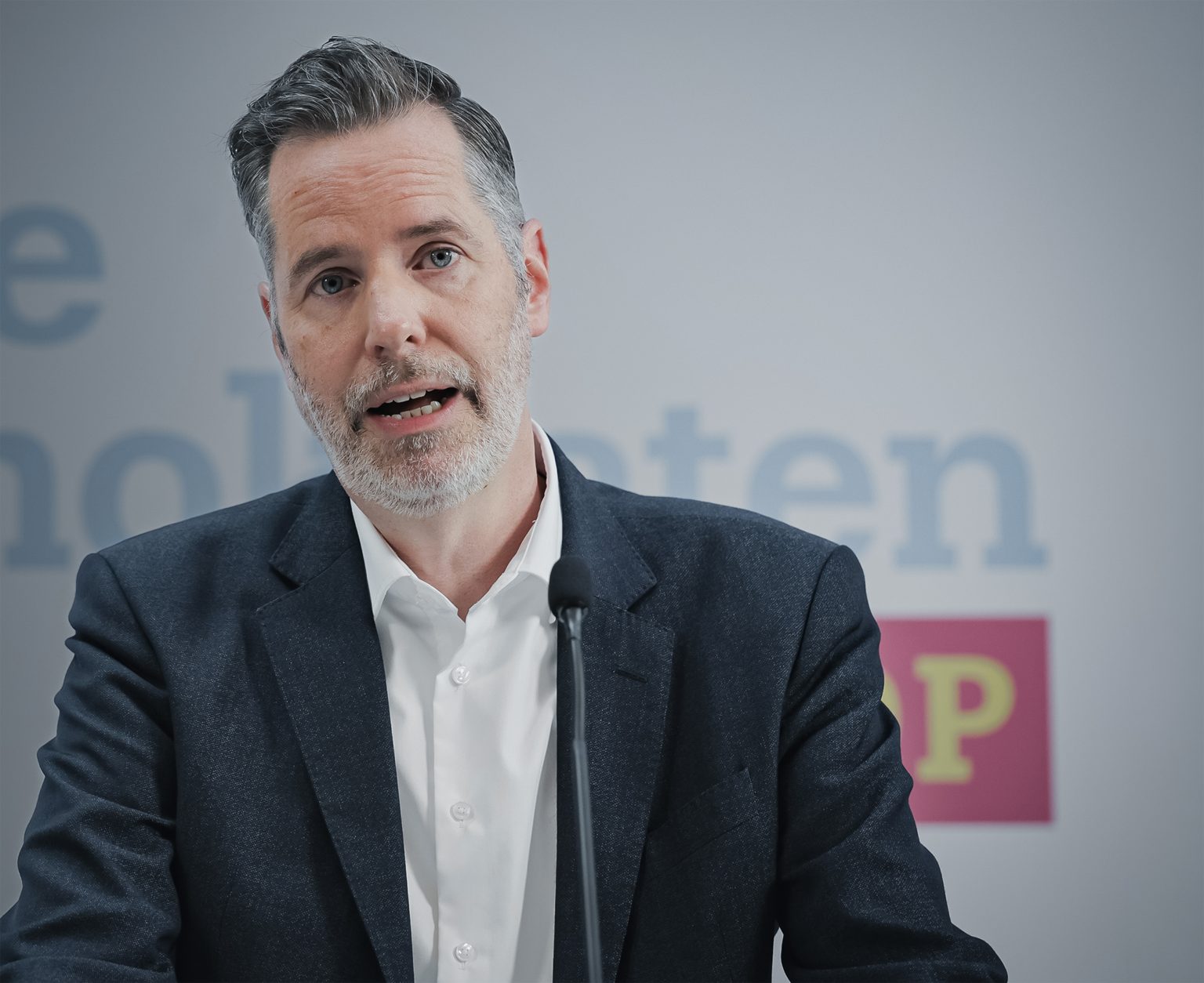
For Friedrich Merz, the matter is clear. Germany’s chancellor and leader of the CDU thinks the FDP is finished. The German liberal party FDP has, he argues, effectively disappeared from Germany’s political stage. ‘It will no longer play any role.’
Referring to the forthcoming state election in Rhineland-Palatinate on 22 March, Merz went further, advising the FDP’s remaining voters to support the CDU instead, ‘so that there can be a corresponding change in the office of minister-president.’
The trigger for Merz’s biting prediction was the FDP’s result in the state election in Baden-Württemberg last Sunday. The state in Germany’s south-west, bordering France and Switzerland, is historically regarded as the heartland of German liberalism. The historic predecessor of the German liberals was founded here in 1864. After the Second World War the FDP even once produced the state’s minister-president. Theodor Heuss, the first federal president of West Germany, also came from this region.
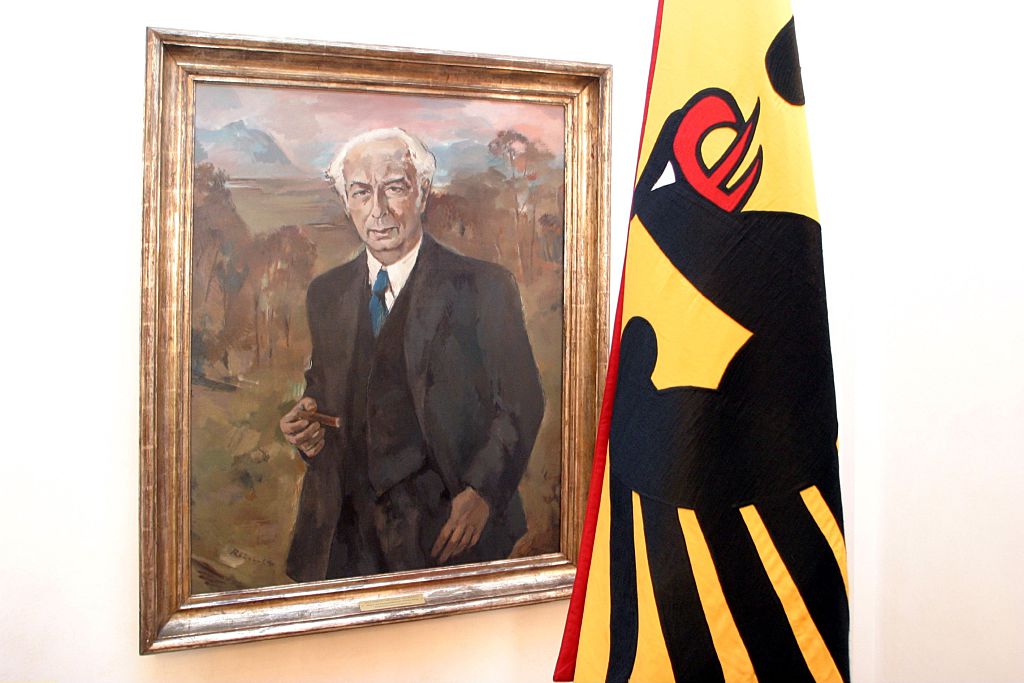
Painting of Theodor Heuss (FDP), the first federal president of the Federal Republic of Germany, in the Villa Hammerschmidt in Bonn. Photo by Bonn-Sequenz/ullstein bild via Getty Images
FDP falls below threshold as Merz launches attack on former allies
And then this: a meagre 4.4 per cent in the election on 8 March. The result means the FDP has failed to clear the five-per-cent threshold and will not be represented in the new state parliament at all. That is a catastrophe, compared to the 10.5 per cent they achieved in the prior state election. After the disastrous federal election about a year ago, observers already knew the party’s situation was far from encouraging. Yet even within the FDP few had expected such a poor result. The shock within the party was correspondingly great.
All the more remarkable, therefore, was the chancellor’s reaction to the liberals’ disastrous showing. Merz’s attack appears to be an attempt to suffocate the FDP politically in order not to go under himself. That is not only impertinent. It is also short-sighted.
For the FDP remains, as matters stand, the only party in Germany’s political spectrum with which the CDU can realistically form a coalition without abandoning too much of its own identity. Alliances with the SPD and the Greens increasingly estrange the CDU from its own base. Cooperation with the AfD, meanwhile, would, at least for now, tear the conservative bloc apart internally.
It was the FDP’s old warhorse Wolfgang Kubicki, the party’s former leader in Schleswig-Holstein and a former vice-president of the Bundestag, who delivered the sharpest reply to Merz. ‘A party leader who is currently ruining his own party through a lack of reforms he has announced but failed to implement should focus on himself and his own party and not on the FDP,’ Kubicki said in an interview.
He added: ‘This party, this Friedrich Merz, simply cannot be trusted.’
A leadership vacuum deepens the liberals’ crisis
At this point not only members and supporters of the FDP began asking why the outspoken and widely respected Kubicki himself should not take over the party. Yet the lawyer from northern Germany is 74 and clearly unwilling to put himself through the ordeal of leading a party in an existential crisis. When asked about such plans, he repeatedly points to younger figures within the party.
Younger, certainly, are the current party leader Christian Dürr, 48, and the party’s secretary-general Nicole Büttner, 41. But youth alone is not enough. In the nearly 10 months they have each been in office, Dürr and Büttner have failed to instil a sense of renewal, programmatic clarity or belief in a political comeback.
Dürr has repeatedly pointed out, not without reason, that the FDP is in the midst of a process of renewal and needs time. The only question is whether it still has that time – and whether the duo of Dürr and Büttner is the right team to turn the ship around. Most within the party believe the answer is no and regard the pair as a temporary solution. Yet there is a real danger that the temporary solution may become the final one.
Since the debacle in Baden-Württemberg, German media have increasingly begun to toll the party’s death knell: politically superfluous, irrelevant, devoid of ideas and lacking convincing personnel. That is the prevailing verdict. Within the FDP, naturally, the view is different.
Liberal ideas, missed opportunities
Finn Flebbe, leader of the Young Liberals, the party’s youth organisation, stressed that the FDP is needed now more than ever, ‘as the only consistent force for freedom, opportunity and personal responsibility.’
In a certain sense, Flebbe even has a point. Germany’s party landscape resembles a cartel of believers in the state. Not only the Left, the SPD and the Greens place their faith in the supposedly beneficent power of the state. The CDU and the AfD do so as well. The parties differ only in their priorities. Traditionally, only the FDP represents a certain scepticism towards state authority and the conviction that the state should not regulate or prescribe everything that may appear desirable or reasonable.
Moreover, liberal themes have been pressing for years yet remain largely unused by the party that should champion them. The curtailment of civil liberties during the coronavirus pandemic, increasing restrictions on freedom of expression in the digital sphere, the state’s growing regulatory zeal reaching deep into private life, extensive regulation in energy policy, economic decline and interventions in entrepreneurial freedom. Again and again the FDP has missed the opportunity to seize these issues.
FDP searches for a path after losing its role in government
Germany is experiencing multiple crises. Its economy is weakening. Key industries are struggling. Formerly celebrated companies report falling revenues. At the same time the country’s infrastructure is ageing. The railway system alone faces a vast backlog of renovation that will take decades to address. Meanwhile citizens witness the decline of city centres, empty shops, rising crime and signs of urban decay.
In such a climate of collective uncertainty, calls for a strong state are hardly surprising. Liberal ideals such as freedom and self-determination retreat into the background. In such circumstances a party like the FDP, traditionally associated with personal responsibility and individual autonomy, inevitably faces an uphill struggle. It also lacks a charismatic leader, in the mould of Argentina’s president Javier Milei, who would articulate bold demands.
The liberals face an additional strategic dilemma. For more than three decades, the old Federal Republic effectively operated with a three-party system consisting of the CDU, SPD and FDP. This gave the liberals the role of kingmaker. As absolute majorities are rare in Germany, the FDP often decided whether Christian Democrats or Social Democrats governed while presenting itself as a corrective against policies that were too left-wing or too conservative.
This role has now been lost. It has largely been taken over by the Greens, who can also form coalitions with both the CDU and the SPD. It illustrates how far Germany’s political centre of gravity has shifted to the left.
The FDP’s fight for relevance
The FDP’s loss of its traditional role as a government-maker is not entirely its own fault. It also reflects the weakness of the CDU and SPD. It was no coincidence that the last government involving the FDP was a three-party coalition. The CDU and particularly the SPD have meanwhile become too weak to govern in a two-party alliance with the liberals alone.
This has made the FDP’s position far more difficult. Liberal ideas are even harder to implement in three-party coalitions than in alliances with a single, usually stronger partner. The last federal government of SPD, Greens and FDP demonstrated this clearly. In such a coalition the liberals can rarely set their own agenda and are often reduced to blocking the most intrusive proposals.
That role may be useful. Yet the image of the perpetual nay-sayer is unpopular, especially in largely left-leaning media. As a result the FDP is quickly portrayed in the public sphere as destructive and directionless, while its own voters turn away in disappointment at a party that sits in government yet delivers little of what it promised during the campaign.
The uncertainty within the FDP is therefore considerable. How should the party proceed? Should it adopt a libertarian course inspired by Argentina’s president Milei? Or would such symbolism, including chainsaws, be too radical for Germany’s comparatively comfortable middle class, the FDP’s potential electorate?

Between libertarianism and caution
An intense debate has erupted among liberals. Some fear that a strongly libertarian course would alienate large sections of potential supporters. Others insist the party must sharpen its profile.
The uncomfortable truth is that both sides are right. Liberal positions have long been regarded in Germany as somewhat suspect, even among large sections of the middle class. Germans tend to favour a protective state that guarantees social, economic and societal security and are often willing to surrender a degree of personal freedom in return.
Under such conditions liberal arguments struggle to gain traction even among high earners who may keep a Porsche or BMW in the garage yet still vote for the Greens or the CDU.
Opinion polls and past election results suggest that even in this rather state-centred political culture there remains a potential electorate for a liberal party. Around twenty per cent of Germans regularly say they could imagine voting for the FDP. In the federal election of 2021 the party still won more than 11 per cent and performed particularly well among younger voters.
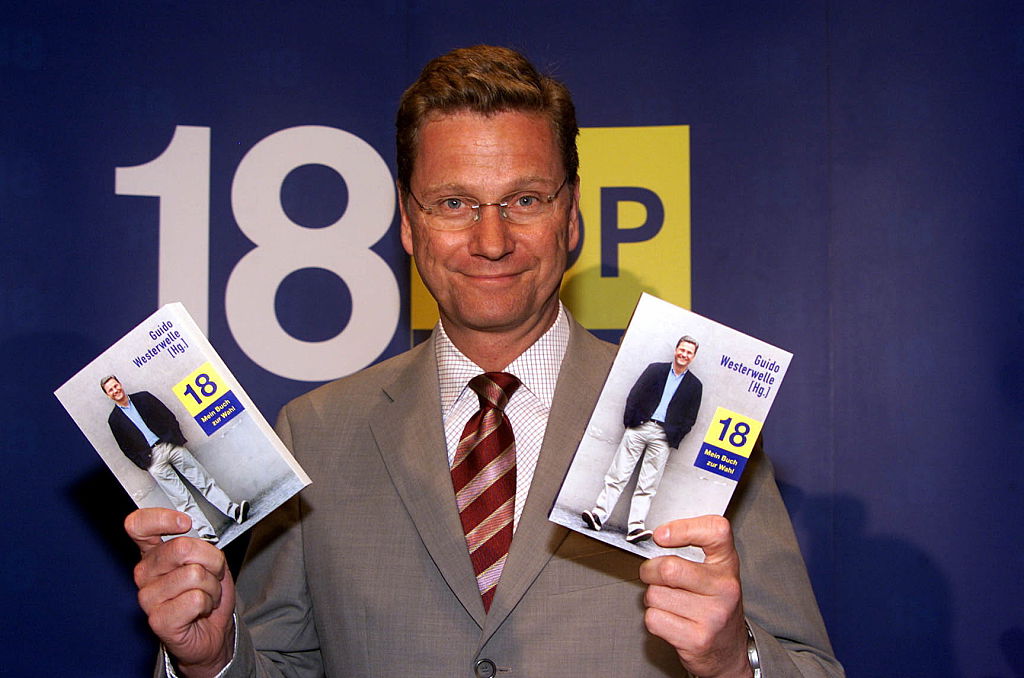
The former FDP leader Guido Westerwelle once launched his ‘Project 18’ in an attempt to raise the party’s support to 18 per cent. Today the FDP struggles merely to clear the five-per-cent threshold in many state and federal elections.
It is clear that the FDP has little left to gain on the left side of the political centre. That space is already crowded by the Greens, the SPD and parts of the CDU. What the party needs is a clear and sharply defined liberal-conservative course to reposition itself.
That means, first, not chasing every passing political fashion. Second, consistently defending individual freedom against an overreaching state but also against equally intrusive international corporations.
If the FDP wants a future, it must win back some of the disillusioned voters who have turned to the AfD because they feel nothing in Germany is changing otherwise. Should the party also succeed in choosing a charismatic leadership figure, it might even emerge strengthened from the current crisis. For the moment, however, no such leader is in sight.