The super-election year is reshaping German politics
Germany faces a year of decisive regional elections. The vote in Baden-Württemberg offers a first glimpse of shifting voter behaviour, tactical voting and growing pressure on the established parties.
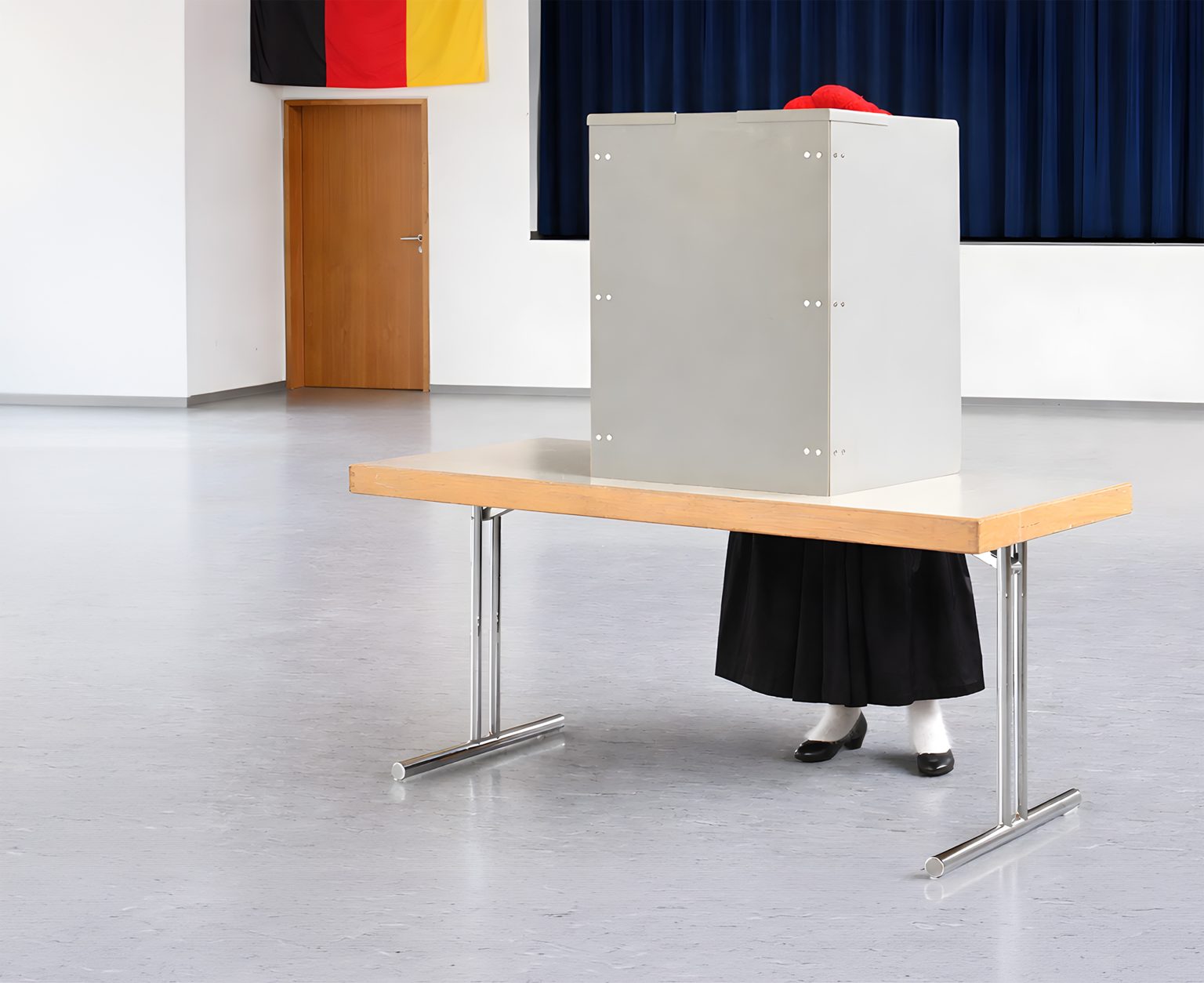
Germany’s 5% electoral threshold is under renewed scrutiny over the millions of votes left without representation. Photo: Thomas Kienzle/AFP/Profimedia
|
On 8 March Baden-Württemberg held the first of five state elections taking place in Germany this year. As recently as October, the centre-right Christian Democratic Union (CDU) held a lead of 14 percentage points over the centre-left Greens. Ten days before the vote that advantage had shrunk to three points, and on election day both parties finished almost level, each with roughly 30 per cent – the Greens with 30.3 per cent and the CDU with 29.7 per cent.
The Greens interpret their margin of half a percentage point, combined with an identical distribution of seats in the parliament, as a mandate to lead the government and provide the minister-president.
A race decided at the last minute
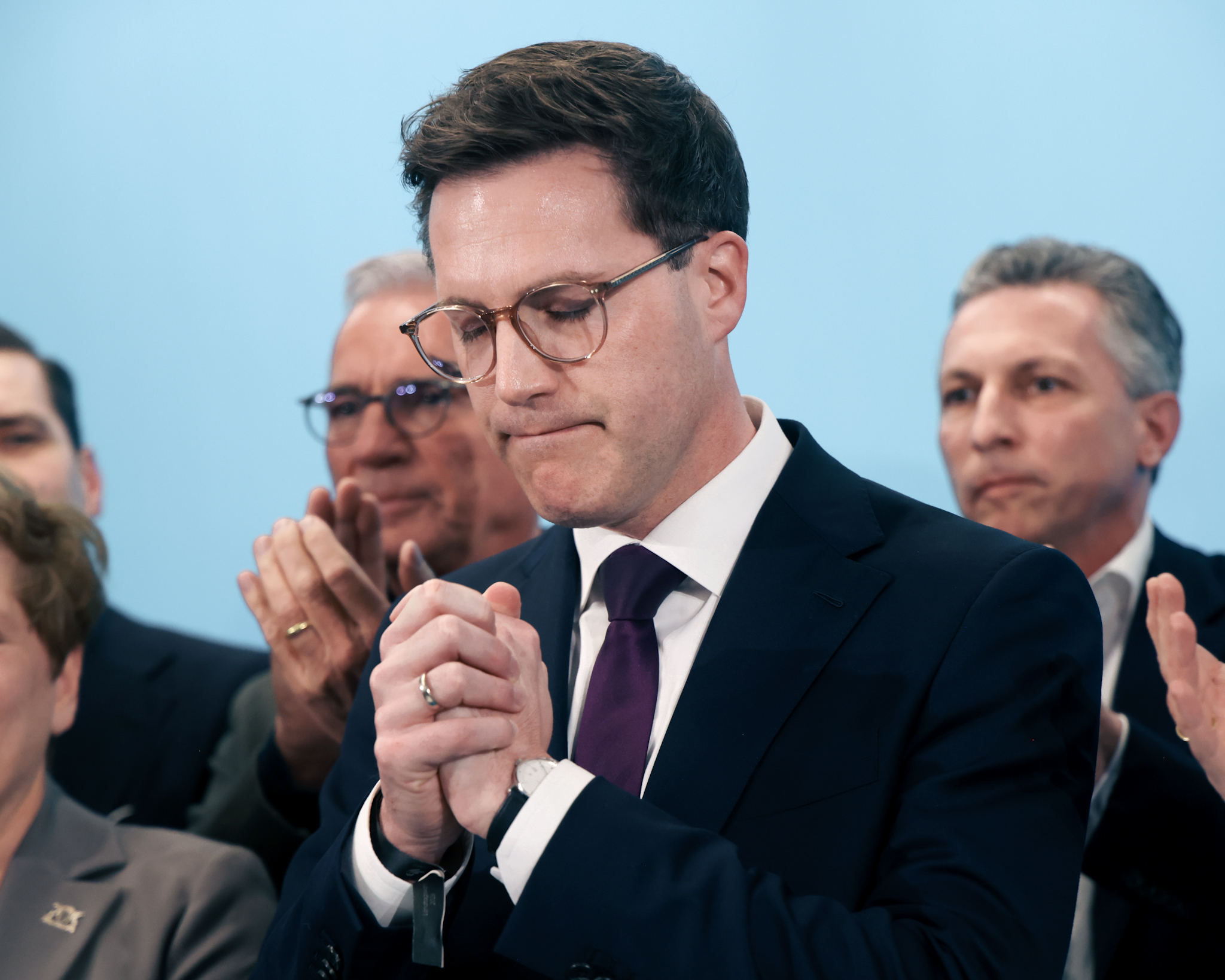
The CDU acknowledges the Greens’ lead but argues that the campaign against its lead candidate Manuel Hagel, 37, was unfair. A Green member of the Bundestag had drawn attention to an eight-year-old interview in which Hagel made remarks about a 14-year-old schoolgirl with ‘doe-brown eyes’, comments that were at least open to misunderstanding. From the CDU’s perspective the Greens’ campaign tactics crossed a line. The party has therefore floated what it calls the ‘Israeli model’: the minister-president would be replaced halfway through the legislative period, allowing each coalition partner to lead the government once.
The Greens’ lead candidate and likely future minister-president, Cem Özdemir, immediately rejected the proposal. He insists on leading the government for the entire five-year legislative term. Coalition negotiations are therefore expected to be tense and difficult, as both parties approach them with considerable self-confidence. The Greens believe they achieved an impressive comeback after overcoming what once looked like a hopeless deficit. The CDU, meanwhile, points to its significantly improved result and to the fact that – after the opposition right-wing populist Alternative für Deutschland (AfD), which almost doubled its support to 18.8 per cent – it was the second clear winner of the election.
Even though the CDU has ruled out such an alliance, a theoretical parliamentary majority exists for a coalition between the CDU and the AfD. The CDU therefore has an alternative option. The Greens do not.
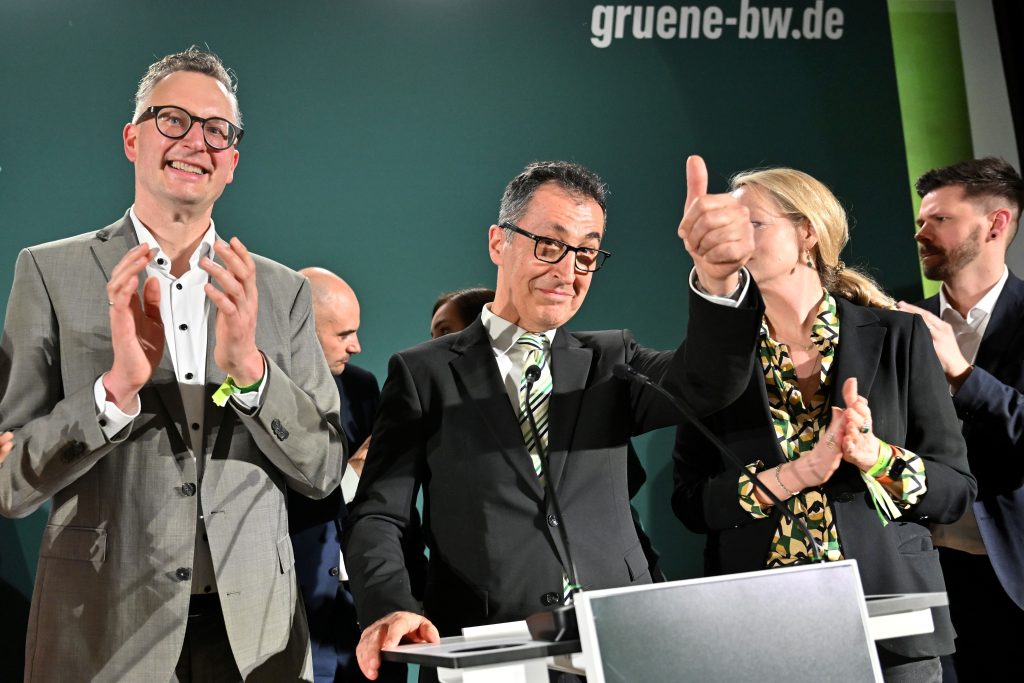
Cem Özdemir wants to lead the Baden-Württemberg government. Photo: Thomas Lohnes via Getty Images
What the percentages really conceal
Election results are usually judged by the parties’ percentage shares. That perspective can obscure the real shifts behind the numbers. Voter turnout rose from 63.8 per cent in 2021 to 69.7 per cent in 2026, returning roughly to the level seen ten years earlier, when participation reached 70.4 per cent in 2016. Looking at the parties’ results as a share of all eligible voters reveals what actually changed.
In 2016 the Greens won 30.3 per cent of votes cast, similar to the current figure, which corresponded to 21.1 per cent of all eligible voters. In 2021 they received 32.6 per cent of the vote but only 20.7 per cent of all eligible voters. In 2026 the figure stands at 20.9 per cent. In other words, little has changed for the Greens. They mobilise their existing base, and the final percentage result largely depends on turnout.
The CDU convinced 18.8 per cent of all eligible voters in 2016, fell to 15.2 per cent in 2021 and rose to 20.5 per cent in 2026. With Manuel Hagel as its lead candidate the party achieved its best result in Baden-Württemberg for two decades.
The AfD secured 10.5 per cent of all eligible voters in 2016 but fell to 6.2 per cent in 2021. In 2026 it more than doubled that figure to 13 per cent.
Non-voters are particularly revealing when analysing shifts between parties. They represent an often underestimated reservoir of potential support. That becomes especially clear when election results are measured against the total number of eligible voters.
Allowing 16- and 17-year-olds to vote in a state election for the first time did not significantly affect the outcome. Among first-time voters, however, the CDU and the AfD performed strongest.
The centre-left Social Democratic Party (SPD), which governs Germany at federal level together with the CDU/CSU, suffered a heavy defeat in Baden-Württemberg. With only 5.5 per cent of the vote it finished just above the five-per-cent threshold required to enter parliament. The SPD became one of the casualties of the duel for first place.
For most observers it had long been clear that the green-black coalition governing the state for the past decade would continue. The only open question in the final stretch of the campaign was which party would lead it. Such a scenario encourages tactical voting. Voters who might normally favour other parties switch allegiance in order to influence who becomes minister-president.
SPD-leaning voters therefore supported the Greens to increase the chances of their candidate taking office. A similar calculation affected voters who might otherwise have chosen the Left Party but preferred a Green rather than a CDU politician in the Baden-Württemberg State Chancellery, the official residence of the minister-president. For the Left Party the effect proved decisive: it lost what had seemed a realistic chance of entering parliament.
The same fate befell the Free Democratic Party (FDP). The liberals had also expected to secure comfortably more than five per cent. Yet since there was no realistic prospect of joining the government, many potential supporters ultimately opted to vote for the CDU in order to make Manuel Hagel minister-president – or cast their ballot for the AfD to strengthen the conservative opposition.
For the FDP the consequences are dramatic. Baden-Württemberg has traditionally been the party’s heartland. It once even provided the state’s minister-president and had been represented in the regional parliament ever since the state was founded. Losing its seat in the Landtag could mark the end of Germany’s historic liberal party.
FDP top candidate in the Baden-Württemberg state election, Hans-Ulrich Rülke, and FDP chairman Christian Dürr leave a press conference at the Hans-Dietrich-Genscher-Haus after losing the election in Baden-Württemberg. Photo: Kay Nietfeld/picture alliance via Getty Images
Polls influence elections – but cannot predict them
Roughly one in four voters makes up their mind during the final week of the campaign or even on the election weekend itself. Opinion polls reflect the mood at the time they are conducted but cannot yet capture those late decisions. At the same time they play an important role in shaping them. Only voters who know how strong the parties appear to be can incorporate tactical considerations and cast their ballot in a way that maximises its political effect.
Because published polls can influence voting intentions, surveys conducted well before election day cannot predict the result with certainty. Some polling institutes attempt to compensate for this by presenting ‘projections’ designed to estimate how opinion might develop after the release of a poll. At INSA we deliberately refrain from doing so. Once projections begin, the figures no longer reflect measured public sentiment but speculation about how attitudes might evolve before election day.
Such an approach may be legitimate, but readers of polling data should know whether the figures reflect the current political mood or an estimate of the likely situation on election day. In the run-up to the vote I made clear in several interviews what trend I expected: the smaller parties would lose support and the two largest parties would gain. In my view, however, the precise scale of such changes cannot be predicted reliably in advance. The election has once again demonstrated that.
The first state election of the year weakens Germany’s CDU/CSU-SPD federal government. Expectations were not met. For the SPD the vote was a disaster and the CDU finished only second. That is not the new beginning Chancellor Friedrich Merz had hoped for. Governing will not become easier for him. Within his own party many blame the unsatisfactory result in Baden-Württemberg on missteps by the federal government, while the SPD – his coalition partner – is increasingly gripped by fears for its political survival.
If the SPD were also to lose the minister-president’s office in Rhineland-Palatinate, governing at federal level would become even more difficult for Merz and his cabinet. And the most dangerous state elections are still to come: those in the eastern German states of Saxony-Anhalt, Mecklenburg-Western Pomerania and Berlin. In Berlin the AfD currently ranks second behind the CDU. In the two larger eastern states it leads by a wide margin.
After this year’s elections the debate will no longer revolve around whether the AfD can be banned. Parties on the left of the political spectrum have long considered submitting such a request to the Federal Constitutional Court through the federal government or the Bundestag. Yet recent court decisions have increasingly cast doubt on the chances of success.
Instead the discussion will now focus on how to deal politically with what has become the strongest opposition force. The super-election year of 2026 is likely to redefine Germany’s approach to the AfD – after voters have spoken.
Placeholder For Topreaded Placeholder For Topreaded
Placeholder
Placeholder
Placeholder For Topreaded Placeholder For Topreaded
Placeholder
Placeholder
Placeholder For Topreaded Placeholder For Topreaded
Placeholder
Placeholder
Placeholder For Topreaded Placeholder For Topreaded
Placeholder
Placeholder
Placeholder For Topreaded Placeholder For Topreaded
Here is placeholder for Article excerpt Here is placeholder for Article excerpt Here is placeholder for Article excerpt Here is placeholder for Article excerpt
Here is placeholder for Article excerpt Here is placeholder for Article excerpt Here is placeholder for Article excerpt Here is placeholder for Article excerpt
Here is placeholder for Article excerpt Here is placeholder for Article excerpt Here is placeholder for Article excerpt Here is placeholder for Article excerpt
Welcome to the comments section of the Štandard daily. Please take note of our guidelines, comments are moderated by us. You can contact the moderators at [email protected].
Participate in the discussion
Comments are available to subscribers only. If you'd like to join the discussion, choose a subscription starting at €6.72 per month.
All comments 0
Register
Comments are available to registered users only. If you'd like to join the discussion, register here.