Votes in the British House of Lords Raise Fears of a Surveillance State
The upper house has backed measures that could turn the driving licence database into a facial recognition tool, prompting warnings that anonymity at protests may soon disappear.
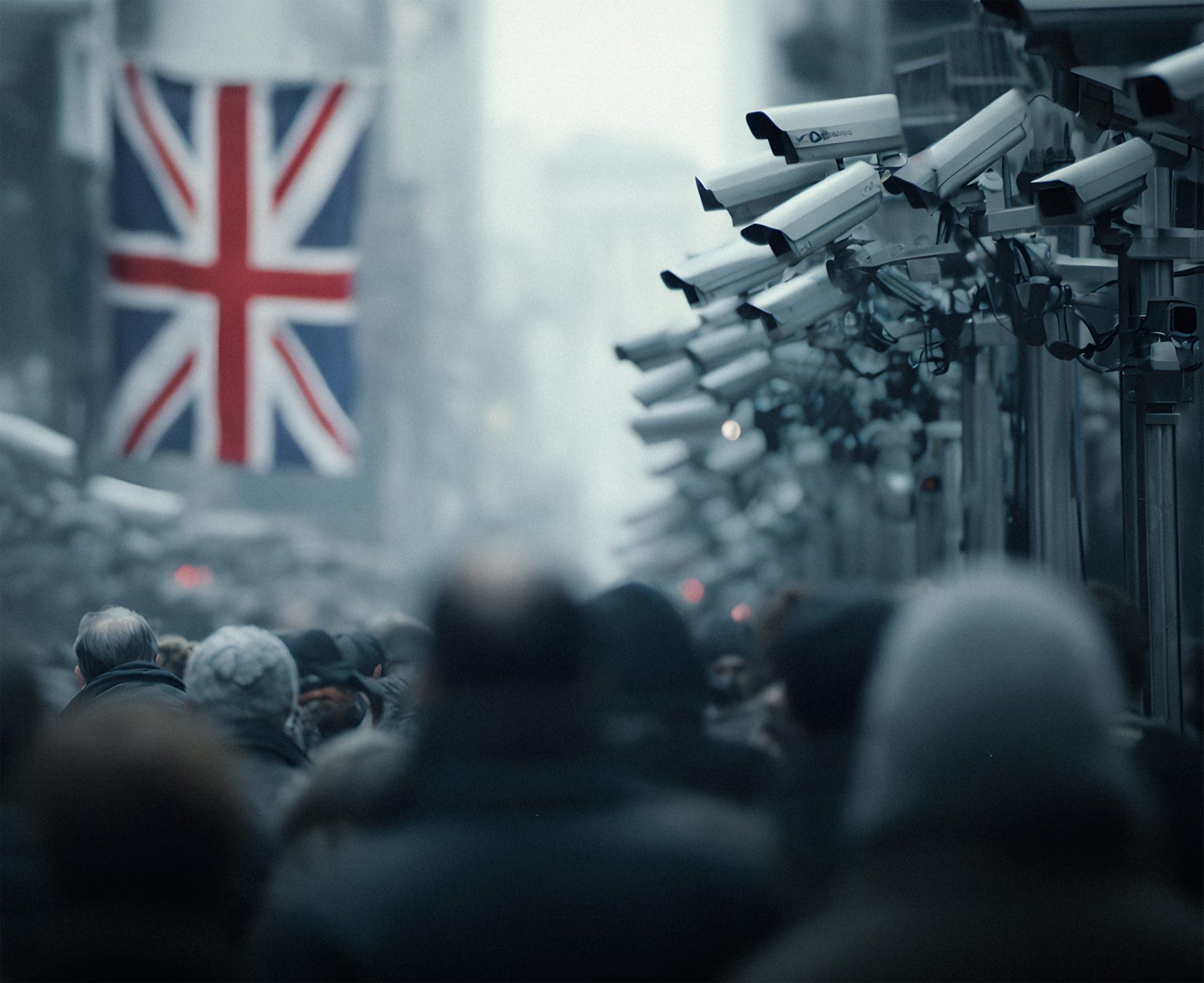
UK Lords back state expansion of surveillance powers over citizens. Photo: Statement / Midjourney
|
A database originally created to make driving licence checks easier is now set to be expanded into a complex surveillance system capable of identifying people in public spaces in real time. Together with two additional laws, the measures would also remove almost every remaining possibility of participating in demonstrations anonymously.
Compared with the British government’s recent plans, the total surveillance depicted in George Orwell’s novel 1984 almost seems like a joke.
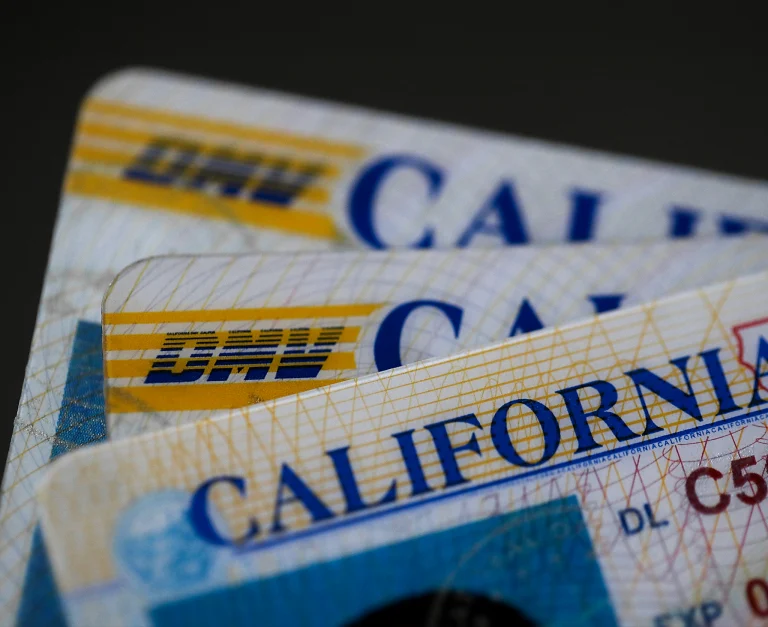
At the centre of their plans stands an already existing database. The DVLA database (Driver and Vehicle Licensing Agency) is the United Kingdom’s central register for more than 50 million driving licences and 40 million vehicle records. It stores detailed information on vehicles, including make, model, colour and ownership records, as well as the history of registrations and re-registrations. The latest proposals focus mainly on driving licences.
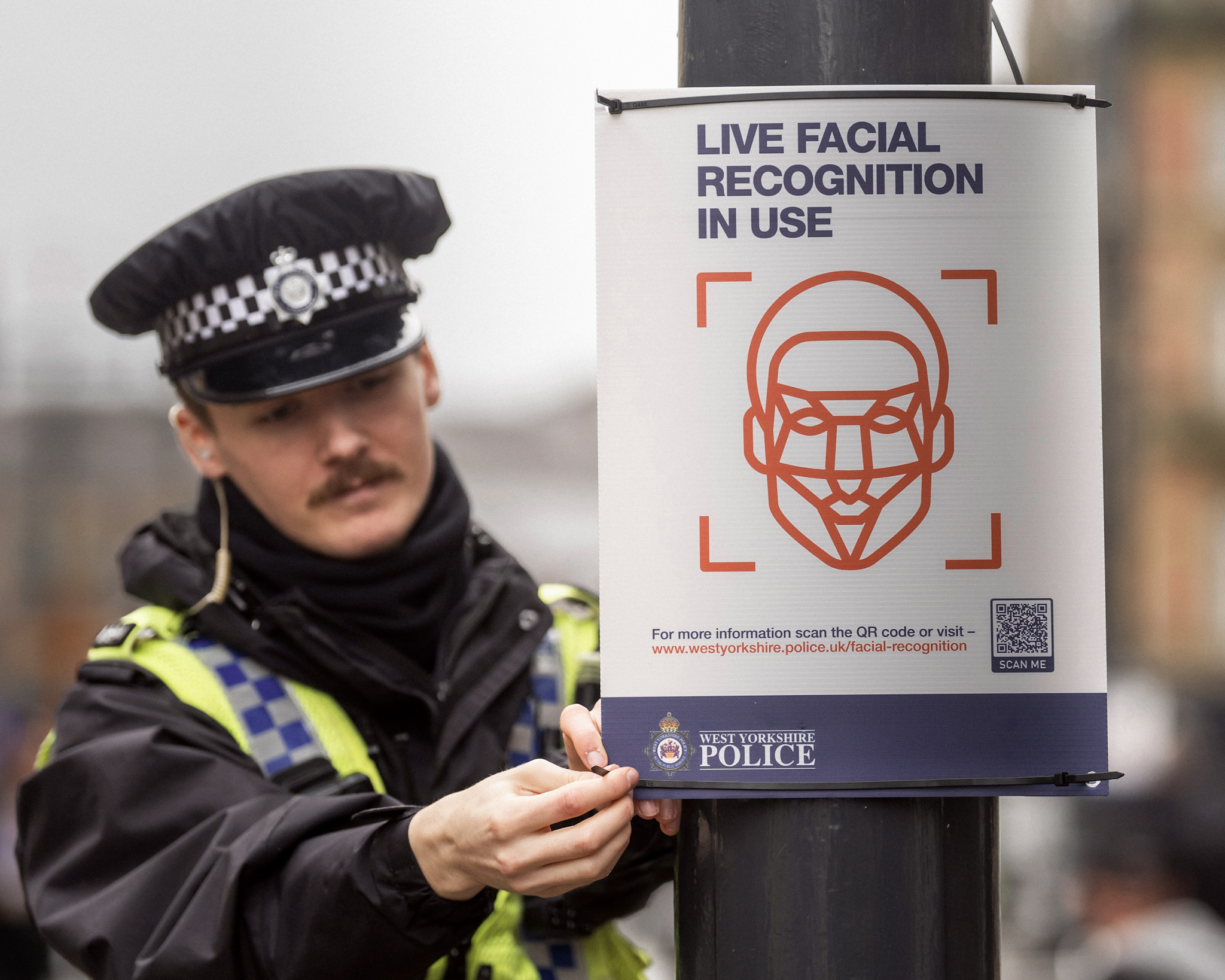
In principle, the DVLA solely provides information on whether people are permitted to drive. The House of Lords in the United Kingdom has now decided to turn this data collection into the largest real-time facial recognition database to which any police force has ever had access. Privacy campaigners say the British lords spent 9 March this year dismantling the few remaining legal safeguards for anonymous protest and privacy while simultaneously creating new tools to monitor or suppress them completely.
The problem, critics argue, is that the new instrument would give the police a facial identification system covering every citizen, a tool that could also be used, or misused, for other purposes.
The peers rejected an amendment that would have prohibited the use of the DVLA database for live facial recognition. In principle, the database is not a surveillance archive. It was created to verify driving licences during vehicle checks. For this purpose, it contains photographs linked to the confirmed identities of most British driving licence holders.
The Lords have now opened a path for the police to use the database for a purpose for which it was never intended. It may in future be matched with faces recorded in real time at public gatherings. This clears the way for a licensing bureaucracy to be transformed into an identification machine.
The change was made quietly. It was a vote that most people in Britain will never hear about.
A Comprehensive List of Participants
Taken seriously, the system would mean that the police at a demonstration or rally would only need to place cameras at access routes, assuming cameras are not already installed there. Everyone walking along those streets could then be matched against the database. Within minutes of a gathering beginning, the police could have a list of participants.
At present the list would include only driving licence holders. It is likely only a matter of time before anyone without a licence would also have to place their image in the database. Anonymity at demonstrations critical of the government would therefore come to an end. Such methods are known from the communist system of China. For a country once known as the ‘cradle of liberalism’, these would be entirely new ambitions.
At the same time, the House of Lords rejected a proposal that would have allowed demonstrators to conceal their identity during protests or rallies. Critics say the amendment would have shifted the burden of proof to police officers, who would then have had to justify why a face covering should be considered a criminal offence.
The decision by the upper house means that wearing a mask at a demonstration would no longer be permitted. It remains unclear whether Muslim women would also have to show their faces, as many are frequently seen on British streets wearing full-face coverings.
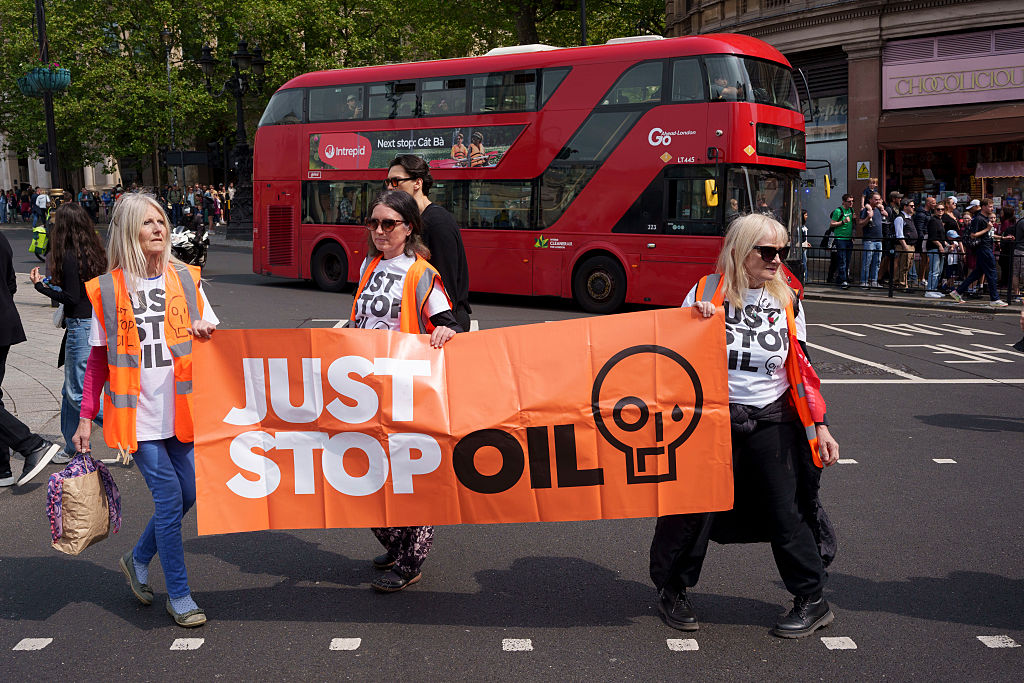
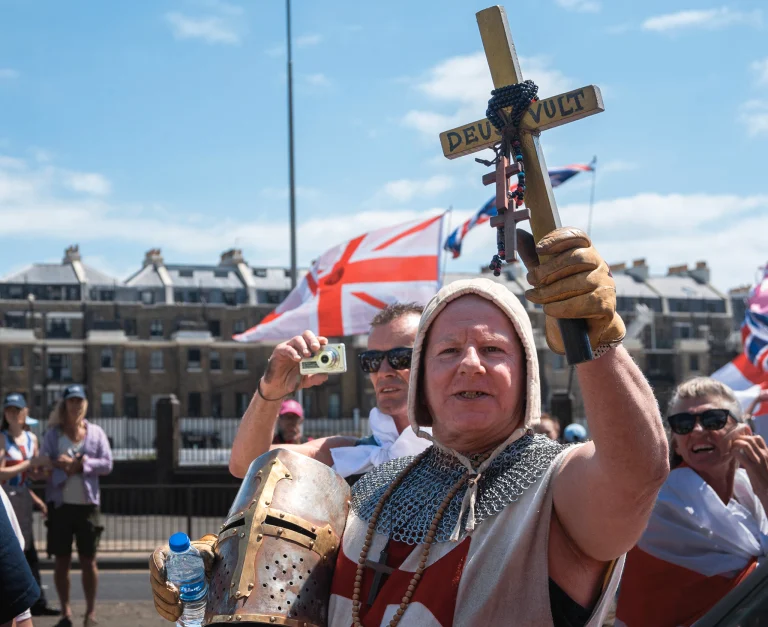
‘Just Stop Oil’ could soon be banned. Photo: Richard Baker / In Pictures via Getty Images
New Powers for the Home Secretary
The peers also granted the Home Secretary new powers to designate organisations as ‘Extreme Criminal Protest Groups’. Activists given this designation would effectively be criminalised. They could be banned similarly to terrorist organisations.
Membership, promotion, fundraising and any form of support for such a group would therefore be prohibited and punishable. The decision would be taken by the Home Secretary without any involvement from the courts. Critics say this opens the door to arbitrary decisions.
Simply attending events or demonstrations organised by such groups, even merely as a spectator, could then make someone suspicious, especially as facial recognition would inevitably place them on lists of participants.
The focus here is naturally on militant groups such as Palestine Action and Just Stop Oil. These groups use criminal tactics to create chaos and hold the public as well as workers hostage without fear of consequences, Lord Walney said during the session.
That may be true. But who defines the criteria? The government as the executive should not be allowed to do so alone. Otherwise pro-life movements could soon appear on the list of ‘Extreme Criminal Protest Groups’, as could those protesting against the country’s migration policy.
Taken together, the votes of the Lords suggest an attempt to end anonymity at demonstrations altogether. At the same time, the executive is being given a powerful instrument to criminalise individual groups that are unwelcome to the government.
Formally these were separate pieces of legislation. Yet in combination they could significantly restrict freedom of assembly and the right to protest. Critics describe the measures as a combined mechanism forming a surveillance and suppression framework that could have long-lasting effects.
Welcome to the comments section of the Štandard daily. Please take note of our guidelines, comments are moderated by us. You can contact the moderators at support@statement.com.
Participate in the discussion
Comments are available to subscribers only. If you'd like to join the discussion, choose a subscription starting at €6.72 per month.
All comments 0
Register
Comments are available to registered users only. If you'd like to join the discussion, register here.