
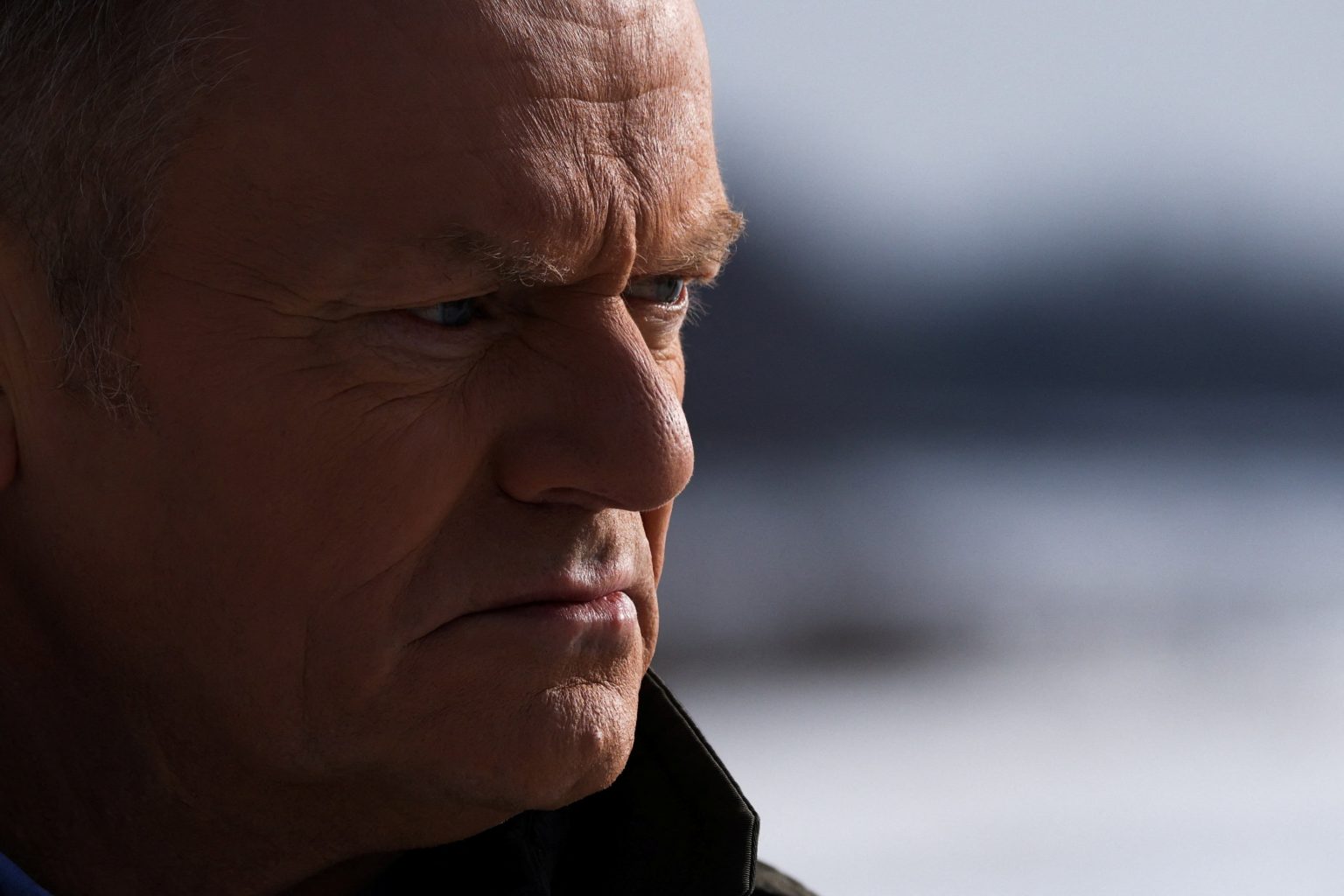
On the evening of March 12, Polish President Karol Nawrocki declared that he would not sign the bill drafted by Donald Tusk’s government regarding the Brussels loan for the Polish Ministry of Defence. The Security Action for Europe, known as SAFE, could provide Warsaw with nearly 44 billion euros for armaments and partial rearmament.
Nawrocki is a strong advocate of robust armed forces. In February, he said Poland should begin working on developing its own nuclear weapons as a defence against the growing threat from Russia. His stance on the SAFE loan therefore surprised many Poles. Tusk said that ‘the president squandered a chance to act like a patriot’.
For...
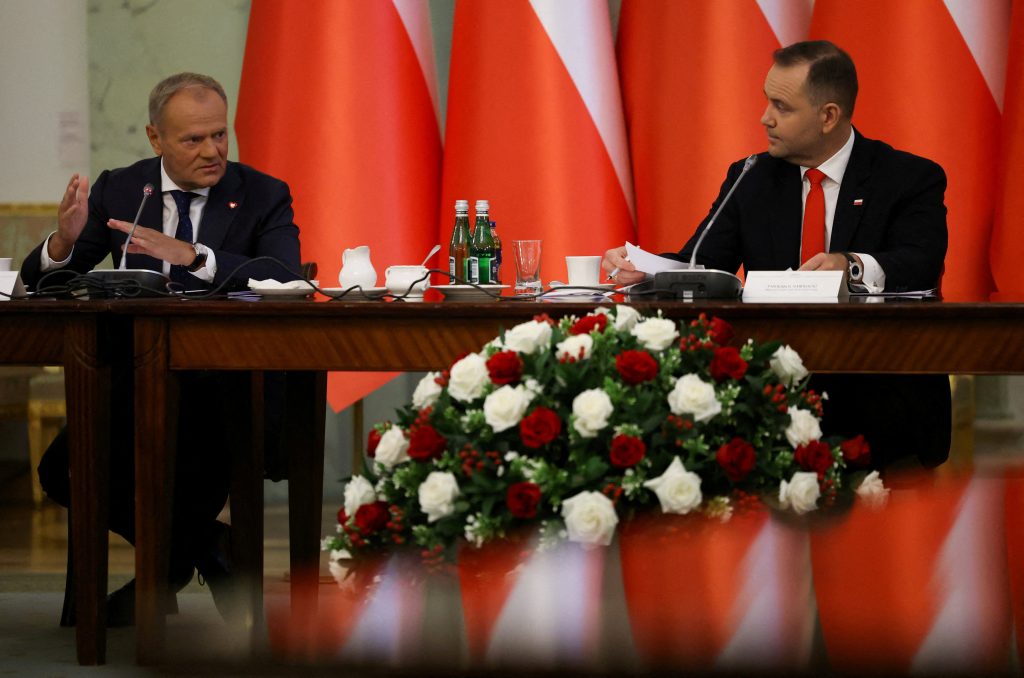
Foreign Minister Radosław Sikorski of Civic Platform, who together with the president and prime minister forms the trio of Poland’s most popular politicians, called the president’s decision an act of national betrayal, citing in a speech to parliament the words of former prime minister and current leader of the opposition Law and Justice party, known as PiS.
‘Ukraine faces the following dilemma: is it better to go into debt, or is it better to have weapons? The answer to this question has already been heard in this chamber. It was heard on June 21, 2022, during the debate on the Homeland Defence Act under the government of our political opponents.
At that time, there was discussion about whether a foreign currency loan to purchase Korean tanks would be too expensive. The answer was given. An important politician wisely, and I agree with him, said, and I quote: ‘Better to be in debt than occupied.’ Who said that? You said it, Mr Chairman Kaczyński. But one must be a patriot not only when one is in power,’ Sikorski concluded his speech.
The foreign minister mentioned the PiS chairman because his party, as well as its candidate and then incumbent President Andrzej Duda, supported Nawrocki in the 2025 presidential election. Although Sikorski emphasized the financial aspects of the loan, namely the interest rates, in his speech, PiS, led by Kaczyński, opposed the SAFE loan because it is a ‘political tool for exerting influence on EU member states’ in the hands of Brussels. Kaczyński’s party also criticises the fact that SAFE rules restrict procurement to EU suppliers.
In January this year, Tusk announced that Poland would receive the largest share of funding from the EU defence loan under the 150 billion euro SAFE instrument, with up to 80 per cent of the funds going to the domestic arms industry and other sectors involved in strengthening the military. In addition to the military, the loan would therefore also bolster the domestic economy.
... and against
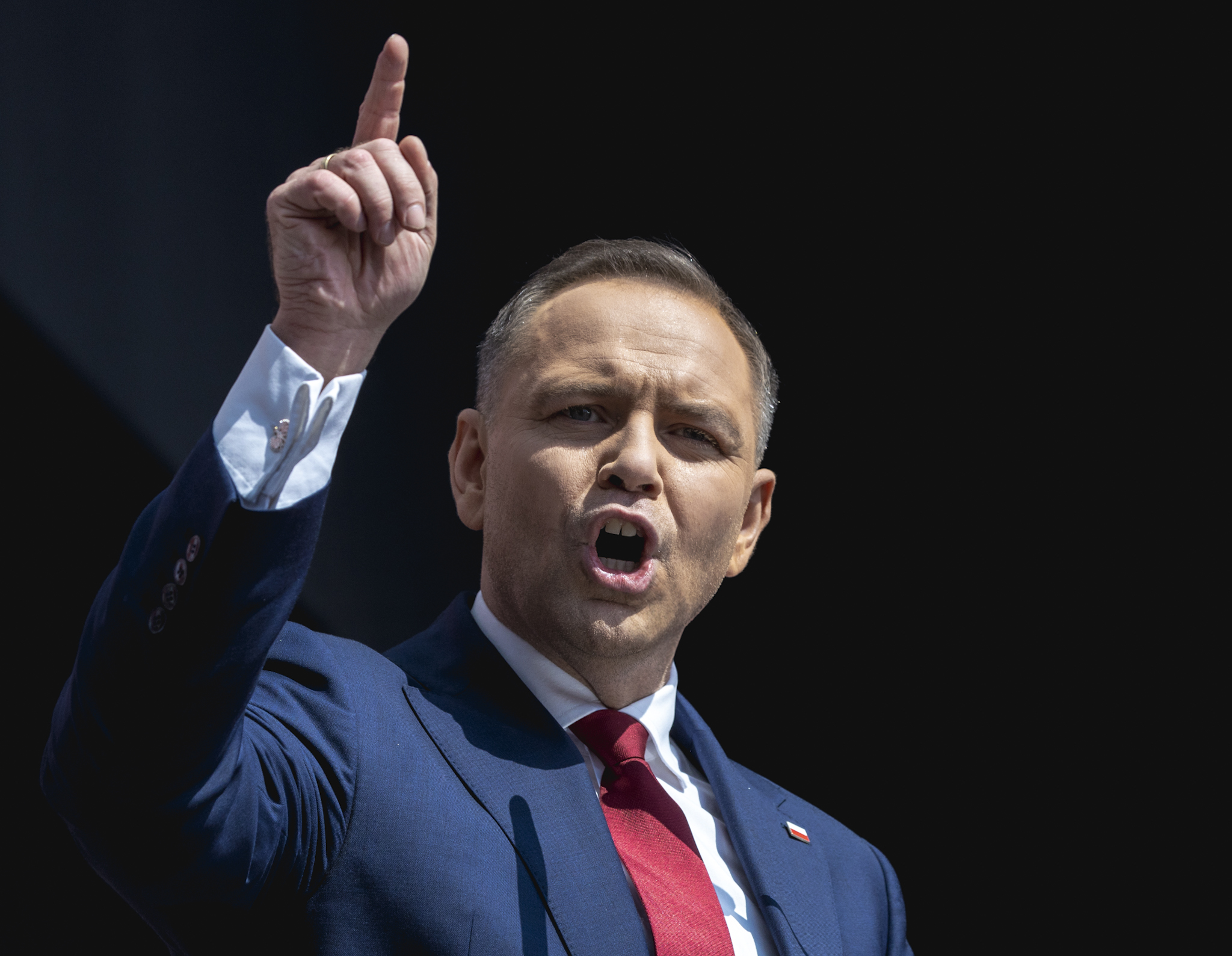
The President’s Office has until March 20 to decide whether it will actually veto the government’s bill on the EU defence loan. However, it is unlikely that Nawrocki will change his mind. In addition to criticising the government’s proposal, he also submitted his own proposal, which the government rejected.
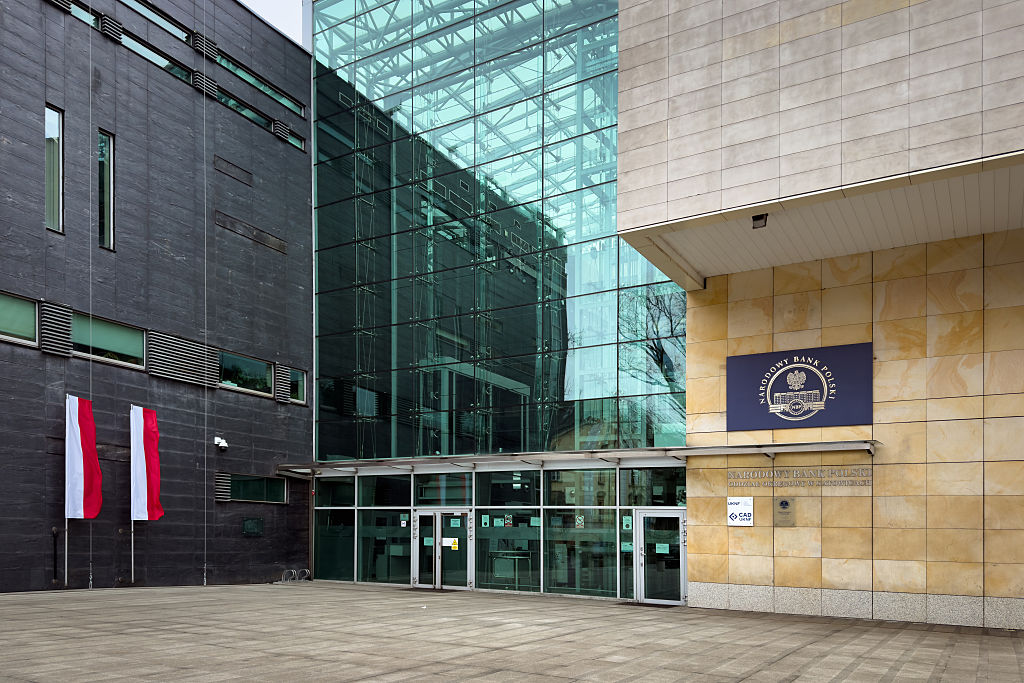
On March 10, the president, National Bank governor Adam Glapiński, the prime minister and several ministers met. At the meeting, the president, together with Glapiński, proposed the so called Polish SAFE 0% to parliament. The government did not accept his proposal. ‘Those in power have chosen confrontation, not dialogue,’ Nawrocki commented on the meeting.
‘Recently, the National Bank of Poland has secured more than 185 billion zlotys [42 billion euros, ed.] for Poland, thanks in part to an increase in gold reserves and sound investment decisions. This is a massive amount of capital. Capital that can work for Poland’s security. Thanks to this, we do not have to take out uncertain foreign loans. The fund is to operate under the full control of the Polish state and parliament in a non partisan manner and with complete transparency in the spending of funds.
‘This solution gives us full freedom of decision making. It is Poland that will decide what equipment to buy, from whom to buy it, and how to develop its defence industry,’ Nawrocki stated in a speech on the evening of March 12.
Although the SAFE instrument is presented uncritically in many countries as an opportunity for rapid defence capability development, the funds allocated to a specific country do not go to the state treasury all at once, but in instalments.
Regardless of the initial approval of the loan, the transfer of a new tranche can be suspended at any time by a decision of the committee in Brussels. It is sufficient for the committee to decide that the rule of law is under threat in the country set to receive the next tranche of the loan, a concept that is often debatable under current conditions. The loan could thus become a tool for Brussels to exert political pressure on a nation-state.
‘The SAFE mechanism is a massive foreign loan taken out for 45 years in a foreign currency, whose interest costs could reach as much as 180 billion zlotys [41 billion euros, ed. note]. Poles will therefore have to repay twice the value of the loan provided, and Western banks and financial institutions will profit from it,’ the president added.
However, according to experts, the shortcoming of the president’s Polish SAFE 0% proposal is its complex implementation, the fact that it concerns money that currently exists only on paper, and above all that the proposal essentially contradicts the Polish constitution, a point paradoxically noted by Kaczyński himself.
They agree to disagree
Back in April 2025, we wrote in Standard.com about a legal coup orchestrated by the current Polish government, which required and still requires legislative support. However, President Andrzej Duda’s vetoes and his referrals of bills to the Constitutional Tribunal have long blocked many new laws. Tusk’s cabinet therefore placed great hopes in last year’s presidential election.
If Duda’s ideological opponent, Rafał Trzaskowski, had become president, the coup would have succeeded and Donald Tusk’s government, unable to override the veto because it lacks the necessary seats, would have breathed a sigh of relief. However, the election was won by a narrow margin by the current president, Nawrocki, and Poland’s political paralysis therefore continues.
The question of whether it is currently more appropriate to opt for the SAFE instrument promoted by the government or the domestic loan option proposed by the president divides both society and experts. Their dispute, however, is complicating matters for the Polish military. Although Tusk announced on March 13 that Poland would accept the loan despite the veto, the veto significantly complicates the process.
The law that Nawrocki intends to veto was supposed to allow the state development bank BGK to create and manage a fund for disbursing money from the SAFE package. Because of the president’s veto, the government will now have to use the existing Armed Forces Fund.
The legal rules governing the current fund prevent the disbursement of approximately seven billion zlotys (1.64 billion euros) earmarked for the border guard and police. Sikorski therefore said Nawrocki ‘is vetoing the law on the creation of the fund. He did not veto SAFE. He doesn’t know what he’s vetoing.’