
U.S. President Donald Trump has threatened to attack the oil infrastructure of Iran’s export hub on the island of Kharg if Tehran does not stop attacking vessels in the Strait of Hormuz. The warning could further destabilize markets that are already facing historic supply disruptions.
Trump accompanied his Friday ultimatum with a social media post in which he stated that the United States had “completely destroyed” military targets on the island. The island serves as an export terminal for approximately 90 percent of Iran’s oil exports and is located about 500 kilometers northwest of the Strait of Hormuz.
However, according to him, the U.S. strikes did not hit the island’s oil infrastructure. “But if Iran or anyone else does anything that disrupts the free and safe passage of ships through the Strait of Hormuz, I will immediately reconsider this decision,” Trump wrote.
U.S. Central Command (CENTCOM) confirmed Trump’s statement regarding the strikes on military targets. “U.S. forces successfully struck more than 90 Iranian military targets on Kharg Island while preserving the oil infrastructure,” CENTCOM stated.
The strike destroyed naval mine depots, missile storage bunkers, and several other military facilities, the U.S. military said in a post on X.
Iran Warns of Attacks on the Emirates
Iran downplayed the extent of the damage on the island of Charg, but at the same time threatened to deploy more powerful weapons and warned that certain areas of the United Arab Emirates are legitimate targets.
“We declare to the leaders of the UAE that Iran considers it its legitimate right to defend its national sovereignty and territory by striking the locations from which the American enemy launches missiles—in ports, docks, and U.S. military hideouts concealed in certain cities of the UAE,” said a spokesman for the Iranian Revolutionary Guards.
The Revolutionary Guards also called on Emirati residents to leave ports, docks, and U.S. military facilities to avoid civilian casualties.
According to the Ministry of Defense, Iran fired nine ballistic missiles at the UAE on Saturday and launched 33 drones. Since the start of the war, Iran has used a total of 294 ballistic missiles, 15 guided missiles, and approximately 1,600 drones, Reuters reports.
Hamas called on Tehran not to attack neighboring states
Behind the scenes, according to regional sources, dissatisfaction is growing among the Arab states of the Persian Gulf over being drawn into a war they neither started nor supported, yet for which they are now paying the price both economically and militarily.
The Palestinian militant movement Hamas has called on Iran to avoid attacks on neighboring states, while also supporting Tehran’s right to respond to attacks by Israel and the United States. According to the movement’s statement, Iran has the right to defend itself by all means in accordance with international law, while ensuring that the conflict does not affect other countries in the region.
Iran also announced that it would increase its use of modernized weapons, particularly ballistic missiles and other missiles with greater destructive power.
Hormuz as a Tool of Pressure
According to the Iranian news agency IRNA, oil exports from Kharg Island continue without major restrictions despite U.S. attacks. Most of this oil is destined for China, the world’s largest importer of crude oil.
Trump told reporters on Friday that the U.S. Navy would “soon” begin escorting tankers through the Strait of Hormuz, through which approximately 20 percent of the world’s fossil fuel supplies pass.
Iran’s Supreme Leader Mojtaba Khamenei, who succeeded his assassinated father, declared that the strategic strait should remain closed as a means of pressure.
At the same time, the Iranian armed forces stated that any attack on the country’s oil or energy infrastructure would lead to attacks on the facilities of oil companies cooperating with the United States in the region.
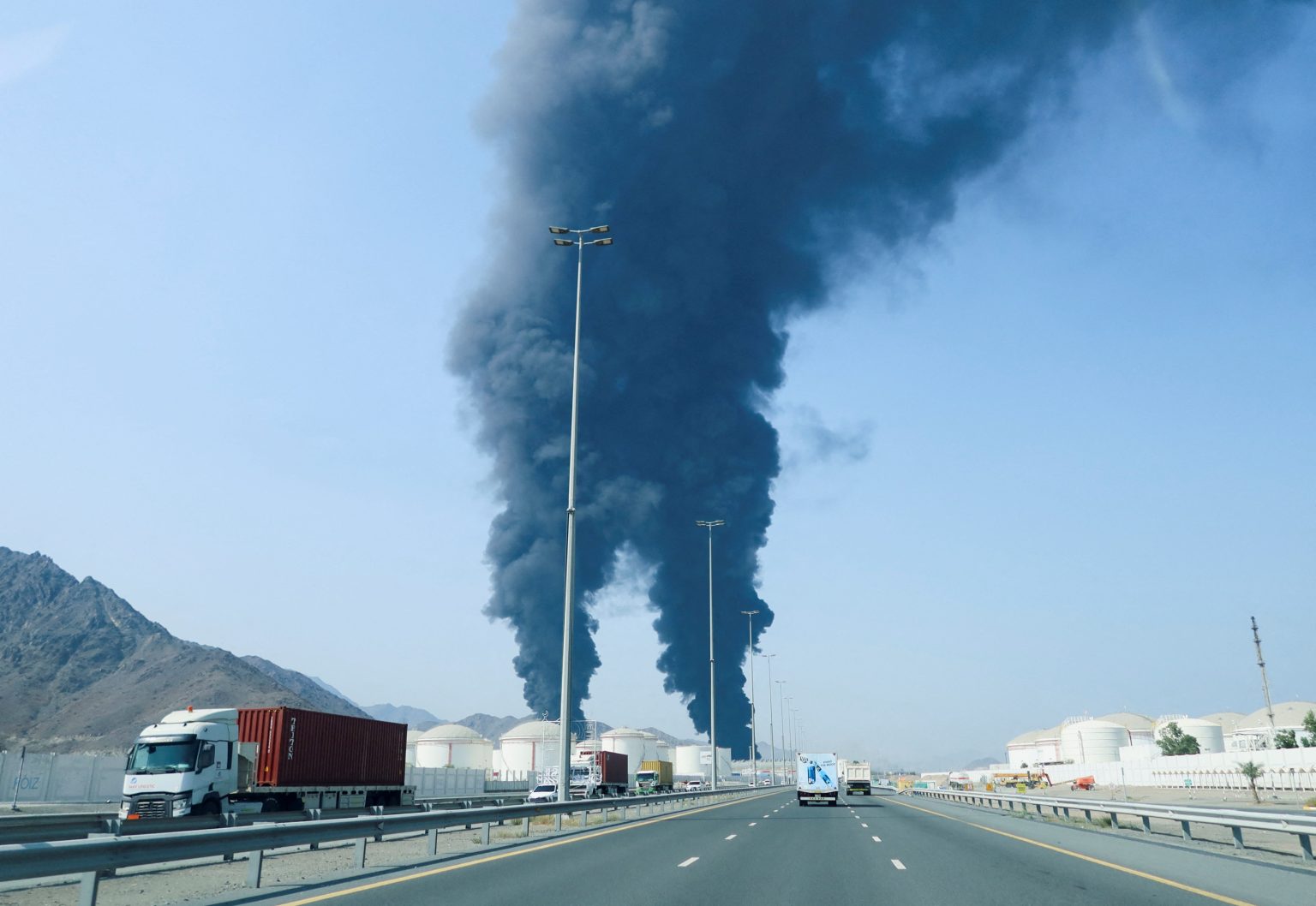
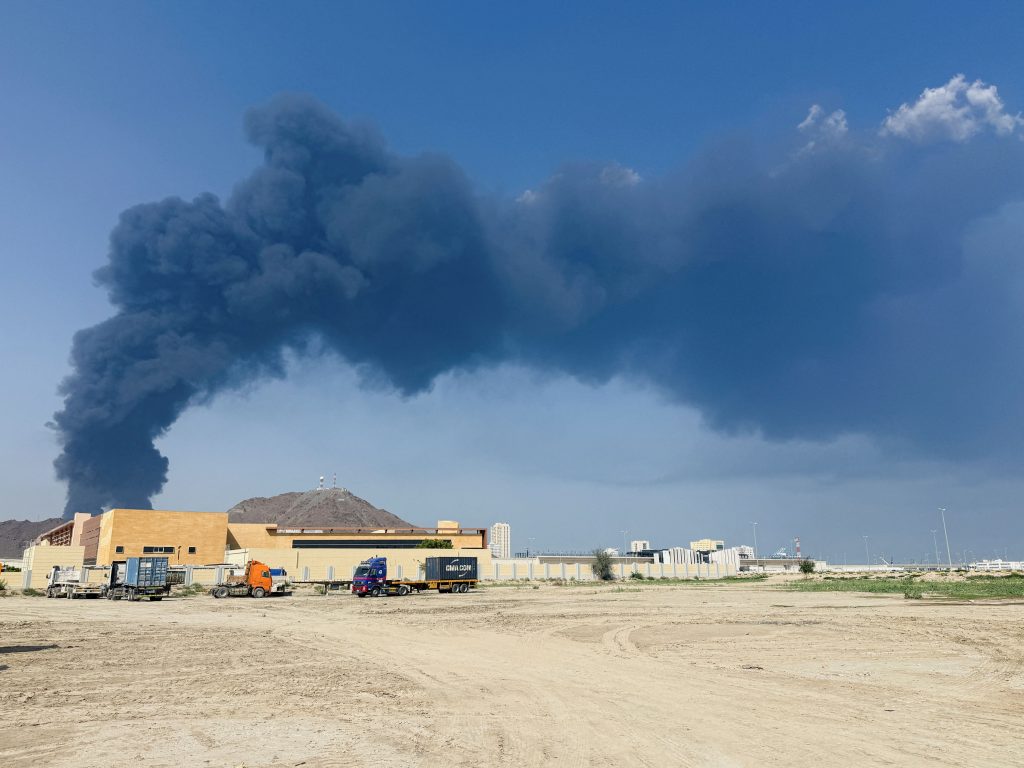
In the Emirate of Fujairah in the UAE, a major ship-to-ship refueling hub, some oil loading operations were temporarily suspended following a fire on Saturday, according to industry and trade sources. The fire broke out after debris from a downed drone struck the area, but no one was injured.
Wide-ranging impact of the conflict on the region
Iran, which had increased oil production even before the war began on February 28, continues to export approximately 1.1 to 1.5 million barrels per day.
Oil prices are fluctuating sharply in response to Donald Trump’s shifting statements about the possible duration of the conflict, which began with extensive bombing of Iran by the U.S. and Israel and quickly escalated into a regional war with consequences for global energy and financial markets.
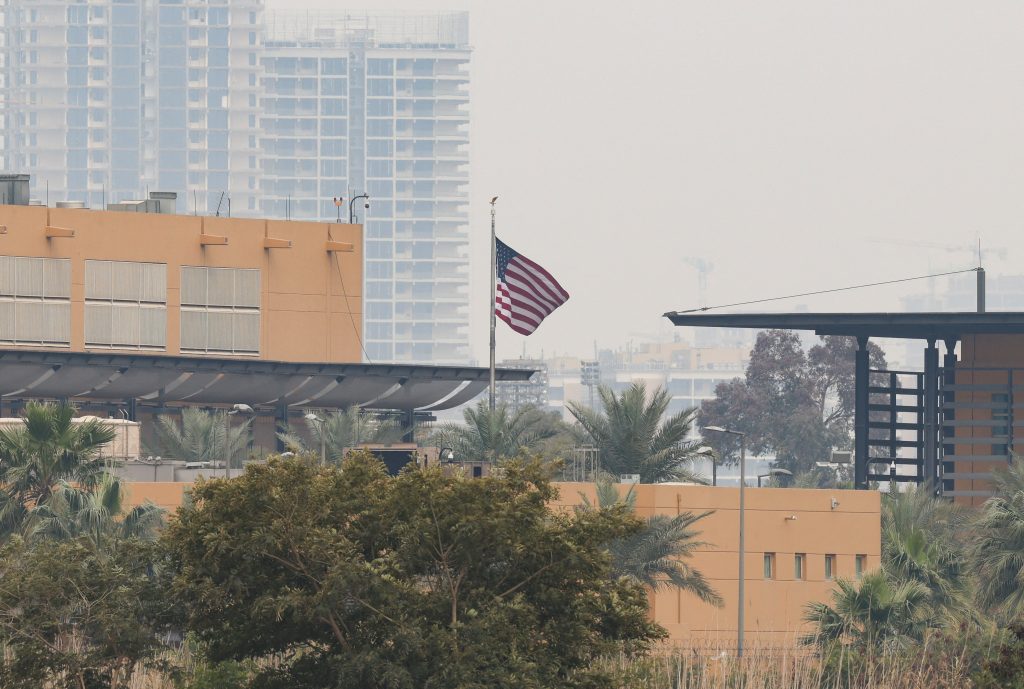
Meanwhile, the death toll is rising. A rocket struck the U.S. Embassy in Baghdad, Iraq, on Saturday, and smoke billowed from the building, according to Iraqi security sources.
At the same time, Iran’s Revolutionary Guards announced further attacks on Israel, which, according to the Iranian news agency Tasnim, were carried out in coordination with the Lebanese group Hezbollah.
At least 12 medical personnel were killed in an Israeli attack on a medical center in the town of Burj al-Kalawiya in southern Lebanon, the Lebanese state news agency reported, citing the Ministry of Health.
Iranian media also reported at least 12 fatalities and several injuries in attacks at multiple locations in Iran, including central and southeastern provinces.
In Dubai, debris from a downed drone struck a building in the city center, but no fire broke out and no one was injured.
After two weeks of war, the conflict has claimed approximately 2,000 lives, mostly in Iran, but also in Lebanon and increasingly in the Gulf states, according to Reuters. Millions of people have been forced to flee their homes, the agency adds.
U.S. forces also suffered losses, including all six crew members of a refueling aircraft that crashed in western Iraq.
Macron Wants to Mediate a Ceasefire
France is ready to mediate ceasefire talks between Israel and Lebanon. This was stated by French President Emmanuel Macron, who said the talks could take place in Paris. Macron also indicated that the Lebanese leadership is open to direct dialogue with Israel.
The French president called on the Israeli government to seize the opportunity to begin ceasefire negotiations and seek a long-term solution to the conflict.
In his words, an agreement could also enable Lebanese authorities to strengthen the country’s sovereignty and stabilize the situation.
Macron appealed to both sides of the conflict. He called on Israel to halt its military offensive and on Hezbollah to end its attacks. He emphasized that the international community should do everything in its power to prevent Lebanon from descending into chaos.
(reuters, luc)