The tuba player was arrested in Berlin. Together with his large tuba, he sat in the police car where officers had placed him. His offence consisted of playing the German folk song ‘Die Gedanken sind frei’ by August Heinrich Hoffmann von Fallersleben in the open air on Potsdamer Platz with 500 other musicians. The performance was intended to draw attention, in the middle of the Covid lockdowns, to the de facto prohibition of artistic freedom. Such dissent proved more than the full force of the state could tolerate.
The Irish teacher Enoch Burke spent more than 500 days in prison. He had been suspended because he refused to address one of his students using newly adopted pronouns reflecting a newly declared gender. His resistance cost him his freedom. The judge ordered his detention to prevent any repetition.
In Bavaria police searched the home of a pensioner after he referred to the then vice-chancellor Robert Habeck as a ‘Schwachkopf’ in a humorous internet image. The incident was one of more than 800 criminal complaints brought by the minister. His colleague Annalena Baerbock initiated roughly 500 similar cases against citizens. The FDP politician Marie-Agnes Strack-Zimmermann is linked to more than 1,400 proceedings. The current chancellor Friedrich Merz has likewise pursued hundreds of cases over expressions of opinion by his own voters.
Three prosecutors from Göttingen boast in a 2025 CBS television documentary, laughing mockingly, about how they send police to citizens’ homes over speech-related offences. They explain how confiscating mobile phones already punishes citizens before any verdict is reached. Since 2016 the number of criminal investigations into speech offences in the German state of Lower Saxony has increased fifteenfold, reaching 35,000 investigations in 2024 alone.
The more the state claims to rescue democracy through a campaign against ‘hate and agitation’, the more citizens’ freedom of speech is restricted through intimidation and prosecution. Revolutions eventually devour their children. The West is now consuming the foundations of its own idea.
Truth Needs a Good Lawyer
Those who bring unwelcome truths have always lived dangerously. In ancient Rome they were famously beheaded. Even Jesus reached only about the age of 35 before proclaiming that the truth would set mankind free – a message that cost him his life. A German proverb says that truth needs a fast horse. In the year 2026 it needs above all a good lawyer.
The frequently invoked cancel culture of our time has produced several phenomena. One is that its existence is consistently denied by those on the left who practise it most passionately. They relentlessly pursue anyone who refuses to submit to the ideas of an aggressive LGBTQ lobby, anyone who considers it madness to run an industrial society with cargo bikes and wind turbines in the name of saving the climate, or anyone who regards a policy of open borders as a danger to the lives and security of the native population.
But censorship is also practised by those who claim to defend freedom of speech. One should not forget that the establishment of seven state-funded reporting offices for ‘hate crimes’ below the threshold of criminal liability – meaning legal expressions of opinion – took place under the leadership of the Christian Democrats in Germany. And while hardly any politician today warns more loudly about the decline of free speech in Europe than the eccentric US president Donald Trump, it is the same Trump who simultaneously denies visas to German NGO activists and even to former EU commissioner Thierry Breton because he does not tolerate their opinions. It may be that the ‘right’ people were affected – activists who supported the EU’s Digital Services Act and thereby attempted to restrict the freedom of speech of millions of citizens. Yet even on the conservative side censorship appears to have become an acceptable tool.
No One Has the Right to Obey
At the same time, restrictions on freedom have always produced heroes. People who never intended to become famous but who simply follow their conscience. The tuba players and teachers, the judges, doctors and writers. And also the many anonymous individuals who raise their voices in decisive moments, often standing alone.
Freedom of speech is not just one freedom among others. It is the mother of all freedoms. If a person no longer has the right to express an opinion, how could that person ever implement a view of the world? If a problem may not even be named, how could it ever be solved? The ability to call things by their name without being punished socially, legally or physically is the first civic right that must be defended.
The power of words has an almost magical force. The right word at the right time can move mountains and mobilise masses. ‘In the beginning was the Word, and the Word was with God.’ From that word in the Bible, the world itself was said to have been created. The idea that words shape reality has existed since the beginning of human history. One need not be religious to grasp the primal force contained in that biblical line from the Gospel of John. Every voodoo priest and every gender studies professor attempts the same thing: to reshape reality through words.
That is why it is alarming when, in countries proud of their liberal democratic achievements, words are once again being banned. When government-funded language guides prescribe the terminology citizens must use, often in order to conceal the truth behind words.
It is alarming because the first signs of lies and cowardice appear when a state forces its citizens, under threat of fines, to call a man a woman. It is a totalitarian precursor when people in England are arrested for silently praying outside abortion clinics. The system fears not only the free word. It fears even the free thought.
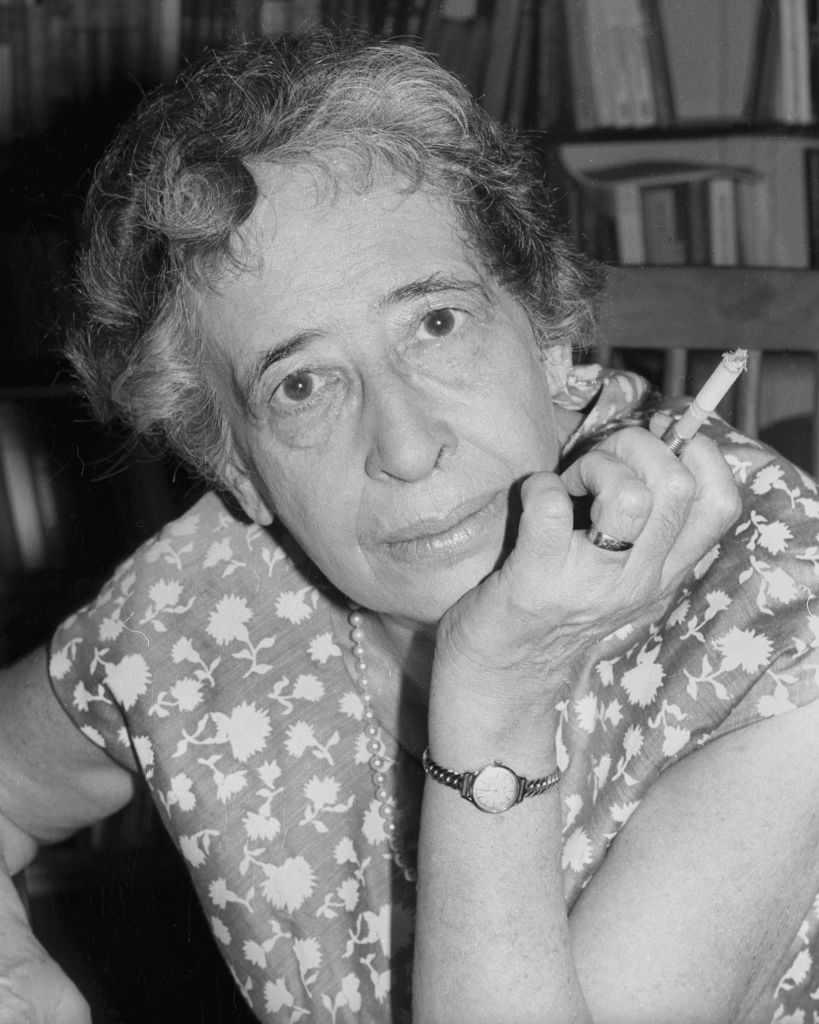
Did we not once believe that ‘thought crimes’ existed only in dystopian literature from our school days, in the works of Kafka, Orwell and Huxley? Were we too young to understand how quickly societies can tilt when Hannah Arendt’s warning is ignored and citizens allow themselves to obey when they ought instead to stand up and resist?
Atmosphere of Unfreedom
I do not know how often I have heard people say apologetically that they cannot afford to say certain things because they have families or depend on their jobs. And in the West today it is not even about life and death. The inner person dies long before the physical body is taken. Freedom of speech dies, courage dies, and with it the ground is prepared for whatever horrors those in power may devise. An atmosphere of unfreedom creates fear. Fear produces obedience. Obedience produces conformity and eventually complicity. Thus the history of totalitarian regimes is always a history of cowardice.
It is almost physically painful to pick up a book like The Gulag Archipelago by Alexander Solzhenitsyn. The horror lies not only in the descriptions of the labour camps but in the atmosphere of fear that led people not to intervene when their friends were arrested, while others allowed themselves to be taken away in the mistaken hope that good behaviour might save them.
Visible Obedience
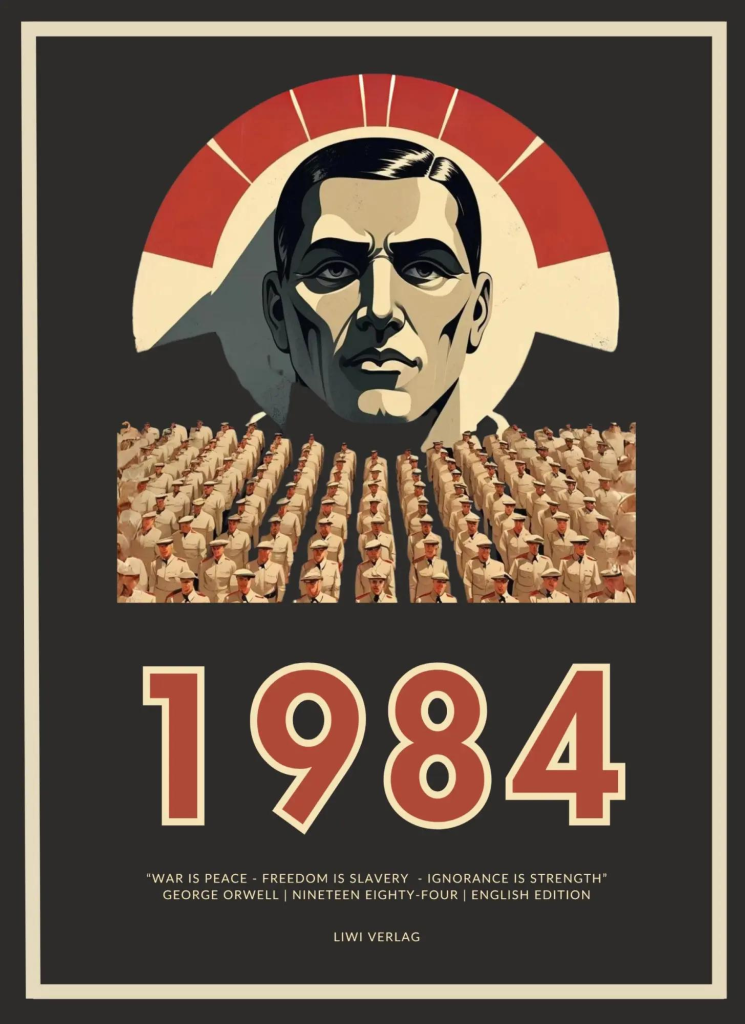
Cancel culture – the culture of erasing and eliminating supposedly wrong thoughts, writings and people – is always an expression of a system of fear. Just as Winston Smith in George Orwell’s novel 1984 is tortured until he not only claims but truly believes that he sees only four fingers where there are five, modern totalitarians are not satisfied with mere tolerance toward other viewpoints. They demand submission. They demand agreement. They demand participation and public declarations of loyalty to ideas in which we may not believe.
Only once we dutifully raise our rainbow flag for Pride Year above our rooftops are we out of danger. Only once we faithfully honour the religion of climate salvation, abstain from meat and transport our children to school on cargo bicycles do we cease to appear suspicious.
Only once we place our pronouns on business cards and gravestones – not because we have forgotten our sex or because it cannot be seen, but in order to question the obvious reality of our womanhood or manhood – do we demonstrate that we accept a new reality in which nature, reason and science no longer have the final say, but the state and its judiciary.
There Is Only One Truth
A short video that plays continuously at the Yad Vashem Holocaust memorial in Jerusalem has remained etched in my memory. In it an elderly man recounts how he was taken from school as a child and brought to deportation. The road passed the houses of his neighbours, who stood by the roadside watching as people were driven into wagons. No one intervened. No one stood up. The man says that until that morning he had believed those people were his friends. But when he saw them watching silently and doing nothing, he lost his faith in humanity.
Where is the difference today? When people obediently go along with everything, when they are asked to exclude those who refuse to submit to the language codes of the new age, the demands of the prevailing spirit and the pressures of those in power, because otherwise they risk their own position.
‘Living in truth’, demanded the Czech dissident Václav Havel. ‘Live not by lies’, wrote Solzhenitsyn. Today we are told that there are multiple truths – my truth, your truth – as though there were no longer any objective standard. But once truth itself has died and returned merely as a plurality of truths, then anything becomes possible. Then ‘the science’ becomes only the thesis of the ideology currently in power. Then, in Orwell’s words, war becomes another form of peace, ignorance the new strength and freedom slavery. Anyone who accepts such a society as a passive spectator and obedient follower deserves no better fate.