
Ursula von der Leyen’s announcement came as a surprise. The EU now even wants to promote investment in the development of small reactors. While most European countries rely on nuclear power for their energy supply, the German government continues to adhere to the phase-out.
Germany thus appears as a wrong-way driver in global energy policy. Narratives surrounding nuclear power persist against all reason and despite numerous new findings.
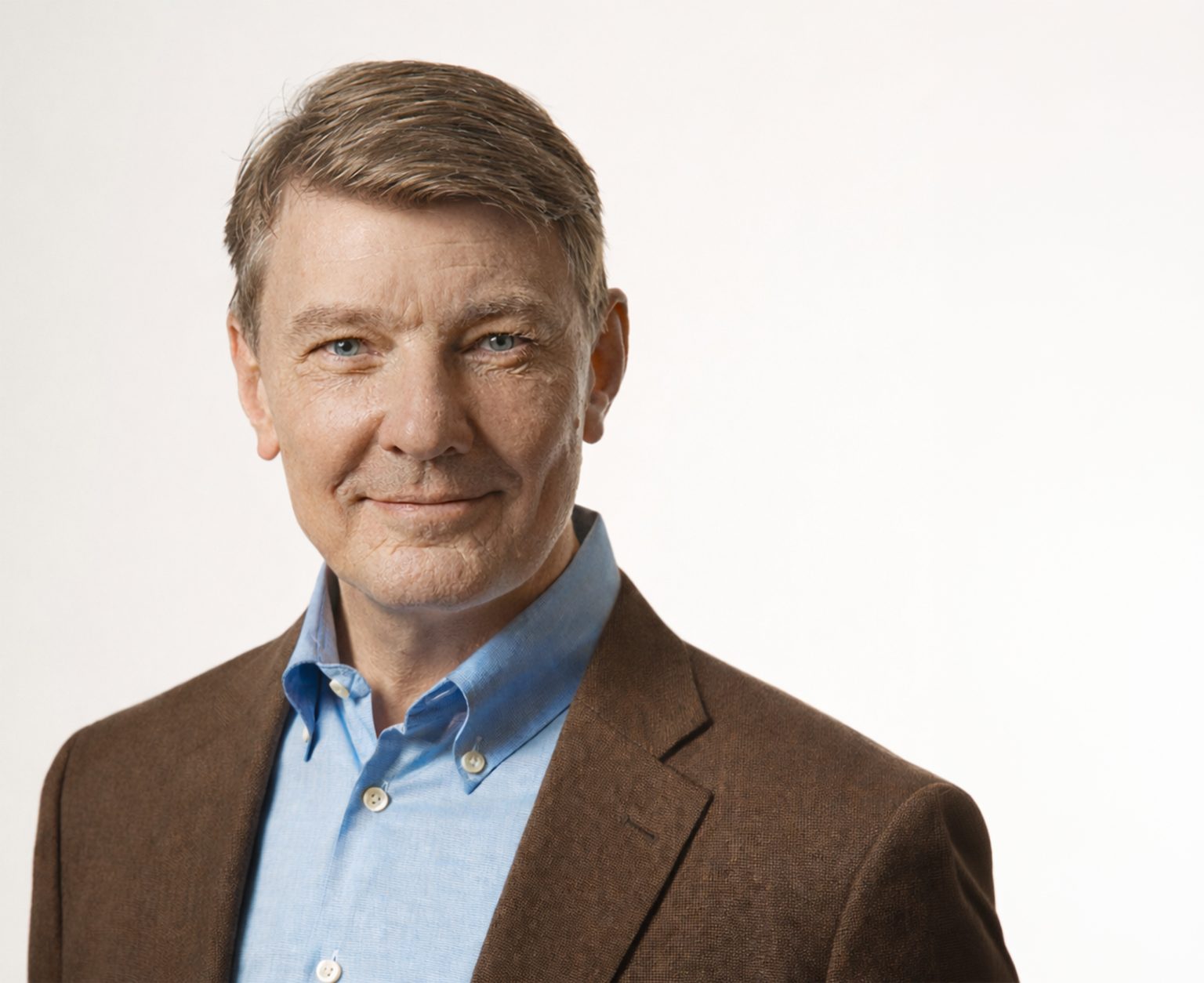
Björn Peters, who holds a doctorate in physics, is an energy economist and power-plant financier specialising in energy and commodity markets. He has studied in depth the consequences of weather-dependent electricity generation. Drawing on a unique body of expertise, he developed the concept of Ecological Realism and is a sought-after speaker on energy issues. Most recently, he founded the Debating School for Energy Policy.
Statement spoke with Björn Peters about nuclear power and its significance for the future of the energy industry in Germany and worldwide. As he sees it, there is no way around nuclear power if prosperity is to be achieved and preserved.
Statement: Ursula von der Leyen has made a major U-turn and said that the EU should once again rely on nuclear power. Is that the right decision?
Björn Peters: The decision is fundamentally correct. Yet it is only a very small step in the right direction and not a truly bold move.
Statement: In what sense a very small step?
Peters: She said she wants to provide a small amount of funding for SMR development (editor’s note: Small Modular Reactor). She spoke of 200 million in loan guarantees. She wants investments in SMR companies to be encouraged. That is good. But compare it with what the US government is doing, which is taking the matter much more seriously. It has pledged up to 900 million US dollars in subsidies for SMR companies. Subsidies, not guarantees.
The first stages of development are extremely expensive for a reactor company when it wants to design a new reactor type. Our venture-capital market is already very small – only about one tenth the size of that in the United States. Development costs a great deal of money. But I firmly believe these will be very good investments. With such limited funding as Ursula von der Leyen is proposing, very little will probably be achieved.
Statement: She says the nuclear phase-out was a strategic mistake. At the same time Friedrich Merz describes the phase-out as irreversible. Is Germany sleepwalking in energy policy?

Peters: Yes. Germany is not alone. Austria and Luxembourg are also not receptive to nuclear energy. But even Denmark, which had a very strong opposition to nuclear power for decades, has increased approval from 20 to 70 per cent of the population. That shows what can be achieved with sensible education.
In Germany we have at least two parliamentary groups in the Bundestag – the SPD and the Greens – that are firmly in the hands of the wind-power lobby. Draft laws written by the German Wind Energy Association end up in the Federal Law Gazette almost word for word. What we would need here is a real breakthrough for nuclear power. But Friedrich Merz will not be able to push that through against Vice-Chancellor Lars Klingbeil of the coalition partner SPD.
Statement: Let us look at the reactors that still exist. Could one perhaps, contrary to expectations, bring one or two back into operation?
Peters: We could still bring nine nuclear power plants back into full operation today. In addition, at all 17 nuclear plant sites the cooling infrastructure, the grid infrastructure, the transport infrastructure and ultimately the legal infrastructure are still in place. New power plants could be built there at any time. There might be a few additional environmental impact assessments, which should be manageable for existing industrial installations. These sites would be ideal for building new nuclear plants, because many necessary steps have already been taken care of there.
Statement: Nine nuclear plants could be brought back onto the grid in the near future. When could those plants produce electricity?
Peters: That timeframe becomes longer with every passing day. First of all, a moratorium on dismantling would have to be imposed and the entire atomic-energy legislation revised so that it is moved from today’s anti-nuclear position back to the state it was in in 2000. The subordinate regulatory framework would also have to be thoroughly cleaned up. After all, Jürgen Trittin himself admitted that there had been a policy of strategically making nuclear power more expensive through regulations. Taken together – and assuming the political will exists – all these nuclear power plants could be brought back within four to six years. The first perhaps even within one to two years.
Statement: Speaking of making it more expensive: opponents of nuclear power repeatedly claim that nuclear power has never been profitable.
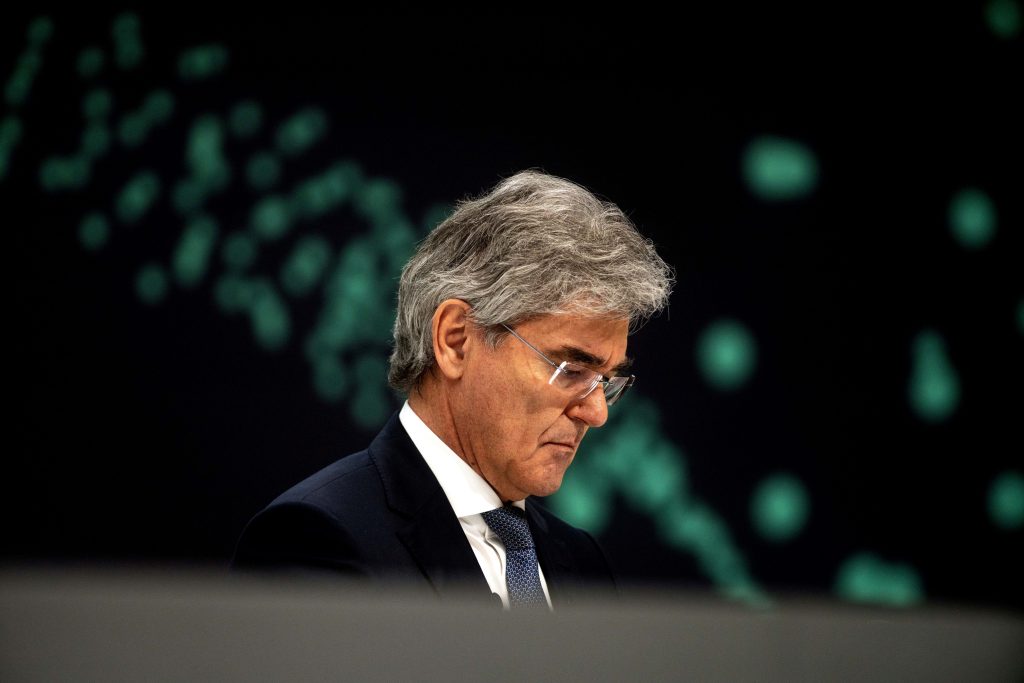
Peters: Yes, former Siemens chief Joe Kaeser said that. I do not know what possessed him to make such an absurd claim. Anyone with even a spark of business sense could take the trouble to look at the balance sheets of nuclear-plant operators. German nuclear power plants at times earned one million Deutschmarks per day. Long before they were depreciated they were real money-printing machines (cash cows) – and even more so afterwards.
Statement: So there would be good arguments for Germany to re-enter nuclear energy?
Peters: Yes. We still have a great deal of infrastructure, some of which could be expanded again. We would need, for example, to invest again in academic chairs in nuclear engineering. In Germany there are roughly ten times more professorships in gender studies than professorships in nuclear engineering. Those too are political decisions that can be reversed through political decisions. What is lacking is the courage among the politicians responsible.
Statement: From political courage to technical expertise. What would you prefer? The large nuclear power plants as we knew them, or are small reactors (SMRs) the future?
Peters: There is a clear sequence of four steps for returning to nuclear power. First, one should focus on the plants that still exist. Isar II was the safest nuclear power plant in the world. It was so safe that one could hardly find a sensible mathematical method for calculating the insurance premium.
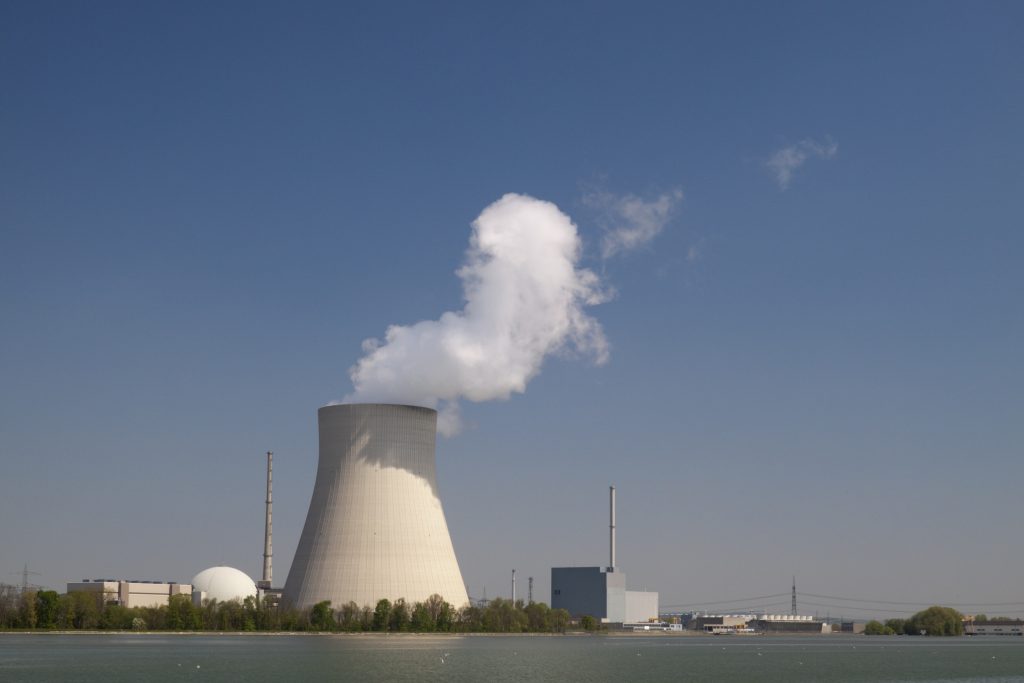
The second step is to purchase the nuclear power plants that can already be acquired on the market today. Those are light-water reactors. No others are available yet. Nevertheless, research is needed.
The third step would be to pursue further research into advanced nuclear-power designs.
Statement: Why, if light-water reactors are so good?
Peters: Even from our Christian view of humanity alone, we should try to bring all eight billion people in the world to prosperity. But there is no country that combines low energy consumption with high prosperity and a high standard of living. That means globally we must provide two to three times more primary energy than today. That cannot be achieved with fossil fuels or with renewable energy. The production of oil and gas cannot be increased to the extent required.
If you apply the German model of the energy transition globally, the limits quickly become obvious. A comparable transition would require the equivalent of 250 years of world-wide copper production. That does not even include other raw materials. It is completely absurd.
That leaves only nuclear fission and nuclear fusion. That is why the third step is so important, because it would develop new reactor concepts that use nuclear fuels much more efficiently and provide not only electricity but also heating and industrial process heat. Breeder technologies that convert 100 per cent of uranium into energy and are technically far safer than any previous reactor are therefore much better suited to initiating a global renaissance of nuclear energy.
Statement: The fourth step is still missing.
Peters: The fourth step is nuclear fusion.
Statement: From the question of purpose to the political question. How likely do you think it is that there will one day be a return to nuclear power?
Peters: Germany will return to nuclear power in the medium term. That is in fact unavoidable. Germany will become poorer if energy policy remains on the present course of the energy transition.
Statement: The convincing of politicians will not be easy.
Peters: Much will depend on what happens in the pre-political sphere and on whether it becomes possible to reset the narratives. Based on my experience with politicians, I have now founded an Energy Debate Masterclass so that citizens and politicians can learn how to recognise green narratives, deconstruct them and replace them with better ones.
Statement: Green narratives extend deep into the CDU. I am thinking of Hendrik Wüst or Daniel Günther.
Peters: Or Andreas Jung, who is responsible for climate policy in the CDU parliamentary group in the Bundestag and thinks along green lines.
Statement: Green narratives penetrated deep into society in the late 1970s. How did that happen?
Peters: They are very clear false messages, some of which can also be traced back to Eastern Germany’s communist secret service circles. Oddly enough, there is no fear of nuclear power in eastern Germany – it was implanted only in the West. That is precisely why the Debating School now exists, because I believe something like that is coming at exactly the right time to free us from those ‘green’ narratives that are doing such great damage to our economy.
Statement: One final question, with a smile. For 50 years people have said that the first fusion reactor is always ten years away. When will the first fusion reactor be connected to the grid?
Peters: I do not know. As a power-plant financier for a large German financial institution I have studied the economic viability of power plants in depth. Everything I have read so far about nuclear fusion has not yet convinced me. Ultimately such a power plant has to be economically viable. That will succeed, but expecting it before 2050 or even 2040 would in my view be very reckless. Instead of relying on nuclear fusion, it makes more sense to use now what we already have, because energy demand will rise through artificial intelligence, household robots and many other new technologies.
We need more energy now – not only in 2040.
Statement: Thank you for the interview.