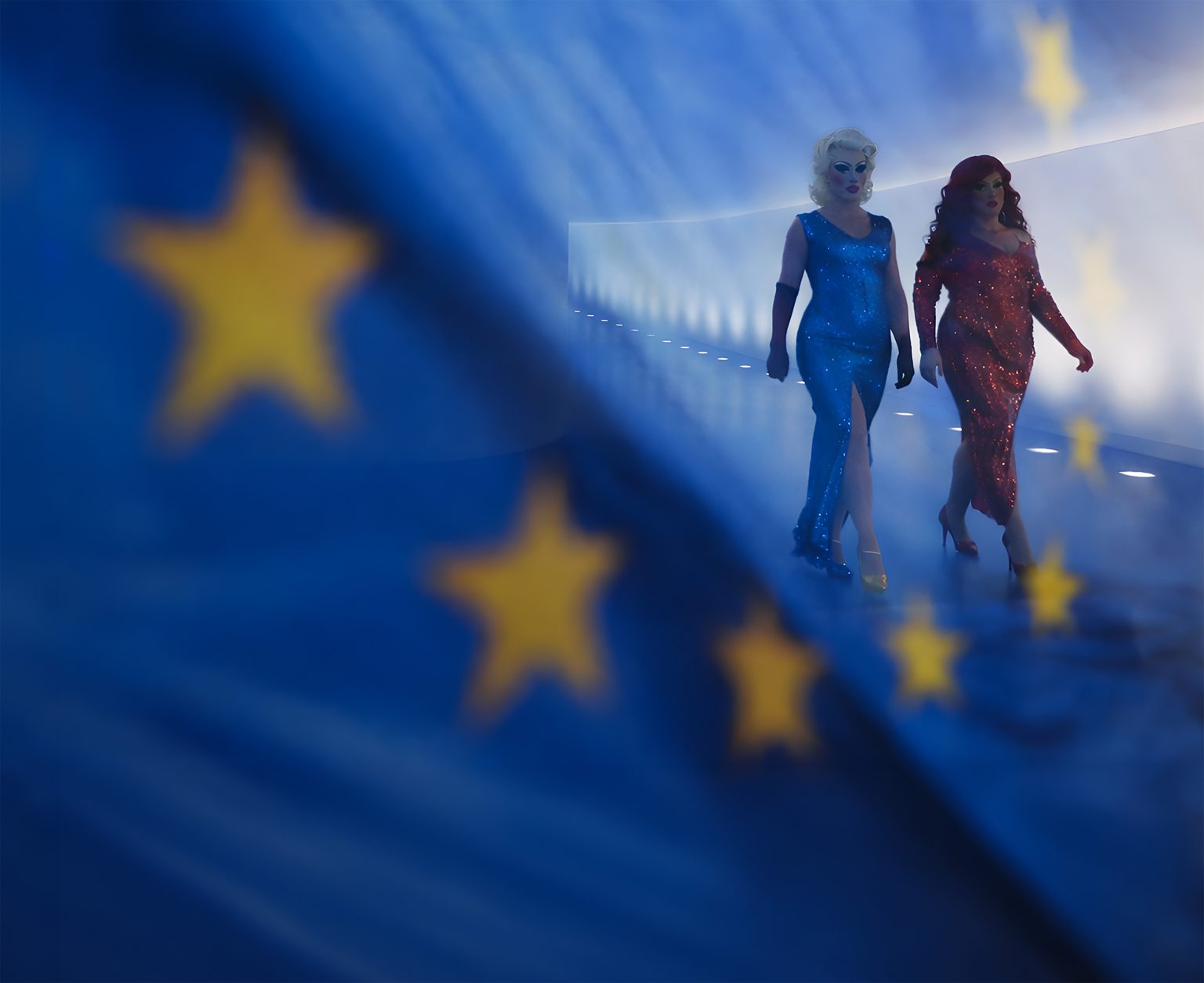
The Court of Justice of the European Union has ruled that transgender people in the EU have the right to identity documents that correspond to their chosen gender identity. Member states must therefore allow changes of gender in civil registries. This ruling takes precedence over national law.
The case centred on ‘Shipov’, a Bulgarian man who identifies as a woman. He moved to Italy, where he began hormone therapy. However, his request to change the sex entry on his birth certificate in Bulgaria was rejected, prompting a legal dispute.
The judgment is another striking example of how European institutions are increasingly venturing into areas that were never part of their core functions. In the name of freedom of movement, privacy and fundamental rights, the Court has again moved beyond a technical interpretation of the law and entered the realm of cultural and moral questions, which are inherently matters for democratic debate among nations.
Rather than respecting the differing traditions and constitutional orders of member states, pressure is being exerted for the uniform adoption of a particular ideological view of human identity, gender and personhood. That is what makes this ruling particularly serious.
This is not merely an individual dispute in Bulgaria. It is a precedent that indicates the direction of European legal thinking.
Anything that can be linked to freedom of movement or to the Charter of Fundamental Rights can become a tool for advancing profound social changes that have never been subject to proper political debate or democratic consent, and which are not aligned with the ideas on which the Union was originally founded.
The Court of Justice replaces democratic consensus
At the heart of the judgment is the proposition that a member state cannot refuse to amend the gender, name and identity details in its civil registry of a person who has exercised the right of free movement in another member state. The Court presents this as a matter of ensuring the effective functioning of the Union’s fundamental freedoms.
In reality, it is doing something far more significant by effectively determining what constitutes a person’s legally relevant identity, and indirectly shaping what it means to be a man or a woman.
It transforms legal interpretation into a cultural and ideological intervention. The European treaties did not establish the Union as an arbiter of fundamental questions of human nature. It was not created to decide questions of anthropology, the meaning of gender, family relationships or how individual nations should balance biological reality, social experience and legal categories.
This illustrates the problem of judicial activism. The issue is not only that such decisions contribute to broader anthropological change, but that they resolve questions that in a free society should be decided by citizens through democratic institutions, constitutional processes and open debate.
Sex is a biological reality
The question of gender is one of the most fundamental aspects of human existence. It is not a register entry that can be arbitrarily altered according to subjective self-perception.
For centuries, European civilisation has developed with the understanding that human beings are both physical and spiritual, and that masculinity and femininity are not incidental or purely psychological categories. The body is not a superficial thing that can be reshaped in meaning according to momentary self-definition. It carries an inherent truth about the person.
The issue at stake is whether biological reality will continue to have public significance or whether it will be replaced by an understanding of identity based primarily on internal self-definition.
This perspective, however, conflicts not only with the Christian understanding of the person and evolutionary theory, but also with common sense and everyday social experience. Society depends on stable concepts. It requires shared meanings for terms such as man, woman, mother, father and family. When these concepts become detached from biological and natural reality, not only the legal order is weakened but also the cultural cohesion of society.
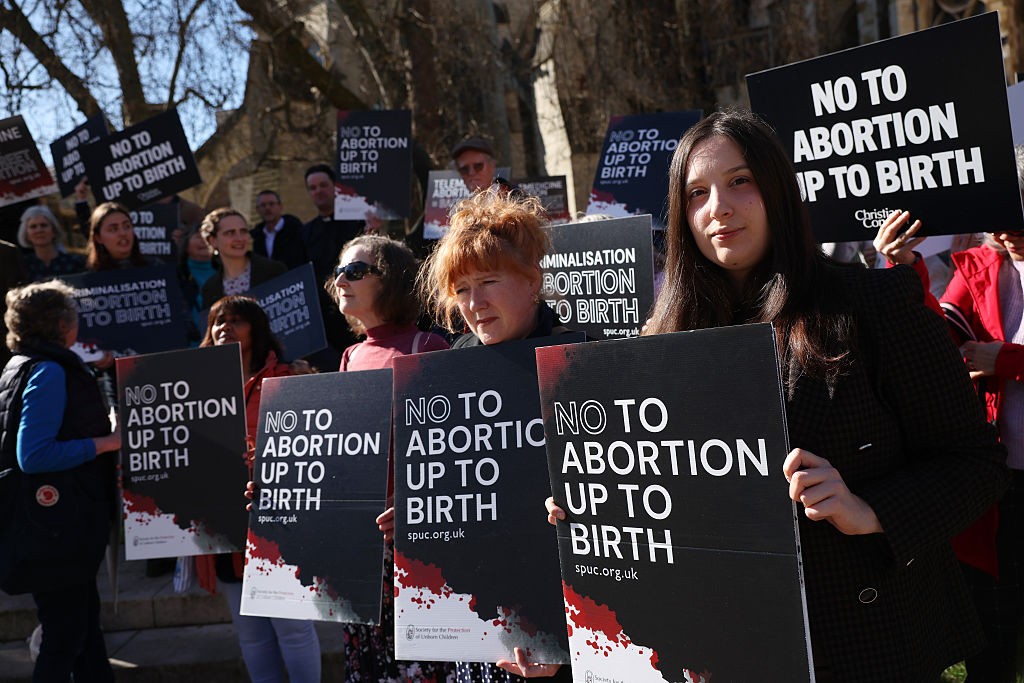
In this context, it is also worth noting what critics see as an inconsistency in the approach of European institutions. A man who identifies as a woman is regarded as a woman, yet an unborn child is not considered a human being and may be terminated.
Feelings aren't facts
On one side stands the Christian and classical European understanding of the person, according to which freedom does not mean the ability to deny one’s nature, but the ability to live in accordance with it. On the other hand stands a modern understanding of identity that treats freedom as self-determination independent of the body, tradition or natural order.
This view is often framed in the language of compassion and human rights. Yet it rests on the idea of human beings as creators of their own nature. The question is no longer only how society should respond to individuals experiencing profound internal conflict.
Rather, society as a whole is asked to accept a new understanding of reality in which biological sex is no longer decisive. Respect for the individual does not necessarily entail recognising every subjective perception as a legal fact.

Compassion cannot be separated from truth
The decision is also troubling because it reflects a broader tendency within the European Union to expand its competences indirectly. Where the treaties leave space for member states, Union law often enters through general clauses or expansive interpretations of fundamental rights.
Cultural and ethical issues are among the most sensitive aspects of national sovereignty. Member states differ in their histories, constitutional traditions, religious backgrounds and moral frameworks. What may be broadly accepted in one country may be regarded in another as a challenge to the foundations of social order.
The Union is gradually evolving into a project of cultural transformation in which the traditional institutions and constitutional identities of member states are increasingly shaped by a more centralised legal approach.
It would be a mistake to regard this as merely a technical legal issue. The dispute is civilisational in nature. It raises the question of what kind of Europe is being shaped. A Europe that retains awareness of its historical roots and sees human beings as having an inherent nature, or one that builds its identity on more fluid legal and conceptual foundations.
Democracy demands a response
The appropriate response, critics argue, is to defend democratic decision-making in fundamental cultural matters and to ensure that changes of this magnitude are subject to open political debate.
If courts are seen as able to impose obligations on states to redefine core concepts such as gender and identity based on abstract rights, it becomes difficult to determine where such developments might end. Today, the issue concerns civil registries. In future, it may extend to education, sport, healthcare, family law or religious freedom.
In this context, legal analysis alone is insufficient. The debate must also address broader questions about the nature of the human person, the role of family and the limits of legal reinterpretation.
Such decisions are viewed by critics not as incremental extensions of rights, but as part of a wider project of societal change taking place without comprehensive democratic deliberation.
For that reason, many argue that these developments should be openly debated rather than accepted as inevitable. Europe, they contend, does not require further ideological experimentation.