
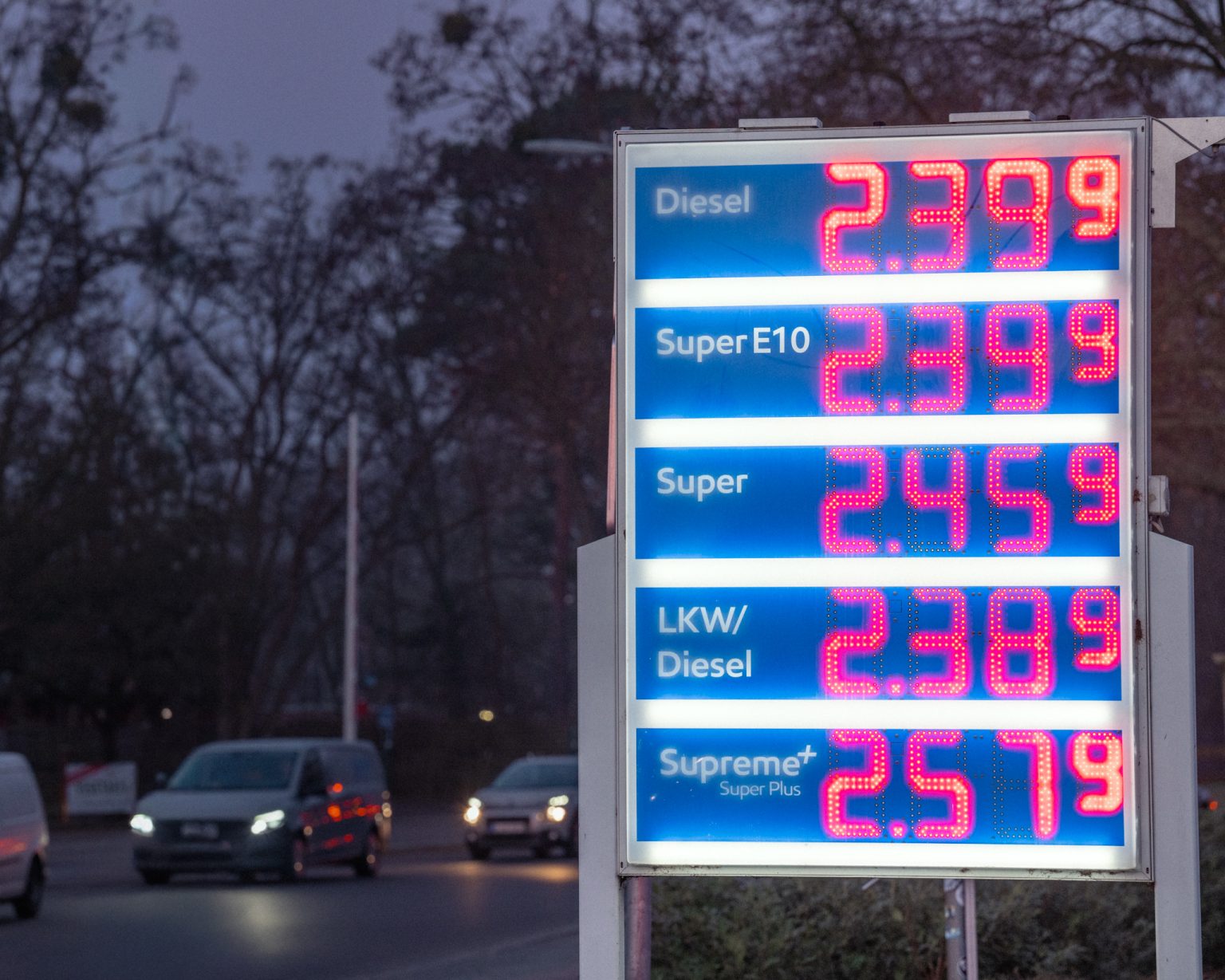
Berlin/Brüssel. In response to soaring fuel prices, many EU states have introduced countermeasures. The approaches differ markedly. In Germany, the federal government has launched a comprehensive legislative package, taking a comparatively gradual route. As more EU countries move to curb fuel prices effectively, pressure has mounted on the German economy minister, Katherina Reiche. Speaking at the government press conference on Wednesday, deputy government spokesman Steffen Meyer announced that Berlin intends to adopt the Austrian model before Easter, under which petrol stations may raise prices only once a day, at noon.
Price reductions, by contrast, would be permitted at any time. Whether such a rule will actually bring down prices remains contested. The government is also planning to strengthen competition law instruments. The Federal Cartel Office is to be enabled to ‘address significant and persistent distortions of competition more easily and more swiftly in future’, Meyer said. However, the government has no immediate plans to introduce fuel tax cuts or a windfall tax. The measures already agreed are to take priority, while the government will ‘continue to monitor the situation’. The proposals have been submitted to the Bundestag as draft legislation and are now under discussion.
Federal states call for relief
At the initiative of Lower Saxony and several other federal states, a special meeting of state energy ministers with Reiche is to be convened. The agenda will cover not only fuel prices but also the future of the energy transition. Lower Saxony’s energy minister, Christian Meyer, considers the measures announced so far insufficient in light of what he describes as ‘fossil-driven price inflation’. According to the German Press Agency (dpa), Meyer and several of his counterparts have called for a windfall tax, to be levied without delay and returned directly to citizens.
Such a policy would amount to a costly redistribution of funds via the state budget. Transfers of that kind rarely provide meaningful relief once administrative costs are taken into account. At the same time, the state ministers argue that the time has come to cut electricity tax across the board, which would benefit consumers directly. Even before any disruption in the Strait of Hormuz, energy prices in Germany were significantly higher than in many other countries due to taxes and levies. ‘A reduction of two cents would take effect quickly, relieve an average household by €100 and should be made permanent in order to lower electricity costs,’ Meyer said.
Other groups are also seeking to persuade the federal government to reduce energy costs. The Allgemeiner Deutscher Automobil Club (ADAC) has called for cuts to energy taxes, which would directly ease the burden on consumers. The Greens and the Left Party are pushing for the return of the €9 ticket. At present, the Deutschlandticket allows travel on local and regional public transport for €63 per month, though it is of limited use in rural areas where services are sparse. Bavaria’s minister-president and CSU leader Markus Söder is advocating a further increase in the commuter allowance, enabling commuters to deduct more of their travel costs from income tax.
Italy and others act swiftly
Italy’s prime minister Giorgia Meloni has announced plans to reduce fuel prices by decree. Cuts to taxes on petrol and diesel are intended to lower prices by 25 cents per litre, while haulage companies are to receive tax credits. An ‘anti-speculation mechanism’ included in the decree is designed to link prices ‘strictly to the actual development of crude oil prices on the world market’.
In Slovakia, prime minister Robert Fico has introduced restrictions on diesel purchases. Individual vehicles may now refuel only up to a maximum value of €400, while the transport of diesel in canisters is limited to 10 litres. The measures are intended, among other things, to curb fuel tourism.
In Austria, a temporary authorisation would allow the finance minister to mandate a reduction in mineral oil tax. The cabinet had already approved a windfall tax in the previous week, expected to lower the price of a litre of fuel at the pump by around 10 cents. However, the governing coalition requires support from the opposition to pass the necessary legislative changes.
EU plans its own measures
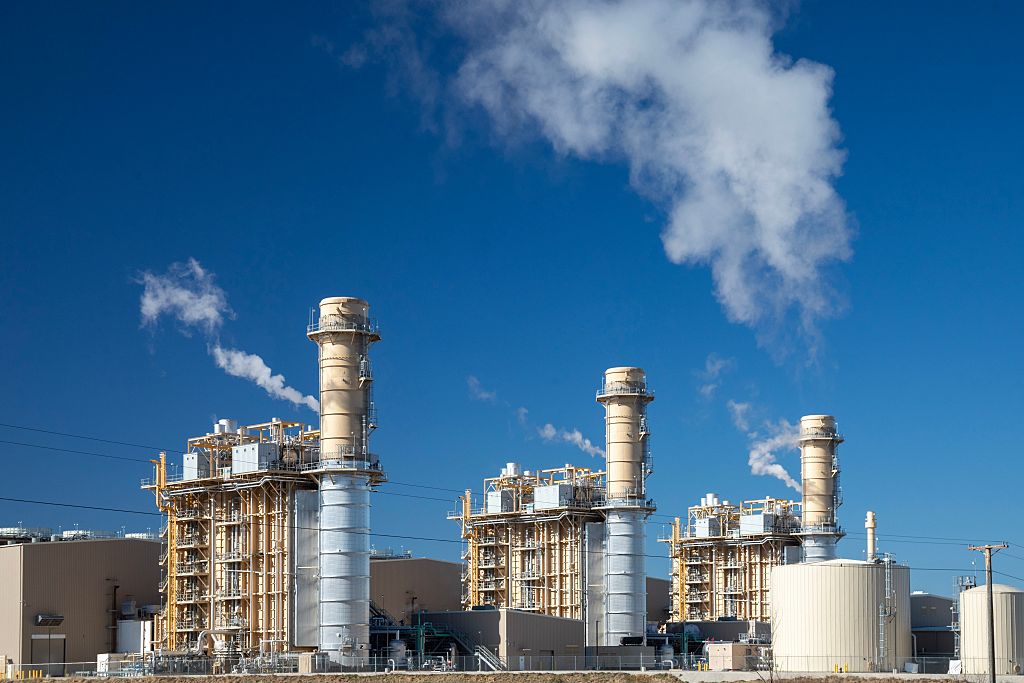
The European Union is also preparing steps to address high energy costs. European Commission president Ursula von der Leyen has presented a set of proposals, including the possible relaxation of rules on free emissions allowances to offset electricity costs for companies across the EU. The emissions trading system (ETS) could serve as another lever. It requires power plants and industrial operators to purchase certificates covering their CO2 emissions and accounts for around 11 per cent of industrial electricity bills across the EU. In countries with a higher share of fossil fuels in the energy mix, the burden is even greater. In Poland, ETS costs make up roughly 24 per cent of industrial electricity prices, according to EU data. Italy has called on the EU to suspend ETS obligations for power plants in order to reduce costs.
If energy costs remain at such elevated levels or rise further, economic losses will be unavoidable. Industrial competitiveness would be at risk, as would consumers’ purchasing power. There is broad agreement among policymakers and experts that reducing energy costs is essential. Whether the planned measures will prove sufficient remains to be seen.