Parallels from history
A relevant historical comparison lies in the eastern Mediterranean and the rise of the Ottoman Empire. The Bosporus and the Dardanelles, which connect the Black Sea with the Aegean, became increasingly significant as power shifted in Anatolia after the Battle of Manzikert in 1071.
The Seljuks disrupted the regional balance and weakened Byzantine control over Asia Minor. The political landscape remained unstable. From the late 11th century onwards, the Crusades opened a western front, further complicating control over territory and trade.
From around 1100, the Sultanate of Rum reasserted itself in Anatolia and remained a major force for roughly two centuries. It controlled large parts of the peninsula and continued to weaken Byzantium before falling under Mongol domination in the mid-13th century.
By the end of that century, Anatolia had fragmented into a series of small Turkish principalities, known as beyliks. One of them, centred on Söğüt and led by Osman I, became the nucleus of what would later be known as the Ottoman Empire.
Trade routes and power
The Ottomans expanded steadily into former Byzantine territory, taking Nicaea in 1331, Bursa in 1335 and Adrianople in the 14th century before conquering Constantinople in 1453. Even before that final victory, they had already become a dominant force along the routes linking Europe with Asia.
It would be reductive to argue that Ottoman expansion alone forced Europe to seek a sea route to India. The shift towards maritime exploration had multiple causes. Yet growing insecurity along overland routes and tighter control in the eastern Mediterranean were among the pressures that encouraged Europeans to look for alternatives.
Portugal stood at the forefront of that effort. Henry the Navigator, a Portuguese prince and brother of King Duarte of Portugal, played a central role in promoting maritime exploration along the African coast.
Bartolomeu Dias later became the first European to round the Cape of Good Hope. Vasco da Gama built on that achievement by reaching India by sea at the turn of the 16th century. In the years that followed, Portuguese expansion in the Indian Ocean was consolidated by figures such as Afonso de Albuquerque, under whom Goa became a major centre of Portuguese power in Asia.
That redirection of trade and power towards the oceans was one of the developments that helped usher in the age of overseas expansion and, in time, the early modern era.
A turning point on the Persian coast
The Portuguese also drew renewed European attention to Hormuz, which Marco Polo is said to have visited. Originally, the name referred not to the strait but to the island kingdom that controlled one of the Gulf’s most important commercial crossroads.
By the early modern period, Hormuz had become one of the great entrepôts of the region. Its importance lay less in territory than in position: at the entrance to the Gulf, where maritime trade could be monitored, taxed and controlled.
The island lies near the narrowest point of the strait, close to the Persian coast. That made it a natural focus of rivalry between regional powers and overseas empires alike.
The Portuguese captured Hormuz in 1514 and held it for more than a century. In 1622, Shah Abbas I of the Safavid dynasty, with English support, drove them out and regained control of Hormuz, Qeshm and the mainland port of Bandar Abbas.
Later, Hormuz, together with Qeshm and Bandar Abbas, came under the control of the rulers of Muscat and Oman between 1798 and 1868. The region’s history was thus shaped by shifting alliances, competing powers and commercial arrangements rather than by a single, continuous imperial order.
The Omani sphere once extended far beyond the Arabian Peninsula and included Zanzibar on the East African coast. In the Gulf, Britain gradually expanded its influence through treaties, naval power and commercial pressure.
What later became known as the Trucial States, a group of emirates bound by truces with Britain, emerged from a loose collection of emirates whose rulers concluded agreements with Britain during the 19th century. British charts had earlier described parts of the shoreline as the Pirate Coast. Over time, London sought to stabilise the region in order to secure maritime routes and protect imperial commerce.
From trading hub to imperial frontier
That influence was closely tied to British India, from which the Gulf was long administered. Yet the principalities of the region were not simply part of the British Raj in the same sense as territories on the Indian subcontinent. Their status rested on treaties, protectorate arrangements and commercial dependency.
The legacy of that system remains visible. Labour migration from South Asia to the Gulf has deep historical roots, and the political geography of the lower Gulf was profoundly shaped by British strategic priorities.
The Trucial rulers, including dynasties such as the Al Qasimi and Al Nahyan, retained considerable autonomy under British protection. They also remained distinct from the House of Saud, which from the 18th century sought to unify much of the Arabian Peninsula.
Those efforts met repeated resistance from regional rivals and external powers. Even so, the alliance between the House of Saud and the followers of Muhammad ibn Abd al-Wahhab endured and eventually became the foundation of modern Saudi Arabia.
After the First World War and the collapse of the Ottoman Empire, Britain’s role in the Gulf remained decisive. London announced its withdrawal in 1968, prompting negotiations among the Trucial States, Bahrain and Qatar over a possible federation.
That broader union did not materialise. Bahrain and Qatar opted for independence, while six emirates founded the United Arab Emirates in December 1971. Ras al-Khaimah joined in February 1972. Oman’s internal consolidation was also relatively recent, with the sultanate securing lasting control over the interior only in the 20th century.
History and what may follow
The need to protect commercial interests in the Gulf first drew Britain into the region and later helped shape the emergence of the modern Gulf monarchies. Bahrain, Qatar and the United Arab Emirates are among the heirs of that history, and their influence now extends well beyond their borders.
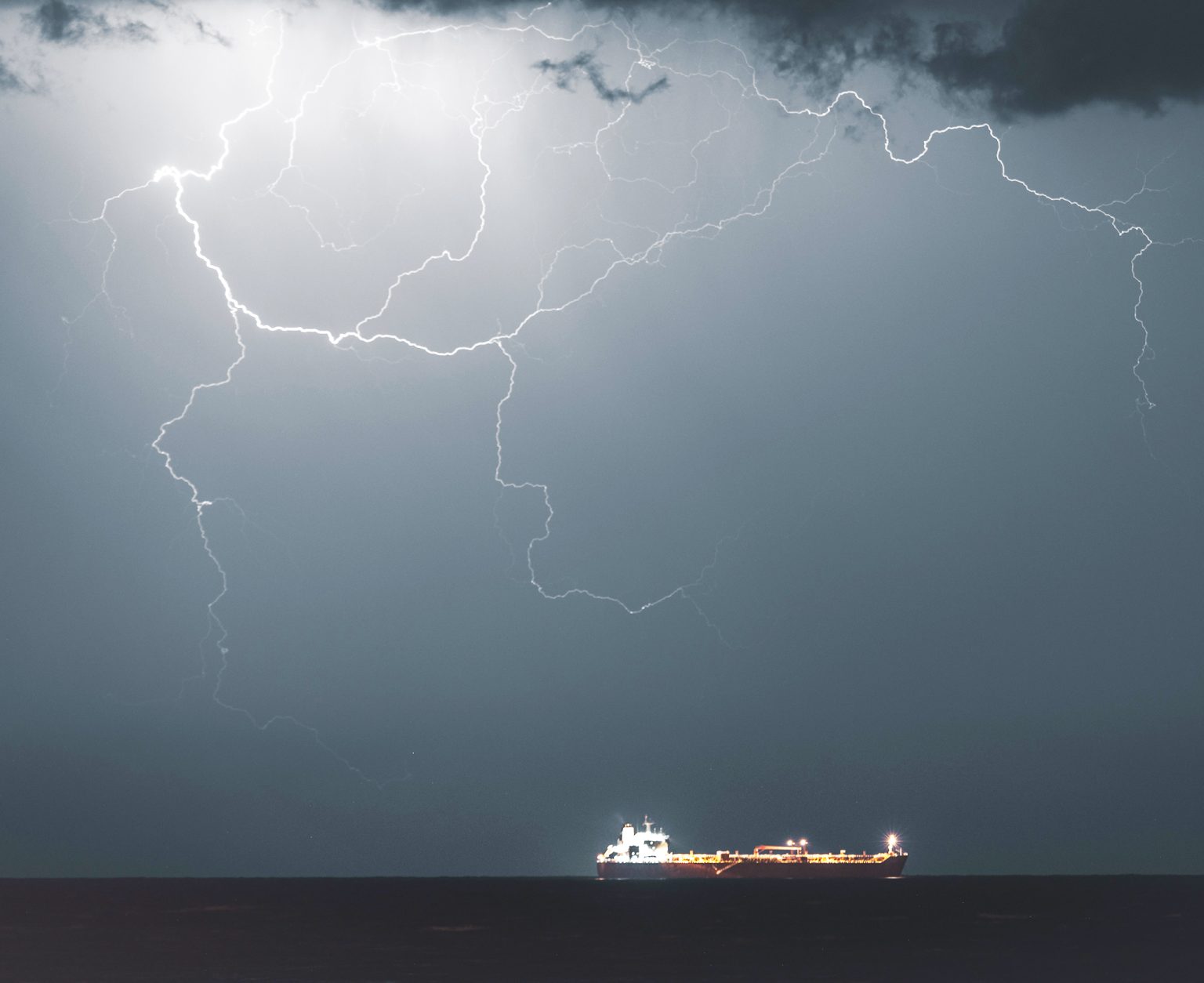
Unlike in the age of imperial trade, the present disruption in the Strait of Hormuz affects not a single empire but the global economy. Oil, gas, shipping, insurance, industry and food supply chains are all exposed.
The balance of power in the Gulf may shift as a result. Iran draws on a strong historical and cultural identity, while the Arab monarchies share closely related political and cultural foundations, even as they remain distinct states shaped by separate ruling houses and interests.
Closer alignment in the Gulf becomes more conceivable under sustained external strain. A new political federation among Gulf states is not inevitable. A deteriorating security environment could push them towards closer coordination in defence, energy and diplomacy.
A bloc linking Kuwait, Bahrain, Qatar and the United Arab Emirates would represent a significant concentration of wealth, hydrocarbons and political influence. Even without formal unification, closer alignment among such states would alter the regional balance.
The broader lesson is not that history repeats itself mechanically. It is that when critical chokepoints cease to function, they can accelerate changes that might otherwise take decades. The Strait of Hormuz may yet prove to be one of those moments.