
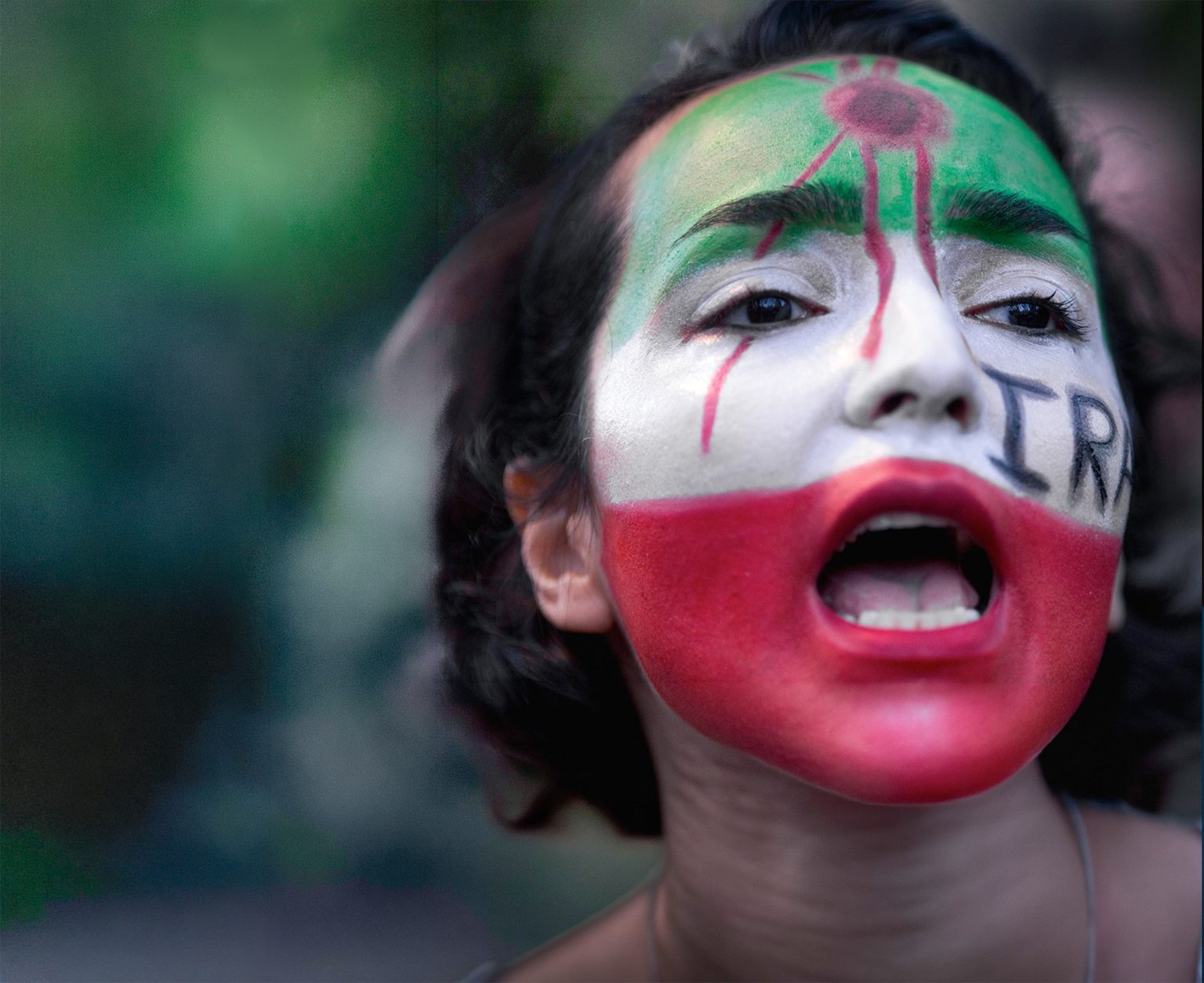
At the outset of the war, there was a sense in Iran that had not been felt in years: the real prospect of political change. After months of mass protests openly challenging the foundations of the Islamic Republic, external military pressure appeared as a possible catalyst. The combination of economic crisis, political fatigue and escalating security tensions made it conceivable, for a brief moment, that the system might begin to falter. That expectation was grounded in recent experience. The protests had reached an intensity that surprised even seasoned observers. In numerous cities, public life was temporarily paralysed, slogans directly targeted the leadership, and despite severe violence, demonstrations persisted for weeks.
International observers, including Human Rights Watch and Amnesty International, had already documented how decisively the leadership responded: with live ammunition, thousands of arrests and rhetoric portraying demonstrators as enemies of the state. Even so, the expectation remained that additional external pressure might tip the fragile balance. The possibility was also widely discussed within Iranian society. For many, the war was not only a threat but also a potential turning point.
That moment proved short-lived. Instead of a power vacuum or internal destabilisation, a swift, precise and comprehensive response followed. The leadership in Tehran did not act defensively but used the situation to expand its control at home. So far, the war has not become a risk for the system but a means of stabilising it. At this point, an analysis by the association Iranian Liberal Women offers particular insight. Based on official statements by Iranian authorities, it provides a view of repression from the state’s own perspective.
The systematic escalation of repression
The data in that analysis paint a clear picture. Between the start of the war and 25 March, at least 1,478 people were arrested, based solely on cases in which state bodies themselves provided figures. The number should be understood as a minimum. The true scale is likely significantly higher, as many arrests are reported without figures or grouped into collective statements.
At the same time, Iranian authorities have published aggregated data of their own, including the detention of 500 individuals in a general police overview and 466 people described as ‘disruptors of security’ in the digital sphere. Taken together, those figures underline that the measures are not isolated but part of a broad, co-ordinated campaign.
The geographical spread is particularly striking. Arrests are not confined to political centres but extend across much of the country. In Alborz province, 116 people were detained within two days; in the Tehran area at least 86; in West Azerbaijan 68; in Mazandaran 60; and in Hormozgan 55. Further cases are distributed across numerous provinces – from Qazvin and Hamadan to Khuzestan and Kerman, as well as regions such as Sistan and Baluchestan or Ilam. The pattern suggests that the security apparatus is not reacting selectively but has activated a nationwide network of surveillance and enforcement.
Equally revealing is the structure of the charges. A central category concerns espionage and the passing of information. In many cases, individuals are accused of reporting locations, sending images or providing information to foreign media. A second category covers digital activity more broadly: sharing videos, forwarding messages or taking part in online discussions. A third includes offences such as ‘disturbing public order’, ‘spreading rumours’ or ‘psychological warfare’. The terms are deliberately vague, allowing almost any form of behaviour to be framed as a security threat. In practice, even owning a smartphone may be enough to attract suspicion.
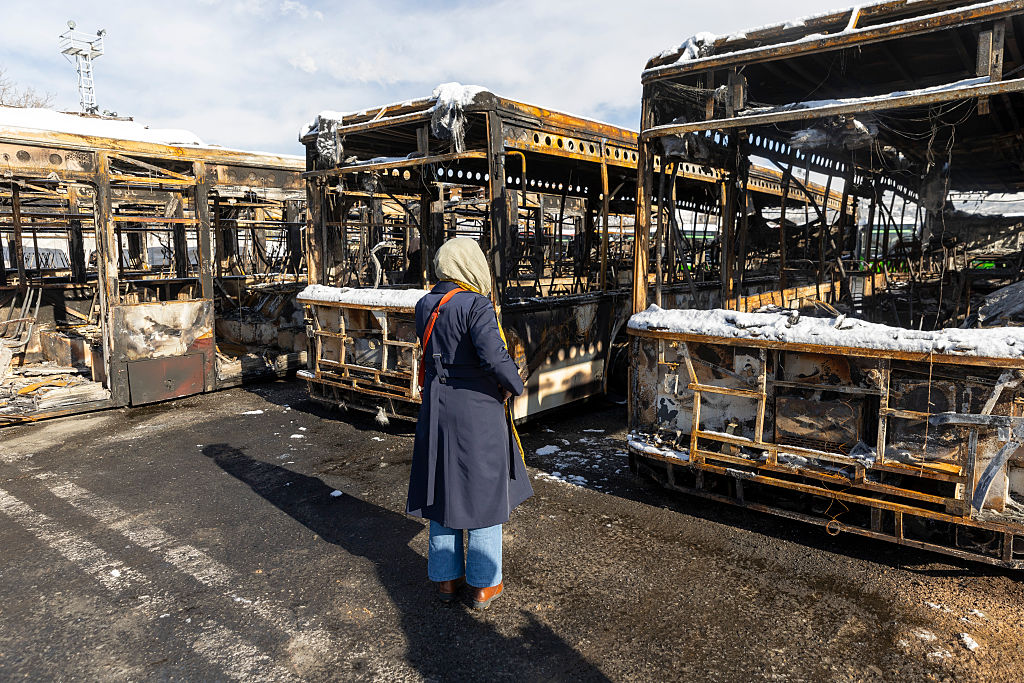
How this strategy plays out in daily life is illustrated by a report from the BBC Persian service. According to the report, checkpoints have been set up across Tehran where citizens are stopped and searched without specific cause. Security vehicles dominate the streets, while checks are sometimes carried out in tunnels or under bridges – apparently in response to earlier attacks on checkpoints. Residents also report severe restrictions on internet access, as well as targeted SMS warnings from security authorities explicitly discouraging participation in protests.
The indirect consequences are particularly telling. Residents describe how they adjust their behaviour in everyday life. Clothing, movement patterns and even routine decisions are shaped by the prospect of checks.
At the same time, access to independent communication is systematically restricted. While state-controlled channels continue to function, the use of alternative connections such as satellite internet is criminalised. One interviewee reports that his professional work in ‘secure internet connections’ could itself be treated as a criminal offence. The combination of the physical presence of security forces and digital isolation not only complicates communication with the outside world but, above all, hinders the internal co-ordination of potential protests.
Equally notable is what has not occurred. Despite earlier momentum, no comparable mass protests have been observed since the start of the war. Instead, state-organised rallies and an atmosphere of controlled public life dominate. The leadership’s strategy appears to be working: before new protests can even take shape, their structural foundations – communication, mobilisation and visibility – are systematically curtailed.
At the same time, the state is intensifying its control over the digital sphere. Internet shutdowns, targeted disruptions and extensive surveillance have long been part of its toolkit. What is new is the consistency with which alternative access routes are now pursued. The analysis documents numerous cases in which the possession of satellite internet, particularly Starlink, is cited as incriminating evidence. A tool that for many citizens represents the only access to independent information is thus effectively criminalised.
Organisations such as Access Now have repeatedly ranked Iran among the countries with the most severe restrictions on digital communication. The current development goes further: not only is access restricted, but attempts to circumvent those restrictions are themselves treated as security offences.
Religious groups are also drawn into this framework. The organisation Open Doors has long documented the persecution of Christian converts in Iran under charges of endangering national security. In many cases, the issue is not specific crimes but foreign contacts, religious gatherings or missionary activity. Those cases show that the state’s security logic is not limited to political opposition but extends to religious deviation. The concept of ‘endangering national security’ thus becomes a universal category under which a wide range of non-state activities can be subsumed.
Why hope fades last
A decisive factor in the failure of initial hopes lies in the strategic use of language and framing. Official statements do not refer to suspects but to ‘spies’, ‘mercenaries’, ‘traitors’ or ‘agents of the enemy’. At the same time, security forces are ideologically elevated and portrayed as defenders of nation and faith. The contrast is not a rhetorical detail but a central element of the repressive strategy. It creates a framework in which the guilt of those arrested is presumed and legal principles such as the presumption of innocence or fair trial recede into the background.
This development has been criticised for years by Amnesty International, which argues that such narratives underpin arbitrary arrests, forced confessions and harsh sentences. The current data suggest that the pattern is intensifying in the context of war. The external conflict serves as justification for integrating domestic opponents, media actors and even unorganised citizens into a single category of enemies.
Another feature is the preventive nature of many measures. In numerous cases, it is not a concrete act that is punished but an assumed intention. Terms such as ‘ready to act’, ‘preparing for unrest’ or ‘with the intention of disturbing public order’ appear repeatedly. The logic of state repression thus shifts fundamentally. The focus is no longer on actions but on potential behaviour. At the same time, the state actively calls on the public to report ‘suspicious’ individuals, creating a dense web of social control in which citizens themselves become part of the surveillance system.
Even so, the story is not over. Recent months have shown that social pressure in Iran does not simply dissipate but shifts, adapts and re-emerges in new forms. The absence of open protest does not indicate growing consent. Much suggests that discontent is intensifying beneath the surface – in private spaces, digital niches and informal networks. The experience of protest has not vanished. It has been stored. The regime’s strategy is aimed at buying time and securing control. Whether that will also deliver long-term stability remains an open question.