
Since the 18th century, but especially during the 19th and early 20th centuries, several scientific disciplines gradually became secularised under the influence of socio-political changes in Europe. This was noticeable in philosophy, religious studies, history, but also in geology, natural science and medicine.
Scholars of religion ceased to assume that polytheisms among nations and tribes scattered across the planet represented a declining stage of original monotheism. Geology and the natural sciences gradually abandoned theoretical foundations rooted in the Bible, and physicians began to view human life differently.

The beginnings of euthanasia
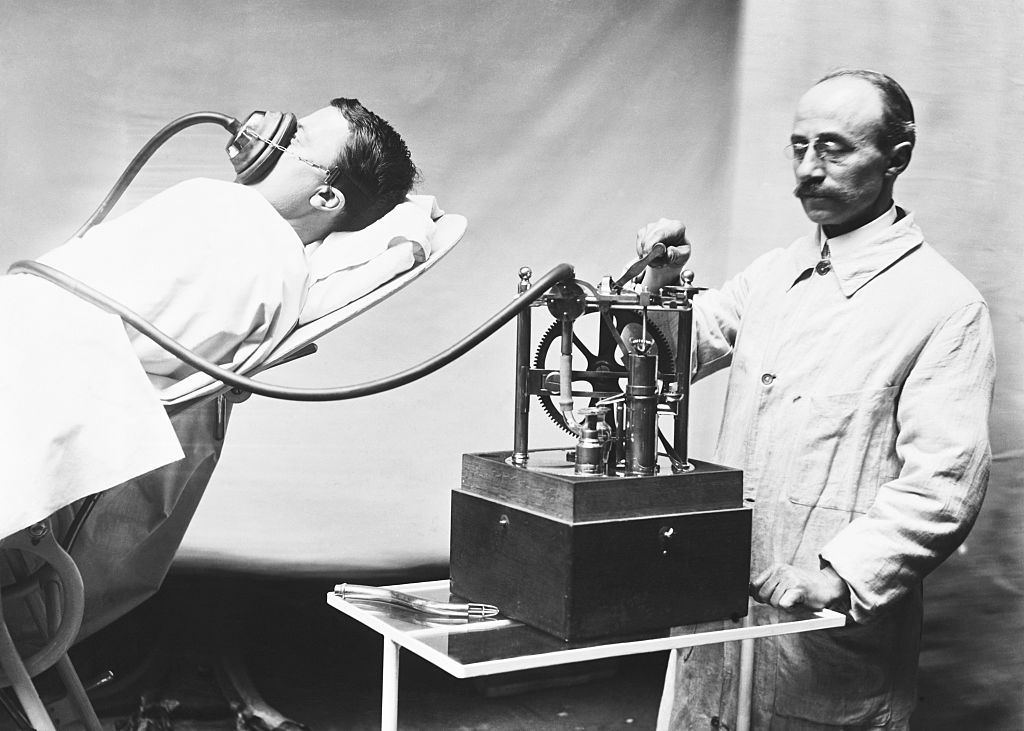
Physicians originally used the anaesthetics available at the time, such as morphine or chloroform, to relieve pain before death. The turning point came in 1870, when Samuel D. Williams, an English schoolmaster, sparked a debate about euthanasia.
In a lecture to an amateur philosophical club, he was the first in recorded history to express the view that it should be the duty of the physician, in cases of incurable and painful disease, to administer an anaesthetic at the request of the patient to bring about a quick and painless death.
His speech was subsequently published as an essay in the non-periodical proceedings of the Birmingham Speculative Club, where he spoke. Two years later, his book Euthanasia was published by Williams and Norgate in London.
In it he urged that ‘in all cases of hopeless and painful disease it should be considered the acknowledged duty of the physician - whenever the patient so desires - to administer chloroform to deprive the sufferer of consciousness at once and bring about a speedy and painless death’.
The concept and ethics of euthanasia
He added to this ground-breaking statement by specifying that all necessary precautions must be taken to prevent any possible abuse of such a duty by the physician. He also stressed the necessity of proving beyond doubt that the procedure in the case of a particular patient had been carried out at the patient’s expressed wish.
Williams thus redefined the concept of euthanasia. From a peaceful natural death experienced at the bedside in the company of family, it became the ‘mercy killing’ that we still understand euthanasia to be today.
After the English non-physician’s speech, more than 30 years of professional and lay debate on the ethics of euthanasia on both sides of the Atlantic followed. The base of opponents gradually weakened and, in turn, the influence of supporters of legalisation grew stronger.
Arguments and argumentative excesses, depending on the observer’s values, were surprisingly consistent with those of the present.

Legalisation of assisted suicide
Efforts to create a legal framework for euthanasia reached a significant milestone in 1906, when a bill was voted on in the US state of Ohio. Despite the efforts of Anna Hall, who sought the death of her mother suffering from an incurable and painful illness, the bill was not passed.
Three years before the start of the Second World War, a bill was introduced in the British House of Lords to allow mentally competent persons over the age of 21 to apply for euthanasia if they were suffering from an incurable illness accompanied by severe pain.
The proposal provided for the compulsory presence of witnesses, independent expert opinions from several doctors and, not least, the approval of the Minister of Health. Nevertheless, the bill was rejected.
For the Catholic world, the year 1957 is significant in relation to euthanasia, when the Vatican admitted the possibility of deliberately removing a patient from life-support machines, that is, the possibility of passive euthanasia. Thirty-seven years later, the US state of Oregon legalised assisted suicide, making it a pioneer in this field in the United States.
However, euthanasia and assisted suicide are not identical concepts, despite their proximity in meaning and legislation. Assisted suicide means that someone assists a person in ending his or her life - for example, by preparing poison, loading a gun or carrying out other necessary actions. Legislation in several European countries punishes the assistant for participating in suicide.
By contrast, euthanasia does not involve assistance in suicide but the act of ending a patient’s life at the patient’s request, without any further action by the patient. In several European countries, this is treated in law as intentional homicide.
The first country to legalise euthanasia was the Netherlands in 2002, followed shortly afterwards by Belgium in the same year, which extended the law to minors in 2014 despite opposition from the country’s Catholic clergy. The number of countries allowing euthanasia continues to grow.
Euthanasia, or suicide, as cults or religious practice
The history of euthanasia and assisted suicide can be understood more broadly and not only in terms of how we imagine these phenomena today - a patient confined to a bed and a medical professional ready to end his or her life.
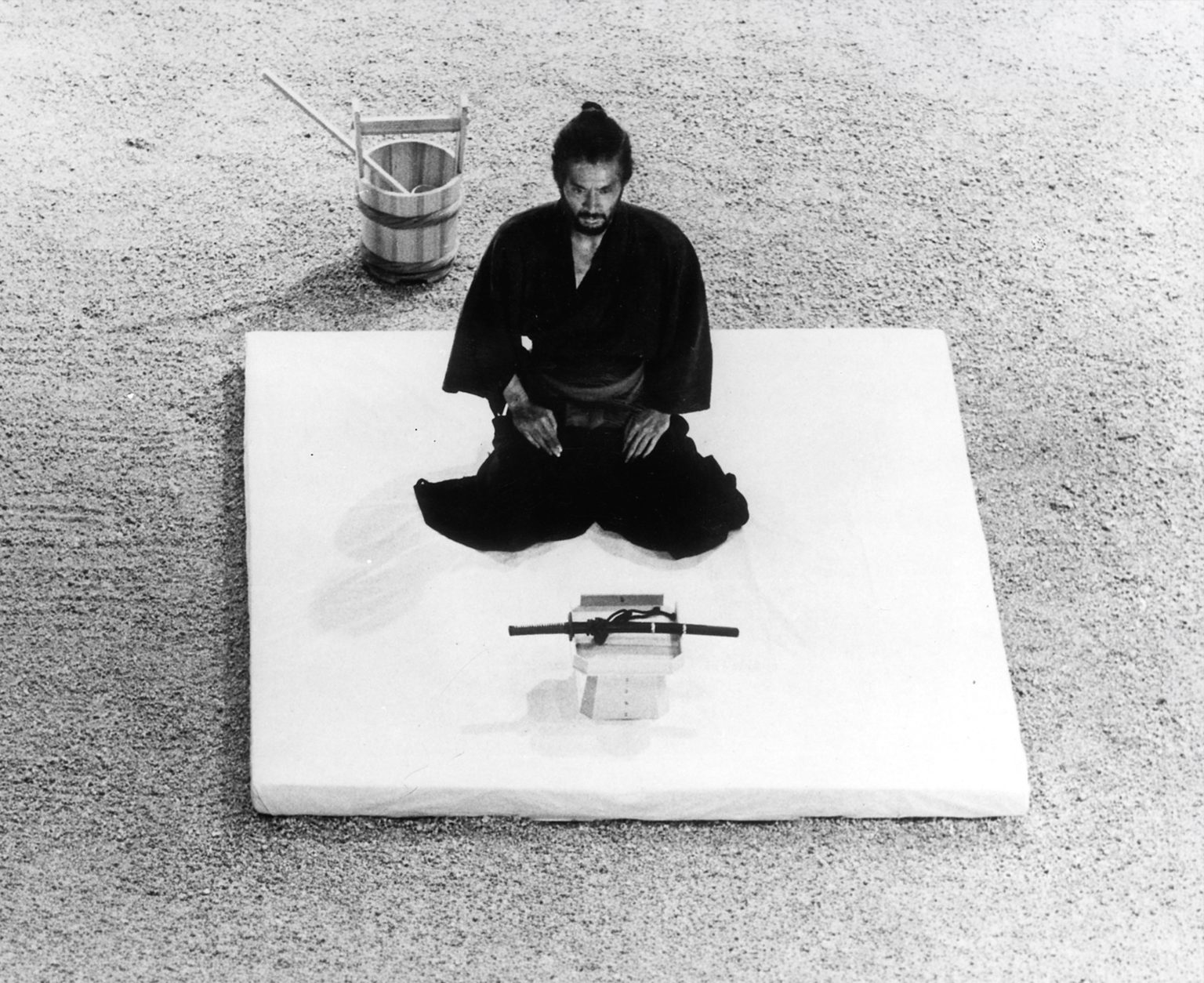
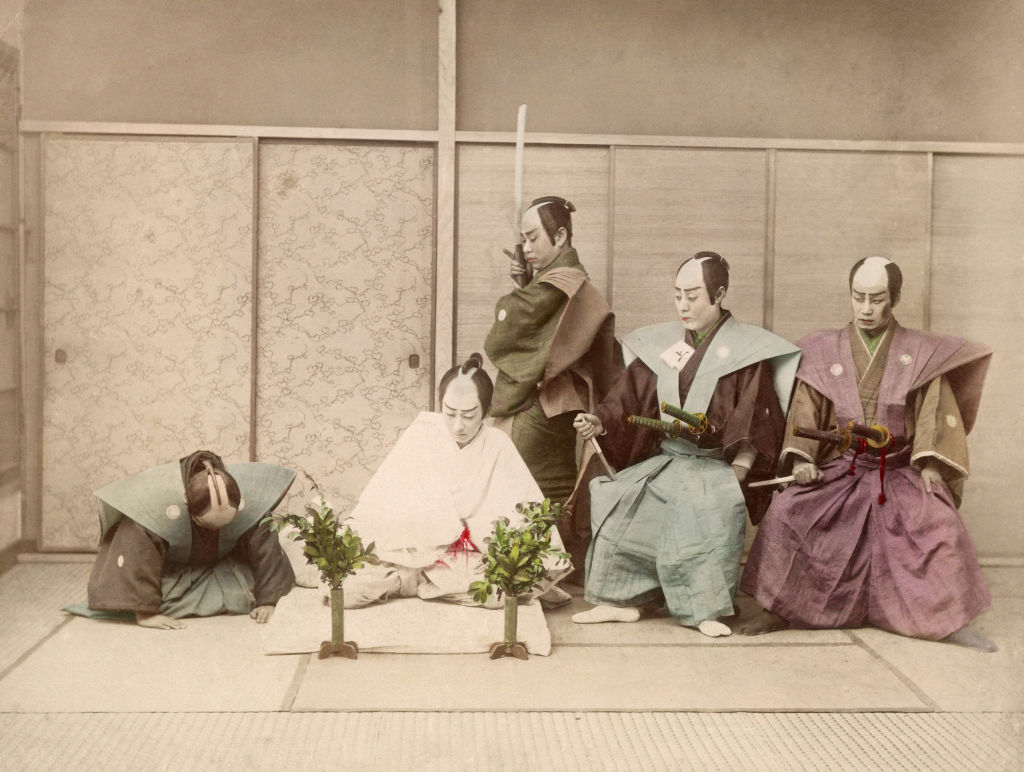
Japanese culture offers an example of assisted suicide outside a medical context. Like European societies, the Japanese have practised assisted suicide for reasons other than health, most often honour. The ritual, banned in Tokyo in 1873, is called seppuku and is also known in the West as Hara-Kiri.
During Seppuku, after brief contemplation, the samurai cuts open his abdomen and his assistant, the kaishakunin, decapitates him with a katana, ending a dying process that could otherwise last several hours. It was, in essence, a form of mercy killing, known worldwide even without its ceremonial context.
An example of euthanasia outside modern medical practice is a Russian religious sect active between the 18th and 19th centuries: the Tukalchiks, also known as the Dushileshchiks. They believed that only a person who died a violent death, like Jesus, could enter heaven. They therefore killed their sick, either with a hammer or by suffocation.
The euthanasia of persons deemed unfit, including children, in prehistoric, ancient, early medieval or National Socialist Germany in the name of eugenics is a separate chapter in European history. In the vast majority of cases, however, such euthanasia was not voluntary.