
Conspiracy theories are as old as human imagination. With social media, they are experiencing exponential growth. One widely circulated claim concerns the Hamas massacre of Jewish women, children and men on 7 October 2023: the attack was an Israeli inside job, designed to justify a brutal retaliation and enable a genocide against Palestinians in the Gaza Strip.
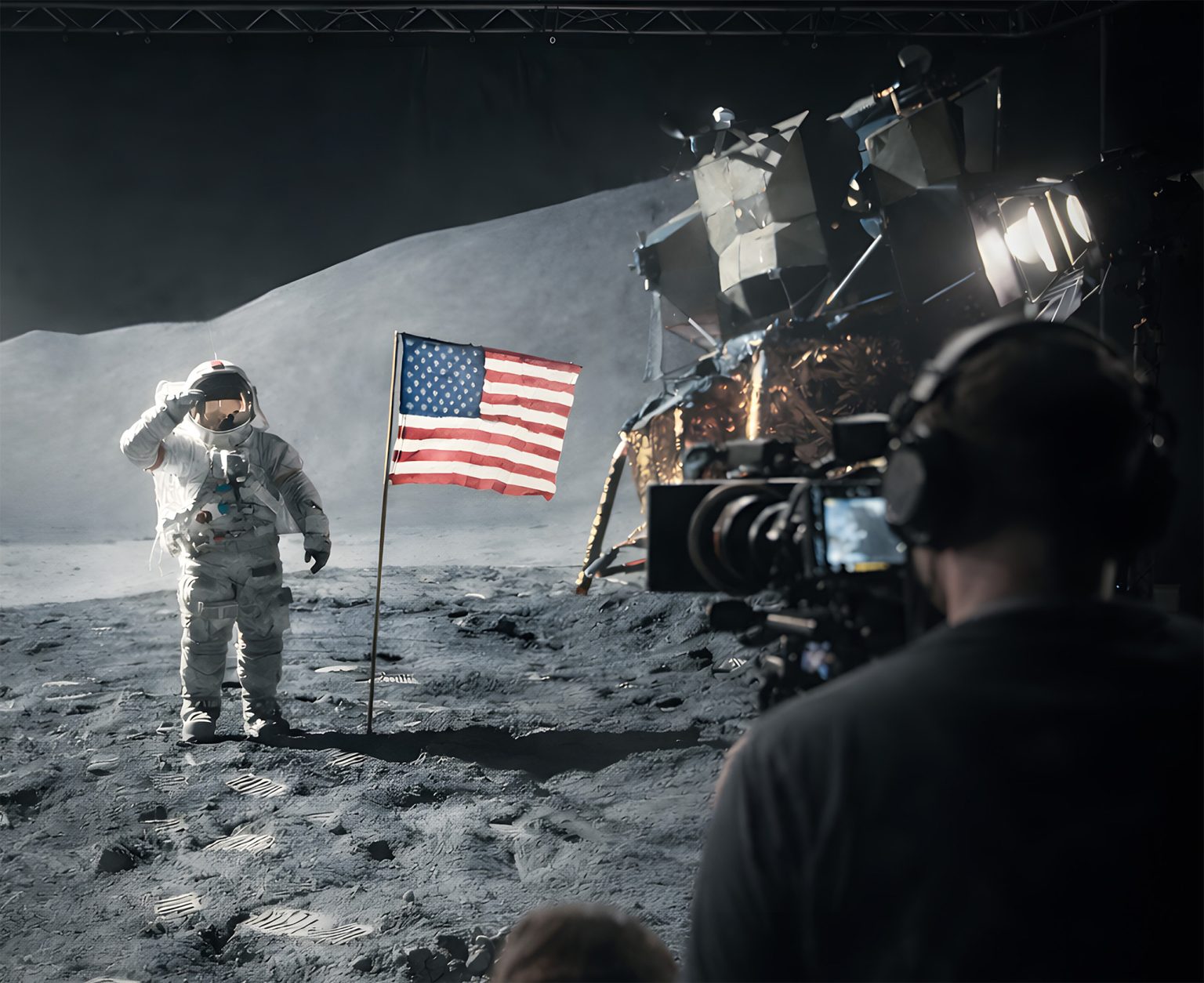
An older theory holds that Americans never landed on the moon and that thousands of engineers and officials involved in the alleged global deception have remained silent ever since. Another claims that in 2001 the United States itself brought down the Twin Towers, killing more than 3,000 of its own citizens in order to wage war on Islam. A further theory, recurring in various forms, suggests that European governments are controlled by shadowy forces – whether multinational corporations, Freemasons, Jews, the deep state or the Epstein connection – and that democracy is therefore merely a performance for a gullible public.
Life in the Matrix
However different such views may be, they share a common core asserting that governments and established media produce only apparent truths while concealing reality. Insiders then supposedly ‘expose’ what lies behind events and present it in YouTube videos and books as a sensation. The narrative usually revolves around powerful secret circles said to be brainwashing society so that people remain unwitting intellectual subjects of power.
It is, of course, true that the world contains power struggles and conspiracies. Grand schemes and delusions of grandeur have been part of history since time immemorial. Yet most conspiracy theories rely on something highly improbable in reality: the long-term control of major events involving hundreds, sometimes thousands of participants, all of whom keep silent.
What gives sweeping conspiracy claims their appeal is the difficulty of verifying their assumptions. The further removed an event is from everyday experience – a terrorist attack, a meeting of billionaires, the origins of a pandemic or a war – the easier it becomes for self-appointed truth-seekers to claim hidden knowledge on YouTube.
Few people can travel to the moon to check whether a US flag stands in the sand. No time machine exists to verify who really shot John F. Kennedy or whether aliens are held at Area 51. Most of us will never see the Earth from space. Instead, we rely on science, which explains the Earth through empirical data, rather than flat-Earth believers.
A longing for truth
If many people nevertheless believe in conspiracies, including people from the centre of society, it is too simple to dismiss them as incapable of grasping complexity. Nor is it merely an attempt to escape a dull everyday life. Cinema would serve that purpose just as well.
At a deeper level, the issue concerns lost trust. Trust in elected governments and institutions, trust in established media, from which many feel deceived. In other words, people resist the feeling of being misled. They want to live in truth. More precisely, they want an authentic relationship with reality.
Against this background, belief in manipulative world powers should not simply be ridiculed. It can express an important concern, namely the desire for individuality and autonomy. Those who distrust powerful actors do not want to become their victims. They worry about intellectual independence and freedom. Their longing for freedom outweighs conformity. Without such a longing, a free society cannot exist.
Truth and freedom are a good sign when many seek them. They become troubling, however, when people assume that governments no longer provide freedom and media no longer provide truth.
Ideological appropriation of scientific authority
Given the rise of conspiracy theories, governments and media organisations should acknowledge that they may not be entirely blameless. The revival of public moral instruction – from rainbow symbolism and climate mandates to gender language requirements – alongside pressure on critics in the name of solidarity and public health, particularly during the coronavirus crisis, has deepened divisions.
Such developments intensify what Jürgen Habermas described as ‘ideological polarisation’. Moralising rhetoric often portrays dissenters as extremists or even as beyond the pale. On climate policy and pandemic measures, commentators invoke ‘the science’, meaning disciplines such as climatology and virology, to delegitimise dissent. Yet in debates over gender, the same voices often sideline biology and neurology. The natural sciences suddenly cease to matter. Many may not fully analyse this selective use of ‘science’, but they sense the inconsistency.
A similar contradiction appears in political slogans such as ‘my body, my choice’, invoked in debates on abortion or assisted dying. Since the pandemic, such arguments no longer apply. During mask mandates and pressure on the unvaccinated, the message from authorities appeared to shift towards collective responsibility over individual autonomy.
Paternalism fuels echo chambers
None of this makes conspiracy theories more credible. It does, however, help explain the conditions in which they emerge. It should also serve as a wake-up call for governments and media seeking to rebuild trust. Moralising and paternalism need to give way to engagement with sceptics and fundamental critics. A vibrant democracy requires uncomfortable citizens. As Albert Einstein put it, ‘Blind belief in authority is the greatest enemy of truth.’
Free societies lose their footing when politics and media adopt the role of public educators and overextend their mandate. Critics are then pushed into the digital noise of their own bubbles. That not only undermines social cohesion, it actively fuels the conspiratorial mindset it seeks to combat. The strength of conspiracy apostles reflects the weakness of a self-righteous establishment.