
It was a huge déjà vu. Just as more than half a century ago, when the world watched the Apollo missions with bated breath, the planet today is divided into irreconcilable blocs. Yet the journey into space has once again become the one story capable of capturing the attention of all mankind. Amid the weighty news of strikes on Iran and threats of retaliation, viewers were able to pause and watch the launch of the historic Artemis II mission.
When the massive SLS rocket blasted off with the Orion spacecraft on 1 April, the goal was clear: to conduct a crewed lunar flyby for the first time in half a century. The crew succeeded on 6 April, even reaching a historic milestone. The astronauts surpassed the legendary flight of Apollo 13 and travelled farther from Earth than any humans before them – almost 252,756 miles. Only one thing was missing from absolute perfection: landing on the Moon and departing again.
On the face of it, it was a spectacular triumph for NASA, all the more valuable at a time of debate over significant budget cuts. In reality, however, there is another, far more pragmatic dimension to the event, embodied by none other than Elon Musk.
The state-led lunar orbit is the best possible business advertisement for the visionary. SpaceX is preparing its initial public offering (IPO) through a so-called confidential filing. If current speculation is confirmed, the move could be completed by July. If it goes through, it would be by far the biggest IPO in history. With an estimated valuation oscillating between $1.75tn and more than $2tn, it would handily surpass the existing record of Saudi Arabian oil giant Saudi Aramco.
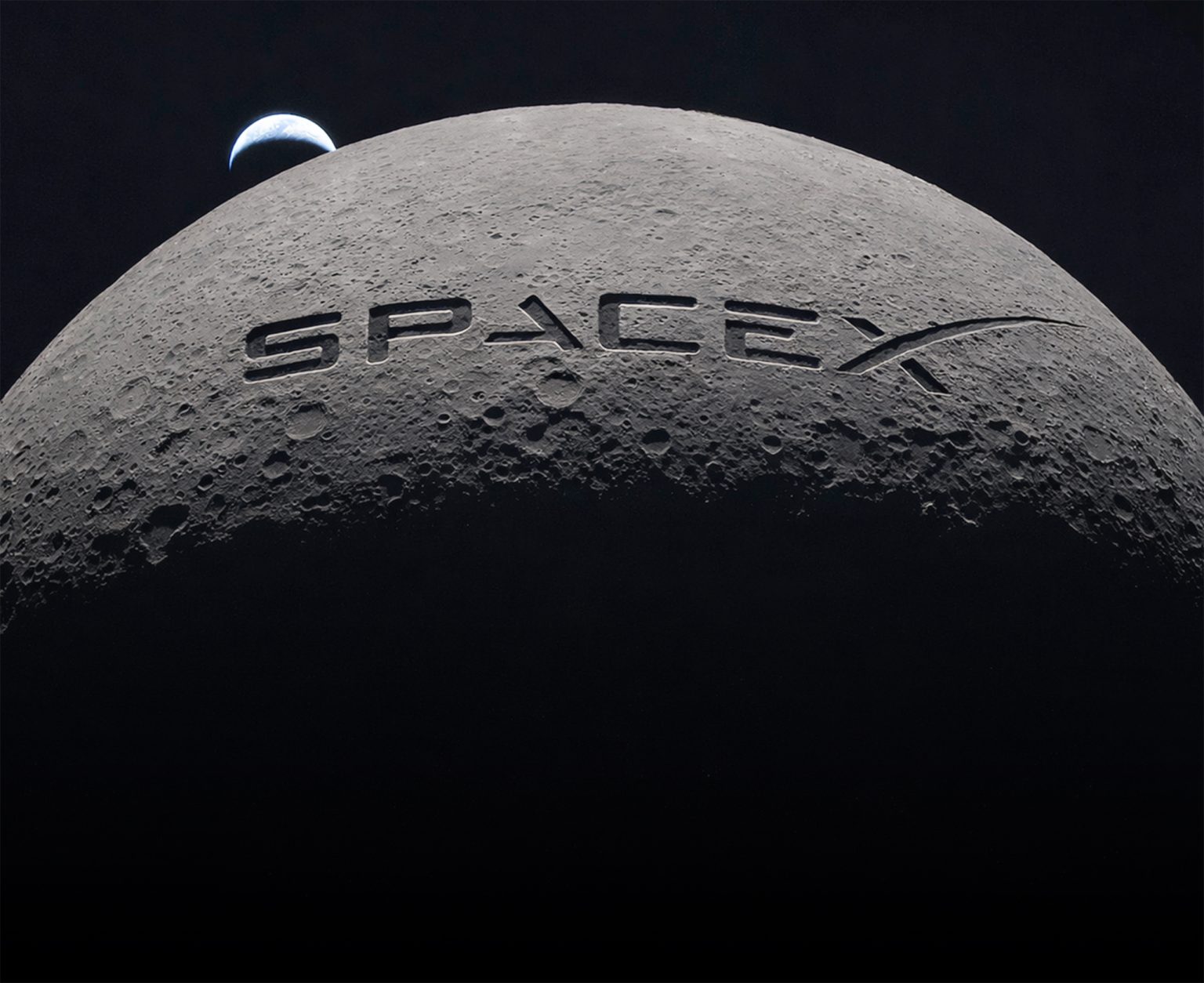
The move can be seen as more than symbolic. While Aramco entered the market with a vision of a world built on oil and the internal combustion engine, Musk is not just selling a rocket company. He is offering investors an entirely new conglomerate after the recent absorption of his other company, xAI. SpaceX now embodies a vision of a future built on satellite internet, orbital data centres and infrastructure for artificial intelligence. The Moon is "only" the best possible billboard.
The Highway Is Public, the Cars Will Be Private
To understand why the Artemis 2 flight is so crucial to Musk, it is necessary to look at how today’s space race works. The days of the Apollo program, when NASA manufactured and inspected every bolt, are irretrievably gone.
The agency still holds the keys to the space "highway", having built the giant SLS rocket and the Orion spacecraft, which act as a national backbone capable of taking astronauts to the Moon. The catch, however, is that the US government has nothing to land on its surface.
In late February and early March, the architecture of the Artemis program underwent a quiet but fundamental shake-up. The anticipated Artemis III mission, originally intended to attempt a landing, is now planned as a test mission in low-Earth orbit. NASA has pushed back a return to the Moon until mission number four, early in 2028. The key fact remains that the agency has outsourced the most difficult task – landing on and departing from the lunar surface – to the private sector.
Responsibility lies primarily with SpaceX’s Starship, to which NASA later added a Blue Origin lander, developed by the company founded by Jeff Bezos, to limit Musk’s emerging monopoly.
In practice, this creates a striking paradox. It is as if the state had built the world’s most modern airport with public billions, yet passengers would have to call a private Uber before the runway to reach their destination. That dependence on Washington gives Musk extraordinary geopolitical and structural legitimacy at a particularly opportune moment.
The billionaire has understood the lesson of his own business. Tesla did not grow on technological progress alone; its success was built on an ingenious combination of private innovation and state money that subsidised the purchase of electric cars. Now the model has merely shifted into the space domain.
A Two-Trillion-Dollar Ticket
This strategic indispensability serves Musk as the perfect springboard for his current financial offensive. It is not just about going public, but about achieving the largest possible market capitalisation to raise massive funds for further expansion.
The final amount remains speculative, but estimates run as high as $2tn. To reach that target, Musk is trying to link his businesses into larger units. A major step was the February merger of SpaceX with his artificial intelligence start-up xAI.
The story now presented to investors is compelling. SpaceX promises to build ‘space data centres’ – gigantic server farms in orbit, powered by solar energy directly from the Sun. Such systems, in theory, would address the extreme energy demands of terrestrial AI models.
Although analysts point out that SpaceX’s main revenues still come from rocket launches and the Starlink internet, the vision of space-based AI acts as a powerful magnet for capital. Musk has mastered this type of marketing. As the technology sector’s chief visionary, he can multiply a company’s value through narrative alone.
The Dark Side of the Moon
Every grand story has its darker side. The more SpaceX is valued as a conglomerate of the future, the greater its systemic risk.
While Musk dazzles the market with sci-fi visions, his other core business is under pressure. Tesla’s shares have fallen more than 22% since the start of the year, and analysts at JP Morgan warn they could lose another 60% by the end of 2026. The narrative of artificial intelligence and space expansion therefore serves, in part, as a sophisticated smokescreen to distract investors from weakening electric-car sales.
Musk may be near the peak of his career in the spring of 2026. The successful flight of Artemis 2 gives him unprecedented geopolitical clout, and the anticipated IPO promises enormous riches. Yet the entire two-trillion-dollar architecture rests on a single bet: that capital markets will continue believing the story and that, hundreds of thousands of kilometres from Earth, everything will function smoothly.
History suggests caution. Musk’s chronic problem has often been meeting deadlines. It will therefore be telling whether investors lose patience when plans for a Moon landing inevitably slip.
One point should be obvious even to the most devoted Musk supporter: if deploying autonomous robotaxis in the US – still limited to narrowly defined areas – is difficult, establishing a reliable transport line to the Moon is several orders of magnitude more challenging.