
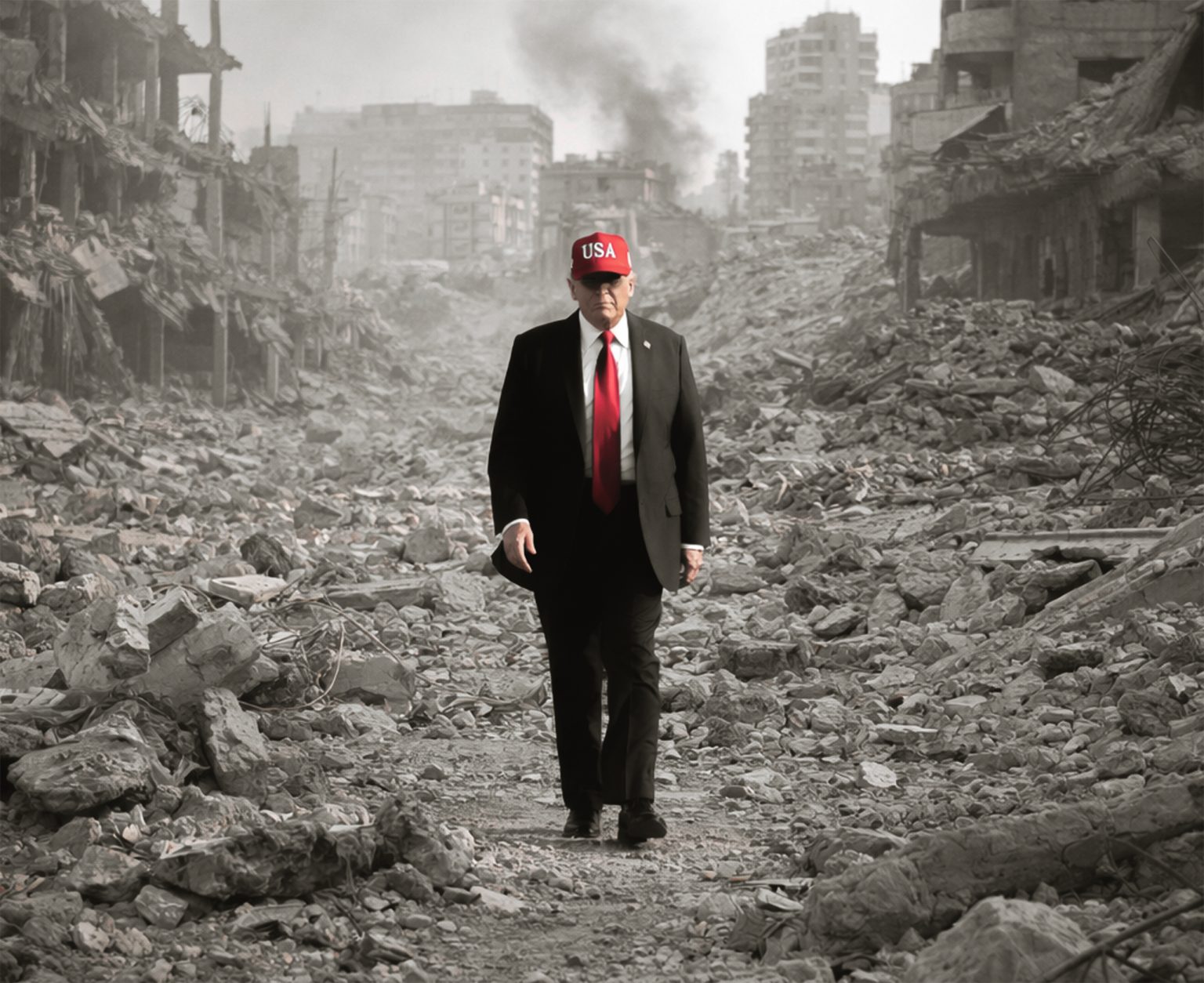
The destructive force and precision shown by the US armed forces in attacks on Iran are unquestionably impressive. The conventional military superiority of the US and Israel was clearly visible from the outset of the war.
However, the conflict quickly reached a stalemate, which led to a ceasefire.
Shortly after the agreement, US President Donald Trump declared that the United States had achieved a “complete and total victory”.
However, his claim is far from the truth. Although the US and Israel have killed many regime leaders, their successors could prove even more radical. The broader picture points to the opposite conclusion: America is winning on the battlefield but may be losing the war.
Iran’s Maximalist Demands
Even though the US and Israel can strike targets virtually anywhere in Iran, the war is on hold after more than a month and both sides are moving to the negotiating table. It does not appear, however, to be Tehran’s initiative.
Trump threatened to destroy Iranian infrastructure and warned that “a whole civilization will die tonight” if Tehran did not reach an agreement. The language could be interpreted as an implicit nuclear warning and may have increased pressure on Iran to accept a ceasefire.
Iran nevertheless continues to press maximalist demands within a 10-point peace proposal presented to Trump and to be debated by both sides in Islamabad, Pakistan. It calls for a halt to attacks, a withdrawal of US troops from the Middle East, the lifting of sanctions, the release of frozen assets and compensation in the form of fees for ships transiting the Strait of Hormuz, while retaining control over the strait.
Reportedly, there are two versions of the 10-point plan. The version in Iran’s possession, written in Persian, also includes a demand to retain the right to enrich uranium. The English version, according to the Guardian, omitted that point for unknown reasons.
The Economist reports similar inconsistencies in the documents conveyed by the Pakistani side to both Americans and Iranians. One version of the ceasefire proposal apparently included Lebanon, while another did not.
Disputed information aside, the paradox is that Trump has described Iran’s 10-point plan as a “workable basis for negotiations”.
Energy Leverage and Trump’s Achilles Heel
The conflict confirms that power and influence do not lie solely in military strength or technological sophistication.
Iran is a vast country whose geography favours defenders and prolonged guerrilla warfare. The regime’s strategy is to impose enough costs to deter an invasion and make future attacks unattractive.
The Strait of Hormuz is a key element in this strategy. It is not Tehran’s only instrument of pressure, but its importance surpasses all others, as roughly one-fifth of global oil and liquefied gas flows through it, along with significant volumes of fertiliser.
Energy is Trump’s Achilles heel. Both fuel prices and energy bills can sway the American electorate. Trump won his second term in the White House against the backdrop of inflation during Joe Biden’s presidency. Now, however, the dynamic works against him.
His decision-making is closely influenced by developments in financial markets, which are acutely aware of the potential economic damage if the strait remains blocked.
About a year ago, Trump launched his tariff policy in earnest, triggering panic in the markets. For several days he resisted pressure from equities, but when bond markets also came under strain, he reversed course.
This year, history repeated itself. Stock markets weakened and US bond yields rose sharply as investors sold. The ceasefire announcement came quickly and relatively unexpectedly.
The editor of the New York bureau of the Economist magazine captured the point. She concluded that “it is really unlikely” that Trump will return to war with Iran after the ceasefire, “except if the strait remains blocked”.
With other targets, she said, he has room to manoeuvre, but the strangulation of a key energy artery would be felt worldwide. Iran has shown it can disrupt transit through Hormuz, while the United States cannot be relied upon to reopen the strait.
Military intervention is therefore unlikely. Not only would Trump risk American lives, ships and equipment. The difficulty also lies in maintaining safe passage over the long term. Even a weakened regime could threaten shipping for years with drones or ballistic missiles.
Political Costs
Beyond Hormuz, there are additional costs that may discourage Trump from continuing the war.
According to Daniel Byman of the Center for Strategic and International Studies, many states will likely blame the US for the economic fallout, increasing anti-American sentiment and raising the cost of allied support in a future conflict with China or Russia.
He argues that the administration’s diplomatic approach “has made matters worse, launching a major war without consulting allies and then criticizing them for not doing more”.
In other words, the war has shown, particularly to Arab states that Iran considers legitimate targets because of US bases, that being an American ally carries significant risks. Regional security and prestige may be damaged for years.
Tehran, however, has little interest in prolonged destruction of its territory, military capabilities and leadership. A ceasefire serves its interests.
Taken together, Iran’s new leadership may hold the stronger cards in forthcoming negotiations and shape the terms of any peace agreement.