
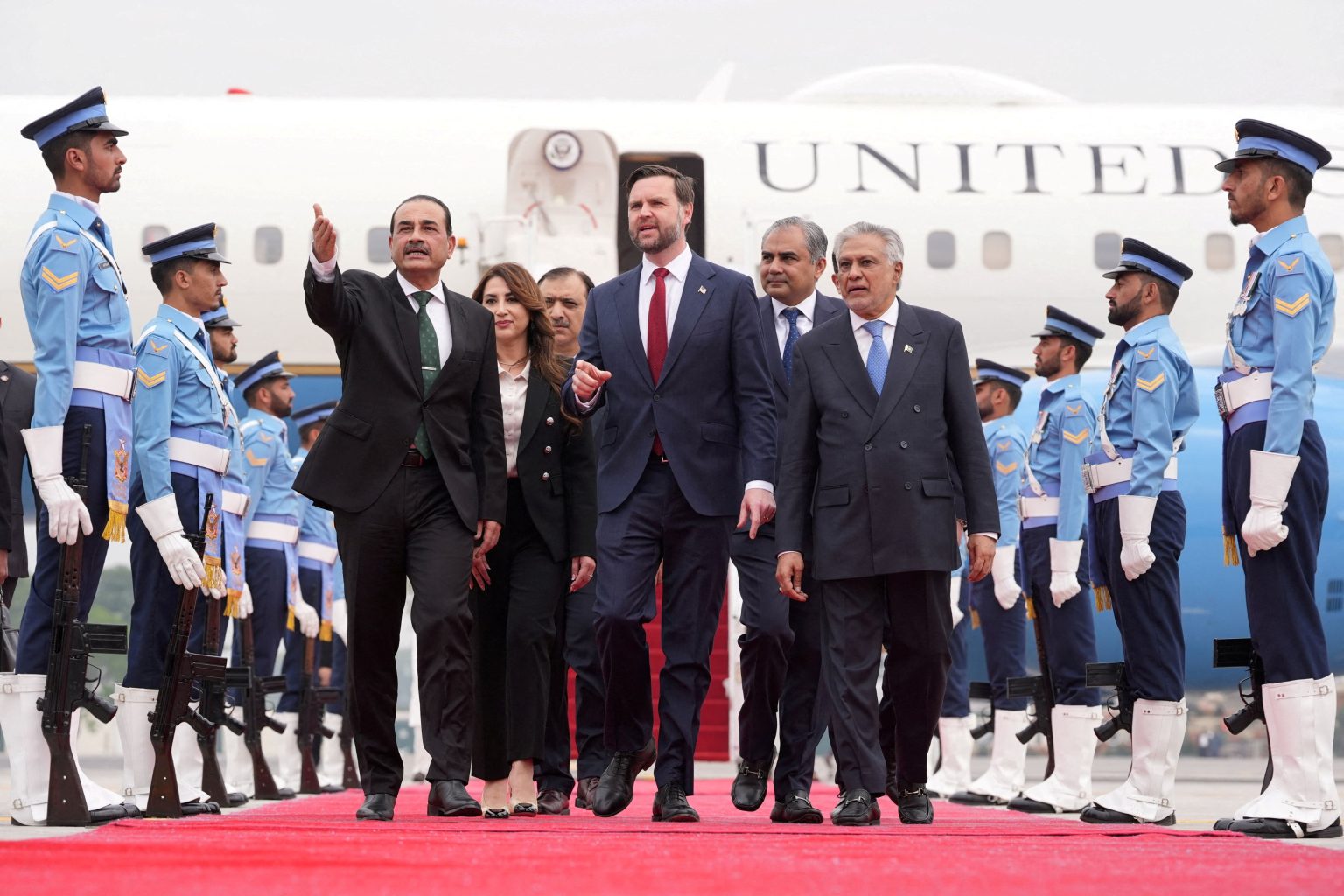
Delegations from the United States and Iran met in Islamabad on Saturday to discuss the terms of a possible settlement. The talks, mediated by Pakistan, mark the highest-level contact between the two sides since the conflict began.
The American delegation is led by Vice President JD Vance, accompanied by US special envoy Steve Witkoff and presidential adviser Jared Kushner. Iran is represented by Foreign Minister Abbas Araqchi and Parliament Speaker Mohammad Baqer Qalibaf.
Reports ahead of the talks suggested Tehran preferred negotiating with Vance rather than Witkoff and Kushner, whom Iranian officials described as too close to Israel. The White House downplayed that characterization but acknowledged Iranian interest in Vance’s involvement.
The two Iranian negotiators represent different political currents within the leadership. Foreign Minister Abbas Araqchi is a veteran diplomat who previously took part in talks with US representatives, including presidential adviser Jared Kushner. The second envoy is Parliament Speaker Mohammad Baqer Qalibaf, a former commander of the Islamic Revolutionary Guards Corps.
Pakistani Prime Minister Shahbaz Sharif met Vance, Witkoff and Kushner, according to both the White House and Sharif’s office. Iranian state television said Tehran presented its terms, the so-called red lines, covering the Strait of Hormuz, the release of frozen assets, war reparations and a “tangible and permanent” ceasefire extending to Lebanon and other areas where Iranian-backed forces are engaged.
“We will negotiate with our finger on the trigger,” Iranian government spokeswoman Fatemeh Mohajerani said.
Dispute Over Scope of Ceasefire
The negotiations take place under a two-week ceasefire announced earlier this week. The truce halted planned US and Israeli strikes on Iran, but it has not ended all hostilities. Israeli operations against Hezbollah in Lebanon have continued, and Tehran insists that any durable agreement must include the Lebanese front.
Washington and Tel Aviv view Lebanon as a separate front, while Tehran insists that any de-escalation must extend to Lebanon. The issue is emerging as one of the main sticking points in Islamabad.
Release of Iranian Assets
Iranian officials also raised the issue of frozen financial assets held abroad. According to Iranian sources cited by international media, Washington has discussed releasing funds blocked in foreign accounts, including money held in Qatar. US officials have not confirmed such a move.
The dispute centres on approximately $6bn derived from Iranian oil sales to South Korea. The funds were frozen in 2018 after the United States reimposed sanctions and withdrew from the nuclear agreement with Tehran.
The money was later earmarked for release in 2023 as part of a prisoner swap between Washington and Tehran but was frozen again following the 7 October attacks on Israel. Iran argues that access to the funds would signal seriousness in negotiations, while Washington has framed the issue as conditional on broader de-escalation.
Hormuz at the Centre
Another key demand concerns the Strait of Hormuz, through which roughly one-fifth of global oil trade passes. Iran has proposed arrangements that would give it greater influence over transit through the waterway, while Washington insists on unrestricted navigation.
The confrontation over Hormuz has already unsettled energy markets, with disruptions and uncertainty pushing prices higher and forcing some buyers to consider alternative supply routes.
Broader Strategic Stakes
The talks take place against a shifting regional landscape. The ceasefire with Iran has not halted Israel’s campaign against Hezbollah, and diplomats say the Lebanese front could determine whether the current pause evolves into a broader settlement.
At the same time, debate inside Iran has intensified over the country’s nuclear posture. Hardline voices have renewed calls to reconsider long-standing limits on nuclear weapons development, although officials have not announced any formal policy shift.
The outcome of the Islamabad talks could therefore shape not only the ceasefire but also wider regional stability, including the future of the Strait of Hormuz and the trajectory of the Iran-Israel confrontation.