
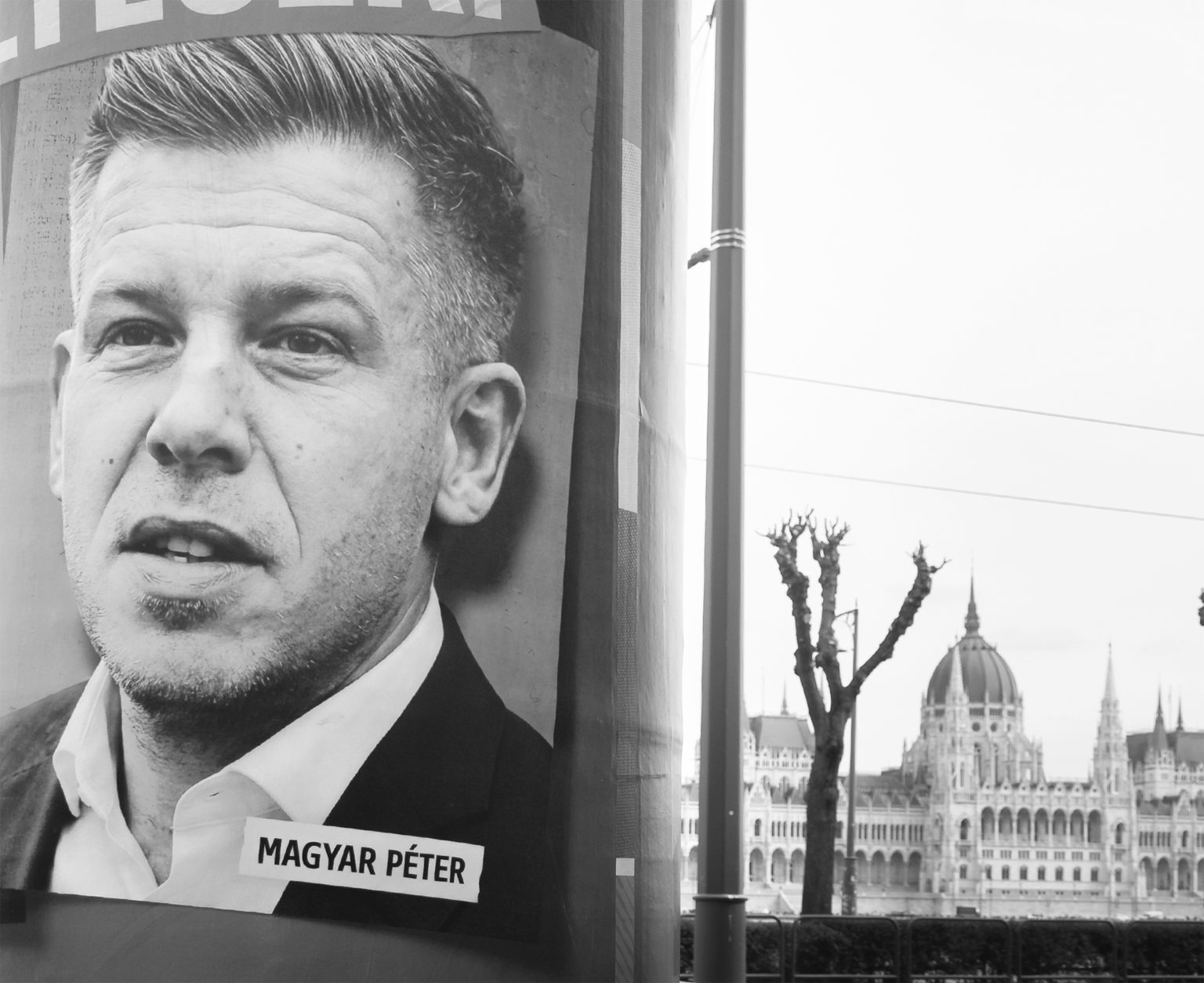
On 12 April, the elections to the Hungarian National Assembly were contested by the two leading candidates, who, although the headlines presented them as serious opponents, came from the same side of the political spectrum. Both men were shaped by the milieu of post-revolutionary reformers associated with the Union of Democratic Youth (Fiatal Demokratak Szovetsege – Fidesz).
With Peter Magyar’s victory, Hungary has moved seemingly closer to the core of the European Union, but also further to the right. In fact, compared to the 16-year tenure of Prime Minister Viktor Orban, the winner of the last election is taking a harder line, which will inevitably have an impact on regional alliances such as the Visegrad Group (V4).
As expected, in the first days after the election victory was announced, European Union officials started raising the issue of funding for Ukraine. Orban blocked a €90bn loan in retaliation for the suspension of oil supplies through the Druzhba pipeline. One of the conditions for the release of EU funds is a change in the treatment of asylum seekers, but there is no indication that Magyar will agree.
After a record turnout of 79.55% of eligible voters – the highest in the entire period since 1990 – the Respect and Freedom Party (Tisztelet es Szabadsag Part – Tisza) won two-thirds of the seats in the National Assembly.
The electoral system, which combines local majority voting in constituencies with party lists, favors the frontrunner and has contributed to the rapid increase in the number of Tisza MPs. In recent years, by contrast, it has suited Orban’s Fidesz, which has relied on rural constituencies, as Hungarian parties need to win only 5% of constituencies to secure representation via party lists.
Magyar has thus exploited a system that kept his former allies in power for 16 years – a period comparable to the tenure of German chancellors Helmut Kohl and Angela Merkel. Tisza’s steady gains were evident, which is why Orban congratulated his challenger after half the votes had been counted.
The Origins of the Orban Insider
Born on 16 March 1981, Magyar, a lawyer and long-time Fidesz insider, graduated from the Pazmany Peter Catholic University in Budapest in 2003. He also studied at Humboldt University in Berlin through the Erasmus+ program.
Three years later, he qualified professionally and worked as a legal adviser before becoming a junior judge at the Budapest Municipal Court.
He also offered pro bono advice to anti-government activists protesting against the corrupt socialist government of Ferenc Gyurcsany in 2006. Orban often invoked that period when facing criticism for economic stagnation or accusations of corruption.
In the same year, he married lawyer and Fidesz member Judit Varga, with whom he has three children. They moved to Brussels in 2009, when he became an assistant to MEP Janos Ader.
In 2010, after an eight-year hiatus, Orban returned to power and Magyar was given a post in the Ministry of Foreign Affairs and Trade. Under Tibor Navracsics, he managed the European legislative agenda.
He remained there after Fidesz and the Christian Democratic People’s Party (KDNP) amended the constitution in 2011 and introduced the dual voting system described above. He moved to the state-owned sector in 2016, joining the board of the road administration company Magyar Kozut.
He left after two years, briefly serving as head of the European Legislation Department at the Hungarian Development Bank, before becoming Director General of the Centre for Student Loans (Diakhitel Kozpont) in 2019, a role he left in 2022.
Since 2022, he has been managing director of Good Farming. The company had been set up a year earlier by the Hungarian government as part of a plan to buy farmland abroad, which was met with protests from the Slovak government.
The Orban government planned to invest 100bn forints in a fund to finance the operation of a series of companies, but in the end only Good Farming was established.
The rest of the capital fund, with a total value of 143bn forints, was to be covered by the Export-Import Bank and the Hungarian National Bank. People close to the head of the Prime Minister’s Office, Antal Rogan, became the administrators of the funds. On 7 January 2025, Rogan was placed on the Magnitsky Act sanctions list by the US government, a decision later reversed in April by Orban’s ally Donald Trump.
Peter Magyar, the husband of Justice Minister Varga, was part of that close personal circle.
Breaking Away From Fidesz
In June 2023, Judit Varga stepped down as minister to lead Fidesz’s candidate list for the European elections. In early February 2024, just four months before the vote, a scandal involving the cover-up of child sexual abuse at a children’s home in Bicske came to light.
During Pope Francis’ visit in April 2023, Novak had pardoned the deputy director of the children’s home. He had been convicted of covering up sexual abuse committed by the home’s director, Janos Vasarhelyi, who had been sentenced to eight years in prison.
When the pardon became public, it triggered a political scandal that led to the resignation of President Katalin Novak and one of the government’s most important advisers, the Calvinist bishop Zoltan Balog.
As head of the department overseeing prosecutions and criminal investigations, Judit Varga, who was already divorced at the time, also resigned and withdrew from public life.
Just a month later, Magyar came forward with a recording of his ex-wife, who headed the justice ministry at a time when government officials were pressuring prosecutors to tamper with evidence in a corruption case involving state secretary Pal Volner and the chairman of the Bailiffs’ Corps (BVK), Gyorgy Schadl.
At a hearing on 3 July 2025, Varga denied the authenticity of the recording and accused her former husband of domestic violence. However, its publication led to mass demonstrations that have put pressure on the government since April 2024.
In subsequent media appearances, Magyar distanced himself from Fidesz while continuing to criticize corruption and cronyism. He repeatedly claimed that “half of Hungary has been divided up by a handful of families” close to Orban.
Against the backdrop of the scandal, which deprived the country of a female president, he criticized Orban for diverting attention onto two women. He founded the Talpra Magyarok movement, named after the opening line of Sandor Petofi’s revolutionary poem of 15 March 1848.
Who Does Magyar Actually Lead?
The movement was intended to link conservatives and liberals and create a political force at the centre of the political spectrum. It said it would build a force that any Hungarian of good will could join to work for the country.
However, apart from the initial protests, Talpra did not gain enough traction, and there was not enough time to transform it into a registered political party. In July 2024, Magyar therefore entered the leadership contest of the fringe party Tisza, winning and becoming its chairman. He then led the party into the European Parliament, securing about a third of Hungary’s seats.
On the first Sunday after Easter, the formerly fringe party also achieved an extraordinary victory in the domestic elections, taking a constitutional majority from Fidesz. However, instead of pushing Orban’s movement out of the National Assembly, smaller opposition parties such as the Democratic Coalition and the Socialists dropped out.
In contrast, the radical right-wing Mi Hazank movement, led by Laszlo Toroczkai, remained in parliament. The current composition of the Hungarian parliament is therefore the most right-wing since the end of socialism. European institutions, however, were primarily focused on toppling Orban, and Magyar’s victory was met with warm congratulations.
Although the future prime minister avoided questions about foreign policy, apart from general statements about remaining in the EU and NATO, he has already indicated several steps after his victory that suggest change will not be as radical as some might expect.
When Ukrainian President Volodymyr Zelensky said that, if Orban continued to block the €90bn EU aid package, Ukraine would “give the address of this person to our armed forces, our guys”, Magyar replied that no foreign leader had the right to threaten any Hungarian.
He also signalled a pragmatic approach towards Russia, a move that appears calculated given that the Russian state-owned company Rosatom is investing in the construction of the Paks II nuclear power plant in southern Hungary. On the question of the Ukrainian loan, he said he would only “reconsider” it.
On domestic issues, however, he has made more far-reaching statements. He called on President Tamas Sulyok, who had replaced Novak on 5 March 2024, to approve the composition of the government, convene the inaugural session of parliament and then resign.
Sulyok said he had no intention of stepping down. However, if Tisza remains in power beyond March 2029, it will be able to elect a new president through the National Assembly, as parliament appoints the head of state in Hungary.
Dirty Campaign Allegations
As Magyar released a recording linked to the Volner–Schadl corruption case, Varga publicly accused her ex-husband of verbal and physical abuse during their marriage. She alleged alcohol misuse, threats against their children and coercive behavior.
Magyar rejected the accusations, saying his ex-wife was being manipulated by the Orban government and that the allegations were an attack on his character. Other inflammatory claims also circulated, including references to his family.
Among the most shocking were allegations that he had behaved inappropriately in front of his children or harmed a family pet. Excerpts from a purported biography, attributed to Varga but denied by her, circulated on social media shortly before the election.
Varga denied writing the book, but its timing suggests it was part of the election campaign. She continued to stand by the domestic violence allegations.
Although many of the more sensational claims were easily refuted, the episode showed that fringe elements in the Orban camp were willing to resort to such tactics.
The Young Reformer
Even these attacks did not stop Magyar’s rise. His support can be explained by the fact that he offered voters a less corrupt version of a model they had backed for 16 years under Orban and Fidesz.
The future prime minister has not, in any speech or media appearance, drawn a clear ideological line between himself and Orban. During the campaign, he acknowledged that the two-thirds parliamentary majority enjoyed by Fidesz since 2010 reflects broad support for national conservatism.
As the New York Times noted, Magyar did not distance himself from measures such as the ban on so-called rainbow marches. Although he proposed suspending state television broadcasts after the election, it remains unclear how far he will use his new powers.
There are already indications that Magyar may adopt a more nationalist tone than Orban. During protests outside the Slovak embassy in Budapest, he used the historical term Felvidek for Slovakia in a letter to President Peter Pellegrini. The term refers to territories that once formed part of the Kingdom of Hungary and is often seen in Slovakia as implying historical territorial claims. Pellegrini criticized the use of the term as inappropriate, and Magyar defended it.
After the long rule of Viktor Orban, a familiar pattern may be repeating itself: a liberal reformer who, over time, moves towards nationalism and conservatism, and can ultimately be replaced only by someone emerging from within the same system.