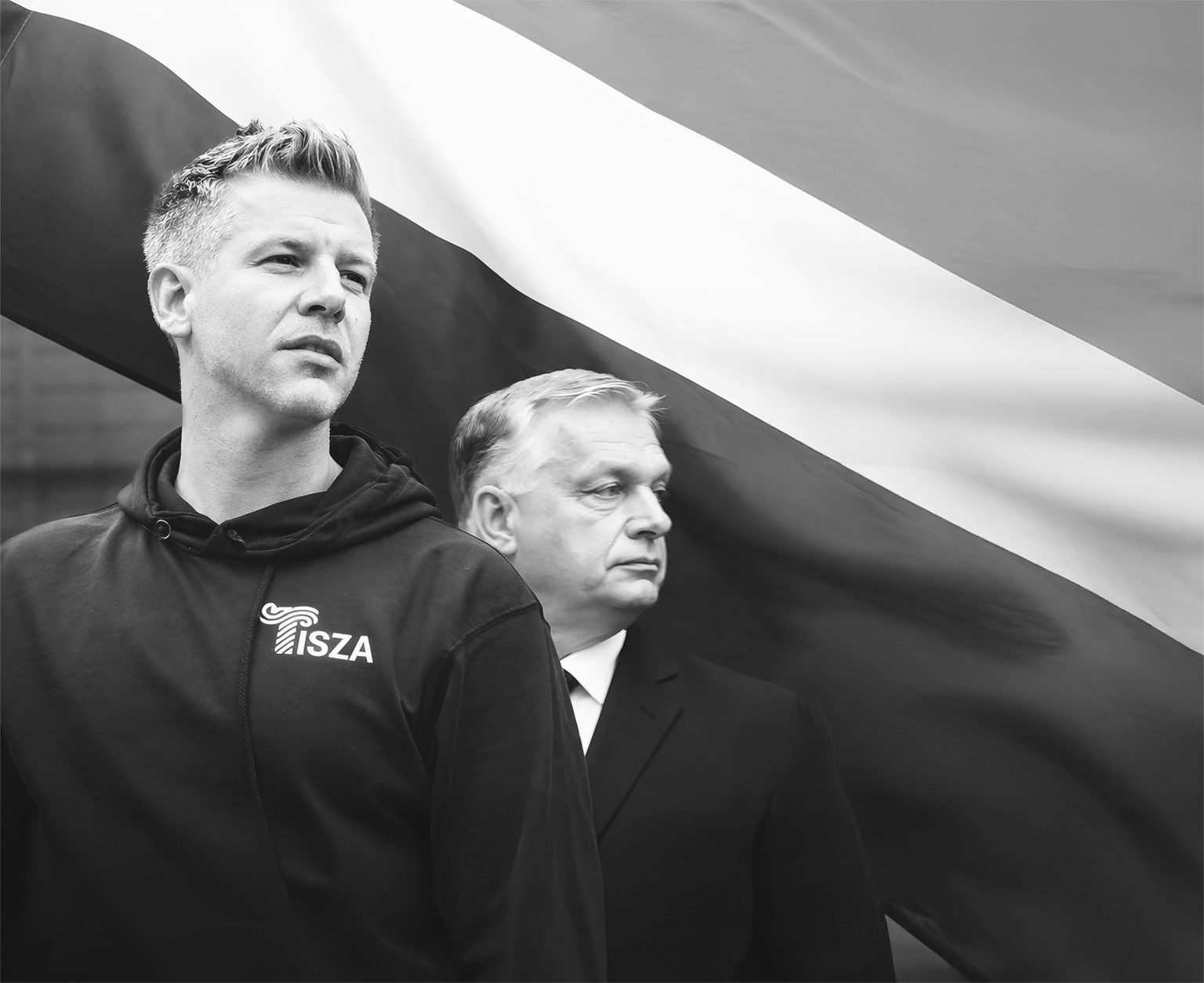
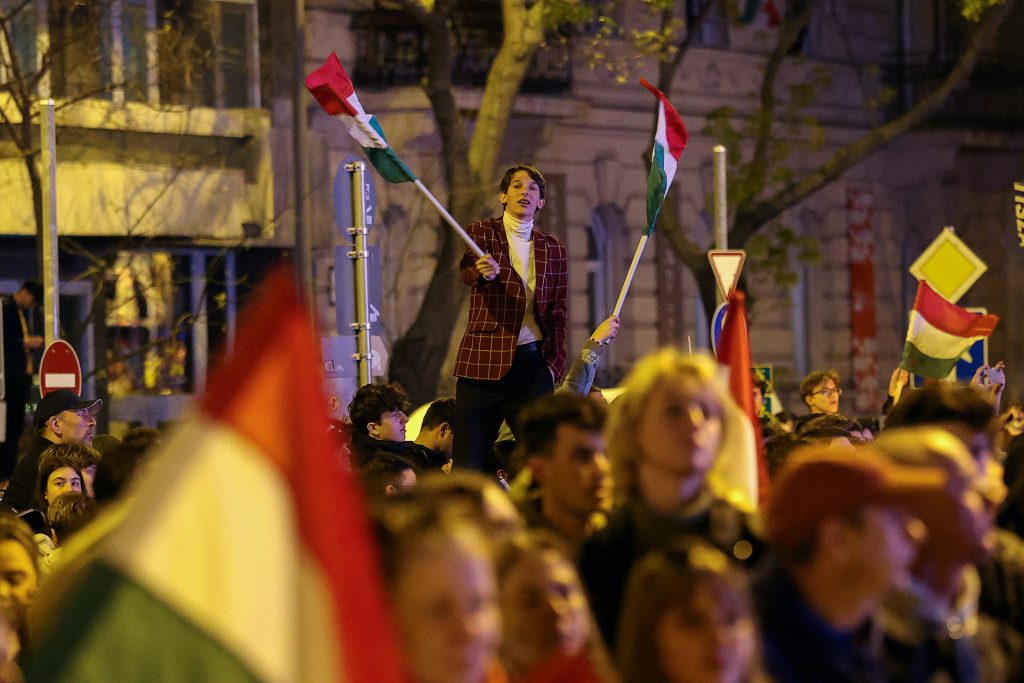
The Hungarian people have decided that 16 years is enough. Disillusionment in the camp of long-serving Prime Minister Viktor Orban was deep and final on election night. By 10 p.m., supporters were already packing up and heading home. There was nothing to celebrate. The party was over.
No backlash, no outrage, no wild claims of electoral fraud, no unrest on the streets – none of what international and domestic observers in Hungary had painted as possible scenarios in the event of an Orban defeat came to pass.
That raises a question: how much of the criticism directed at Orban personally and at his government ever had a real factual basis? And how much was largely projection by activists and politicians across the European Union who spent 16 years grappling with a stubborn and difficult partner – a man whose defiance of the European mainstream and penchant for going it alone caused them no small amount of frustration? Autocratic, undemocratic, anti-LGBTQ, pro-Russian, anti-Brussels, champion of the traditional family, pro-Israel, anti-migration, anti-Islam, transphobic – such labels served for years to construct a durable enemy image of Hungary and its prime minister. Openly describing Donald Trump as a friend did not help either.
A Graceful Exit
Fears that Orban would refuse to accept defeat and chain himself to his office were, of course, a fantasy. Instead, he stepped down like a gentleman. He congratulated his opponent early, when only around two thirds of the votes had been counted but the outcome was already clear, as some polling institutes had predicted for days.
Peter Magyar won in a landslide. For those who had hoped to scrape into another term, the worst case has now materialized. Many actors and institutions that benefited from 16 years of Fidesz support are now concerned about their future and their budgets.
To secure his power, Orban had shrewdly built institutions, financed his own media and sought support, particularly from the United States, to create structures capable of surviving an electoral defeat and ensuring that an extra-parliamentary opposition would not be left without resources once the seat of power had to be relinquished.
In recent days, no one in that camp had projected confidence of victory. The tone was closer to holding the line. The hope had been to mobilize the party’s core voters in rural areas, where Fidesz has traditionally been strongest and where, under Hungary’s electoral system, constituencies are decisive.
Such appeals were still audible among Orban supporters on Sunday afternoon, even as it became clear that turnout would reach record levels and had already exceeded that of the previous presidential election by more than 14% by midday. Some observers saw the surge in participation as a positive sign for Magyar, suggesting he had succeeded in bringing previous non-voters to the polls. Pro-government analysts, at the same time, saw it as an advantage for Orban, pointing to particularly high turnout in rural areas.
In the end, even there a disaster was unfolding. As the first constituency results came in after 9 p.m., it became evident that Magyar’s Tisza party had also won the mobilization battle.
Once the countryside is no longer secure, the election is lost. That was understood within Orban’s own camp. It explains the early and unequivocal concession. There was no intention of questioning the result because there was no doubt that it was correct.
Looking back at the widely differing polling forecasts in Hungary, it is clear that Orban’s camp had likely known for weeks how close the race would be. The opposition’s polls were far more realistic than those it had commissioned to keep its base motivated. In the end, it would have taken a small miracle to shift the mood, particularly among younger voters and the roughly 18% of undecided voters. That miracle did not materialize.
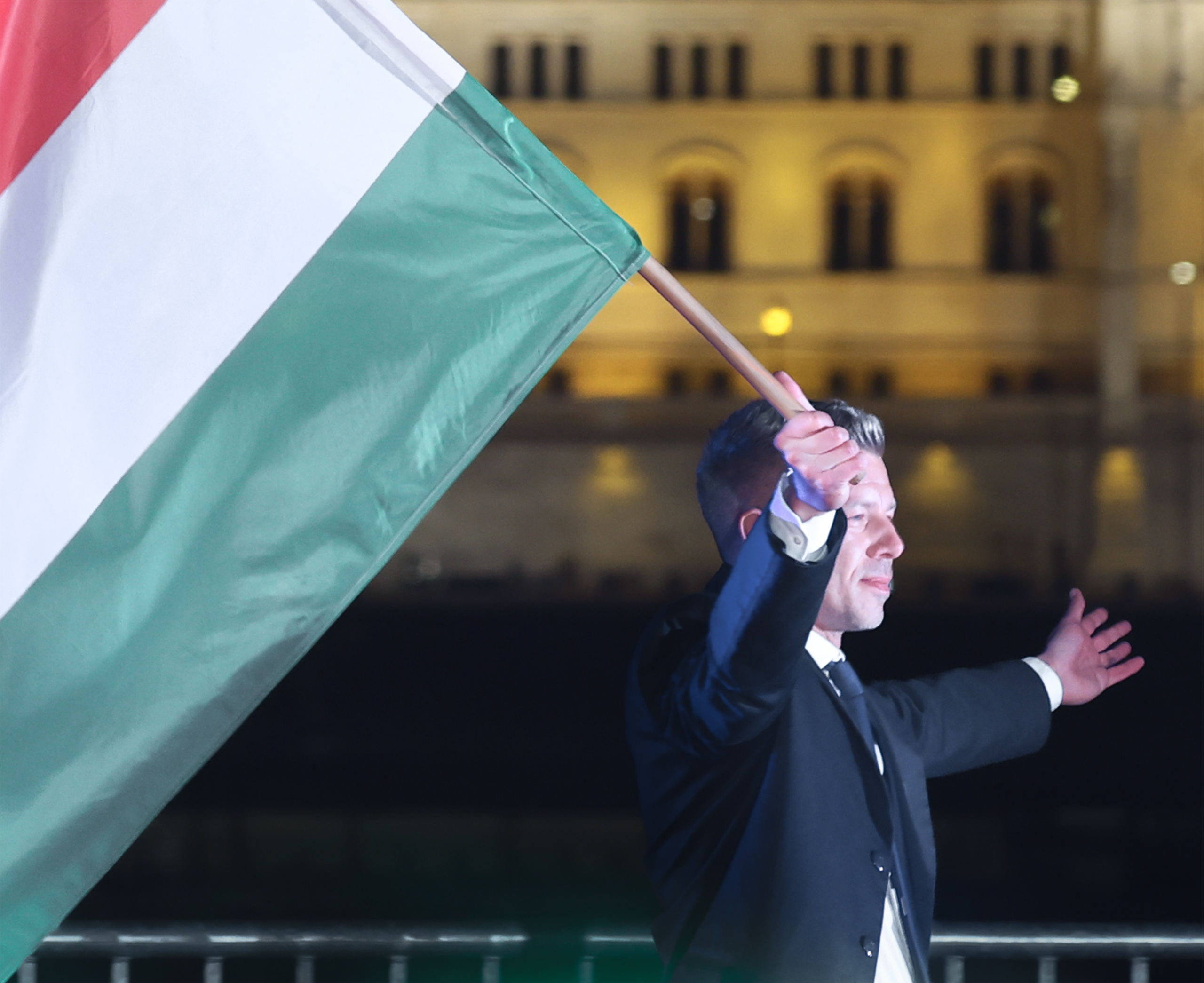
Fidesz Faces a Reckoning
Although alarmist claims of disturbances and aggression at polling stations were circulating on social media on Sunday afternoon, notably from Balazs Orban, a member of parliament and close political adviser to the president, numerous observers from across the political spectrum reported a calm situation nationwide.
Such posts can safely be seen for what they likely were: a precautionary narrative in case the result turned out to be close and a recount or even new elections might be demanded.
Hungary’s electoral system, which combines constituency voting with a list system, has long been criticized and was often described as favorable to Orban. Terms such as electoral autocracy circulated in Germany and Brussels, suggesting he had spent years constructing a system to secure his power in an undemocratic way. On Sunday, however, that same system delivered victory to his challenger.
Another myth is therefore ready to be buried: that Orban remained in power for 16 years only because of such mechanisms. The truth, uncomfortable for some in Europe, is different. Hungarians repeatedly elected him. Only now have they grown tired of him. The electoral system itself is intact.
With its clear rules and oversight mechanisms, it is generally regarded as resistant to fraud. It would be presumptuous to claim the result was manipulated. No one attempted to do so on Sunday evening.
Even within Orban’s camp, there is an understanding that the situation is of its own making and must now be analyzed. Whether Fidesz will undertake the necessary internal reckoning remains to be seen. So does the question of how Viktor Orban will position himself within the party in future.
Why 16 Years Was Too Long
If one were to offer unsolicited advice from Germany, it would be that 16 years in power is indeed enough for one individual. Helmut Kohl served as chancellor for 16 years. Angela Merkel governed for the same length of time. Entire political generations come to know only one figure in office. It is not unlike a generation of Catholics born under Pope John Paul II, for whom the papacy was associated with a single name for decades.
Or generations of Britons who knew only Queen Elizabeth II for most of their lives. Office and individual merge in public perception. Voters grow weary, even in the absence of major mistakes. Change, simply for the sake of change, was once enough to bring Barack Obama to power in the United States.
Younger, more unconventional candidates, particularly those adept at social media, gain appeal, especially among younger voters. At the same time, long tenures prevent the timely and legitimate development of successors within a party. Systems such as that of the United States, where presidential terms are limited, have their advantages. No one remains in power indefinitely, and the orderly preparation of a successor is not treated as an act of disloyalty.
Helmut Kohl was eventually forced out by an ambitious Angela Merkel. Merkel, in turn, left behind a party hollowed out both politically and internally, as any serious rising figure had been sidelined as a potential challenger. Parties that remain under the same leadership for too long tend to drift into a vacuum.
Fidesz will also have to confront its policy positions. From the outside, maintaining close ties both to the Trump camp in the United States and to Vladimir Putin’s Russia appeared contradictory. According to sentiment analyses in Hungary, younger voters in particular view the pro-Russian stance critically, even if there are few significant differences between Fidesz and Tisza on migration policy or the question of Ukraine. Magyar, after all, comes from within the Fidesz milieu, and the two sides share many positions.
For many voters, the poor economic situation was far more decisive than ideological questions, in which Orban and his successor are broadly aligned.
Europe Celebrates Too Soon
At the European level, there is now considerable satisfaction that the stubborn, veto-wielding Orban no longer holds office and that Hungary’s opposition to the €90bn support package for Ukraine may finally be lifted.
European Commission President Ursula von der Leyen went so far as to draw a parallel on election night between Orban’s defeat and the Hungarian uprising of 1956, while declaring that Hungary had chosen Europe. A bold claim. German Chancellor Friedrich Merz drew a similar parallel a few days later with the fall of the Eastern bloc in 1989.
Both comparisons are not only historically presumptuous but plainly inaccurate. The intention, however, was clear: to portray Orban’s defeat as a liberation from an illegitimate ruler. That appears particularly inappropriate given that the young Viktor Orban himself was part of the political opposition to Soviet rule in 1989.
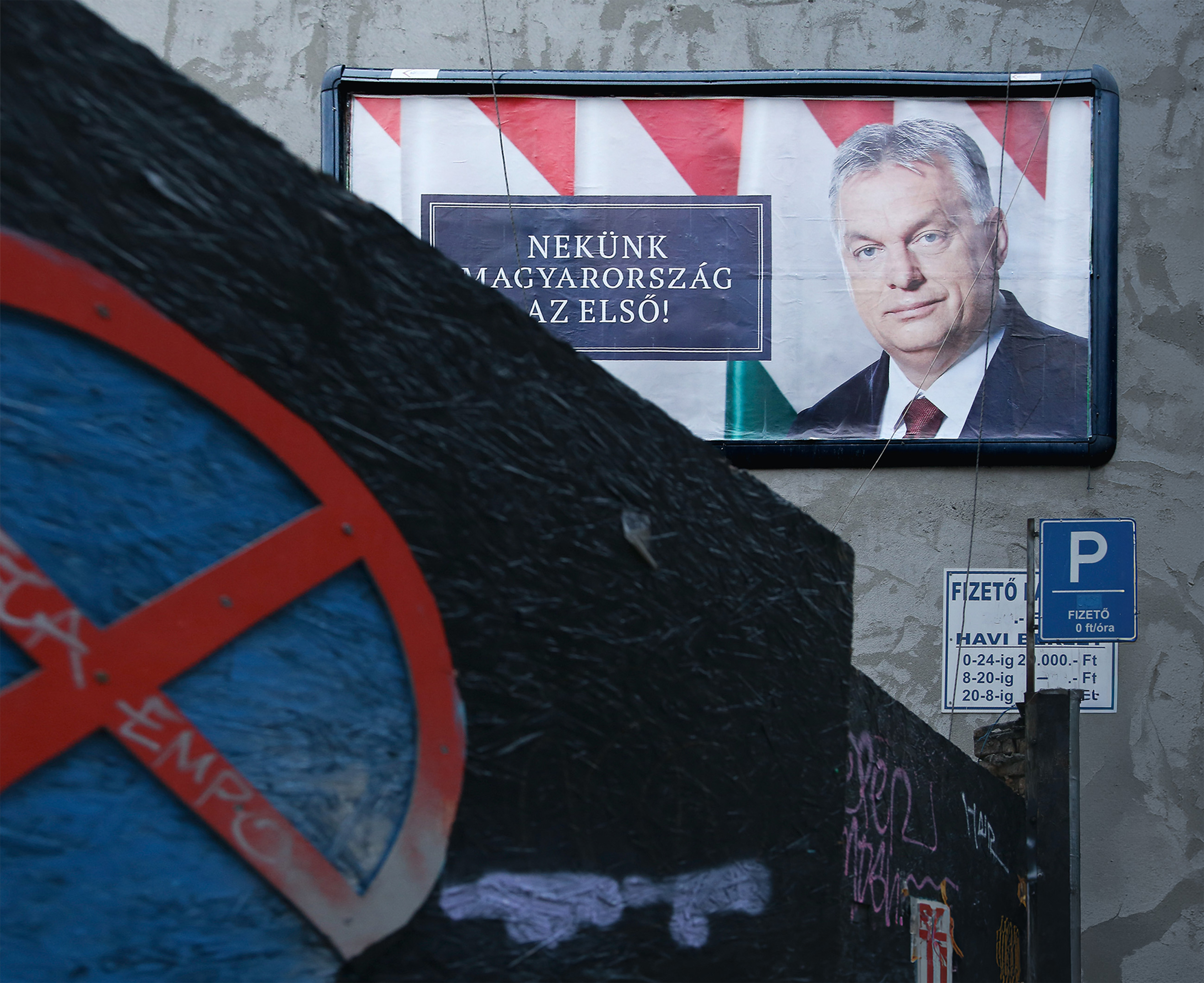
There may, however, be a swift reality check. The only certainty about Magyar is that no one yet knows where he truly stands or whether he will prove to be Brussels’ man in Budapest, as some hope. The effusive praise from Ursula von der Leyen and various politicians from Germany’s left and green parties, interpreting the result as a pro-European vote, is likely wishful thinking rather than reality. Hungarians value their independence, and if there is one thing they want even less than a continuation of Orban’s rule, it is interference from Brussels.
For years, Orban was criticized from abroad, particularly from Brussels, for numerous policies and programs, as if he had imposed them on an unwilling population. That ignores the fact that many of those positions command majority support within Hungarian society. Hungary did not suddenly become a supporter of European migration policy overnight, nor is there any enthusiasm for external guidance on social issues. The electorate has consistently endorsed a particular social model, and that has not changed with this election.
One does not walk through Hungarian cities, even late in the evening, and encounter the same urban landscape as in many western European capitals. Budapest does not require constant security around its synagogues in the way seen elsewhere in Europe. Many Hungarians regard that as a positive outcome. They did not elect a left-wing alternative but rather a different, perhaps slightly more moderate, figure on the right.
Peter Magyar is not substantively different from his predecessor, and he is unlikely to reposition himself fundamentally, as doing so would risk alienating his own voters. The Tisza party campaigned on a consistently restrictive migration policy. Illegal entry is to be actively countered. The existing southern border fence is to be maintained and expanded, not only to protect Hungary but also Europe.
The party calls for significantly tougher penalties against human smuggling. It rejects economic migration in principle and has announced that from June 2026 no new residence permits will be issued to non-EU guest workers, while existing numbers will be gradually reduced. Magyar is therefore also advocating the removal of unwanted migrants and will not accept relocation quotas from Brussels. That is not a left-wing agenda.
A Two-Thirds Majority Changes Hands
Magyar’s camp now holds a two-thirds constitutional majority and thus finds itself in the same comfortable position that was previously criticized under Orban. Autocracy, erosion of democracy, corruption, obstruction of the opposition – Magyar now wields the same level of power. It remains to be seen whether he will voluntarily limit it in line with Western expectations or simply use the instruments available to him, as politicians tend to do.
The election winner has already announced initial plans. News programs on state television, which largely ignored him during the campaign, are to be suspended for the time being until neutral reporting can be ensured. In interviews with Kossuth Radio and the state broadcaster M1, he stated that the “propaganda machinery of the state media” would be halted with immediate effect, within the legal framework, until an independent supervisory authority capable of guaranteeing objective news coverage is established. Public broadcasting, he argued, must be independent, balanced and free from any political influence, giving all political actors equal access.
The Ukraine Veto Remains
Magyar may lift Hungary’s veto on Ukraine funding in order to stabilize relations with Brussels and, above all, to unlock the nearly €20bn in EU funds that have long been withheld over concerns about democratic standards.
Ursula von der Leyen, however, should not celebrate too soon, nor should Volodymyr Zelensky. The Commission has set out 27 conditions for Hungary to meet in order to access the funds. Magyar has already indicated that he intends to fulfil only four of them. That does not suggest a full realignment with Brussels. Instead, he has made clear that Hungary will accept only those conditions that serve its national interests, including measures against corruption. Hungary is to join the European Public Prosecutor’s Office and establish a national body to protect and recover public assets. Independent investigative authorities and a judiciary free from political influence are also to be strengthened, along with the independence of the press and academic freedom.
On migration, Magyar remains far removed from the position of Ursula von der Leyen. He has stated that Hungary will not accept illegal migrants and will strengthen the southern border fence and its protection.
Nor can Ukraine assume a fundamental shift. According to Magyar, Hungary will not take on debt on Ukraine’s behalf and will not transfer funds directly.
Relations with Russia also do not align with prevailing EU expectations. Magyar intends to continue purchasing energy from Russia while diversifying supply, sourcing raw materials from both Russia and the United States depending on cost.
The veto on the €90bn loan for Ukraine is therefore far from resolved. Even if Hungary no longer plays the role of the primary blocker, other countries, including Poland, Slovakia, Austria or the Netherlands, may step forward. Until now, they did not have to do so publicly, as Orban effectively carried that burden. The final confrontation has not yet taken place. Only a new actor has entered the stage.