Collapsing profits, thousands of lost jobs and growing geopolitical pressure are forcing Germany to pivot to armaments as its new industrial backbone.
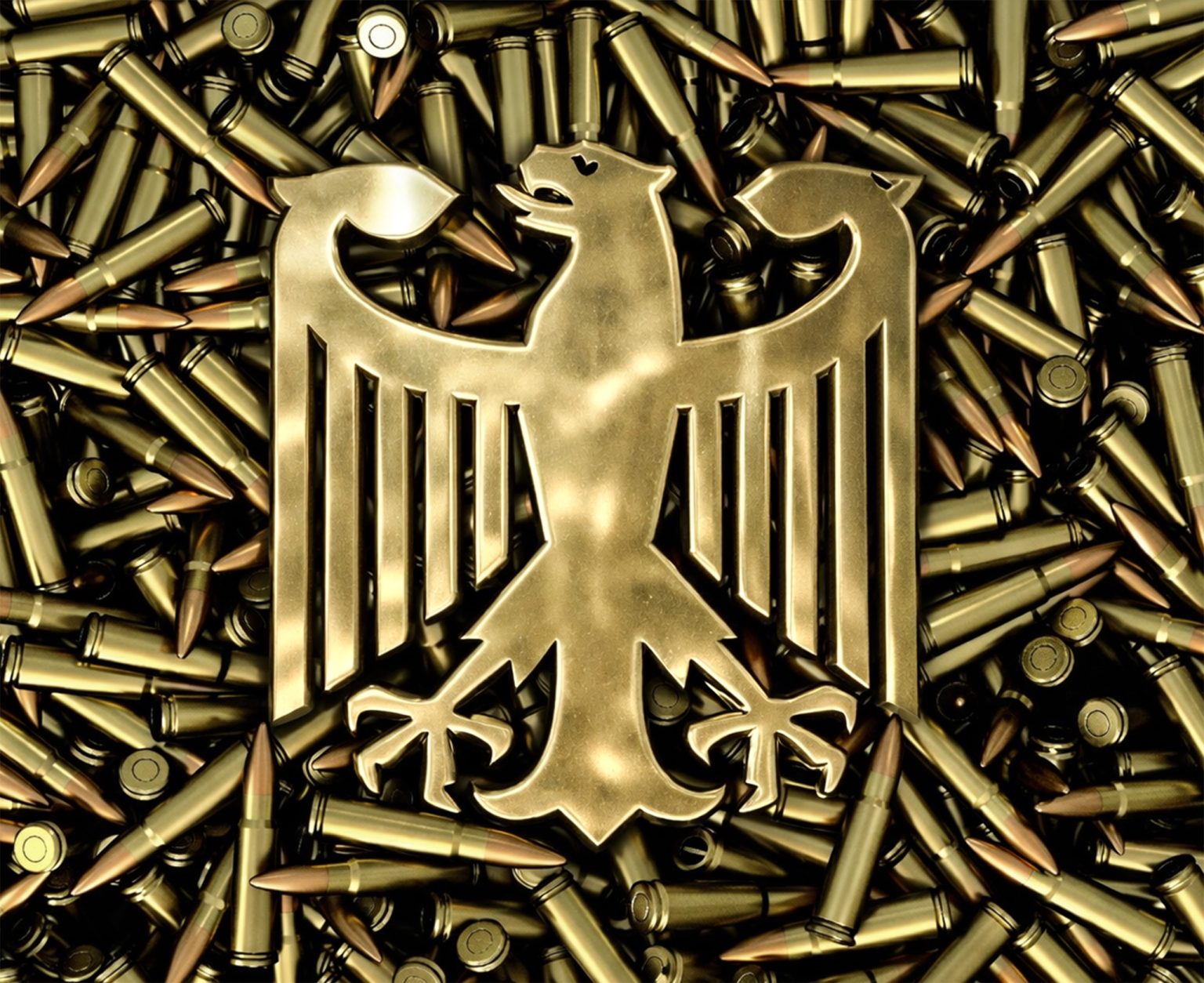
Germany shifts from industrial exports to defense production as economic pressure and geopolitics reshape its economy. Photo: Statement/AI
|
Germany has drawn its industrial self-image for decades from its successful export model. Cars, machines and chemicals formed the economic DNA of the republic. Yet this model is faltering. Weak demand, rising competition from China and structural problems have plunged the industry into its longest stagnation phase since the Second World War.
The figures are stark. Thousands of jobs are disappearing from industry each month, and the once-dominant automotive sector is visibly shrinking. Profits are collapsing: at Mercedes-Benz by 49%, at Volkswagen by 44%. Volkswagen is planning to cut 50,000 jobs by 2030.
Even Porsche has reported steep declines, with operating profit almost entirely eroded. The industrial base is weakening, taking with it a central pillar of the German economy. Although services account for 70% of output, they remain closely tied to industry. If that base deteriorates further, entire value chains will come under strain.
The political response is not focused on preserving the old model. Berlin is increasingly shifting toward a structural realignment, with a growing emphasis on defense production. Carmakers are moving into military manufacturing, and suppliers are becoming defense technology providers. This shift reflects both economic pressures and geopolitical developments.
Uncertainty about American security guarantees and Europe’s rearmament are driving demand significantly. Public programs, new financing instruments and government orders have triggered investments of nearly €1tn. Industry representatives are openly stating the direction. Klaus Rosenfeld, chief executive of supplier Schaeffler, said in the Wall Street Journal: “A great trend in the German economy is that people are asking much more than before ‘how can we contribute to what has not been done over the last many years - to regain the ability to defend ourselves’ - and this is what we are doing.”
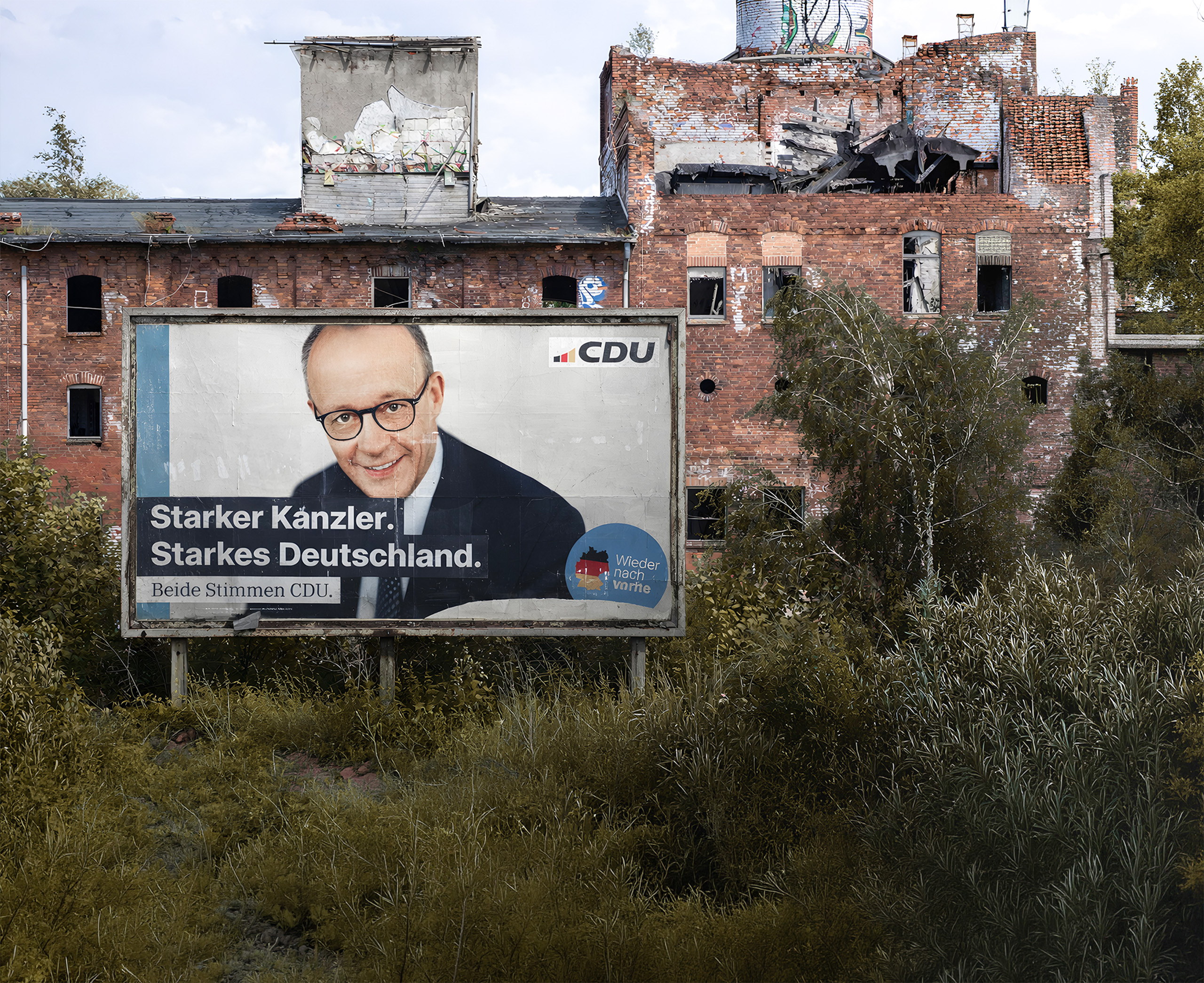
At the same time, he describes the change in mentality particularly clearly: “In Germany, there is a lot of whining. If everyone just complains all the time that things are horrible, then nothing will work. We must roll up our sleeves.” Politically, too, the restructuring is being actively managed. Economy Minister Katherina Reiche (CDU) stresses: “Europe must be able to defend itself [and] that also means building a strong security and defense industry we can depend on.”
She is deliberately pushing ahead with the conversion of existing industries and explains: “Repurposing existing production sites from other industries can reduce the hurdles to scaling up domestic capacity.”
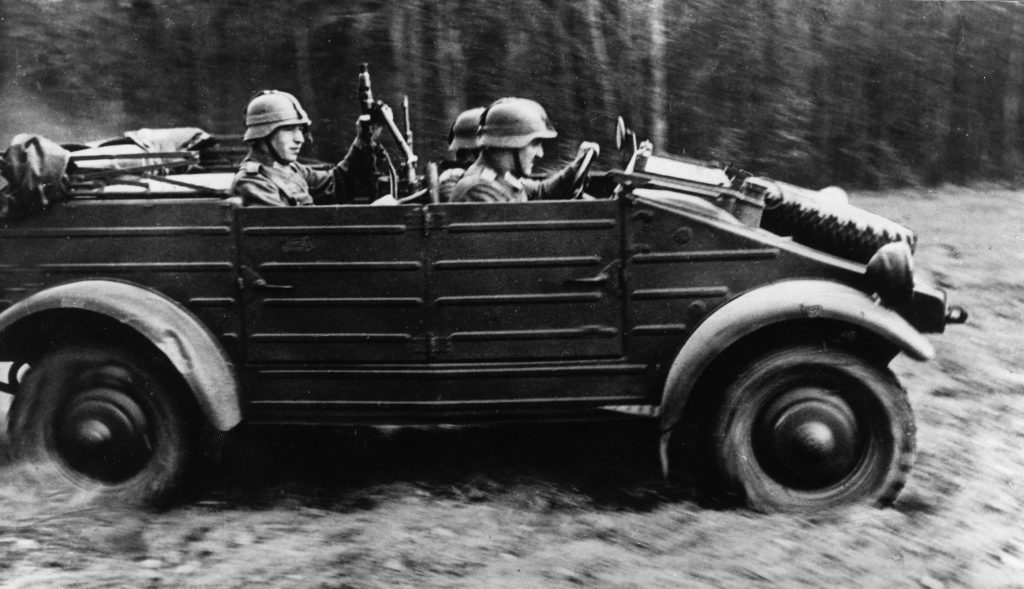
A Volkswagen Kübelwagen in service during the Second World War, June 1942 – a reminder of the company’s earlier role in military production. Photo: ullstein bild/ullstein bild via Getty Images
New Dynamics in Old Factories
The transformation is already visible across traditional industrial companies. Facilities that once produced passenger car engines are increasingly manufacturing components for military systems. Deutz AG has moved decisively in this direction.
Chief executive Sebastian C. Schulte describes the strategic shift clearly: “Transforming the company became my job.” His approach focuses on speed and industrial scaling: “Our USP is stable supply chains: What works for engines and mining equipment will work for the defense industry.”
The company now supplies drive systems for military applications, including generators for the Patriot missile system as well as components for unmanned systems and armored vehicles. While traditional arms companies often scale up only slowly, industrial firms are using their experience from the highly competitive car market to quickly convert production lines and organize supply chains efficiently.
The effect is already measurable. While many industrial companies are cutting jobs, firms with a growing market share are stabilizing or even expanding. Deutz was able to increase its sales and avoid major layoffs because employees were transferred to new production areas. Germany is thus undergoing a fundamental structural change. Industry is not disappearing; it is changing its character. Instead of consumer goods for the world market, military production is moving to the forefront.
This course is economically understandable, politically desired and strategically risky because it is replacing an export-driven model with one that depends heavily on government demand and geopolitical tensions. The transformation into the “weapons factory of Europe” thus marks far more than a cyclical adjustment. It is a profound restructuring of the country’s economic foundation.
Here is placeholder for Article excerpt Here is placeholder for Article excerpt Here is placeholder for Article excerpt Here is placeholder for Article excerpt
Here is placeholder for Article excerpt Here is placeholder for Article excerpt Here is placeholder for Article excerpt Here is placeholder for Article excerpt
Here is placeholder for Article excerpt Here is placeholder for Article excerpt Here is placeholder for Article excerpt Here is placeholder for Article excerpt
Welcome to the comments section of the Štandard daily. Please take note of our guidelines, comments are moderated by us. You can contact the moderators at [email protected].
Participate in the discussion
Comments are available to subscribers only. If you'd like to join the discussion, choose a subscription starting at €6.72 per month.
All comments 0
Register
Comments are available to registered users only. If you'd like to join the discussion, register here.