
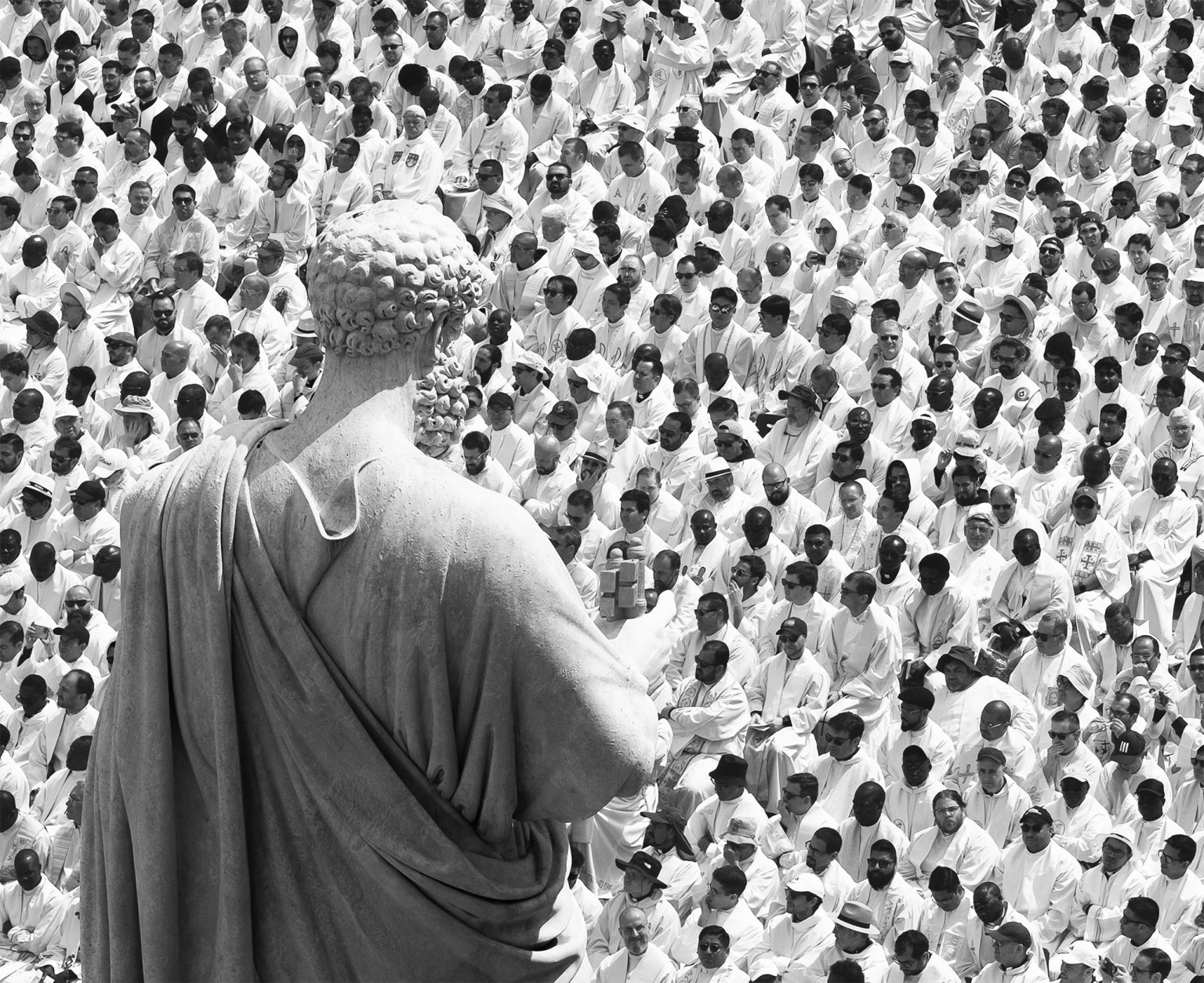
When the cardinals entered the conclave on 7 May 2025, the broadcast also captured the oath they were required to take. With a hand placed on the Gospel, the cardinals recited the formula affirming that they would observe the rules governing the election and maintain secrecy about the conclave.
“Et ego cardinalis … spondeo, voveo ac iuro sic me Deus adiuvet et haec sancta Dei evangelia quae manu mea tango.” – “And I, Cardinal … promise, pledge and swear. So help me God and these holy Gospels which I touch with my hand.”
One stood out: Cardinal Robert Prevost, then prefect of the Dicastery for Bishops, who delivered the formula with striking intensity. The observation was immediately noted by a number of commentators.
Peace Be With You All
When, the following day, the Cardinal Protodeacon proclaimed “Annuntio vobis gaudium magnum, habemus papam …” and announced the name of the new pope together with the papal name he had chosen, few among the faithful could doubt that the election had indeed been guided by the Holy Spirit.
The name Leo XIV immediately signaled a deliberate link to Leo XIII, whose name is inseparably associated with the first modern social encyclical, Rerum Novarum. Quite apart from the fact that the text has lost none of its relevance, the social question remains open in many new forms. Artificial intelligence is not the least among them.
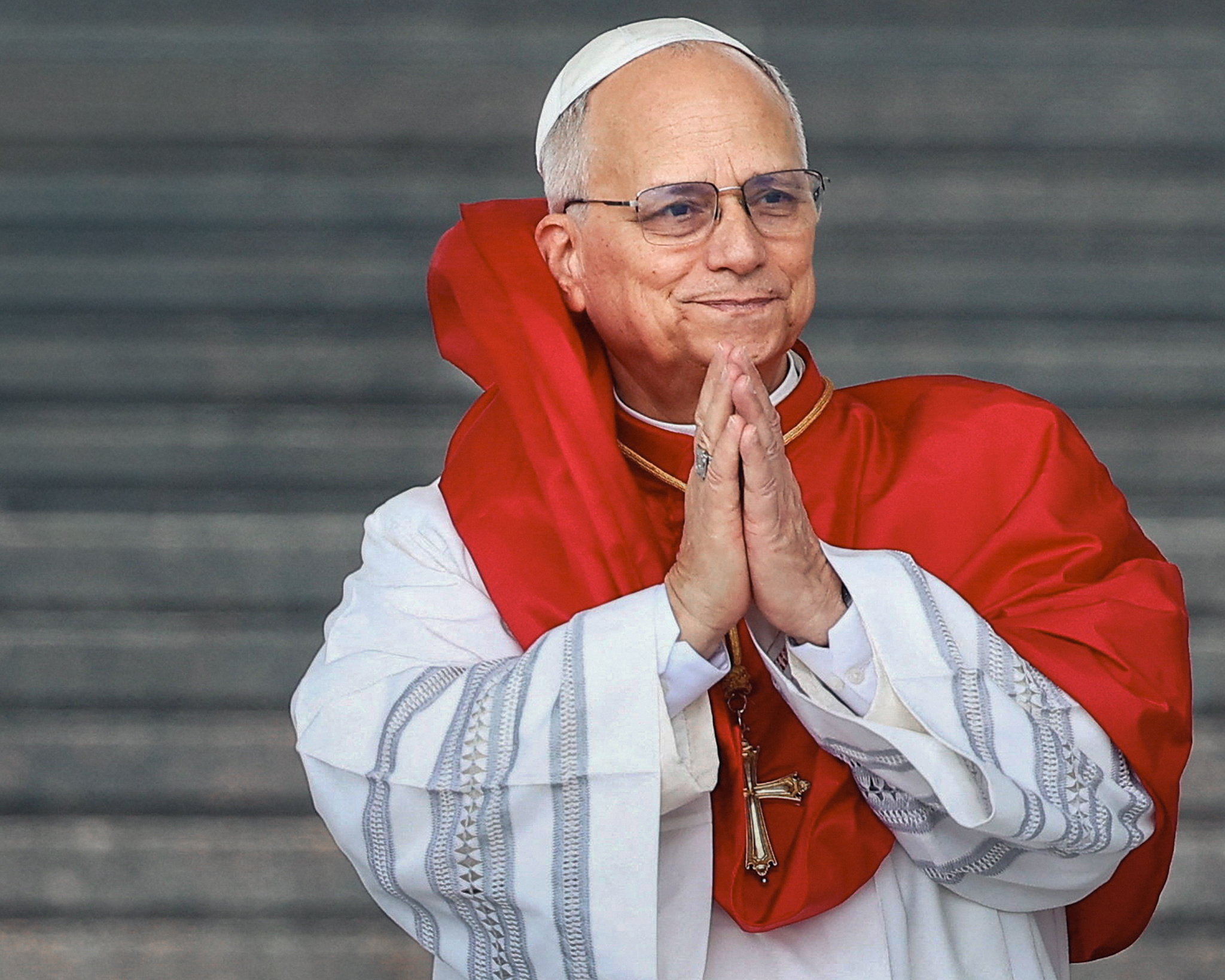
Pope Leo XIV presented himself as a pope of peace. His first words to the world were: “Peace be with you.” In the days that followed, he returned to the theme of peace while also addressing justice and the challenges posed by artificial intelligence.
In contrast to his predecessor, the new pope again wore the traditional papal vestments, including the mozzetta, the red shoulder cape, and the papal stole depicting the Apostles Peter and Paul. His predecessor had dismissed such garments with the remark that “the carnival is over”.
The detail reveals a defining stylistic element of Leo XIV’s pontificate. He treats the traditions of the Vatican with far greater respect than his predecessor. He uses the papal summer residence for rest. He allows himself to be driven in appropriate official vehicles. Only a few days ago, he moved into the papal apartment on the third floor of the Apostolic Palace. While his predecessor kept his distance from the Curia and, at the beginning of his pontificate, railed that the court was the leprosy of the papacy, a more cordial and reliable tone has now entered the working life of the Curia.
A Measured Style
Father Robert Prevost gained leadership experience as Prior General of the Augustinian Order from 2001 to 2013 and later as Bishop of Chiclayo in Peru from 2014 to 2023. During his tenure as Prior General, he spoke repeatedly on issues associated with the spirit of the age. In a 2012 address, he argued that Western mass media were “extraordinarily effective” in generating sympathy for lifestyles and convictions that ran counter to the message of the Bible. He cited the “homosexual lifestyle”, abortion and euthanasia as examples. In particular, he rejected positive or sympathetic portrayals of same-sex families in film and television.
As pope, he set out a programmatic signal with the Apostolic Exhortation Dilexi Te (I Have Loved You) in October 2025. At its core lies the unconditional love of God as the starting point for the Church’s action. The document emphasizes an open and merciful Church that accompanies rather than judges. At the same time, it links spirituality with social responsibility and builds on the tradition of Catholic social teaching. Observers are right to regard the document as a guiding framework for the course of the pontificate.
Leo XIII Was an Intellectual
If one recalls Leo XIII, he stands not only for the social question but also for education. As a scholastic, he championed a revival of the theology of Thomas Aquinas. He was widely educated and authored 86 encyclicals. Like Leo XIV, he was a pope at a moment of profound transition, tasked with leading the Church out of a self-imposed isolation from the social and political developments of the modern age. Today, the transition is digital, reshaping how people live, work and interact across nations. Pope Leo XIV has made clear that he intends to confront it.
Part of his course is to bring together what drifted apart under his predecessor. Pope Francis produced important ideas and documents such as Evangelii Gaudium, yet his lack of respect for tradition alienated many groups within the Church. Not least the document Traditiones Custodes, which sought to severely restrict the celebration of the Mass according to the older rite, unsettled many Catholics, particularly younger ones.
Although Pope Leo XIV has so far issued no legally binding texts or statements on the matter, he has shown himself far more tolerant of the traditional Mass than his predecessor.
Relations with Bishops
As Bishop of Chiclayo, Prevost was an engaged advocate for the poor, and concern for the poor remains central to his pontificate. His predecessor as pope unsettled many with the call for a poor Church for the poor. Critics used to remark that Francis’s poverty proved expensive for the Church. While earlier pontiffs used vehicles provided by manufacturers, a used car had to be purchased for him.
Pope Leo allows himself to be driven in the vehicles already available. The same applies to liturgical vestments. The papal sacristy in St Peter’s Basilica is filled with garments for every occasion. Pope Francis had new vestments made according to his own preferences.
The papal residence in the Casa Santa Marta also incurred considerable expense. Because Francis did not move into the Apostolic Palace, repeated renovations became necessary, and in the end an entire floor of the residence was effectively occupied by the pope. The costs were exorbitant. Before Leo XIV moved into the Apostolic Palace, it became clear how much maintenance had been deferred in the papal apartment. Here, too, the poverty of his predecessor proved costly.
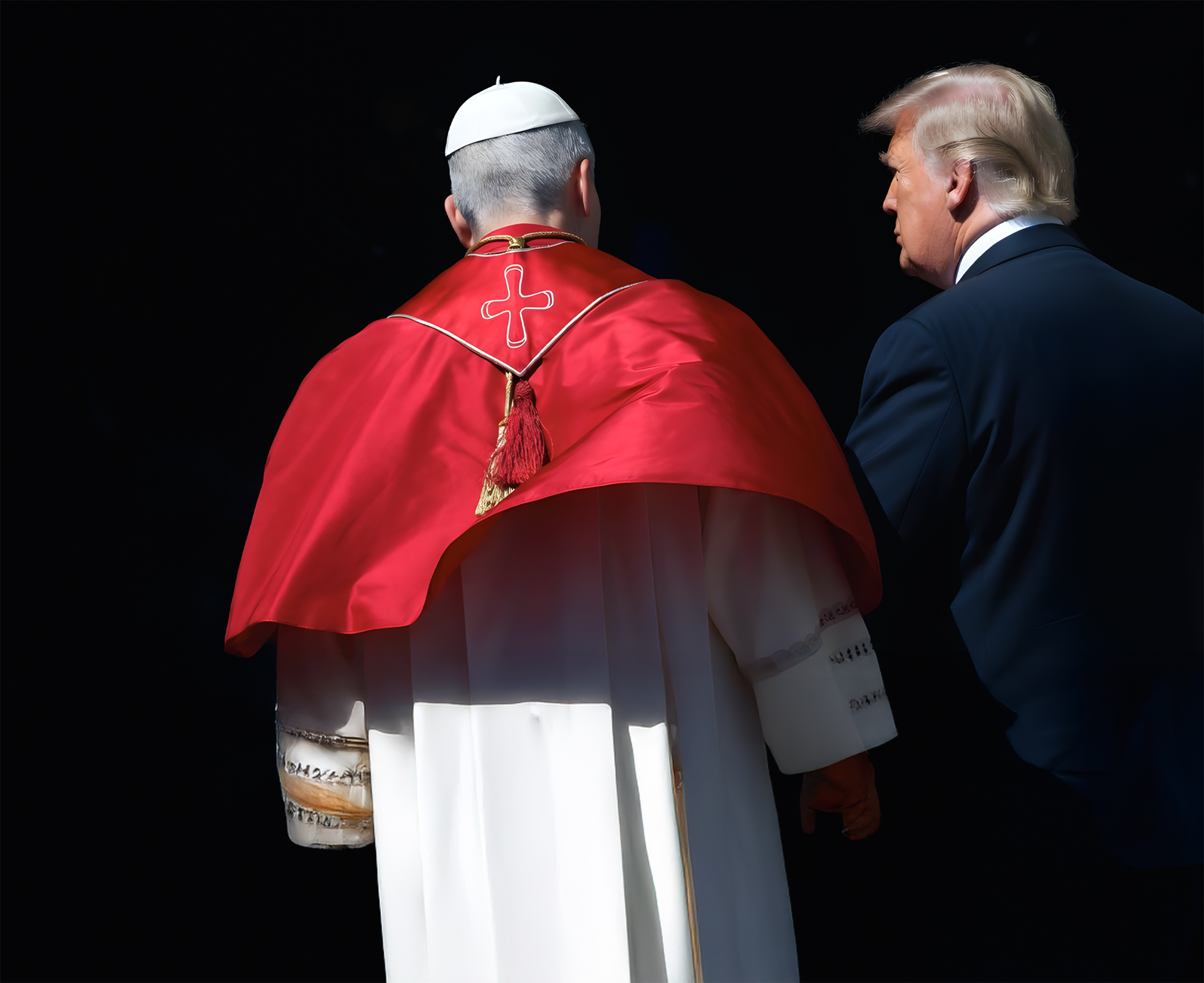
Synodality is a central theme for the pope from Latin America, who regards it as inseparable from evangelization. Leo XIV has taken up the theme with sovereign ease. It is already becoming apparent that he may succeed in winning over many Catholics to synodality as a model of Church governance who had viewed it critically or rejected it under Francis.
He reinforces the role of the bishop. He has returned to the older practice of personally imposing the pallium on newly appointed archbishops who head metropolitan sees on the Feast of Saints Peter and Paul in Rome. Pope Francis had shifted the rite to the local churches and delegated it to apostolic nuncios. Yet the ritual belongs in Rome, because the pallium, a woolen band marked with six crosses and worn over the chasuble, symbolizes the bond between the metropolitan archbishops and the pope.
The Cardinals Gather in Rome
This year, shortly before the Feast of Saints Peter and Paul, an extraordinary consistory will also take place. It is a gathering of cardinals at which no new ones are created and which serves as a forum for thematic exchange with the pope. That, too, is part of ecclesial synodality. The cardinals are not only tasked with electing a new pope, but also with advising and supporting the reigning pontiff in the governance of the Church.
The papal office is also known as the Petrine ministry. To a very high degree, it is a ministry of unity. The leadership style of Pope Francis placed that unity under strain in many respects. In numerous aspects of his pontificate, Pope Leo shows that he intends to draw frayed ends back together. He does so less through grand gestures, which were precisely what created tension during the Bergoglio pontificate. The appearance of the Pachamama figure on the margins of the Amazon Synod is a case in point: it suddenly found its way into the Vatican and stood at the center of a prayer gathering with the pope.
Quiet, Humble and Convincing
Pope Leo XIV values quiet and modest signs and a more restrained engagement with the traditions of the Church. While Francis washed the feet of prisoners on Maundy Thursday, Leo has returned to washing the feet of priests. On the evening before his Crucifixion, Jesus washed the feet of his apostles, not prisoners, not just anyone, but the apostles. The foot-washing is a sign directed at those who share in the apostolic ministry. To reinterpret it leads to misunderstandings and distortions.
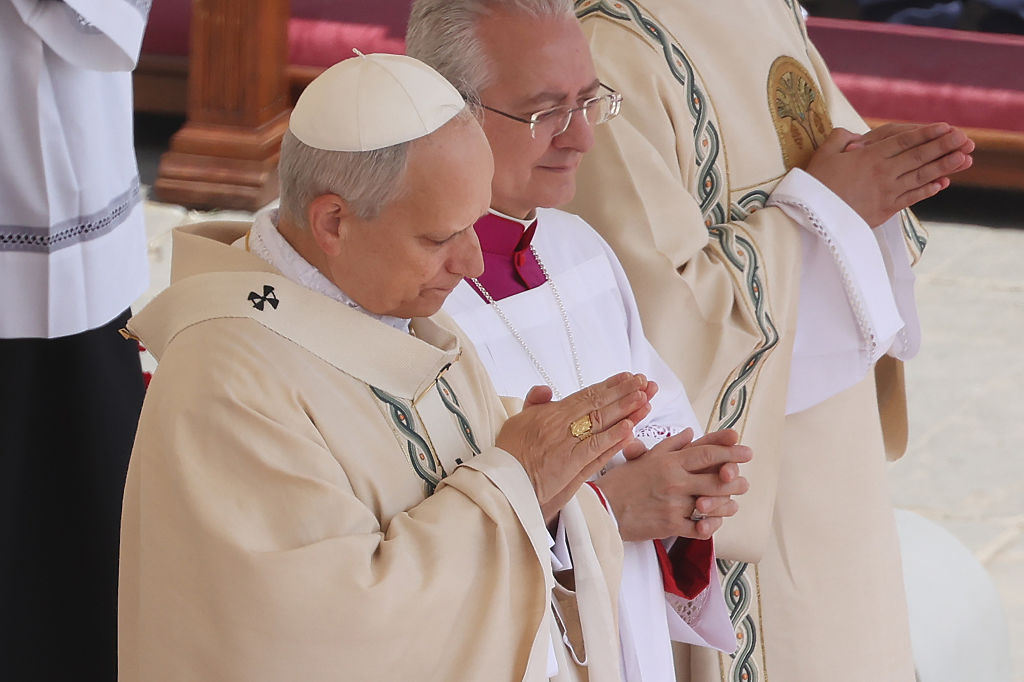
If one seeks to understand the Petrine ministry of Pope Leo XIV, one scene may serve as a symbol. Before Cardinal Tagle placed the Fisherman’s Ring on the new pope’s finger at his inauguration, he emphasized that the ring is a reminder that, through his ministry, he is to keep all who believe in Christ in unity and communion.
After the ring was placed on his finger, the pope briefly turned his folded hands to the side and looked closely at it. As if to confirm his readiness to undertake the ministry symbolized by the ring, he gave a short nod before returning his hands to their original position. It was another affirmation: yes, he will carry out the Petrine ministry, the ministry of unity in the Church.
Unity will remain one of the most important, if often unspoken, themes of this pontificate. In a world in upheaval and transformation, a united and strong Church is needed.