
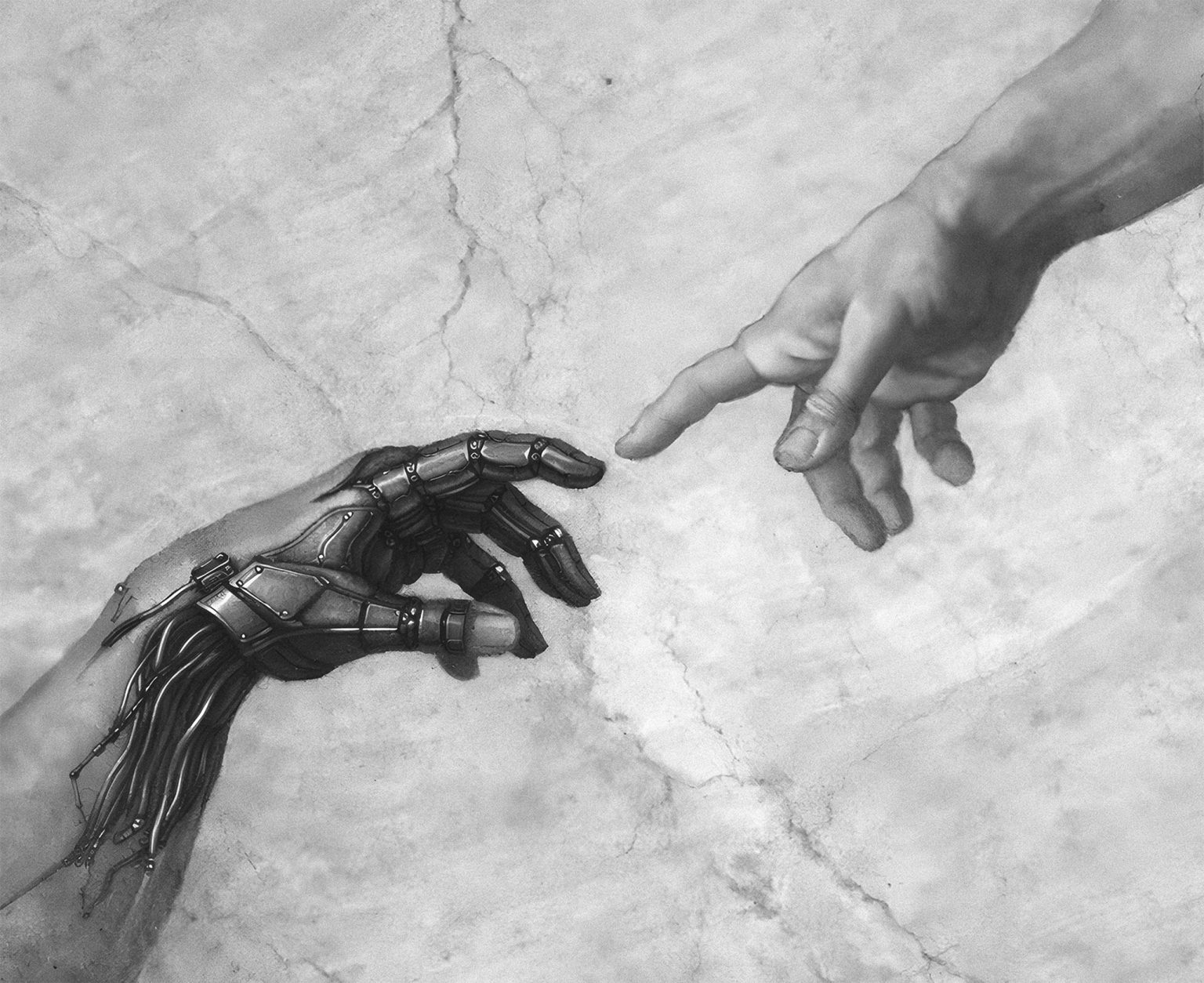
As revolutionary technologies have emerged throughout human history, from Galileo’s telescope to the Industrial Revolution and the splitting of the atom, the Vatican has never remained a silent observer. Whether as a skeptical opponent or a moral compass, the papal office has consistently shaped the debate on the impact of human discovery on society.
Today, on the threshold of an era in which artificial intelligence is reshaping the nature of work, creativity and free will, that historic responsibility passes to Leo XIV.
It is this prophetic dimension that may help navigate current uncertainty. In the face of artificial intelligence, whose full consequences are not yet visible, public debate is often trapped in extremes. On the one hand are apocalyptic visions of mankind’s demise; on the other, naive trivializations of a breakthrough technology. In this fog of unpredictability, papal guidance offers not precise forecasts but a much-needed compass anchored in enduring values.
How does the representative of the See of Peter approach the challenge of artificial intelligence?
When, in late 2022, a wave of generative AI moved unexpectedly from laboratories into homes, schools and parliaments, it quickly became a new reality. Inevitably, it also became a subject for the Vatican.
The Francis Doctrine: AI as a Tool
Historically, the first pope required to respond to artificial intelligence as a civilizational issue was Francis. From the outset, he emphasized a fundamental thesis: AI is not an autonomous force or a new subject of history, but above all a tool.
He did not create a new theology, but followed the tradition of St. Thomas Aquinas and Aristotle. They understood technology as a product of human reason which, while intended to develop human nature, always carries the risk of becoming detached from it and dehumanizing man.
Francis applied this classical framework to the 21st century. He treated AI not as a technical curiosity but as a question of power and political decision-making. In doing so, he established the Vatican’s initial framework: artificial intelligence should be a powerful instrument of progress, but it must not be left to itself. It must be subject to regulation by states and institutions so that it serves human dignity rather than the market, war or technocratic arbitrariness.
Leo XIV and the Anthropological Turn
His successor, however, inherited a different situation. Leo XIV took up the question of artificial intelligence not at a moment when its importance still needed to be established, but when it had already become a mass technology, a cultural symbol and a new field of power struggle. The question of regulation alone is therefore no longer sufficient.
Where Francis understood algorithms primarily as an ethical and political challenge, Leo XIV considers them in deeper civilizational and anthropological terms. The fundamental question of what the technology does to human judgment, to education, to interpersonal relations and ultimately to the very understanding of the human being moves to the foreground.
Even the frequency of his interventions is telling. In a single year, he has delivered no fewer than seven substantial texts on artificial intelligence. Although he has not yet issued an encyclical, the speeches offer the clearest insight into the emerging doctrine of his pontificate. In them, AI appears not merely as a subtopic of technology, but as the battleground on which the relationship between man, power and truth is now being decided.
This shift is most evident in the way the new pope adopts and deepens Francis’s definition of the tool. For him, too, artificial intelligence remains a product of human genius, not an autonomous vehicle of morality. Yet the argument does not end there.
Leo XIV asks what happens when the tool begins to penetrate the very processes of thought and communication. Systems no longer intervene only in the economy or in government; they are entering a sphere previously reserved for the human person: imagination and discernment.
The pope therefore asks not only who should regulate AI, but also what kind of person its widespread use may shape. His concern is directed less at the risk of machines making decisions without responsibility than at the risk that humans will gradually lose the habit of making their own decisions.
His texts repeatedly call for critical thinking, the responsible exercise of freedom and the defense of interpersonal relations against the logic of simulation and automatism. The danger lies not only in the potential misuse of technology, but in its capacity to subtly transform the user.
Leo XIV thus extends the traditional Catholic skepticism about technology into a new dimension. He warns not only of the dehumanization of work, but of a more subtle and profound erosion of human interiority. Where his predecessor emphasized the need to keep man at the center of decision-making, Leo emphasizes whether he will remain capable of concentration and contemplation at all. The question is almost spiritual: what remains of the human being if he becomes accustomed to outsourcing not only the work of his hands but also thinking itself, that is, his inner life?
Technological Heresy and Salvation Without God
It is here that the debate over artificial intelligence can become a problem of heresy. Not because machines themselves hold a false faith, but because man begins to seek salvation in them.
In the figure of the businessman Peter Thiel, this tendency appears in its starkest form: technology is no longer merely a tool, but the embryo of a new order intended to replace the weakness of politics, the uncertainty of democracy and the fragility of human judgment.
Heresy begins the moment a part of the truth, especially efficiency, calculation and control, is elevated to the whole truth. The debate over artificial intelligence is therefore, in the end, not only about technology, but about whether man will remain its master or become the raw material for a new system of salvation without God.