
In the Siberian city of Tomsk, on 19 April, a memorial complex dedicated to victims of Soviet-era repression was removed from the Park of Remembrance. It included the Stone of Sorrow and several smaller memorial stones dedicated to Lithuanians, Latvians, Poles, Estonians and Kalmyks affected by Soviet repressive policies.
The city also removed the benches and fenced off the entire area, with police guarding the site. On the city’s Telegram channel, officials stated that these were necessary steps related to structural problems with nearby garages. However, since the garages are located approximately 50 m from the demolished monument and the incident drew international attention, the post containing that explanation was later deleted.
Tip of the Iceberg
But this is not just about one monument, the removal of which has already been condemned by both Poland and the Baltic states. On 9 April, Russia’s Supreme Court declared the “International Memorial Social Movement” an extremist organization and banned its activities across the country. Although no such movement formally exists, it is clear that the ruling will affect people and groups cooperating with the remnants of the Memorial Association.
The International Memorial Society for History, Human Rights and Charity was declared a foreign agent in Russia in 2013 and was officially liquidated on 29 December 2021. It was the country’s oldest organization dedicated to preserving the memory of victims of the Soviet regime.
Founded during perestroika in 1987, it documented and commemorated crimes committed during the Red Terror, the Great Terror, the famine in Ukraine, the gulag system, in which tens of thousands of Slovaks were also imprisoned, and the so-called psychiatric hospitals.
As the Gulag.cz project, which has long cooperated with Russians linked to the dismantled Memorial, explains, anyone supporting the group’s activities in Russia can face serious criminal charges. Organizing the activities of an extremist organization is punishable by as many as 12 years in prison. Participation can result in six years, financial support in eight years and publicly calling for extremist activities in five years.
Even Kadyrov Objects
Statement contacted Russian historian Dr Alexei Uvarov, an independent scholar at the Department of East European History at the Faculty of History of Ruhr University Bochum. He has been based in Germany since the summer of 2022, when he emigrated from Russia and left the prestigious Moscow State University. In April 2026, he conducted an extensive interview with a former Memorial staff member.
According to Uvarov, the removal of memorials such as the one in Tomsk has not yet become systematic in Russia and is unlikely to do so quickly.
“It is happening, but for the time being these are individual cases. Maybe it will become part of state policy, but again, it will not happen that fast or that easily. It is simply a huge amount of work. Fortunately for Russians, for us, to some extent these memorial plaques and monuments have already become part of the public space”, the historian says.
According to Uvarov, Memorial’s influence on Russian society is often overestimated and it was never able to compete with the state’s official policy of remembrance, although the renewed crackdown against the organization is highly significant.
“I would not overestimate their visibility and popularity in Russia … Undoubtedly, it was a well-known and highly respected organization, but to say that its presence in the mass media and on the internet could somehow compete with that of the state is, of course, impossible”, Uvarov says.
The historian stresses that the regime had long taken the necessary steps to make the media presence of similar groups virtually impossible. Nevertheless, Memorial’s activities were far from negligible. He points to school competitions on historical themes, annual commemorative events and initiatives such as Return of Names, a public reading of victims’ names, and Last Address, which places memorial plaques on the former homes of repression victims. Both projects gained international reach.
According to Uvarov, Memorial is inconvenient for the regime because its very existence, beginning in the era of perestroika, proves that Russia could have taken a different path from the one it follows today.
“And secondly, Memorial, among other things, recalled certain basic principles on which the Russian state was built in the early 1990s. Although the creation of the Russian Federation was very difficult, some foundations were laid then. In particular, the law on the rehabilitation of victims of political repression was adopted in the autumn of 1991”, he says.
Uvarov points out that despite restrictions on freedom of speech, the Russian-Chechen war and other events that shaped the birth of contemporary Russia, awareness of the crimes of the communist regime and the unacceptability of repeating them gradually spread through post-Soviet society, not least thanks to Memorial and the groups cooperating with it.
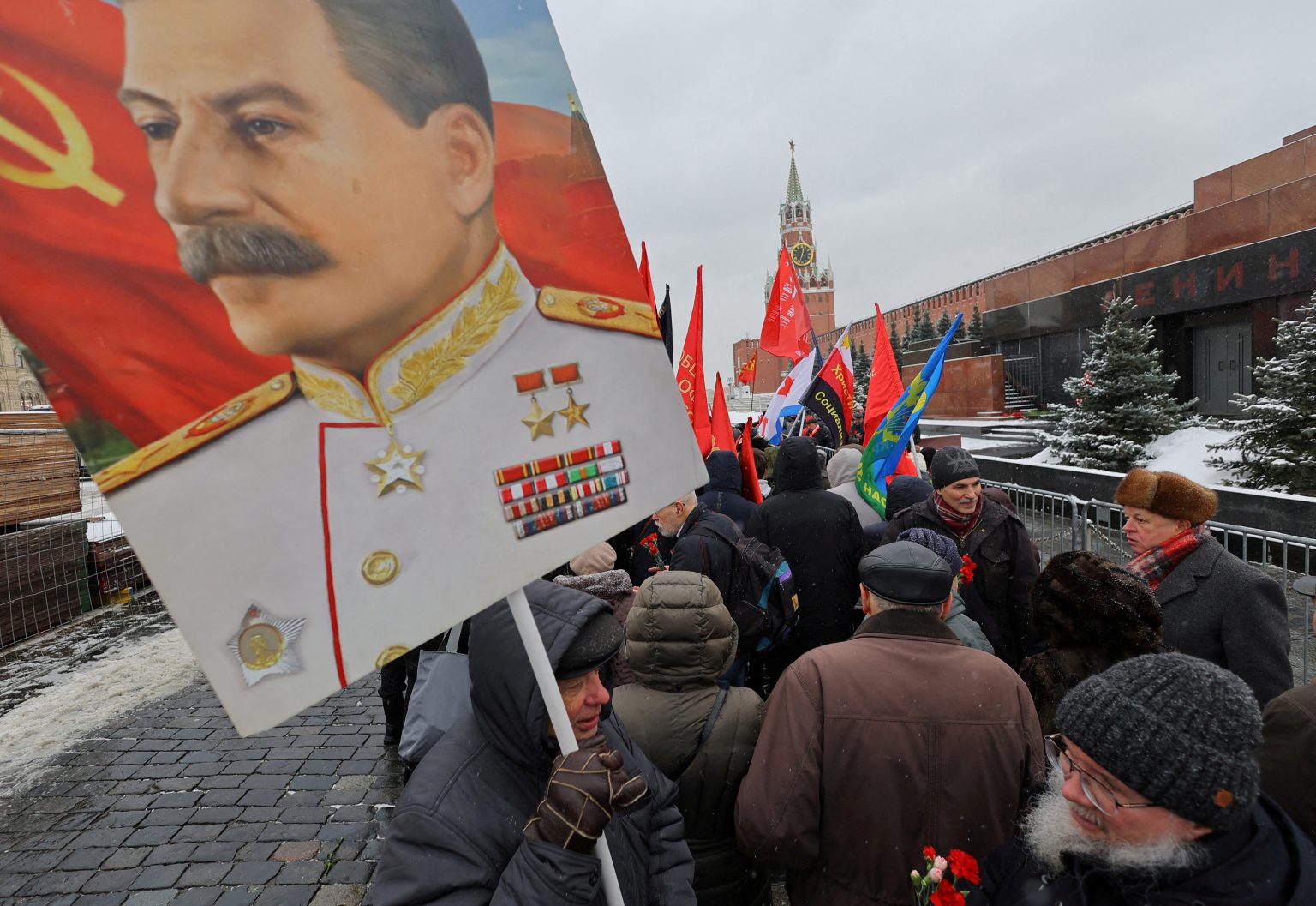
This is deeply at odds with the current regime, which remains in power in part through repression. However, the historian believes the Kremlin will not succeed in erasing the memory of the victims, even if their public commemoration eventually becomes impossible. In fact, not only anti-Kremlin Russians but also some figures within Putin’s own circle oppose the glorification of Stalin and his crimes.
“An excellent example is Ramzan Kadyrov, who is ostensibly unreservedly loyal to Putin. However, he consistently contradicts the state’s position in one important respect: for the past 20 years, he has insisted that Stalin was a traitor and that he committed a great crime by deporting the peoples of the Caucasus in 1944”, the historian explains.
He adds that this is one reason why the memory of the communist regime’s crimes will not disappear any time soon.
Although the state has been trying to erase that memory for years, Uvarov argues that it will not succeed any time soon. The Soviet Union persecuted and killed a vast number of national, ethnic, religious, social and class groups among its own citizens, and their descendants still remember it. For some groups, memory of the repression has already become part of collective identity, including Cossacks, Volga Germans, Ukrainians, the peasantry, Orthodox believers, the nobility and supporters of the White movement, the anti-Bolshevik forces in the Russian Civil War.
According to him, a full reassessment of Russia’s communist past would also require legislative change, since the law on the rehabilitation of politically persecuted people still states that the USSR pursued a policy of repression throughout its history.
“This remains the letter of Russian federal law today. There is also the 1992 ruling of the Constitutional Court of the Russian Federation, which states that the Soviet Union was a totalitarian state with a one-party dictatorship under the Communist Party of the Soviet Union”, Uvarov concludes.

Not All Victims Are Equal
As remembrance of those persecuted by the Soviet state becomes increasingly unwelcome, the Kremlin has created its own official cult of victims to displace those who are inconvenient to the regime. In the first half of April, Russian President Vladimir Putin signed a law introducing criminal penalties for denying or endorsing what the Kremlin calls the “genocide of the Soviet people”.
The term “genocide of the Soviet people” is a recent invention and has no basis in international law. However, it is clear from the legislation that it does not refer to the tens of millions of Soviet citizens killed by the Bolshevik regime, but exclusively to the victims of the Soviet-German war from 1941 to 1945, during the Second World War.
In February this year, the Gulag Museum in Moscow, which was closed in 2024, was definitively replaced by an exhibition dedicated to the “genocide of the Soviet people”, curated by a veteran of the Russo-Ukrainian war.
The Second World War began with Germany’s invasion of Poland in September 1939, in which Slovakia also took part, followed later that month by the Soviet invasion from the east. The later war between Nazi Germany and the Soviet Union, known in Russian historiography as the Great Patriotic War, lasted from 1941 to 1945. After the Soviet invasion, large numbers of Poles were taken prisoner, and more than 20,000 were executed by Soviet forces near the Russian town of Katyn in 1940.
On 10 April 2026, three days before the memorial day for the victims of the Katyn massacre, the state-sponsored Russian Military Historical Society opened an exhibition in Katyn titled “10 Centuries of Polish Russophobia”. As Polish media noted, the ahistorical display stands at the entrance to the cemetery where the Polish victims of 1940 are buried.
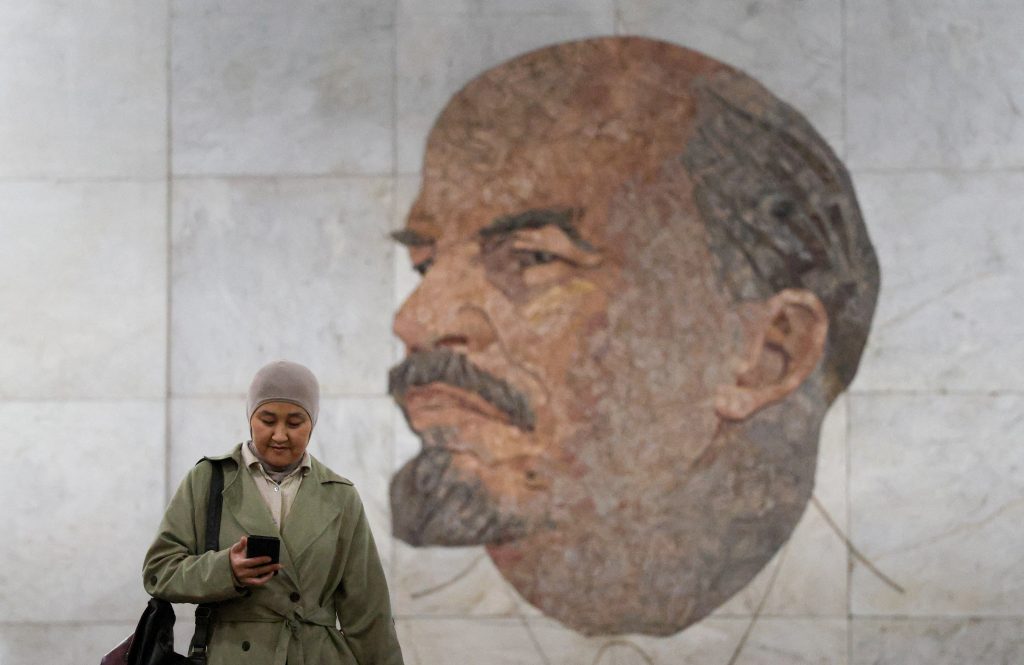
It is worth recalling that more than 20,000 Polish officers and officials were executed in Katyn on Stalin’s direct orders, something Putin first acknowledged indirectly in 2002 and openly in 2010. In total, more than 120 Stalin memorials stand in Russia and in occupied parts of Ukraine. Roughly 90% of them were unveiled during Putin’s presidency.
In 2014, the Russian president gave an elite Interior Ministry unit the honorary name of Felix Dzerzhinsky, the founder of the Soviet secret police and one of the architects of the Red Terror. Since September 2023, Dzerzhinsky’s statue has once again stood outside the headquarters of the Federal Security Service (FSB) in Moscow. As Uvarov notes, the original monument was removed on 22 August 1991.