
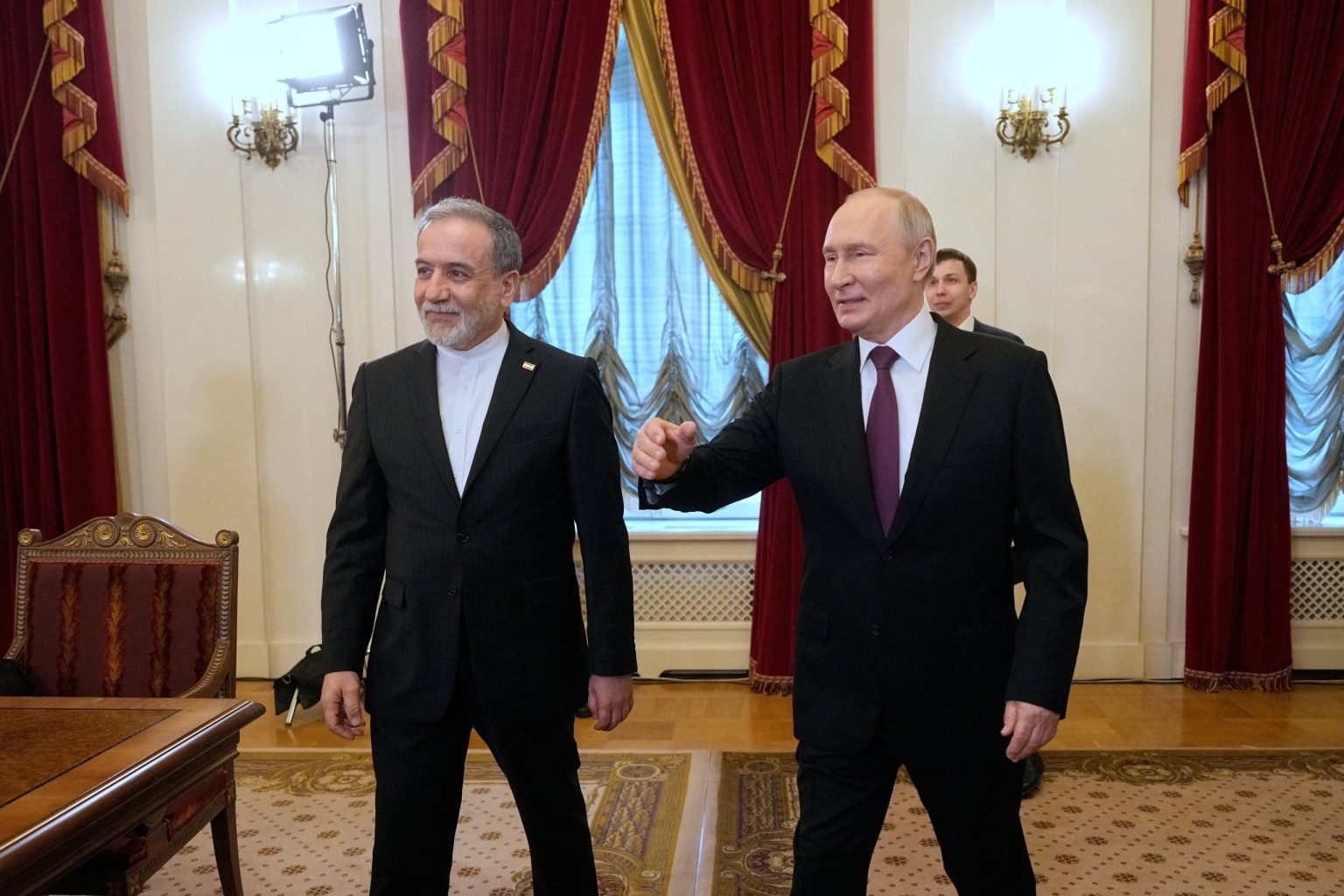
Iranian Foreign Minister Abbas Araqchi arrived in St Petersburg, Russia, for a meeting with President Vladimir Putin and other Kremlin officials. The main topics of discussion were the current state of peace negotiations with the United States, as well as broader developments on the battlefield.
According to the TASS news agency, the Russian president said that the Iranians were fighting courageously and heroically for their independence and sovereignty, and that Moscow would do everything possible to ensure that peace would return to the Middle East as soon as possible. At the same time, he said he hoped Iran, under its new leader, would “come through this difficult period of trials”.
Putin also conveyed “our best wishes for his health and well-being” to Iran’s supreme spiritual leader, Mojtaba Khamenei.
Beyond the symbolism of reaffirming a strategic partnership, however, the Iranian diplomatic chief is also seeking to challenge the image of a “globally isolated” Tehran by holding talks with a wide range of diplomats across the Middle East and beyond.
On Monday morning, Araqchi telephoned his Saudi counterpart, Faisal bin Farhan al-Saud, from Russia. Since the early days of the US-Iranian war, the Islamic Revolutionary Guard Corps and the Artesh army have been shelling US installations, including bases and data centers, on Saudi territory. The call therefore marked an initial attempt at reconciliation.
Contacts With Neighbors
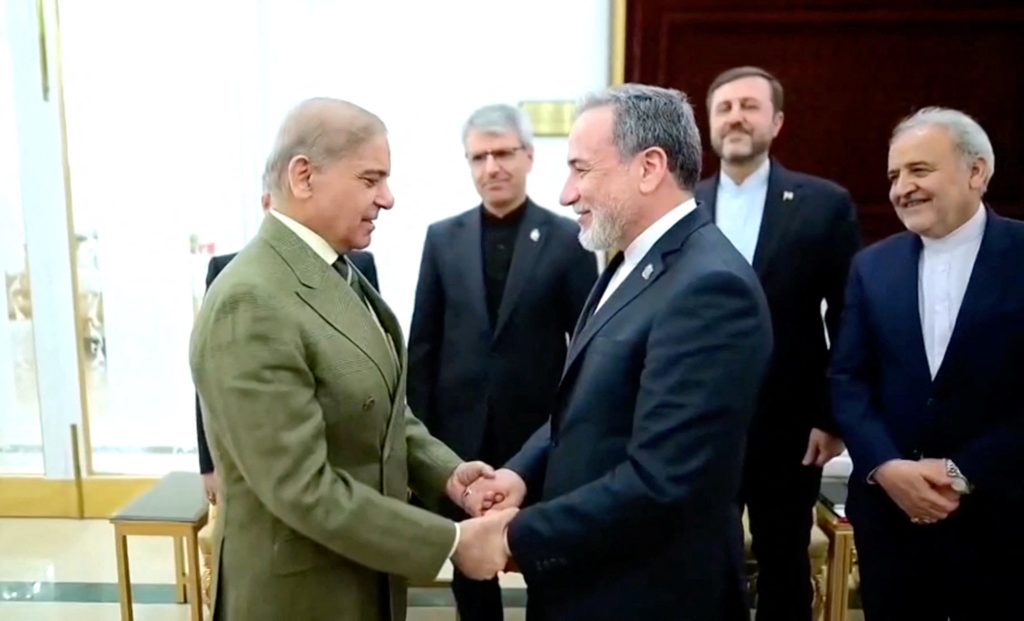
Araqchi’s weekend schedule was particularly busy. On Friday 24 April, he arrived in Islamabad for another attempt to negotiate with US counterparts. However, he left the Pakistani capital the following day, before the arrival of Steve Witkoff and Jared Kushner.
According to the minister, Tehran refused to accept US “maximalist” demands, particularly on the issue of uranium enrichment. While the Shi’ite government insists it has the right to a civilian nuclear program, its opponents view enrichment as part of a pathway toward nuclear weapons production.
US President Donald Trump initially canceled his negotiators’ trip, which further complicated the already uncertain state of the peace talks.
The Iranian diplomatic chief, who according to a recent report by The New York Times is aligned with the moderates, traveled to Muscat on Sunday, where he met Sultan Haitham bin Tariq al-Said of Oman. Oman had sponsored the earlier US-Iran negotiations on the nuclear program and, despite Revolutionary Guard military operations in the Gulf, continues to act as a friendly intermediary.
Iran and Oman, “as the only two states on the Hormuz coast”, must work to ensure safe navigation, Araqchi later wrote on X.
From Oman, however, the minister returned to Islamabad, presenting a new list of ceasefire terms to the government there. According to sources from the semi-official Tasnim news agency, the demands do not concern the nuclear issue. The key points are the reaffirmation of Tehran’s sovereignty over the Strait of Hormuz and reparations for destroyed infrastructure.
In addition to speaking with the Saudi foreign minister, Araqchi also held talks over the weekend with Qatar’s prime minister and foreign minister, Mohammed bin Abdulrahman al-Thani. He also contacted his French counterpart, Jean-Noël Barrot, calling for greater support for peaceful solutions and continued dialogue.
Alliances With Major Powers
Although statements from Iran’s Foreign Ministry, as published by Press TV and the Tehran Times, have been largely formulaic, they reveal a broad network of potential allies, supporters and interlocutors. This significantly undermines Washington’s and Tel Aviv’s efforts to isolate the theocratic government.
Araqchi said that despite progress in previous talks, an agreement had ultimately failed because of what he described as excessive US demands and constantly shifting American positions.
The trip to Russia is particularly important for the Iranian minister. Three days before Trump’s inauguration, Moscow and Tehran concluded a comprehensive strategic partnership agreement that includes defense cooperation.
The Kremlin has previously used a similar framework in its rapprochement with North Korea. Taken together, these steps point to strengthening ties within the anti-American alignment often described as CRINK: China, Russia, Iran and North Korea.
Russia and China remain the core of this continental bloc, while Iran and North Korea serve as strategically important partners on its periphery. It is the growing convergence of these anti-Western powers, in the sense described by British geographer Halford Mackinder in his 1904 essay The Geographical Pivot of History, that Henry Kissinger sought to prevent, or at least slow. As secretary of state under Richard Nixon, his strategy centered on keeping Moscow and Beijing apart in order to prevent the emergence of a united Eurasian bloc capable of challenging US dominance.
Through its diplomatic activity across the Arabian Peninsula, South Asia and Moscow, Iran is seeking to consolidate the “land powers” whose future alignment could pose a serious challenge to US dominance.
That is why the visit to Putin carries such significance for Tehran.