
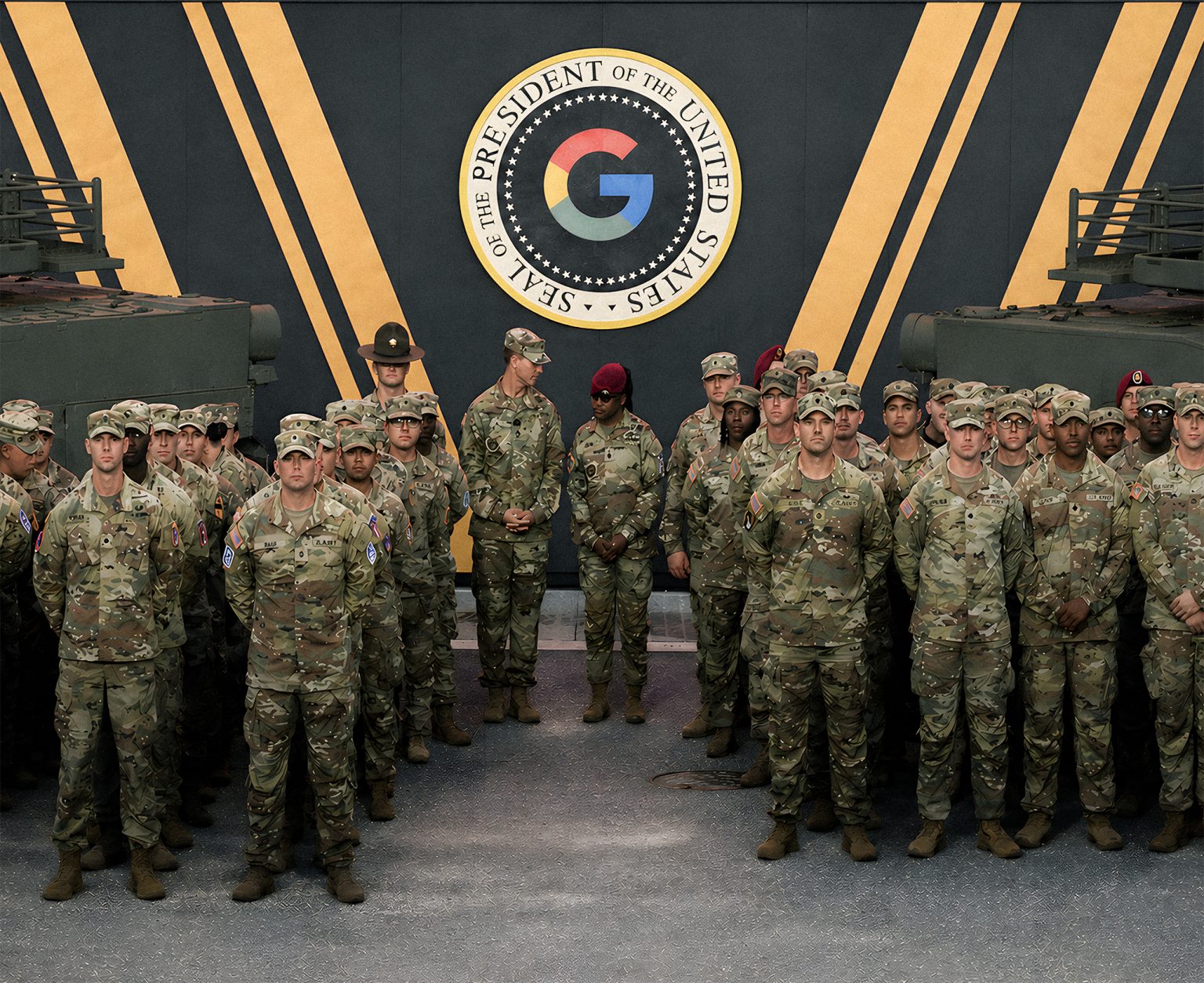
According to the Financial Times, more than 560 Google employees have signed an open letter to CEO Sundar Pichai urging him not to approve any potential agreement with the United States Department of Defense. The appeal follows reports that Google’s Gemini AI model could be made available for classified military operations. The signatories argue that sufficient safeguards are not yet in place to prevent misuse.
In the letter, the employees warn against opening artificial intelligence systems to applications linked to autonomous weapons, surveillance or other high-risk areas. They point to earlier commitments by the company not to develop AI for purposes that could cause direct harm to people and call on Google to uphold those principles.
The issue touches on a sensitive point in a debate that has been gaining momentum for years. While artificial intelligence is often discussed as a key economic technology, its security dimension is becoming increasingly prominent. Modern AI systems are not only used in civilian applications but are also relevant in military contexts, including intelligence gathering, logistics, data analysis and operational decision support.

From Silicon Valley to the Security Sphere
Against this backdrop, cooperation between technology companies and state security agencies is coming under closer scrutiny. In the United States in particular, the strategic importance of advanced AI has grown. In the context of geopolitical tensions, especially with China, technological leadership is increasingly viewed as a matter of national security.
The current dispute at Google echoes earlier internal conflicts. In 2018, employees protested against the Pentagon’s Project Maven, which used AI to analyze drone footage. Following internal opposition, Google chose not to renew the contract and later introduced principles governing the use of artificial intelligence, including restrictions on applications related to weapons and surveillance.
More recently, attention has focused on changes to those principles, with the company removing or softening language related to military or harmful uses. Critics have interpreted this as a sign of a possible shift in direction.
Other AI companies are grappling with similar questions. Anthropic, for example, has recently drawn attention following reports of disagreements with US authorities over safeguards and access rules for AI models. Such cases highlight how technological advances are intensifying political and regulatory tensions.
Who Controls Military AI?
At the centre of the debate is not only whether artificial intelligence should be used in military contexts, but under what conditions. Key issues include safety measures, human oversight of AI-driven systems and accountability in sensitive applications.
Advanced generative models are raising new questions in particular. While earlier debates focused primarily on autonomous weapons, attention is now shifting towards the broader use of AI in decision-making, analysis, planning and intelligence operations. This also raises questions about the role private technology companies should play in security-critical infrastructure.
At the same time, international discussions around regulation and oversight are gaining momentum. While companies argue for the need to preserve innovation and governments seek to secure strategic advantages, critics point to a lack of clear standards for transparency, liability and democratic control. These issues are becoming more pressing as AI systems are increasingly integrated into security-related processes.
The protest at Google therefore reflects a debate that extends far beyond a single company. It concerns the relationship between technological innovation, state security priorities and the rules governing the use of emerging technologies. As AI capabilities continue to expand, the significance of this debate is likely to grow.