

On Wednesday, 29 April, two Jewish men were stabbed in broad daylight in North London, in the area of Golders Green on Highfield Avenue. CCTV footage shows one of the victims, in his 70s, standing at a bus stop and putting on his kippah when he was attacked and stabbed. The 45-year-old suspect is a British citizen who is of Somali origin. The other victim, in his 30s, was stabbed during the fight that followed.
The victims are in a stable condition following the attack.
At a press conference in the area later that day, Labour MP and Minister of State for Courts and Legal Services, Sarah Sackman, said: "We cannot guarantee everybody is kept safe." Sackman, who is Jewish and represents the Finchley and Golders Green constituency, was heckled by the crowd, who accused her of not doing enough.
The incident comes only weeks after an arson attack on Hatzola ambulances, a Jewish volunteer-led emergency service in the same area. The fire caused the gas canisters inside the ambulances to explode, resulting in around £1 million in damage. Four suspects in that case were arrested and charged. Hamza Iqbal, 20, Rehan Khan, 19, and Judex Atshatshi, 18, are British nationals. The 17-year-old boy, who cannot be named due to his age, is a dual British-Pakistani national.
The Wider Terrorist Threat
The attack has intensified pressure on the government to tackle antisemitism, with the Golders Green stabbing being the latest in a string of incidents targeting the Jewish community. Jonathan Hall KC, the government's independent reviewer of terrorism legislation, told the BBC that such attacks now constitute "the biggest national security emergency" since 2017, warning that many British Jews feel unable to live normal lives.
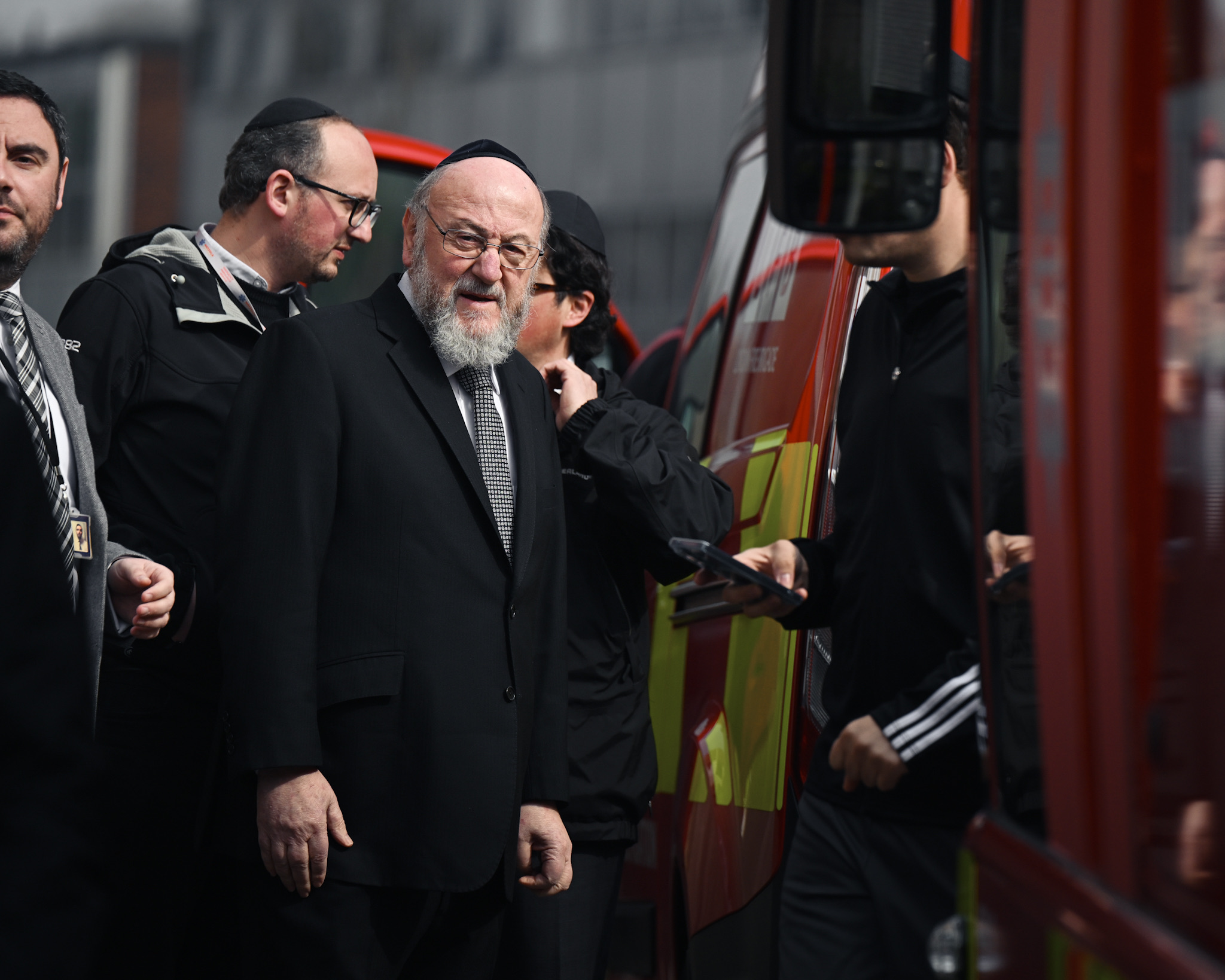
Chief Rabbi Sir Ephraim Mirvis said the incident showed that "if you are visibly Jewish, you're not safe", calling for meaningful action on the root causes of antisemitism. The Board of Deputies of British Jews urged the state to confront and deter antisemitism "with the full force of the state", while Israeli Prime Minister Benjamin Netanyahu's office said words alone were "not enough to confront this scourge".
An Iran-linked group, Harakat Ashab al-Yamin al-Islamia (HAYI), has since then claimed responsibility for the stabbing of two Jewish men in a Telegram post, publishing a brief statement with its logo at 12.23 p.m., followed 40 minutes later by footage of the bus stop attack.
Counter-terrorism police are aware of the posts but say the 45-year-old suspect arrested on suspicion of attempted murder has “a history of serious violence and mental health issues”, according to Metropolitan Police Commissioner Mark Rowley.
Previous Antisemitic Incidents
In the past months, there has been a pattern of incidents affecting Jewish sites and organizations:
- 27 April: A fire believed to have been started deliberately damaged a memorial wall in Golders Green. It honored both victims of the Iranian regime’s crackdown on protests earlier this year and those killed in the 2023 Hamas attack on Israel.
- 18 April: An object containing a flammable substance was thrown through a window at Kenton United Synagogue in north-west London.
- 17 April: Police were called to reports of suspicious items near the Israeli embassy in London, which were later confirmed to pose no danger. Earlier, a social media video had suggested the embassy could be targeted in a drone attack.
- 15 April: Projectiles, including a brick and bottles suspected to contain petrol, were thrown at Finchley Reform Synagogue in north London.
- 23 March: Four ambulances belonging to a Jewish charity were destroyed in a fire in a synagogue car park in Golders Green.
- 2 October 2025: Two people were killed and three others seriously injured in a combined vehicle and knife attack outside a synagogue in Manchester. One of the attackers was shot by police at the scene.
Police inquiries are ongoing, with counter-terrorism officers continuing to assess the circumstances and any potential wider links. Downing Street said Prime Minister Keir Starmer has convened a COBRA emergency meeting in response to the situation, bringing together senior ministers and security officials to coordinate the government’s response. Further updates are expected as the investigation progresses and authorities review whether additional security measures are required.
Taken together, the attacks underscore growing concerns about the safety of Jewish life in Britain, with a marked rise in antisemitic hate crime in recent months. Despite repeated pledges and security measures, critics say the government’s response has so far failed to stem the trend, leaving communities facing a persistent and evolving threat.