
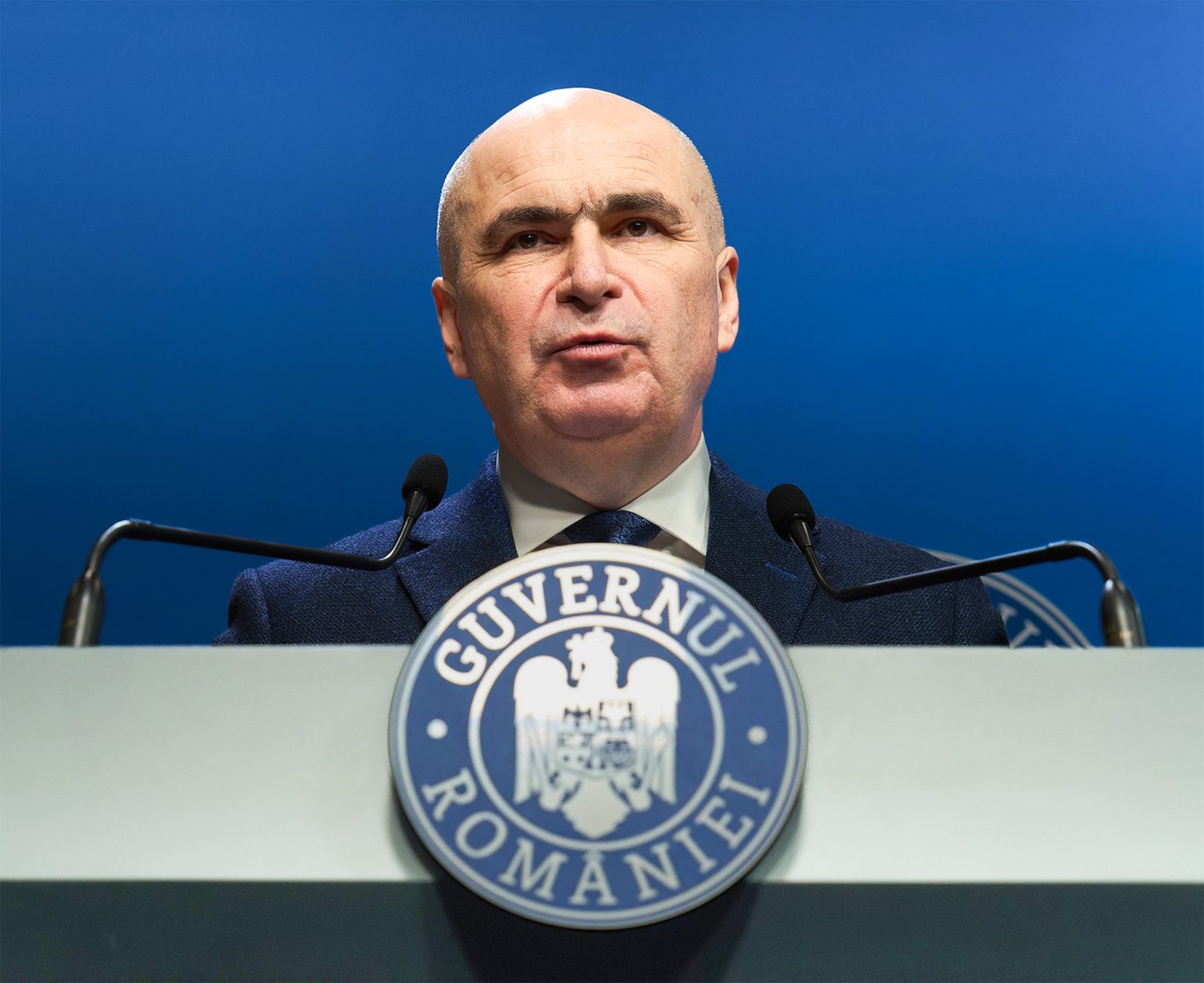
The Romanian Parliament voted to oust the government of Prime Minister Ilie Bolojan on Tuesday. The motion passed with 281 votes in favor, well above the 233 needed.
The fall of Bolojan’s cabinet has raised concerns over Romania’s public finances, access to EU funds and currency stability. The leu weakened to an all-time low against the euro before the vote, as investors feared that political instability could undermine Bucharest’s commitment to reducing the highest budget deficit in the European Union.
Before the vote, Bolojan urged MPs to consider the consequences of their decision. “Can anyone say how Romania will function from tomorrow? Do you have a plan?” he asked. He stressed that his government had tried to govern with respect for public finances.
The deficit is expected to fall to about 6.2% of gross domestic product this year, from more than 9% in 2024.
Crisis in the Coalition
The coalition took power 10 months ago with the aim of limiting the rise of the right after a series of polarizing elections. The cabinet began adopting austerity measures and cutting the deficit, narrowly avoiding a credit rating downgrade.
Yet those measures triggered repeated disputes with the Social Democrats, because they hit the party’s voters and power networks while support for the right continued to grow.
Bolojan had led a minority government since late April, after the Social Democratic Party (PSD), the strongest party in Parliament, left the four-party coalition and called for his resignation. The PSD later joined the right-wing opposition in tabling the no-confidence motion. Without its support, a stable pro-European majority is all but impossible.
Early Elections
Despite the collapse of the cabinet, early elections are not expected. Romania has never held them, and analysts consider them unlikely even now, especially with the Alliance for the Unification of Romanians (AUR) leading in the polls.
President Nicusor Dan is expected to start talks with political parties on forming a new government. The options include rebuilding a pro-European coalition under another prime minister or appointing a technocratic cabinet.
The Social Democrats have already signaled their willingness to return to government if it is led by another figure. Bolojan’s Liberal Party has so far refused to cooperate, although some of its leaders have acknowledged the possibility of a compromise.
PSD leader Sorin Grindeanu said after the no-confidence vote that life “goes on” and that the party’s aim was essentially to preserve the current coalition. Liberal MEP Siegfried Muresan described the PSD’s alliance with the right-wing AUR in the vote as anti-European. At the same time, Deputy Prime Minister Catalin Predoiu indicated that his party must keep its options open.
Until Parliament approves a new cabinet, Bolojan will remain interim prime minister with limited powers. The country also faces pressure to continue reforms and deficit reduction so that it can draw about €10bn ($11bn) from the EU’s recovery and resilience plan by August.
(reuters, lud)