Britain’s political landscape is undergoing another dramatic transformation, only a few years after Boris Johnson’s Conservatives redrew the electoral map in the 2019 general election. That victory overturned decades of political assumptions, with traditionally Labour-voting communities across northern and central England backing the Conservatives in large numbers and helping deliver one of the party’s biggest parliamentary majorities in modern history.
Now the forces that once powered that Conservative breakthrough appear to be turning against the party itself.
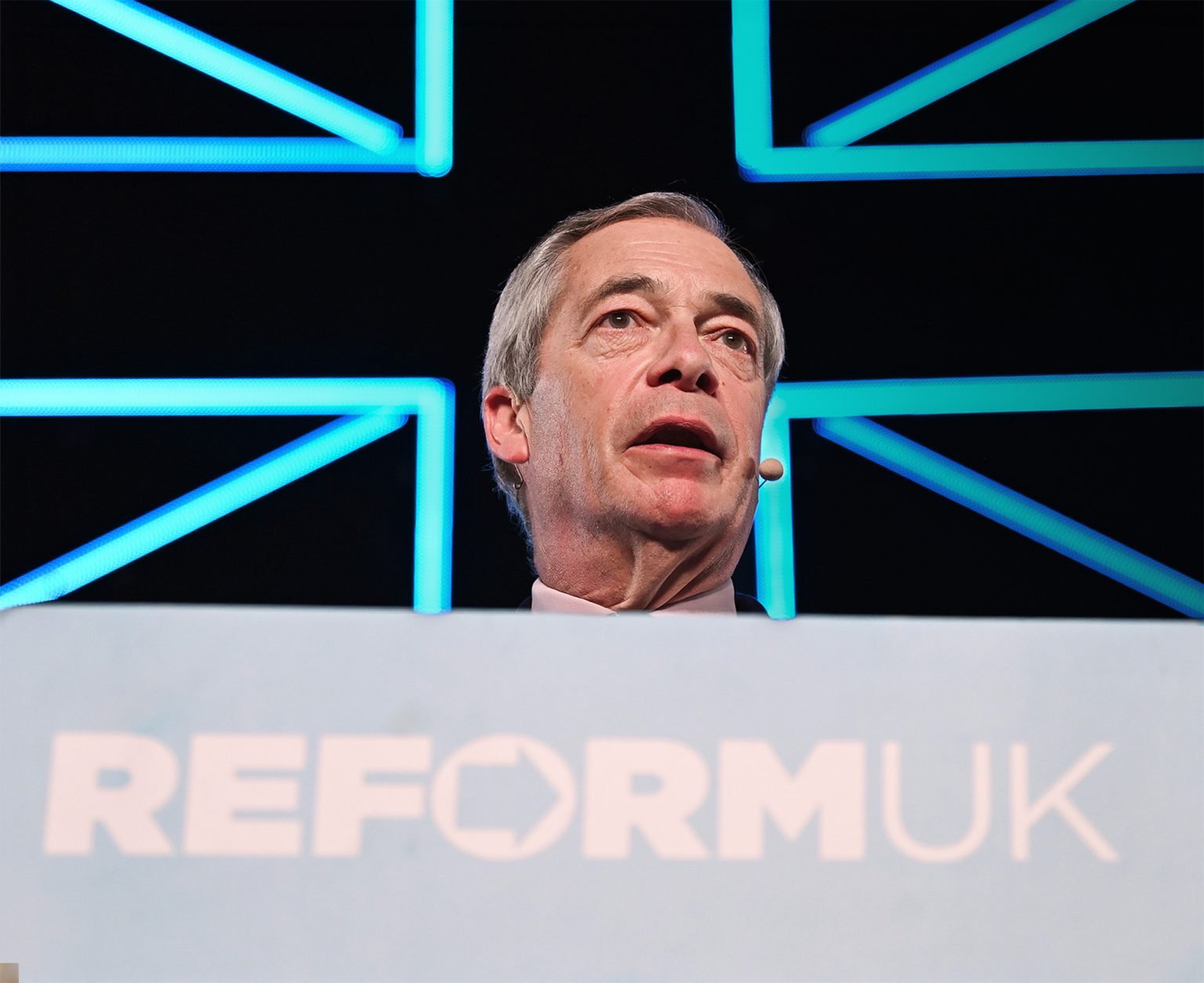
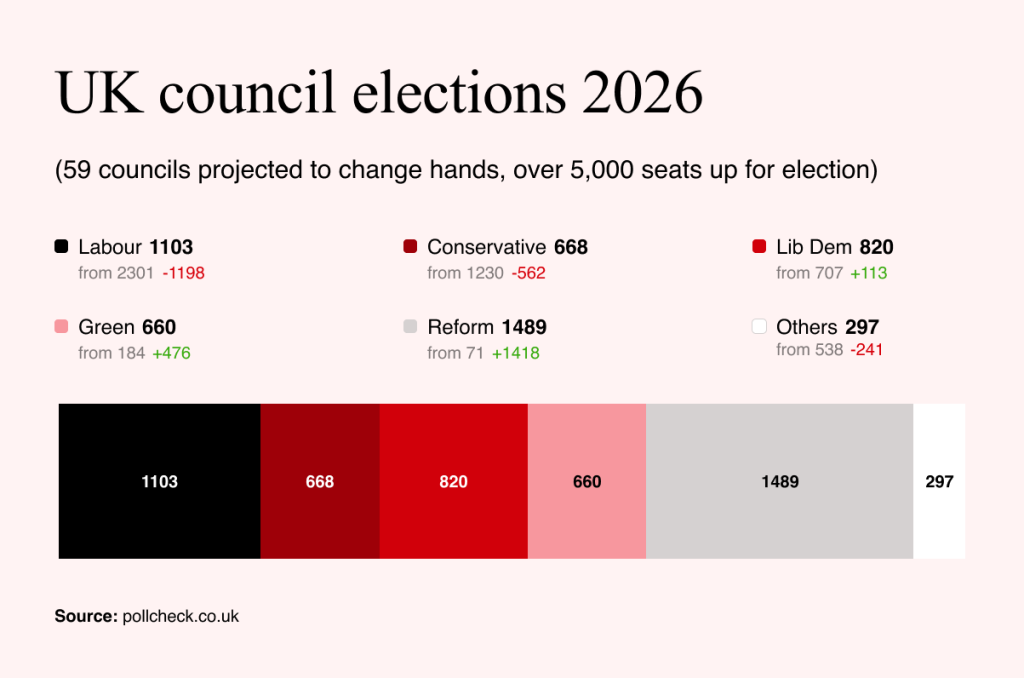
Early local election results indicate that Reform UK is making substantial advances under its leader, Nigel Farage, who was quoted this morning as saying: ’’We are witnessing an historic shift in British politics.“ Across England, including in areas long dominated by both Labour and the Conservatives, Reform has made significant gains. Labour has suffered a historic setback, losing 83% of its councillors up for re-election. Reform’s first council gain came in Newcastle-under-Lyme, where it won seats directly from the Conservatives, offering one of the clearest signs yet that the party is evolving from a protest movement into a serious electoral force.
The results suggest that British voters are becoming increasingly detached from traditional party loyalties. Years of economic pressure, anger over mass immigration and declining trust in Westminster have created a far more fluid electorate, with support shifting rapidly between parties from one election to the next.
A Fragmenting Political Landscape
The overnight results may still understate the scale of Reform’s momentum. During the previous local election cycle, the party was still relatively small, with only 71 councillors nationwide. In many of the councils voting this year, only a portion of seats were contested, limiting Reform’s ability to secure outright control even in areas where it achieved strong performances.
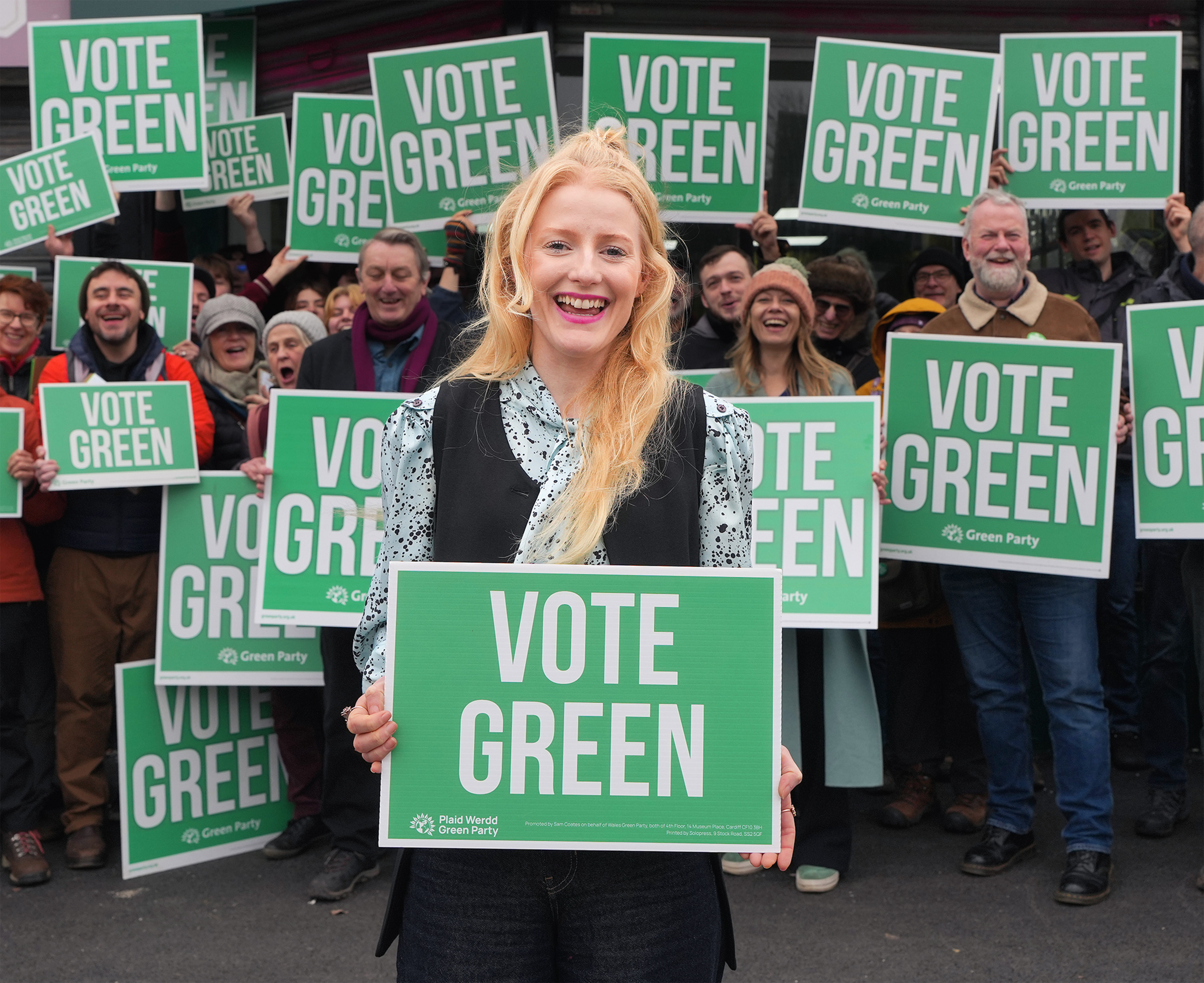
For decades, British politics revolved around Labour and the Conservatives, with smaller parties playing secondary or regional roles. That structure is increasingly under strain. Reform has expanded rapidly on the populist right, while the Liberal Democrats, Greens and nationalist parties continue to erode support from the traditional major parties in different parts of the country. Another notable trend is the rise of party-independent Muslim councillors and candidates angry over Gaza, reflecting a growing sense of political alienation among parts of Britain’s Muslim electorate.
This trend has been reinforced by recent polling and analysis. Understanding Islamopopulism, a report published by the think tank Policy Exchange, examined what it described as the widening distance between Muslim voters and the British political mainstream. The think tank commissioned JL Partners to survey more than 1,000 British Muslims, with findings suggesting that Gaza ranked above the economy, education, housing and healthcare as the most important issue for many respondents. The poll also found that 63% prioritized their Muslim identity over their British identity, raising broader questions about cultural integration in an increasingly fragmented electorate.
Britain’s first-past-the-post voting system still rewards parties capable of building broad national coalitions of voters. But while that once kept insurgent parties out of power, it now promises a sweeping political realignment. The debate is no longer confined to whether Reform can hurt the Conservatives electorally. Increasingly, the question in Westminster is whether Reform could replace them as Labour’s principal opposition.
Badenoch’s Problem
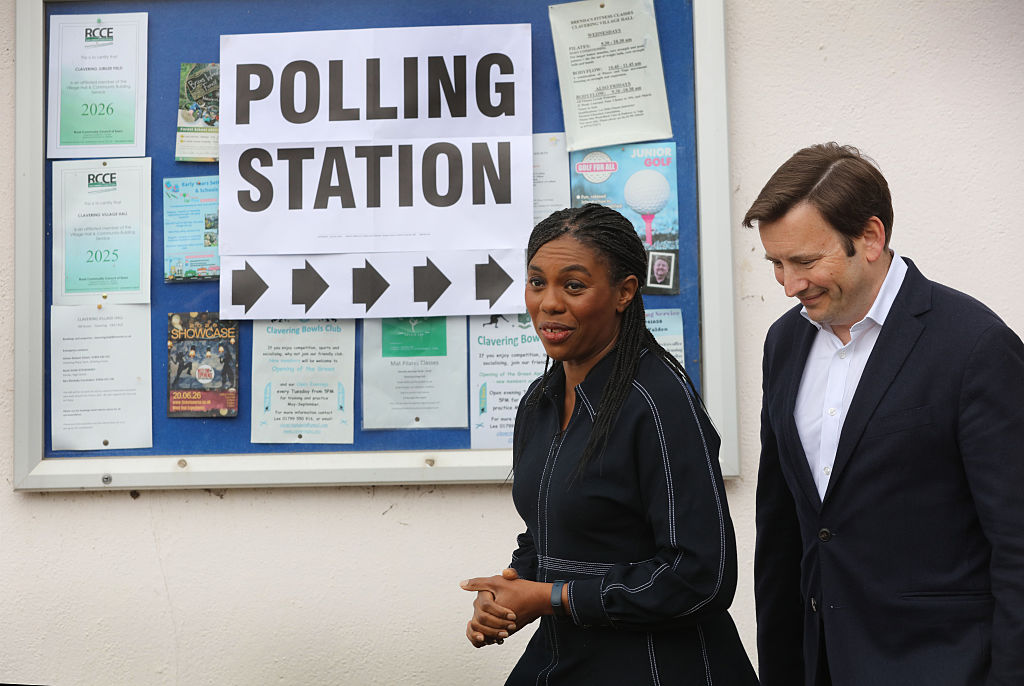
For Kemi Badenoch, the local election results are becoming a test of political survival as much as party recovery. Allies argue she has become more effective at Prime Minister’s Questions and more confident in direct clashes with Keir Starmer. But stronger parliamentary performances do little to rebuild public trust after 14 years of Conservative government marked by internal turmoil, economic stagnation and voter fatigue.
The results undermine Badenoch’s argument that the Conservatives are stabilizing after last year’s general election defeat. Unfortunately, she even had to concede to her own council in Essex to Reform. While the Tories regained the Westminster council from Labour, Reform’s sweeping advances across England show that momentum on the right no longer belongs to the Conservatives. Labour also lost control of Wandsworth Council, although the borough moved into no overall control rather than returning to the Conservatives. Even without a total Tory collapse, many MPs and activists increasingly view Reform as the dominant force shaping the future of the British right.
That pressure intensified following the defections of prominent Conservative politicians Suella Braverman and Robert Jenrick to Reform UK earlier this year, exposing deep ideological fractures inside the Conservative Party and damaging Badenoch’s authority. Relations between Badenoch and Braverman had already deteriorated over disagreements about immigration and identity politics. The feud escalated after Braverman defected, when the Conservative Party issued a statement implying that she had mental health problems. The remarks triggered a backlash across Westminster, and Badenoch was later forced to apologize publicly, admitting the statement “should not have gone out”.
Braverman has argued repeatedly that the Conservatives failed because they abandoned a more confrontational populist agenda on migration and national identity. Jenrick’s dramatic departure was even more politically damaging. As Badenoch’s main rival in the leadership contest and a leading figure on the Conservative right, his move reinforced the perception that many in the party didn’t want to move right after their election defeat. Badenoch sacked him from the shadow cabinet and accused him of plotting his defection to inflict maximum damage on the party.
Reform’s Dilemma and the Post-Badenoch Right
Reform’s rise depends on presenting itself as fundamentally different from the Conservatives, not simply a refuge for disillusioned Tory politicians. That is why party figures issued an ultimatum that they wouldn’t accept Conservative defectors after the local elections. While high-profile arrivals may bring media attention and institutional credibility, too many former Conservatives could dilute Reform’s anti-establishment identity. A party promising a clean break with the old order cannot easily fill its ranks with politicians from that same order.
That tension is central to Reform’s appeal. Much of its support comes from voters who believe the Conservatives failed in office, particularly on migration, taxation and state competence. If Reform begins to resemble the party it is trying to replace, some of that emotional and ideological energy could fade.
At the same time, the elections are intensifying the debate about what comes after Badenoch. Even if she survives a poor result, many Tory MPs are already looking beyond the current leadership crisis. Names such as Katie Lam, a younger MP viewed by some as part of a future generation of Conservative leadership, are increasingly surfacing in party discussions. There is no current prospect of a leadership challenge centered on her, but the fact that such conversations are happening at all reflects how fragile confidence in Badenoch has become.
The broader significance of these elections extends beyond either party. Local elections are imperfect predictors of general elections, due to lower turnout and regional issues, but they remain among the clearest measures of political mood and momentum. This year’s results suggest Britain is entering another period of major political realignment. Reform has demonstrated an ability to convert their consistent polling lead into concrete electoral gains, supplanting the Conservatives across large parts of England.
The results have delivered a clear answer. Reform’s advances have exposed Conservative vulnerability and highlighted the growing instability of Britain’s traditional two-party structure. What is emerging may prove more significant than a temporary protest vote or council election backlash. The elections point toward a deeper restructuring of British politics that is challenging the dominance Labour and the Conservatives have exercised for more than a century. That could propel Reform UK’s leader, Nigel Farage, to be Britain’s next Prime Minister.